A newborn congested at night may not have any nasal congestion during the day, but may be very congested once they fall asleep. They may snuffle during sleep, which can cause them to wake up more often or make it harder to feed.
Newborn congestion at night may seem more pronounced for several reasons. Because a baby’s nasal passages are so small, even a little bit of mucus or swelling can make their breathing sound congested. Congestion may be more noticeable when they lie on their back, and the nose may be further irritated by dry air. When the house is quiet, every barely audible snuffle is heard.
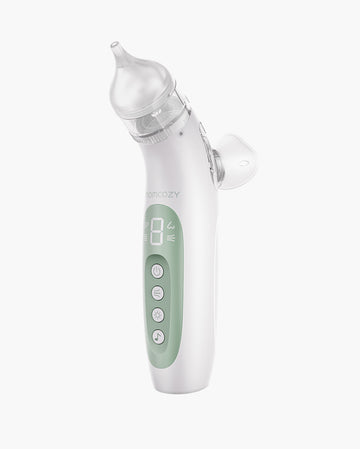
If you need to tend to your baby's nasal mucus, you may want to try exploring Momcozy baby nasal aspirators as well. Make sure the product is age-appropriate and use the product on a newborn or young baby only after consulting with your pediatrician.

Key Takeaways
- Congestion during the night can sound worse, but it doesn't necessarily mean that there is more mucus. The very slight amount of mucus or swelling in these very small passages can result in a surprising amount of noise.
- Monitor breathing and feeding. It is not about how loud your baby's nose is; it's about how they are breathing and feeding.
- Check to determine if any mucus needs to be cleared. If the mucus is dry or thick, it may be helpful to use water or saline to make the mucus soft and easier to suction.
- Suction should only be used for mucus that can be removed. Ensure your baby is awake and you are closely monitoring your infant while using a nasal aspirator.
- Don’t overdo suctioning just because you can still hear congestion. If little or nothing comes out, stop instead of trying harder.
- Congestion does not alter the regular safe-sleep arrangement. Full sleep position guidance is available in the separate safe sleep resource.
- Recognize the signs when congestion requires medical care. If breathing problems, feeding difficulties, or color change occur, or if symptoms get worse, a pediatric provider should be contacted.
Why Does Newborn Congestion Seem Worse at Night?
It might seem like your baby is only a little bit congested during the day but sounds a lot more congested after he's asleep at night. This may not mean that the congestion has increased. You just notice the small amount of mucus or swelling when your baby is in bed at night in a quiet environment.
Tiny nasal passages amplify small changes
Babies’ nasal passages are tiny, so even a small amount of mucus or swelling can affect how they breathe. A bit of congestion that goes unnoticed during the day may sound more obvious at night, with snuffling, snorting, or damp-sounding breaths.
That's one reason infant congestion at night can sound more dramatic than it looks. The sound alone, however, can't tell you what's causing it or whether there is mucus that needs to be removed.
Lying down can make stuffiness more noticeable
Mucus and swelling may be more pronounced when your infant is lying down than when they are seated or standing, but this does not indicate that they have an illness or are producing more mucus.
Once you have laid the baby down and he still has a stuffy nose and is making congested sounds, you need to assess the situation overall, not just based on the noise. The real thing you need to watch for in your baby is that he is breathing easily and able to eat.
Dry nighttime air can irritate the nose
Even heated or air-conditioned rooms can be dry, drying out the lining of the nose and causing mucus to feel thicker and stickier.
A cool-mist humidifier may aid in adding moisture to the dry air in your room when used in an appropriate way. Clean and use it as the manufacturer recommends. This is for making the air more comfortable, not for treating the cause of air congestion.
Quiet rooms make snuffling easier to hear
Other sounds we hear during the day can cover up a baby's snuffling, but it can seem much louder once the house is quiet at night.
So if you think your baby's congestion worse at night, you need to look at your baby, not just listen to him. Is he breathing comfortably? Is he feeding normally? Can you actually see mucus? How loud the snuffling sounds is less important than these details.
Is There Actually Mucus to Remove?
Have a quick look before grabbing an aspirator. Even when a baby seems very congested, there might not be enough mucus for an aspirator to get hold of.
|
What you notice |
What it may mean |
What to do next |
|
Wet or loose mucus is visible |
There may be mucus that can be cleared |
If appropriate for your baby and the product, gentle suction may help |
|
Mucus looks dry or sticky |
It may not move easily yet |
Use appropriate moisture first, then reassess |
|
No mucus is visible, and breathing/feeding are comfortable |
There may be little removable mucus |
Observe and try non-suction comfort measures first |
|
No mucus is visible, but breathing or feeding is difficult |
This needs more than another suction attempt |
Contact a pediatric professional |
Visible mucus vs. noisy breathing
A newborn's stuffy nose at night may sound alarming, even when there’s little mucus. Instead of assuming something needs to be cleared, first ask: Can you even see or feel any mucus to begin with? That tells you more than the sound alone.
What “nothing came out” can tell you
Very little or nothing coming out is useful information. Instead of trying again and again, try to pause and see how your baby is doing.
If they’re breathing easily and feeding normally, you do not need to repeatedly clear their nose. If however, they become distressed when breathing or feeding, cease and consult your doctor. And if your baby sounds congested but no mucus, try alternative measures to help rather than attempting to suction again.
What Can You Do Before Bed When a Newborn Is Congested?
When your baby is congested at night, keep the bedtime routine simple. Check that they can breathe and feed comfortably. Make sure the room isn’t too hot or cold, and clear their nose only when you can see mucus.
Add moisture before sleep.
If the air in a room feels dry, a cool-mist humidifier may help add moisture and keep the nose from drying out. Follow the manufacturer’s cleaning instructions, and replace the water regularly.
If the mucus is dry or thick, a saline solution or similar product intended for use in the baby's nose may help to thin and soften it. Follow the directions and re-evaluate before trying to remove anything.
Reduce nighttime irritants
Keep the sleep area of your baby free of smoke, strong smells, dust, and other irritants. They can also make a stuffy nose feel worse.
If your baby appears to be more congested at night, checking the room and sleeping arrangement may be preferable to reaching for the aspirator one more time. A little change in the environment may do some good.
Clear mucus only when it is there
If the mucus is visible, or if it is easily loosened and suctioning is safe to do for your baby, a gentle suctioning may be helpful. But don’t pump the suction just to remove a stuffy sound.
In cases where little to none comes out, cease suction instead of trying multiple times. And if your baby is having a hard time breathing or eating, stop trying home care and seek pediatric care.
Return to the usual safe-sleep setup
If needed, gently suction your baby's nose and then place your baby back in their normal safe sleep environment. However, do not use congestion as an excuse to add pillows, towels, wedges, or any other props, or to sleep in any other position.
If your infant is breathing and feeding well, there may be no further action required. So long as it’s just a touch of snuffling when you go to bed, that’s fine.
What If the Mucus Is Dry or Thick at Night?
Dry or sticky mucus can make a baby’s nose sound blocked even if there isn’t a lot of mucus there to suck out. You may notice a crust along the nostril and be tempted to clear it immediately, particularly as bedtime is drawing near. Soften it instead, to begin with. Suctioning thick mucus before it has been softened can lead to nasal irritation and impede the process.
Soften first
A small amount of moisture can loosen dried, sticky, or crusty mucus. For babies, use plain saline; use any other mist only as directed.
Wait a short time, then check the nostril. If the mucus has softened, try removing it. If not, decide whether gentle suction may help. If it remains stuck, don’t immediately try again to remove it.
Do not rush because it is bedtime
It’s tempting to clear your baby’s nose completely before bed. If the snot is still clogged up, though, stronger or more suction probably won’t do anything. Do not insert anything into your child’s nostril or pick at crusts that are further back.
A gentle approach may take a little longer, but it’s less likely to irritate the nose. If dried mucus is difficult to clear, see our guide to know how to remove hard or dry baby boogers.
When Can a Nasal Aspirator Help at Night?
If your baby has mucus to clear, consider whether suction is warranted before you suction. If you are going to use it at night, your baby needs to be awake, you need to watch your baby carefully, and the product needs to be age-appropriate.
|
Fits the situation |
Does not fit the situation |
|
Baby is awake |
Baby is sleeping |
|
An adult is directly supervising |
Baby is unattended |
|
Visible or loosened mucus is present |
No mucus is visible |
|
Clearing mucus is appropriate for the situation |
The goal is to remove every nasal sound |
|
Product age guidance and pediatric advice have been checked |
Assuming any aspirator is automatically appropriate for a newborn |
Use suction for removable mucus, not for every nighttime sound
If you can see mucus or have dislodged it, mild suctioning can be effective to clear it when your baby and the product allow. But if there is nothing to suction out, don’t feel like you need to keep at it just because your baby still sounds congested.
That’s also why getting a little or nothing out counts for something. Instead of turning up the suction power or going at it again, stop and think. If you are new to suctioning, how to suction a baby's nose outlines the steps.
Newborn use requires age guidance and pediatric advice
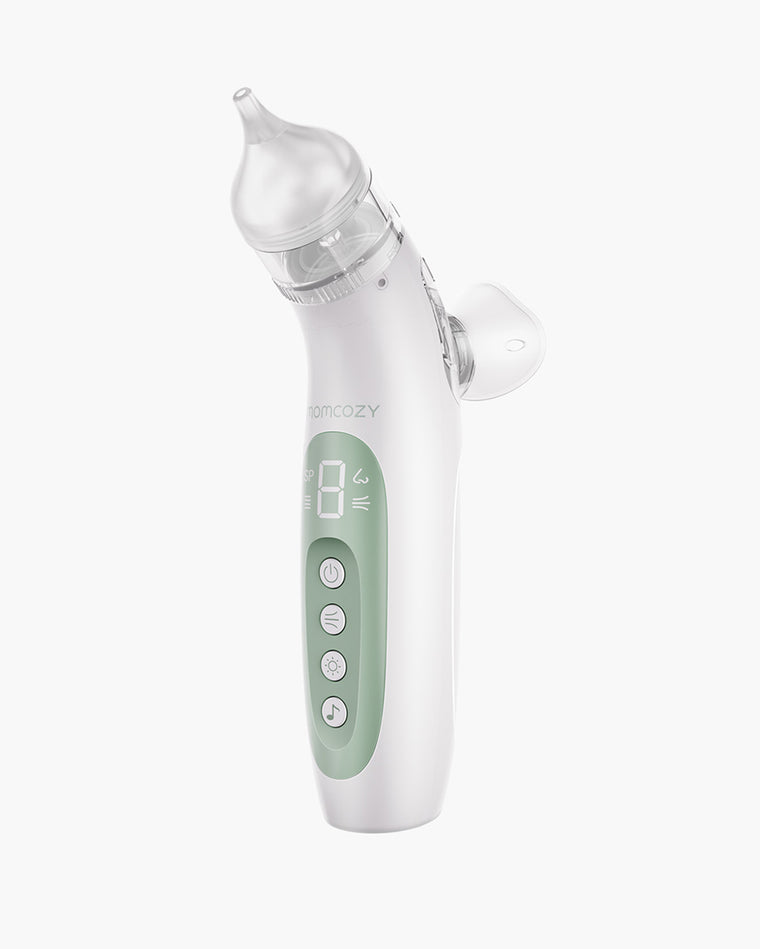
After you've determined that suction might be helpful, the next question is if the aspirator itself is right for your baby. For the Momcozy BreezyClear™ 2-in-1 nasal aspirator, the present product guidance states that children under 2 should adhere to the product manual's age guidance and that caregivers are advised to consult a pediatrician prior to use.

If its use is indicated, use the manual and start at the lowest effective suction level. Hold the tip shallow at the entrance of the nostril instead of attempting to go deeper inside the nose. And in case you are curious how frequently suctioning is considered appropriate, that's another choice detailed in the guide on when and how often to use a nasal aspirator.
Never use the device on a sleeping or unattended child
All of that is assuming your baby is awake and you’re there with them. Do not use nasal suction with a sleeping infant, or leave it on while you are away.
So even during an overnight wake-up, check the situation first. If your baby is awake and there is mucus that can actually be cleared, suction may have a place. If there is no removable mucus, you don't need to turn a congested sound into another suction attempt.
What If Suction Gets Little or Nothing Out?
Your attempted saline suction was ineffective. Your baby continues to sound congested, so the urge to repeat the process can be strong. Instead, stop and think about whether you need to use more suction.
Do not chase the sound with more suction
Don’t increase suction, insert the tip farther into the nose, or keep sucking just to stop the sound. Trying to do so might irritate your baby’s nostrils, and it won’t make the noise any different.
If this is something that happens every night, then you may want to think about when and how often to use a nasal aspirator, rather than just reaching for it over and over again.
Reassess the baby, not just the aspirator
Set the device aside and check the things that matter more: Is your baby breathing comfortably? Feeding normally? Is there anything visible in the nose?
The volume an aspirator collects isn’t always the best indicator. If your baby sounds congested but no mucus, go easy instead. Your baby’s pediatrician should be called if the baby is having difficulty breathing or eating.
How Can Nighttime Congestion Affect Feeding?
A baby stuffy nose at night is more difficult to feed, especially since he has to breathe and eat at the same time. Babies breathe predominantly through their noses when they nurse or bottle feed, and therefore a blocked nose can make it difficult to breathe and feed simultaneously. You may find your baby detaching more frequently, taking more time to finish, or getting frustrated while feeding.
Why a stuffy nose can interrupt feeding
Even a slight stuffy nose can make feeding harder. Your baby might pause to breathe, particularly if their nose is blocked. This doesn’t necessarily mean there’s a problem. If they’re feeding comfortably and taking about their usual amount, they may just need a bit more time.
When mucus is obviously interfering, clearing it before the feed can be more effective than waiting until your baby is already upset. Suctioning the infant’s nose is only recommended if there is mucus to be removed, and the suctioning device is suitable for the infant’s age and condition. For technique, see the guide on how to suction a baby's stuffy nose.
When feeding changes the urgency
Pay close attention if your baby suddenly eats much less than usual. Look for signs of fatigue, difficulty breathing during feeds, or repeatedly pulling away from the breast or bottle.
Mild nasal stuffiness is often manageable at home. But if feeding becomes difficult, contact a pediatrician rather than relying on more suctioning.
What If Congestion Keeps Waking Your Newborn?
When infant nighttime congestion is waking your baby repeatedly, it’s easy to get caught up in a rut and not question whether the same response is still necessary.
Reassess at each wake-up instead of repeating the same intervention
A simple way to handle waking up in the middle of the night is:
Breathing → feeding → visible mucus → moisture → suction only if appropriate.
First, focus on your baby's well-being, not just how congested they sound. If they are breathing and feeding comfortably, you may not need to clear anything. Visible mucus may call for appropriate nasal care, while dry or sticky mucus may need moisture before suction is useful. Keeping track of how often you are suctioning can also help; the guide to when and how often to use a nasal aspirator can help you reassess repeated nighttime use.
A congested baby still needs the usual safe-sleep setup. Avoid using a car seat, swing, rocker, wedge, pillow, towel, or mattress elevation as a way to manage nighttime stuffiness.
Persistent nightly congestion deserves a broader review
One disrupted night can happen. A pattern that keeps returning is different.
When nighttime congestion continues to wake your baby or repeatedly gets in the way of feeding, tell your pediatrician what you've been noticing and how the pattern has changed. You do not need to wait for obvious distress before bringing a recurring nighttime problem up.
What Not to Do for Newborn Congestion at Night
At 3 a.m., stronger, faster, or more improvised solutions can sound tempting. They are not necessarily better.
Avoid unsafe sleep-position fixes
Congestion does not call for a different sleep position. Keep your newborn on their back on a firm, flat surface. Skip mattress elevation, pillows, towels, wedges, and intentional side or stomach placement. Swings, rockers, and car seats should not become overnight sleep spaces outside their intended use.
Avoid over-suctioning
The answer is not to keep working at the nose until every snuffle disappears. Avoid deeper insertion, stronger suction, or repeated attempts when there is little to clear.
Avoid unverified congestion remedies
Keep newborn care simple. Do not use over-the-counter cold or decongestant products unless a clinician specifically directs you to, and skip hot-steam hacks and essential oils as congestion fixes.
|
Do |
Don’t |
|
Check breathing and feeding first |
Don't judge congestion by sound alone |
|
Use appropriate moisture for dry or sticky mucus |
Don't use stronger suction because little came out |
|
Clear visible or loosened mucus when appropriate |
Don't keep suctioning to eliminate every snuffle |
|
Keep the usual safe-sleep setup |
Don't elevate, prop, or reposition your baby for congestion |
|
Follow product age and supervision guidance |
Don't suction a sleeping or unattended baby |
|
Seek medical advice when red flags appear |
Don't delay care because some mucus was removed |
The safest nighttime approach is usually the least complicated one: check your baby, address what you can actually see, and know when home care is no longer enough.
When Is Nighttime Congestion a Reason to Call the Pediatrician?
A stuffy-sounding nose does not automatically mean an emergency. What matters is what comes with the congestion. In a newborn or young infant, changes in breathing, feeding, alertness, or color are reasons to seek prompt medical attention.

Breathing red flags
Get urgent medical help when your baby is working harder to breathe, with signs such as:
- Skin pulling in around the ribs or neck
- Marked nostril flaring
- Grunting
- Breathing much faster than usual
- Blue or gray coloring around the lips or face
Severe breathing trouble, including struggling for each breath, needs emergency care. Stop trying to manage the congestion with nasal care at home.
Feeding and hydration red flags
A congested baby may pause more often or take longer to feed. The concern is a clear change from normal, such as:
- Taking much less than usual
- Unable to feed comfortably because of breathing difficulty
- Becoming unusually sleepy or difficult to wake
- Showing signs of dehydration
A meaningful drop in feeding needs medical advice rather than repeated suction attempts.
Persistent or worsening nighttime symptoms
Congestion that keeps returning and repeatedly disrupts feeding or sleep is worth discussing with your pediatrician, especially when the pattern is getting worse. For babies 3 months old or younger, a rectal temperature of 100.4°F (38°C) or higher is a reason to call the pediatrician immediately.
Once any of these red flags appear, skip further nasal care and seek medical help.
Frequently Asked Questions
Why is my newborn congested only at night?
You may notice your infant stuffy at night more than during the day. Tiny nasal passages, dry air, being laid down, and a quiet room can all make snuffling sound louder. Nighttime timing alone does not tell you the cause.
Why does my baby sound more congested when lying down?
Lying down can make existing mucus or nasal swelling easier to hear. A louder sound does not automatically mean there is more mucus to clear or that your baby needs suction.
Can dry air make newborn congestion worse at night?
Yes. Dry air can irritate the nose and make mucus feel thicker or stickier. A clean, properly maintained cool-mist humidifier can add moisture when the room feels dry.
Should I use saline before bedtime?
Plain saline can help loosen dry or sticky mucus before nasal clearing. Follow the product directions and use it when needed rather than making it an automatic bedtime step.
Should I suction my newborn every night?
Not necessarily. There is no universal nightly suction routine. Suction is most useful when removable mucus is present, and the method is appropriate for your baby's age and situation. Checking when and how often to use a nasal aspirator can also help you decide when another round of suction is actually needed.
Can I use a nasal aspirator while my baby is sleeping?
No. BreezyClear guidance specifies use while the child is awake and directly supervised. Never use a nasal aspirator on a sleeping or unattended baby.
What if the aspirator gets no mucus out?
Pause instead of using more suction or pushing the tip deeper. Check whether mucus is actually visible and how your baby is breathing and feeding. When your baby sounds congested but no mucus, there may be little for the aspirator to remove.
Why does congestion get worse during nighttime feeds?
Babies rely heavily on nasal breathing while nursing or bottle-feeding, so a blocked nose can mean more pauses, pulling away, or frustration. When visible mucus is getting in the way, clearing it before a feed may make more sense. For technique, see how to suction a baby's nose.
How long should nighttime congestion last before I call the pediatrician?
There is no one number of days that fits every newborn. Seek advice sooner when symptoms are worsening, feeding is being affected, or breathing, color, alertness, or hydration change. Repeated nighttime disruption is also worth discussing.
Can I elevate my newborn's mattress when congested?
No. Congestion is not a reason to raise the mattress or add pillows, towels, or wedges. Keep your baby's usual firm, flat, back-sleep setup.
Conclusion
When your newborn sounds more congested at night, start with the baby—not the noise.
Check breathing and feeding first, then take a look at the nose. A stuffy sound does not always mean there is mucus to remove. Dry or sticky mucus may need moisture first, while visible or loosened mucus may be cleared when suction is appropriate for your baby's age and situation. For those moments, you can follow the how to suction a baby's nose steps while your baby is awake and directly supervised.
Keep the usual safe-sleep setup, too. And when breathing or feeding becomes difficult, symptoms keep getting worse, or another warning sign appears, it's time to stop home care and check in with your pediatrician.