Newborn sounds congested after feeding? Your newborn was quiet and clear before the feed. Then, somewhere mid-nursing or mid-bottle, the snorting starts. Wet, rattly, a little gurgly, like your baby has a cold. Now you're staring at that tiny nose wondering what's going on in there.
Here's the thing. The sound doesn't always mean a nose full of mucus. Newborn nasal passages are really small, so it doesn't take much to make a noise. A tiny bit of mucus, some saliva, or a little milk sitting higher up in the airway can all do it.
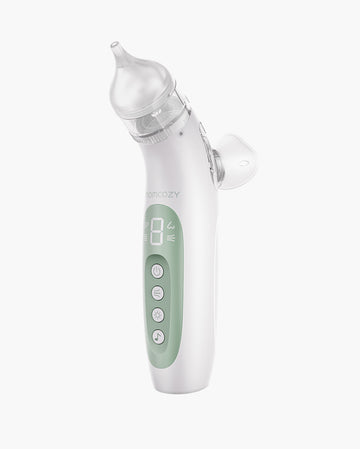
Don’t grab anything yet. Watch how your baby is breathing and feeding first, then peek at their nose. Is mucus present? If so, a gentle tool like a Momcozy baby nasal aspirator can help with nasal care. If the nose looks clear, suction isn't the answer, and it can irritate those delicate little passages.
Key Takeaways
- A little mucus, saliva, or milk in a newborn’s tiny airways can make a noisy, snorty sound. It doesn’t automatically mean the nose is blocked.
- Spit-up and reflux can add to the wet, gurgly sounds newborns make.
- Try to work out where the noise comes from. It may be the throat rather than the nose.
- Nasal care may help when you can see mucus. No mucus means a nasal aspirator won’t probably help.
- If the noise sticks around or gets worse, mention it to your pediatrician, even if your baby seems fine otherwise.
- Call your pediatrician if feeding gets hard or your baby can’t breathe comfortably.
- A high-pitched, squeaky breathing sound is not a sign of ordinary congestion. A pale, gray, or bluish tint, or visible effort to breathe aren’t either. Get medical help right away.
Why Can a Newborn Sound Congested After Feeding?

Feeding is a lot for a tiny airway to handle. There will be sucking, swallowing, and breathing all in a quick little rhythm. Milk and saliva will be moving through this tiny airway. That may make loud sounds that may make your newborn sound congested.
Tiny Airways, Saliva, and Milk Can Change the Sound
Your newborn’s nostrils are really narrow, so one dried or sticky bit of mucus can be enough to set off a snort. Feeding makes it easier to hear. Your baby is swallowing over and over and pulling more air through their nose with every suck.
Saliva plays a part too. Babies make extra saliva while they eat, and they’re still figuring out how to breathe and swallow in the right rhythm. You might hear a wet, gurgly sound if a little saliva or milk is sitting at the back of the baby's nose or up high in the throat. The nostrils can be totally clear while that’s going on.
Here’s something you might notice. After a burp, a little time upright, or a short rest, the sound fades. If that happens with your baby, the feed itself is probably the reason, and mucus is a less likely one.
Reflux or Spit-Up
Reflux and spit-up may cause breathing that sounds wet and stuffy. Some of that milk can sit in the back of your baby’s throat or near the nose, so it sounds like a blocked nose even though nothing is stuck. You can help your baby by holding them upright for a few minutes after a feed.
Spit-up is normal for newborns. Thus, this alone isn’t something to worry about. But tell your pediatrician if your baby spits up a lot or is fussy after feeds, since reflux can look different from one baby to the next. And if your baby is working hard to breathe or looks pale or blue, get medical help right away.
Is the Sound Coming From the Nose or Somewhere Else?
Is the sound coming from your baby’s nose? Here's a quick way to sort out what you're seeing and hearing. It's not a diagnosis, just a way to decide what to do next.
|
What you hear or see |
What it may suggest |
What to do next |
|
Snuffly, stuffy nose sound, and you can see mucus at the nostril |
Mucus in the nose may be the culprit |
Gentle nasal care may help (more in the nasal care section below) |
|
Snuffly sound, no visible mucus, and your baby seems comfy |
Could be normal newborn noise |
Watch and wait. If it keeps up, check out this guide on baby sounds congested but no mucus |
|
Wet or gurgly sound after a feed |
May be saliva, milk, or secretions sitting higher up in the airway |
Try a calm upright hold. Don't assume nose suction will help |
|
High-pitched, squeaky, or noisy breathing that sticks around |
May be coming from somewhere other than the nose |
Call your pediatrician |
|
Skin pulling in around the ribs or chest, its color changes, or difficulty in breathing |
Can be a sign of a real breathing problem |
Get medical help right away |
A few things to keep in mind. Confirming if there’s mucus is important. If you can't see any, repeated suction usually isn't the answer, and it can irritate a tiny nose. And if something about the sound just seems off to you, that's a good enough reason to call.
What Does Spit-Up or Reflux Have to Do With Congestion-Like Sounds?
Does your baby sound stuffy after feeds, and also spit up, arch, or squirm like something’s bothering them? Wondering about reflux makes sense. It’s just not the full story.
Reflux Can Play a Part, but It’s Rarely the Only Reason
Some babies who spit up a lot also sound congested. Breathing then sounds wet, rattly, or snuffly for a while after the feed. That’s due to the moisture in the throat or near the back of the nose that milk that comes back up can leave. A few babies get some nose irritation from it too.
Still, lots of babies with no reflux concerns sound just as congested after eating. Small airways, extra saliva, and ordinary newborn noise can do it without any help. So a stuffy sound doesn’t tell you reflux is the cause. It’s one possible piece, and a pediatrician can help sort out the rest.
A Congested Sound Alone Can’t Diagnose GERD
After a noisy feed, reflux is an easy thing to blame, and it may well be part of what’s going on. But a stuffy sound can’t tell you whether your baby has GERD, “silent reflux,” or has breathed milk into the airway (called aspiration). Only a pediatrician can sort that out, and they’ll look at the whole picture: how feeds are going, how your baby is growing, whether they seem comfortable, and how they breathe.
Call your pediatrician if you notice:
- Ongoing discomfort during feeds
- Poor intake
- Slow weight gain
- Coughing or choking
- Any trouble breathing
We encourage you to get medical help right away if your baby is struggling to breathe or looks blue or gray. Any one of these is worth a professional look. Questions about reflux treatment, formula changes, or medication belong with your baby’s doctor, not in an article like this one.
In the meantime, go back to what you can actually see. Is there mucus in the nose? Is your baby breathing and feeding okay?
When Is Nasal Care Actually Useful After a Feed?

Suction only helps with mucus that’s actually in the nose. If you can see it, or the nose sounds plainly blocked as your baby breathes, clearing it can make a real difference. But if the nostrils look clean and the sound is wetter and rattlier, like it’s coming from further back in the throat, another round of suction probably won’t change anything.
Use Nasal Care for Nasal Mucus
Start with your baby, not the nose. Is the feed going fine? Is breathing easy and calm? If so, check the nostrils. If you can see mucus, gentle clearing may help.
Here's a quick way to tell where nasal care fits:
|
What you see |
Does nasal care fit? |
|
Soft, loose mucus you can see |
Yes, gentle clearing may help |
|
Dry or sticky mucus |
Maybe. Soften it with moisture first, then take another look. Here's more on hard or dry baby boogers |
|
Nose looks clear, sound is wet or gurgly |
No, suction is unlikely to help |
|
Nose looks clear, sound is throat-like or high-pitched |
No, and it's worth mentioning to your pediatrician if it persists |
Skip the Aspirator When There’s No Mucus to Clear
Some moms immediately grab the aspirator when they hear a gurgly sound. But if there's nothing to remove, suction won't fix it, and it can irritate those delicate nasal passages. Please don't build a "suction after every feed" routine, either. Doing less can be the right call here. If the nose looks clear and you're still wondering what's up, this guide to congestion without mucus can help.
Should You Use a Nasal Aspirator When Baby Sounds Congested After Feeding?
Only when there's mucus you can actually remove, and only if the product's age guidance says it's okay for your baby. A post-feed sound on its own isn't enough reason to reach for it.
Here's a simple way to think it through:
- Check for mucus first. Can you see it at the nostril? If not, stop here.
- Soften dry or sticky mucus. Plain saline or a model-specific mist, used as directed, can help.
- Keep it shallow and gentle. Short, brief suction, with the tip only at the opening of the nostril.
- Stop if little or nothing comes out.
Suction Only When Mucus is Present
See mucus? Gentle clearing can make breathing easier for your baby. Don’t see any? Hold off. Read our guide on how to suction a baby’s nose if you need help with the step-by-step and positioning. Not sure how often is too often? When and how often to use a nasal aspirator covers it in more detail.
Newborn Use Requires Age and Product Guidance
Age guidance differs from one aspirator to the next, and newborns, along with all children under 2, need extra care. Read the current manual and ask your pediatrician before you use any aspirator on a very young baby.
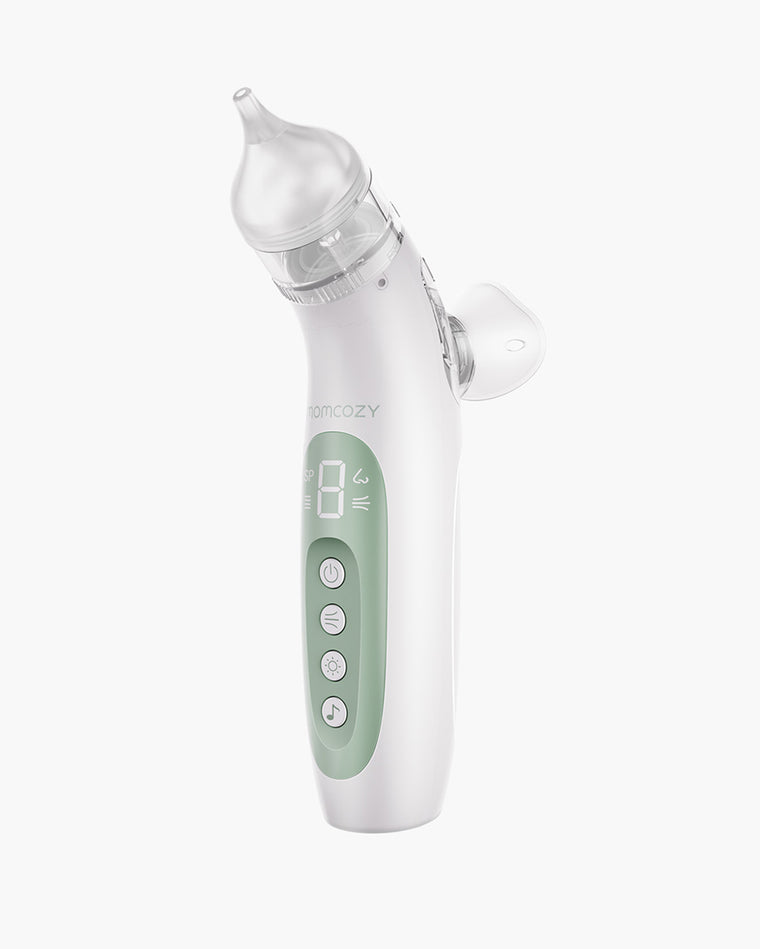
If your baby has real, visible nasal mucus and you’d like to see one option, the BreezyClear™ 2-in-1 nasal aspirator combines a mist with suction. Its purpose is to remove nasal mucus. It won’t help with reflux, feeding trouble, or noisy breathing that starts in the throat.
What If the Nose Looks Clear but the Baby Still Sounds Congested?
You looked. You may even have tried suction. And the sound is still there. This is where it helps to stop and rethink.
"Nothing came out" is Useful Information
If the nose looks clear and suction brings out little or nothing, that's a clue. Hidden nasal mucus might not be the source of the sound. It could be normal newborn airway noise, saliva, reflux-related context, or something else in the upper airway. For more on that, see baby sounds congested but no mucus.
When the next step is observation or pediatric review, not more suction
A quick checklist:
- Don't turn up the suction just because the sound hasn't gone away.
- Don't go deeper with the tip. Shallow is the rule.
- Watch your baby's breathing. Is it easy and calm, or does it look like work?
- Watch feeding. Is your baby latching, eating, and settling?
- Notice overall behavior. Alert and content is a good sign.
- Record a short video or audio clip if the sound is persistent or unusual. Your pediatrician can learn a lot from hearing it.
If things look comfortable, observing may be enough. If they don't, or the sound keeps going, the next stop is your pediatrician, not another round of suction.
What If the Sound Happens During Feeding, Not Just After?
Some babies get snorty or rattly right in the middle of nursing or a bottle. That can still be harmless. It does mean the feed itself is worth watching.
Focus on Feeding Function, Not the Sound Alone
A noisy baby can be a healthy feeder. Here’s what usually looks fine:
- Your baby stays latched or keeps a good hold on the bottle.
- They keep swallowing.
- They look relaxed between sucks.
That said, don’t always assume the noise your baby makes is caused by nasal mucus. Check their nose and breathing first. If your baby can eat and breathe comfortably, your baby’s okay.
Coughing, Choking, or Breathing Difficulty Changes the Decision
Other signs shift the question from “what’s that sound?” to “is my baby okay?”:
- Pulling off again and again
- Coughing or choking
- Working hard to breathe
- A change in color
Call your pediatrician if you see these. If your baby is struggling to breathe or looks blue or gray, get medical help right away.
If noisy breathing keeps showing up during feeds, bring it up at your next call or visit. Your pediatrician may also send you to a feeding or lactation professional. A feed that looks hard on your baby is worth a real conversation.
What Can You Do After a Feed If Baby Sounds Stuffy but Is Breathing Comfortably?
Suppose your baby is feeding well and breathing easily. There is no need to be alarmed by a little noise. Instead, watch your baby to know what you need to do. Take a minute to look before you reach for the aspirator, then use this as a guide:
|
What you see |
What to do |
|
Baby is calm and the sound is already fading |
Wait. It often passes on its own. |
|
Baby seems unsettled |
Keep things calm. Many babies settle once they relax. |
|
Nose looks dry or crusty |
A little nasal moisture can help. |
|
Mucus is visible in the nostril |
Clear it gently, following the age guidance that comes with your product. |
|
Nose looks clean |
Skip it. There’s nothing to clear. |
Separate Awake Post-feed Care from Sleep Positioning

If you already hold your baby upright for a while after feeds, you can keep doing that while they’re awake. Sleep follows its own rules. Follow safe-sleep practices when it’s time for your baby to go to bed. Don’t use pillows, wedges, or any kind of elevation to try to ease the congestion.
If you have questions about the best sleep position for a baby with a stuffy nose, your pediatrician can advise you. If the sound keeps happening after feeds or gets louder, go to the section below on when to call the pediatrician.
When Should You Call the Pediatrician About Congestion After Feeding?
Most post-feed noise is just newborn noise. But some things shouldn't wait, and you don't need to second-guess calling. Here's what to look for.
Breathing red flags
- Working hard to breathe, with skin pulling in around the ribs or chest
- Nostrils flaring with each breath
- Blue or dusky color around the lips or face
- Persistent high-pitched or squeaky noisy breathing
If your baby looks like they're struggling to breathe or has a bluish tint, get emergency help right away.
Feeding red flags
- Repeated coughing or choking during feeds
- Not being able to feed comfortably
- Poor intake, or concerns about weight gain
Persistent symptoms that need evaluation
- Congestion-like sounds that stick around across feeds
- Sounds that are getting worse over time
- A fever in a young baby. Please call your pediatrician right away for a fever in a newborn
Even without any emergency signs, persistent or worsening symptoms deserve a check-in. You know your baby best, and if something feels wrong, that's reason enough to call.
Frequently Asked Questions
Here are a few other questions related to newborns sounding congested after feeding.
Why does my baby sound congested after breastfeeding?
Nursing means more saliva, lots of swallowing, and extra air moving through a very small airway. Afterward, a little mucus or milk can sound surprisingly loud. If your baby is feeding and breathing comfortably, you’re most likely hearing everyday newborn noise. If the sound keeps happening or your baby seems to have trouble feeding, tell your pediatrician.
Why does my baby sound congested after a bottle?
The causes overlap with breastfeeding. Saliva and swallowing during a bottle can make a little mucus or milk in the upper airway easier to hear. Look for visible mucus before you assume the nose is the source. If your baby coughs, chokes, or struggles during bottle feeds, talk with your pediatrician.
Can reflux make a baby sound congested after feeding?
In some babies it can add to the sound. A congested sound by itself can’t confirm reflux, though. If you also notice a lot of spit-up, discomfort, or trouble feeding, ask your pediatrician.
Can milk get into a baby's nose and make them sound congested?
Milk or spit-up that moves higher up can sit near the back of the nose or throat and make breathing sound wet. It's common, though ongoing choking or coughing deserves a pediatrician's attention.
Should I suction my baby's nose after feeding?
Only if you can see mucus and your product's age guidance allows it. A post-feed sound alone isn't a reason. Check the aspirator's manual and your pediatrician's advice, and here's how often to use a nasal aspirator.
What if the aspirator gets no mucus out?
That's helpful information. It means the sound probably isn't from nasal mucus, so stop suctioning and look at what else may be going on.
Why does my baby sound wet or rattly after eating?
It's often saliva, milk, or secretions higher in the airway, not a blocked nose. A burp or a few calm minutes upright can help. If it lingers, check in with your pediatrician.
When is noisy breathing during feeding not normal?
When it comes with coughing, choking, repeated pulling off, color change, or visible effort to breathe. Those need a pediatrician's attention.
Can I lay my baby down if they sound congested after feeding?
Once your baby is calm and breathing comfortably, sleep should still follow safe-sleep guidance: flat on their back on a firm sleep surface, with no wedges or elevation. If you have questions about positioning, ask your pediatrician.
Should I call the pediatrician if this happens after every feed?
It's worth mentioning, especially if it's persistent, getting worse, or comes with feeding or breathing trouble. They can listen to your baby and rule out anything beyond normal newborn noise.
Conclusion
Next time your baby sounds congested after a feed, here's the simple version. First, ask whether the sound is really coming from the nose and whether you can see mucus. If your baby is breathing and feeding comfortably, watching and waiting may be all you need.
Nasal moisture or gentle suction is for an actual nasal-mucus problem, not for every noise, and suction doesn't need to be part of every feed. If breathing or feeding gets harder, those signs matter more than any home-care step, so call your pediatrician.
And if you do spot mucus and want to learn the right technique, here's how to suction a baby's nose.