Key Takeaways
-
• Most babies switch to one nap between 12–18 months.
-
• Signs of readiness include nap refusal and shortened naps.
-
• Wake windows stretch to 4.5–6 hours during transition.
-
• The transition can take 2–6 weeks.
-
• Overtiredness is the biggest challenge during this phase.
-
• Consistent routines and a supportive sleep environment make a major difference.
Introduction
Few milestones feel as confusing—and disruptive—as the nap transition. One day your baby is happily taking two naps. The next, one nap is refused, bedtime becomes chaotic, and you’re left wondering: when do babies switch to one nap?
The shift from two naps to one is a major developmental transition. Done too early, it can cause overtiredness and night wakings. Done too late, it can result in nap battles and split nights.
This in-depth guide explains when the transition typically happens, how to recognize readiness with the help of baby monitors, how to adjust wake windows using the baby swings, how long the process takes, and how to make the switch as smooth as possible.
When Do Babies Switch to One Nap?
Most babies transition from two naps to one between:
12 and 18 months
The average age is around 14–15 months, but developmental readiness matters more than the calendar. Some toddlers are genuinely ready at 13 months, while others continue to need two naps until 17 or even 18 months.
This transition happens because of normal neurological and sleep maturation. As toddlers grow:
-
Wake windows lengthen — Instead of comfortably staying awake for 3–3.5 hours, they can handle 4–5+ hours before becoming overtired.
-
Sleep pressure builds more slowly — The body no longer accumulates enough sleep pressure by mid-morning to require a full nap.
-
Morning naps begin interfering with afternoon sleep — A solid morning nap can “steal” sleep pressure from the second nap, leading to refusal or short afternoon naps.
-
Total daytime sleep consolidates — Rather than splitting 2–3 hours of daytime sleep into two chunks, toddlers gradually consolidate it into one longer midday nap.
Is 11–12 Months Too Early?
Some babies show signs of nap resistance around 11–12 months. However, this often coincides with:
- First steps
- Language bursts
- Separation anxiety
- Increased mobility
- The 12-month sleep regression
If your 12-month-old becomes overtired, melts down by late afternoon, or wakes frequently overnight on one nap, they likely still need two naps.
How Much Sleep Do Babies Need at This Stage?
Between 12–18 months, toddlers typically need:
- 11–14 hours of total sleep in 24 hours
- 2–3 hours of daytime sleep
- 10–12 hours of overnight sleep
While some toddlers fall at the lower end of this range and others at the higher end, most do best when total sleep remains relatively stable—even during the transition.
What Changes During the Transition?
When shifting from two naps to one:
- Total daytime sleep may temporarily drop to 1.5–2 hours.
- Bedtime may need to move earlier.
- Night sleep may initially shorten or become fragmented.
This is usually temporary as the body adjusts to longer wake windows.
Is 12 Months Too Early to Drop to One Nap?
For many babies, yes.
Around 12 months, a temporary “nap regression” often occurs due to:
- Developmental leaps
- Increased mobility (walking)
- Separation anxiety
- Teething
A baby may refuse a nap for a week or two—but still biologically need two naps.
If your baby:
- Becomes overtired on one nap
- Wakes early the next morning
- Has meltdowns by late afternoon
Many sleep experts recommend waiting until closer to 14–16 months if possible.
Signs My Baby Is Ready to Drop to One Nap
True readiness often includes:
- Consistent refusal of one nap for 1–2 weeks
- Taking a very long morning nap (1.5–2 hours) and refusing the second
- Shortened second nap
- Longer comfortable wake windows (4+ hours)
- Bedtime resistance when both naps are taken
- Split nights or early morning waking
The key word is consistent. A few difficult days do not equal readiness.
Signs My Baby Isn’t Ready to Drop to One Nap
If your baby:
- Falls asleep easily for both naps
- Becomes extremely fussy by late afternoon
- Wakes overnight when on one nap
- Wakes very early in the morning
- Takes only a short midday nap
—they likely still need two naps.
Overtiredness during this stage can lead to:
When in doubt, hold onto two naps a little longer.
Which Nap Gets Dropped During the 2-to-1 Nap Transition?
During the 2-to-1 nap transition, it is almost always the morning nap that gradually shifts later and merges into a single midday nap. The goal is not to suddenly eliminate a nap, but to slowly consolidate daytime sleep into one longer, restorative nap that typically occurs around midday.
Why the Morning Nap Shifts (Instead of Dropping the Afternoon Nap First)
By 12–18 months:
- Sleep pressure builds more slowly in the morning.
- Toddlers can tolerate longer awake periods after waking for the day.
- A solid morning nap can reduce the need (or ability) to nap well in the afternoon.
- The body’s natural circadian rhythm supports one longer nap around midday.
If you drop the afternoon nap first while keeping an early morning nap, you may end up with:
- An extremely long wake window before bedtime
- Overtired meltdowns
- Early bedtime struggles
- Increased night wakings
That’s why most sleep specialists recommend shifting the morning nap later until it becomes the single midday nap.
What Are the Wake Windows During the 2-to-1 Nap Transition?
Before transition (two naps):
- 3–3.5 hours before first nap
- 3–4 hours before second nap
- 3–4 hours before bedtime
During transition:
- 4–5 hours before nap
- 4.5–6 hours before bedtime
After fully transitioned:
- 5–6 hours before nap
- 5–6 hours before bedtime
These extended wake windows are why overtiredness becomes a major risk.
How Long Does It Take to Transition From Two Naps to One?
Most transitions take: 2 to 6 weeks
Some toddlers adjust quickly. Others alternate between one and two naps for several weeks. Temporary setbacks are normal. Common patterns include:
- One nap some days, two naps other days
- Early bedtime on one-nap days
- Shorter midday naps initially
Flexibility is essential during this period.
How to Transition to One Nap Smoothly?
1. Gradually Push the Morning Nap Later
Move nap start time by 15 minutes every 3–4 days.
2. Protect Night Sleep
If nap is short, offer an earlier bedtime. Early bedtimes prevent overtired cycles.
3. Avoid Abrupt Drops
Dropping to one nap too suddenly often leads to overtired meltdowns.
4. Create a Strong Pre-Nap Routine
A short, consistent wind-down helps signal sleep:
- Diaper change
- Sleep sack
- Short book
- White noise
- Into crib awake
5. Use Calm Transitional Tools
Before napping, calming overstimulation helps.
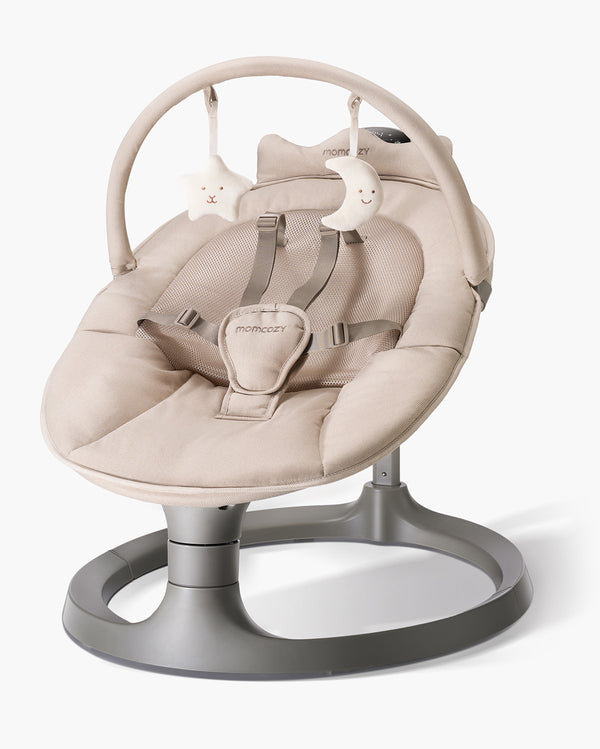
The Momcozy CocoSway 3D-Motion Electric Baby Swing from the Best Baby Swing Collection offers:
- Multiple natural sway motions
- Adjustable speed levels
- Bluetooth music capability
- Soft breathable materials
- Secure 5-point harness
- Lightweight portable design
Used for supervised calming before nap (not for sleeping), it can help regulate overstimulation during long wake windows.
Patented 3D Swing Tech
6 swing motions
180° rotatable seat
5-point harness
Soporte de doble brazo
Movimientos de balanceo inspirados en los padres
Asiento cómodo
Funciona como asiento fijo
What Is the Ideal One-Nap Schedule?
Sample schedule for a 15-month-old:
- 7:00 AM – Wake
- 12:00–2:00 PM – Nap
- 7:00 PM – Bedtime
Key points:
- Nap should begin between 11:30 AM–1:00 PM
- Aim for 1.5–3 hours of nap
- Bedtime may need to be earlier initially
Monitoring During the Transition
During nap changes, observing sleep patterns is helpful.
The Momcozy 5-Inch HD Baby Monitor from the Best Baby Monitors Collection includes:
- Large 5-inch HD display
- Clear night vision
- Two-way talk function
- Temperature monitoring
- Long-range coverage
- Secure encrypted connection
- Expandable multi-camera capability
This allows you to monitor nap length and resettling attempts without interrupting sleep unnecessarily.
What If I’m Not Ready for My Baby to Nap Transition?
Transitions affect parents too.
If daycare, work schedules, or routines make you hesitant:
- Delay transition if baby isn’t clearly ready
- Use a “bridge nap” (short second nap) temporarily
- Offer earlier bedtime
- Maintain consistency on weekends
Remember: This milestone cannot be rushed—but it also cannot be permanently postponed once your baby is biologically ready.
Final Thoughts
So, when do babies switch to one nap? Most toddlers transition between 12 and 18 months—but readiness matters more than age. Watch for consistent signs, protect against overtiredness, adjust wake windows gradually, and maintain strong sleep routines.
With patience, flexibility, and supportive sleep tools, the 2-to-1 nap transition becomes less chaotic and more manageable. Sleep transitions are signs of growth—and with the right approach, they lead to longer, consolidated daytime rest and smoother nights ahead.