


MEDICALLY REVIEWED BY

Shelly Umstot, BSN, RN
Shelly Umstot, titulaire d’un BSN (Baccalauréat en sciences infirmières), est infirmière autorisée depuis plus de 35 ans. Installée dans le nord-est de l'Ohio, elle travaille désormais comme rédactrice web spécialisée dans les contenus de santé. Sa passion consiste à apporter des réponses claires aux personnes ayant des préoccupations médicales et à les aider à atteindre, puis à préserver, une santé optimale. Elle chérit les moments passés en famille, notamment avec ses deux petites-filles qui font son bonheur. En tant que professionnelle, mère et grand-mère, elle trouve particulièrement gratifiant d'aider les nouveaux parents à trouver les informations nécessaires pour aborder avec sérénité les joies et les défis liés à l'éducation de leurs enfants. Remarque : le texte original (en anglais) a été révisé par des experts ; le présent texte est une traduction en français de cette version.
Cleaning the nasal aspirator is not a single routine for all nasal aspirators. In a bulb syringe, water is trapped within a closed chamber, while in a mouth-suction type, the filter is disposable, and the body is powered and must remain dry, with parts that contact the mucus being washed away. When comparing baby nasal aspirators, you'll want to find a model whose components can be washed, rinsed, checked and dried the way the manufacturer suggests. This guide covers the cleaning routine by aspirator type, then when extra sanitizing actually applies and when it's time to replace a part or the device itself.
Key Takeaways
- Clean a nasal aspirator after every use: wash only the manufacturer-approved removable parts, rinse thoroughly, and let everything air-dry fully before reassembly.
- Electric, mouth-suction, and bulb aspirators each need a different routine, since motors, filters, enclosed cavities, and removable chambers handle moisture differently.
- Bulb syringes need repeated flushing and careful draining, since the enclosed interior is harder to inspect and can hold moisture longer than open designs.
- Sanitizing isn't an automatic extra step; boiling, microwave, dishwasher, sterilizer, or chemical methods should only be used if your product's own instructions allow them.
- Persistent odor, residue, cracks, mold-like spots, damaged seals, or worn parts (or a device you can't fully dry or inspect) are signs to replace it.
- This guide covers equipment hygiene. It doesn't set suction frequency or replace your pediatrician's advice if your baby has breathing or illness concerns.

Cleaning, Sanitizing, and "Sterilizing" Are Different Decisions
Routine cleaning removes visible mucus and residue after use. Sanitizing or sterilizing is a separate, extra step that's only appropriate when your product's own instructions support it. Brands don't agree here: some publish approved disinfection methods for their own parts, while others limit or prohibit heat exposure for certain components. The best way is to take the term and all the steps in the manual for your actual product, and not a general rule you saw somewhere else. Some parents report feeling as though they missed the sterilizing process; others just unpack it, wash it with hot water and soap and air dry it; and one parent with an electric unit even thought that repeated sterilizing had ruined her unit. It's a nice reminder that "extra" isn't always "better."
Before You Wash Anything, Identify What Can Get Wet
Before you clean anything, separate the parts that touch mucus from anything powered, battery-operated, or fitted with a valve, seal, tube, mouthpiece, or disposable filter. For how these designs differ, see baby nasal aspirator types and safety.
| Aspirator type | Typical cleaning challenge | Inspect first | Keep dry unless the manual allows |
|---|---|---|---|
| Bulb syringe | Water or mucus can sit inside an enclosed cavity | Opening, tip, interior visibility | N/A unless it has electronics |
| Manual / mouth-suction | Several pieces plus a tube, chamber, and filter | Tip, chamber, tube, mouthpiece, filter | Any valve or filter your manual marks as non-washable |
| Electric | Moisture can travel toward the motor or airflow path | Tip/nozzle, mucus cup, seals, connectors | Powered body, battery, and charging area |
| Spray + suction electric | More fluid-handling parts and seals | Spray/mist parts, suction cup, tips, seals | Powered body unless the manual says otherwise |
The 60-Second After-Use Routine: Clean Before Mucus Dries
The core routine stays the same at a high level: disassemble the approved removable parts, rinse away mucus promptly, wash or rinse as directed, shake off excess water, and leave everything open to air-dry fully before reassembly. Cleaning right after use matters, since dried mucus is much harder to remove from narrow tips and suction paths later. This section covers equipment care only; for the actual technique, see how to clear an infant's nose safely, and for softening mucus beforehand, see using saline drops before nasal suction.
How to Clean a Bulb Syringe When You Can't See Inside
Bulb syringes are the most challenging design to inspect because it is impossible to see what is occurring inside the cavity. Fill the bulb with warm, soapy water, squeeze or shake the water out, and rinse with fresh water until it is soap-free. With any type, drying is more important than with other types: drain tip-down and allow time for the interior to dry before putting away, and don't put together and seal when wet. Many parents report that opaque, hospital-type bulbs cause excessive anxiety to them because it is hard to determine whether moisture remains inside or not, and many prefer clear or openable bulbs because of this. Not all bulbs can be boiled, put in dishwashers, dunked in vinegar, or soaked in alcohol. Check the instructions for your product to make sure it is compatible before trying any of these methods.
How to Clean a Manual or Mouth-Suction Aspirator
Take apart the washable tip, mucus chamber, tube or mouthpiece, and any other approved removable pieces so you can reach the narrow passages, rather than rinsing the assembled unit as a whole. Treat the filter as its own category: many mouth-suction models use a disposable filter that has to be replaced, not washed or reused, once it's been in contact with mucus or after an illness has passed. Cleaning compatibility genuinely varies by brand, too. Some manufacturers permit dishwasher cleaning for select pieces, while others publish their own disinfection protocol for the same type of part. For how manual and electric designs compare beyond cleaning, see electric vs. manual nasal aspirators.

How to Clean an Electric Nasal Aspirator Without Damaging the Powered Body
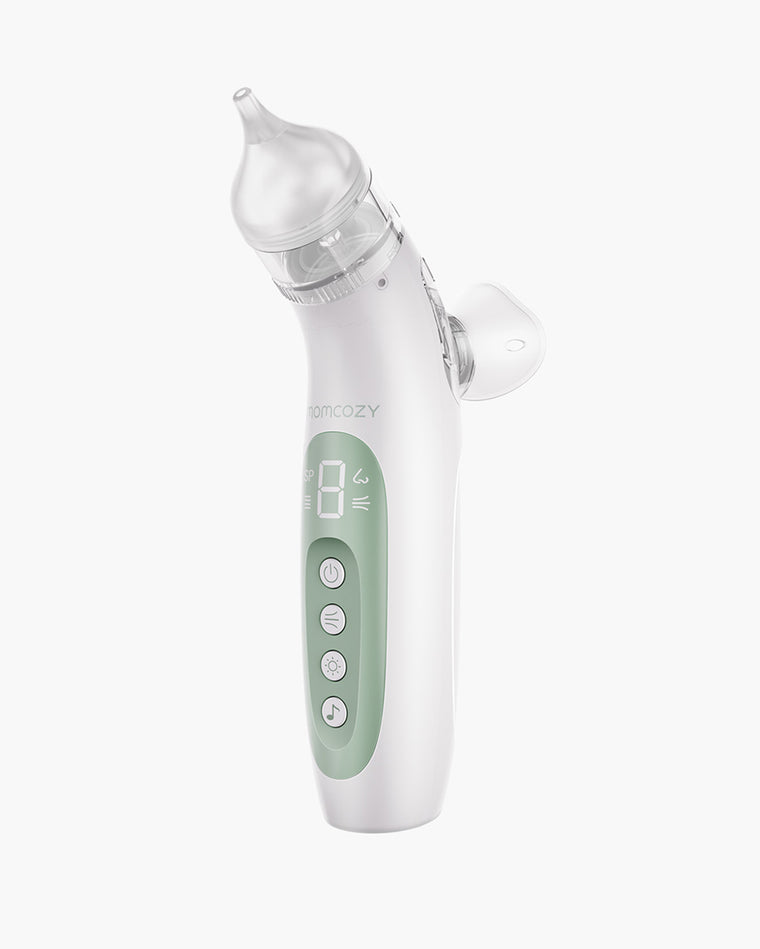
Remove the detachable nozzle or tip and any mucous collection components from the powered body before washing, and place the motor, battery and charging area away from water unless stated in the manual. Only wash or rinse parts that are approved to be in contact with water; parts should be completely dry before reassembly to prevent moisture from entering the airflow path or housing. Momcozy's BreezyClear™ 2-in-1 Spray & Suction Electric Nasal Aspirator is built around fewer parts and easy disassembly, worth considering if cleaning has felt like a chore with your current device; as with any electric model, confirm exactly which parts are washable against your unit's current instructions before using anything beyond a basic rinse. If you're deciding between suction strength settings rather than cleaning steps, that's covered in choosing a nasal aspirator suction level.
When Should You Sanitize or Sterilize a Nasal Aspirator?
Start with your product's manual, not a fixed schedule. Some manufacturers call for extra disinfection after an illness or as needed; others allow different heat or chemical methods depending on the materials used. It's a common assumption that baby products need to be sterilized every time, but heat or chemical sterilizing can actually damage plastics or electric components that weren't designed for it. There's also no universal sterilizing frequency for every baby - newborns, premature babies and those with compromised immune systems might require a different regimen, so consult with your child's GP if necessary rather than following a rule of thumb. If your query isn't how often, but how often you can suction, then this is answered in the section on how often a baby nasal aspirator can be used.
Drying Is Part of Cleaning: Prevent Trapped Moisture, Odor, and Mold
Just as much as washing, moisture is the reason behind odor and mold-like growth, and it's left behind. Dry off excess water, disassemble each part, make the most of air circulation, store bulb openings downwards if applicable, and only store parts when dry. Which soap to use isn't the most frequent complaint; it's the lack of confidence that there is moisture in an opaque or closed design. Certain cleaning routines are meant to ensure that a device will not get mold, but regular cleaning and drying will minimize the residue and moisture that can lead to mold and may not prevent it from occurring altogether.
When Cleaning Is Not Enough: Replace Parts or the Aspirator
If a part or the entire device has visible mold-like spots, cracks, tears, hardened rubber, damaged seals, an odor or residue that hasn't gone away, or a part that no longer cleans or dries completely, it's time to replace it. For manual models, that includes disposable filters and any parts the manufacturer specifies. For electric models, ongoing leaks, damaged seals, an unusually noisy motor, or charging problems are a sign to contact product support rather than repair it yourself, and the same applies if cleaning itself seems to be what's causing weaker suction.
If Cleaning Is Always Difficult, Make Cleanability Part of the Next Purchase
When you end up with the same cleaning issue each time, the design is most likely the problem. Parents always mention that they appreciate clear/opened parts, easily disassembled parts, easy access to the mucus chamber, easy drying, and readily available replacement parts. Before you make the next purchase, you should be able to determine if you can see residue, if you can reach all the surface areas that have been in contact with the mucus, if you can distinguish powered parts from washable parts, if you can replace filters or seals when necessary, and if you can follow any instructions without guessing. Once you know which maintenance features matter most, you can browse Momcozy's baby nasal aspirator collection with that in mind.
FAQ
Can siblings share the same nasal aspirator if it's cleaned between uses?
Only if thoroughly disassembled, washed, rinsed and dry between children. If you are worried about getting sick, consult your child's doctor.
Can I use baby-bottle dish soap to clean nasal aspirator parts?
Generally yes for washable parts, but confirm against your product's manual, since some parts (like disposable filters) shouldn't be washed at all.
Is vinegar safe for cleaning a nasal aspirator?
Not universally. Vinegar can affect certain plastics and seals, so only use it if your manufacturer's instructions specifically allow it.
Can rubbing alcohol be used on nasal aspirator tips or collection cups?
Only if your product's instructions confirm it's compatible with that material. Alcohol can damage some plastics and isn't a universal solution.
Can I put nasal aspirator parts in a bottle washer or steam sterilizer?
Only for parts your manufacturer specifically lists as dishwasher- or sterilizer-safe. Powered components and some plastics shouldn't go through either.
What should I do if water accidentally gets into an electric aspirator body?
Stop using it, let it dry fully, and check your product's manual or contact support before powering it on again.
Should disposable nasal aspirator filters be washed or replaced?
Replaced. Disposable filters aren't designed to be washed or reused once they've contacted mucus.
Can cleaned aspirator parts go straight into a sealed storage case?
Only once every part is completely dry. Sealing damp parts is what creates the moisture that leads to odor or mold.
How should I keep nasal aspirator parts clean while traveling?
Pack them fully dry in a breathable pouch rather than a sealed bag, and clean them again as soon as you're able to.
Conclusion
The actual routine is easy: clean quickly, use the technique that is appropriate for your type of aspirator, dry everything thoroughly, and add sanitizing steps if your manufacturer states that they can be used. The claim that it is easy to clean is not intended to mean that each part can be boiled, dishwashed, sterilized or submerged, but rather that it is easy to disassemble, inspect, dry and reassemble. If you're comparing a replacement once you know which maintenance features matter most to your routine, Momcozy's baby nasal aspirator collection is a good place to start.
Disclaimer
The information and/or educational content in this article is intended solely for general informational and educational purposes and is not intended to be a substitute for the medical advice of your healthcare provider, nor should it be used for diagnosis or treatment of any health conditions. It is a summary of general advice and manufacturer recommendations for common basic hygiene for nasal aspirators and is not medical, pediatric or professional advice. It cannot replace individual advice and guidance from a trained health care professional, like your baby's doctor, on your baby's respiratory state, hygiene practices or any indication of infection, illness, or irritation.
All nasal aspirators (nose suckers), such as Momcozy's nasal aspirators, must be cleaned and thoroughly dried after every use to avoid the growth of mold, bacteria or other microorganisms in wet areas. This can result from improper cleaning, not drying the device thoroughly, using a disposable that is not completely sterile, using too much force when removing the device, or leaving the device wet during storage, and may cause contamination, nasal irritation, an increased risk of infection or lower efficacy of the device. Always fully disassemble (where applicable), use warm, soapy water, rinse thoroughly, air-dry completely (tip-down or on a clean surface until dry) and sanitize only as directed by the manufacturer. If your baby is at risk (under two months, premature or immunocompromised), use pediatrician-recommended guidelines and consider more frequent replacement.
Momcozy is a baby product retailer, selling such items as nasal aspirators and other baby hygiene products, but none of the products they sell removes all of the hygiene risks and guarantees mold-free performance when not properly maintained. Proper cleaning, drying, appropriate conditions for use by the individual, and careful following of the instructions, warnings, age restrictions and U.S. safety requirements (where applicable) of the product are critical to effectiveness, safety and suitability. Before use, cleaning, and sanitizing, read and follow the manufacturer's user manual in its entirety; replace if mold spots, cracks, discoloration, loss of suction, or serious illness is observed; and check certification from Momcozy or retailer.
Reading this article or using any information contained herein constitutes your agreement that you accept any risks involved in relying upon the information. Momcozy, its authors, affiliates or contributors shall not be held responsible for any injury, infection, exposure to mold, irritation of the nose, respiratory problems or other damages (direct or indirect) from using, misusing, improperly cleaning, storing or relying on the nasal aspirators, or any advice provided here.
Momcozy is not liable for any resulting actions based upon the use of this content. If you have any concerns regarding your baby's health, hygiene in the nose, signs of mold-related problems or anything related to the maintenance of the product, please contact a qualified healthcare provider promptly. When using baby equipment, never leave your child unattended.








