


Saline drops loosen mucus so an aspirator can gently clear it, easing feeding and sleep for newborns who breathe mostly through their noses.
Saline makes suction gentler and more effective
Newborn nasal passages are narrow, and mucus can be thick and sticky. A saline solution draws moisture into the nose and thins mucus, allowing it to move with less friction. When mucus is softened, the aspirator can do its job without tugging on delicate tissue.
Skipping the drops often means stronger suction, more tries, and a crankier baby. Saline also helps break up crusts at the nostril opening, which can be the real blockage.

A quick, calm routine that works
If the mucus looks thick or dried, a few saline drops first can loosen it. Keep your pace slow and your voice steady; babies read your calm.
- Lay the baby on their back with the head slightly tilted back.
- Place 2–3 drops in each nostril and wait about 1 minute.
- Compress the bulb/aspirator, set the tip just at the nostril opening, and release to suction.
- Clear the device, repeat on the other side, then wipe the nose.
- Wash the aspirator pieces so they’re ready for next time.
Try to do this before feeding or bedtime, and avoid suctioning right after a feed to reduce spit-up. Stick to plain saline drops with no added medication unless your pediatrician says otherwise.
$115.00 CAD

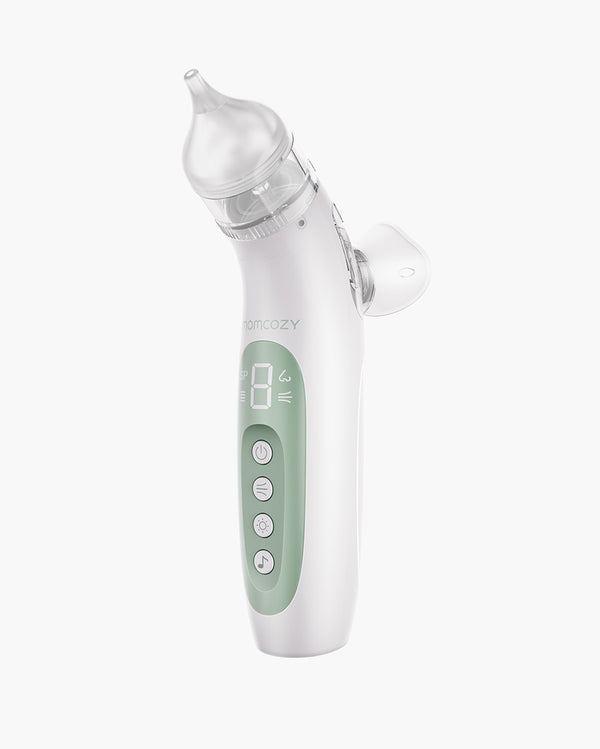

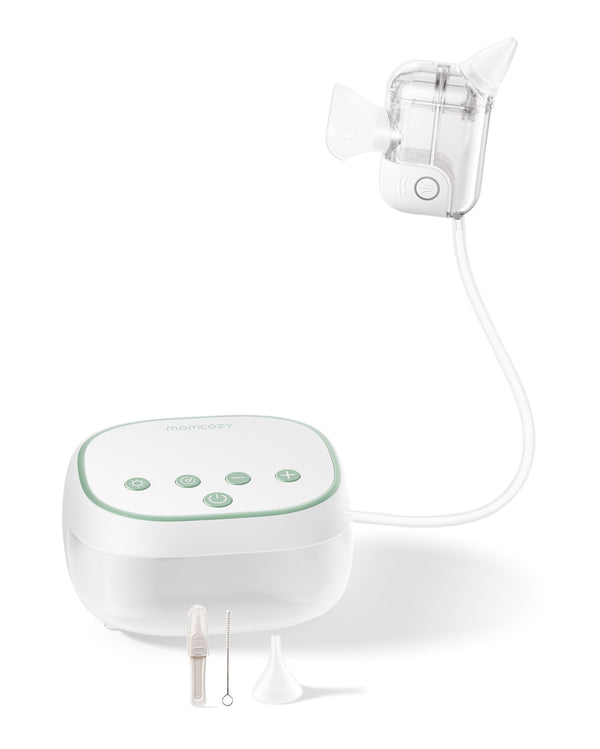
For an even smoother routine—especially when you're juggling a wiggly newborn—one handy option is a 2-in-1 electric nasal aspirator that combines a gentle saline mist with suction in the same device. It delivers an ultra-fine spray right into the nostril to soften mucus evenly (similar to drops but less messy and more consistent), then switches to adjustable suction to clear it gently. The soft, rounded tips stay at the opening without deep insertion, and many models are quiet, rechargeable, and easy to clean. This can cut down on steps and baby protest during those pre-feed or bedtime clears. As always, start with the lowest suction, wait 30-60 seconds after misting, and only use when congestion is really affecting feeding or sleep.
How often is enough, and when to call for help
Use suction only when congestion is interfering with feeding, sleep, or comfortable breathing. Most families find that a few sessions per day are enough; more than that can irritate the nose. If the nose looks red or your pediatrician gave a specific limit, follow that guidance.
Call your pediatrician if your newborn has a fever of 100.4°F, is feeding poorly, or seems unusually sleepy.
Seek urgent care for warning signs like blue lips, struggling to breathe, or nonstop coughing that blocks sleep or eating.
Gentle parenting tips for smoother sessions
This is one of those tiny-care tasks that can feel big in the moment. A predictable routine helps your baby feel safe, even when they protest. You can steady the session by swaddling or holding the arms close to prevent sudden movements, and by warming the saline drops in your hands so they’re not chilly. Pause between nostrils for a cuddle or soft song, then follow with a feed or a few minutes of upright snuggles.
If your baby cries, it’s a normal protest to the sensation, not a sign you did harm. Your calm voice and quick comfort afterward build trust for next time.

Disclaimer
This article, "Why You Must Use Saline Drops Before Using a Nasal Aspirator for Newborns," is provided for general informational and educational purposes only. It summarizes common home-care practices for newborn nasal congestion relief based on publicly available pediatric guidance, but it is not medical, pediatric, ENT (ear, nose, and throat), or professional advice. It is not a substitute for personalized guidance from a qualified healthcare professional, such as your pediatrician, regarding your newborn's respiratory health, nasal passages, mucus management, feeding difficulties, breathing patterns, or any signs of illness, irritation, or distress.
Saline drops and nasal aspirators (including models sold by Momcozy) can help gently loosen and remove mucus to support easier breathing and feeding in newborns when used correctly, but improper use—including skipping saline, excessive suction, deep insertion of the tip, overuse (more than a few times per day), inadequate cleaning, or forceful technique—can irritate or damage the delicate nasal lining, cause bleeding, increase discomfort, push mucus deeper, or raise infection risk. Always use plain saline drops (no added medications unless directed by a doctor), apply only 2–3 drops per nostril, wait 30–60 seconds to allow thinning, position the aspirator tip at the nostril opening without inserting deeply, use the gentlest effective suction, limit sessions to when congestion truly interferes with feeding/sleep/breathing, and clean the device thoroughly after each use (disassemble, wash with warm soapy water, rinse well, air-dry completely to prevent mold/bacteria). Never suction immediately after a feed to avoid spit-up, and avoid chilling the saline (warm in your hands if needed). For newborns, any persistent congestion, poor feeding, unusual sleepiness, fever (≥100.4°F), blue lips/skin, labored breathing, or nonstop coughing requires immediate pediatric evaluation—do not delay.
Momcozy sells baby products, including saline solutions, nasal aspirators, and related newborn care items, but no product guarantees complete mucus clearance, eliminates all risks, or works identically for every newborn. Effectiveness, safety, comfort, and suitability depend on gentle technique, proper saline use and timing, correct tip placement, thorough cleaning/drying, individual baby anatomy/sensitivity, and strict adherence to the product's specific instructions, warnings, age guidelines (typically 0+ months with soft, rounded tips), and applicable U.S. safety standards (such as CPSC, ASTM, FDA-related where relevant, or CE). Always read and follow the manufacturer's user manual in full before use, cleaning, or sanitizing; discontinue if baby shows increased distress, redness, bleeding, or no improvement; and verify certifications directly with Momcozy or the retailer.
By reading this article or using any information herein, you agree that any reliance on the content is at your own risk. Momcozy, its authors, affiliates, and contributors are not liable for any injury, nasal irritation, bleeding, infection, worsened congestion, feeding/breathing difficulties, or other damages (direct or indirect) that may arise from the use, misuse, overuse, improper technique/cleaning, or reliance on saline drops, nasal aspirators, or any advice described here.
Momcozy is not responsible for any consequences arising from the use of this content. For any concerns about your newborn's breathing, nasal health, feeding, fever, unusual sleepiness, blue lips/skin, labored breathing, or product use, consult a licensed healthcare provider immediately—seek urgent care for emergency signs. Never leave your child unattended with any baby product.








