


MEDICALLY REVIEWED BY

Mary Bicknell, MSN, BSN, RNC, ANLC
Mary Bicknell possède plus de 30 ans d'expérience en tant qu'infirmière autorisée (IA) en unité de soins intensifs néonataux (USIN). L’éducation des mères sur l’importance d’un allaitement sain lui tient particulièrement à cœur. Maintenir un allaitement réussi peut s'avérer complexe lors de situations difficiles ou de longues hospitalisations. Mary s'engage à aider les familles à définir ce que représente pour elles un allaitement réussi et à les accompagner pour atteindre leurs objectifs. Après avoir quitté les soins au chevet des patients, Mary est devenue infirmière leader, veillant à ce que l'éducation et le soutien à l'allaitement soient toujours accessibles aux familles de son unité. Remarque : le texte original (en anglais) a été révisé par des experts ; le présent texte est une traduction en français de cette version.
For most families, bottle nipples and bottles follow the same sterilizing schedule. Clean both after every feeding, and reserve daily sanitizing for young infants or for babies born early or with weaker immune systems. This guide is general information, not a substitute for personal medical advice. If your baby was born premature, is medically fragile, or has recently been in the hospital, follow your pediatrician's or hospital team's instructions.
Same schedule, different priority
Bottle nipples do not usually need to be sterilized more often than the bottle itself. In daily care, both are feeding items, so the timing stays the same.
What changes is the risk from poor cleaning. The bottle is easier to inspect and scrub, while the nipple is smaller, softer, and more likely to trap milk in places that are easy to miss.

One nuance is that after-every-use sterilizing through 12 months appears in some non-US guidance, while routine sterilization after the three months is often not considered necessary in US guidance for healthy babies.
Why nipples need closer care
Nipples deserve more attention even though they do not need more frequent sterilizing. Milk can sit inside the tip, around the collar, and in the tiny flow hole, which makes residue easier to miss during a rushed wash.
That is why cleaning nipples in hot, soapy water matters so much. Some experts also recommend boiling nipples for 5 minutes when the manufacturer says the material can be safely boiled

The practical takeaway is simple: keep the sterilizing schedule the same for bottles and nipples, but spend a little more hands-on time cleaning the nipple during every wash.
A realistic routine for busy parents
A newborn may have 8 to 12 feedings a day, so a routine that looks perfect on paper can feel unrealistic by bedtime. Many parents do best with one consistent daily sanitizing batch, plus thorough washing after each feeding.
- Before first use, sterilize the bottle, nipple, ring, and cap.
- After every feeding, fully disassemble and wash every part with soap and water.
- For babies under 2 months or at higher risk, add one daily sanitizing step for the full set.
- For older healthy babies, wash carefully, then sanitize again after illness, thrush, travel, or delayed washing.
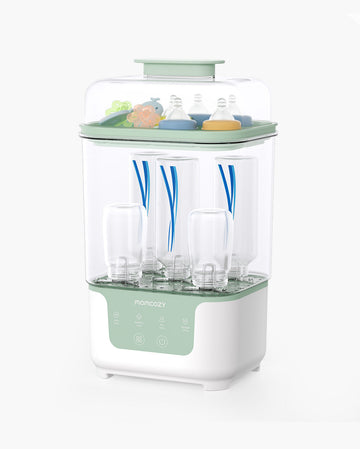
If you use a dishwasher with heated drying or a sanitizing cycle, that extra step may already be covered for dishwasher-safe parts. Alternatively, using a dedicated baby bottle sterilizer offers a reliable way to sanitize both bottles and accessories.
Replace nipples sooner than bottles
This is where nipples really differ from bottles: they wear out faster. A bottle may still be usable while the nipple has tiny tears, a stretched opening, or a sticky feel that makes it harder to clean well and safe for feeding.

If you notice flattened, torn, cracked, or discolored nipples, replace them instead of trying to make them safe again through sterilizing. For bottles, replace anything cracked, badly scratched, or cloudy with residue or holding an odor after a full wash.
The rule to remember is simple: sterilize nipples and bottles on the same schedule, but nipples may need closer inspection. They are small, but they are usually the first part that needs extra care.








