


MEDICALLY REVIEWED BY

Zola Zhang, MD, IBCLC, Breast Surgeon, Mother
Chirurgienne du sein | Consultante en lactation certifiée IBCLC | Mère Chirurgienne du sein dévouée et consultante en lactation certifiée IBCLC forte de 21 ans d'expérience clinique, mon travail prend racine à la fois dans l'expertise médicale et dans la réalité vécue de la maternité. Plus qu'une clinicienne, je suis une mère qui a allaité exclusivement son propre enfant pendant deux ans. Cette double perspective imprègne chacune de mes interactions, me permettant de conjuguer la rigueur scientifique à une empathie profonde face aux joies et aux défis de l'allaitement. Remarque : le texte original (en anglais) a été révisé par des experts ; le présent texte est une traduction en français de cette version.
Start with your baby’s posture, then adjust the tray, harness, seat height, and footrest so they stay upright, secure, and comfortable as they grow. At about 6 months, use the most supportive setup your chair allows; by 2 years, you’re usually looking for a taller, more independent fit with better leg support and less baby-style restraint.
First, check whether your baby is ready for the chair
The safest starting point is readiness, not age alone. Signs your baby is ready for solids and chair seating include sitting up alone or with support, good head and neck control, opening their mouth for food, swallowing instead of pushing food out, and reaching for small objects.

If your baby is around 6 months and showing those signs, that is the usual time to begin introducing solid foods. The CDC says not to introduce foods before 4 months.
For mealtime seating, keep the child upright in a high chair or other safe place and avoid feeding while they are lying down, crawling, walking, or riding in a car or stroller.
What to adjust at 6 months
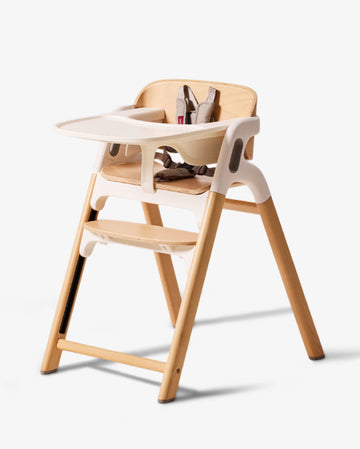
At this stage, think “support first.” Use the most upright recline your chair allows if your baby can sit with head and trunk control, and keep the 5-point harness snug. A 6-month-old starting solids is usually better served by a stable, upright position than a relaxed, lounged one. A chair like the Momcozy DinerPal High Chair and Soft Cushion is one example of a model with adjustable seat height and tray position that can adapt as a child grows.

The tray should sit close enough that there is no big gap between the tray edge and your baby’s torso. Consumer guidance says a gap wide enough to pass a fist through is unsafe, and the crotch strap should be no more than 1 to 2 inches from the child’s body.
At this age, make sure the food itself is easy to manage: start with mashed, pureed, or smooth textures, and keep meals calm and distraction-free. The CDC also recommends limiting TV, videos, cell phones, and pets during mealtimes.
How to adjust as your baby gets steadier, around 9 to 12 months
Once your baby can sit upright independently, stop relying on the recline feature for feeding. That’s the point where you want the seat to support upright eating rather than a more reclined infant posture.
You can also start adjusting for more self-feeding. As babies move through the first year, they begin finger feeding, drinking from a cup, and using a spoon, so the chair should make it easier for them to reach the tray and stay balanced while practicing.
This is also the stage to watch harness fit more closely. The straps should lie flat and snug, and if you can pinch strap material between your fingers, the harness is too loose.
For foods, keep progressing texture slowly from smooth to thicker and lumpy as your child’s ability develops. Continue to avoid choking hazards and keep supervision constant.
What to change around 18 months
By toddler age, the goal shifts from “supporting a baby” to “fitting a more independent eater.” Lower the footrest so your child’s feet have better support, and move the tray outward or remove it if that helps with self-feeding practice.

A good fit still matters a lot. Proper foot support can help with posture and stability during meals, and keeping the child upright reduces the chance of awkward slumping. That matters just as much now as it did at 6 months.
If your chair converts into a toddler chair or table set, follow the manufacturer’s step-by-step conversion instructions exactly. Skipping steps or using unapproved parts can void safety certifications.
At this stage, many toddlers are ready for family foods in smaller, safer forms. By 7 to 8 months, the CDC says children can eat vegetables, fruits, meat and protein foods, dairy without added sugars, and whole grains, and by 2 years they can eat most of the same foods as the rest of the family.
What a 2-year-old usually needs instead
By 2 years, many children have outgrown the baby-style high chair setup and do better in a toddler chair, booster, or the chair portion of a convertible system. The main signs are that your child is climbing out, looks cramped, or no longer fits the tray and harness comfortably.

If your chair can convert, this is when a more open setup often makes sense: less recline, lower restraint if the design allows it, and enough seat height that the child can sit with feet supported on the footrest or floor. Consumer guidance notes that some models are meant to transition from baby seat to toddler or youth chair, but exact limits vary by model.
Keep following the weight and size limits listed for your exact chair. Consumer Reports notes that these limits are usually on the label under the seat or in the manual, and they matter more than a general age range.
Cleaning and safety checks to keep with every stage
The tray and any surface that touches food should be cleaned with hot, soapy water. The CDC says to wash, rinse, and sanitize high chair trays just before and right after each use for eating, and to sanitize any touched or contaminated surface.
Use the right cleaning step for the job: cleaning removes dirt and most germs, sanitizing lowers germs to safer levels, and disinfecting is for stronger germ control after cleaning when needed. For food-contact high chair parts, sanitizing is the key step.
Keep mealtimes calm and supervised, and strap your child in every time. The CDC also recommends placing newspaper or a plastic mat under the chair to help manage mess, which can make cleanup easier as your baby starts solids and gets messier.
A simple growth-by-stage setup
Stage |
What to look for |
Practical chair setup |
About 6 months |
Sitting with support, good head and neck control, ready for solids |
Most upright safe recline, snug 5-point harness, tray close to torso |
Around 9 to 12 months |
Sitting upright independently, starting finger foods and self-feeding |
Reduce or stop recline for feeding, check harness snugness, keep tray easy to reach |
Around 18 months |
More self-feeding, better balance, growing leg length |
Lower footrest, consider tray repositioning, follow conversion steps exactly if changing modes |
Around 2 years |
Climbing out, cramped fit, wanting more independence |
Use toddler-chair, booster, or converted mode if allowed by the manual; respect weight and size limits |
The main idea is simple: fit the chair to your child’s current posture, not just their age. Start supportive, then make the chair more upright and more independent as their balance, feeding skills, and leg length change.
Take a quick look before each meal, and if the fit seems loose, cramped, or hard to use safely, adjust the chair using the manufacturer’s instructions or move to the next seating stage your child is ready for.








