


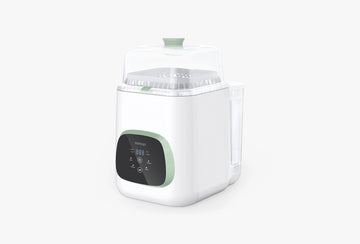
Your baby's bottles, pacifiers and feeding equipment shouldn't have germs on them, which is why it's important to keep them germ-free - but how? Steam sterilizer vs UV sterilizer options may be down to speed, convenience and effectiveness at destroying bacteria. Steam sterilizers kill germs faster and with more moisture, while UV sterilizers are chemical-free, providing a clean. Both options come with their advantages and disadvantages, depending on your daily activities and lifestyle.
Here, we will explain the process of each sterilizing method, as well as its advantages and disadvantages, and you can decide on which one best suits your family.
Understanding Sterilization vs. Cleaning vs. Sanitizing
The three words are often used interchangeably, but they are not synonymous, and understanding the difference can help you add or subtract from your routine without doing it wrong. If you prefer to use dedicated equipment for either step, a baby bottle sterilizer covers the deep-clean step, and a baby bottle washer covers the cleaning that should take place before deep cleaning.

Sterilizing Baby Bottles
This is the deep-clean end of the spectrum. Sterilizing eliminates most of the bacteria and viruses that are attached to the bottle. Pediatric advice suggests frequent sterilizing in the first few months as babies' immune system is still developing, but again your pediatrician is the best person to ask about what is appropriate for your baby.
Sanitizing Baby Bottles
Sanitizing lands somewhere in the middle. It cuts germ levels down to what's generally considered safe, usually through hot water or a sanitizing solution, without necessarily wiping out everything the way sterilization does.
Cleaning Baby Bottles
Then there's plain cleaning, which simply involves removing the visible milk residue and dirt using soap, water or a washer. It seems simple, but it really does make a difference. If you skip cleaning first, leftover milk residue can shield bacteria during steam or UV treatment and reduce effectiveness.
What is the Difference Between a Manual and an Automatic Autoclave?
The idea behind a home bottle sterilizer is basically the same as an autoclave: pressurized steam is used to sterilize. The real difference between models is how much supervision you need to provide them with.
Manual Sterilizers
Consider the stovetop steam bag or a plain pot of boiling water. You are the one who keeps track of the time, fills the water and removes the items when they are finished. It's cheaper, yes, but that's yet another thing to keep in mind when the feeding window is already hectic.
Automatic Sterilizers
Automatic units remove the need for timing and shut-off, and some models will even dry them for you so you can load it up and leave.
Sterilizer vs. Boiling vs. Dishwasher
The Electric Steam Sterilizer
This is where steam and automation meet in the middle. The Momcozy 8-in-1 Electric Steam Baby Bottle Sterilizer will sterilize up to 8 baby bottles in 8 to 15 minutes and then automatically start to dry them. Speed and space are more important than they think for parents who are running through bottles but don't want to hover over a stove.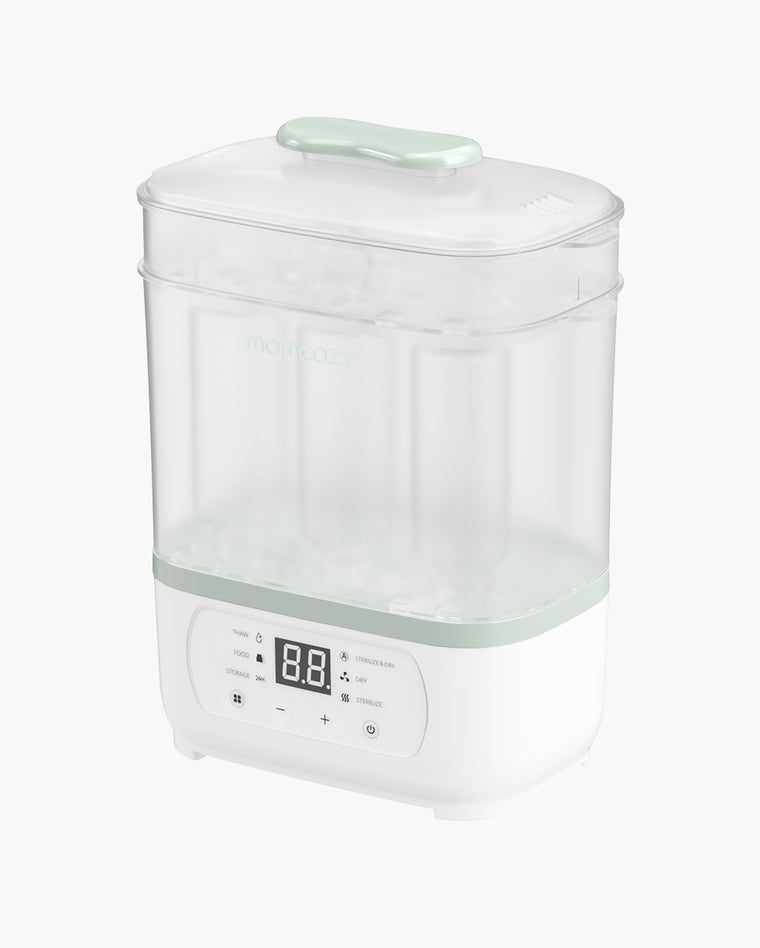
The Traditional Pot (Boiling)
Boiling is the most basic method and does not require any specific equipment. The downside is that it involves hovering, it uses more energy with repeated use, and the heat in use degrades plastics and silicone nipples faster than you want.
The Dishwasher
A standard dishwasher cycle cleans bottles, but may not sanitize them. If your dishwasher has a heated dry or sanitizing cycle, CDC notes that separate sanitizing may not be necessary.
How to Sterilize Baby Bottles: Methods and Tips
After choosing a method, it is important to know how to perform it properly because a rushed or incomplete cycle can result in bottles not being as sterile as desired. Let's take a closer look at each of the options and get into a few details that can sometimes be hard to remember the first time.
Boiling method
Completely place the clean bottles in boiling water for a few minutes and ensure there are no trapped air pockets, which will lead to uneven heating. Use tongs to remove hot items, and after removal, allow all items to dry on a clean surface.
Electric Steam Sterilizers
Fill with the recommended water, load your cleaned bottles and accessories, and choose a cycle. The Momcozy 4-in-1 Compact Bottle Sterilizer and Dryer may be useful for families who are rotating more bottles, pump parts, and pacifiers, and fits a maximum of 6 bottles in a nesting configuration that will not consume much counter space, with an 8-minute steam cycle and drying under 30 minutes.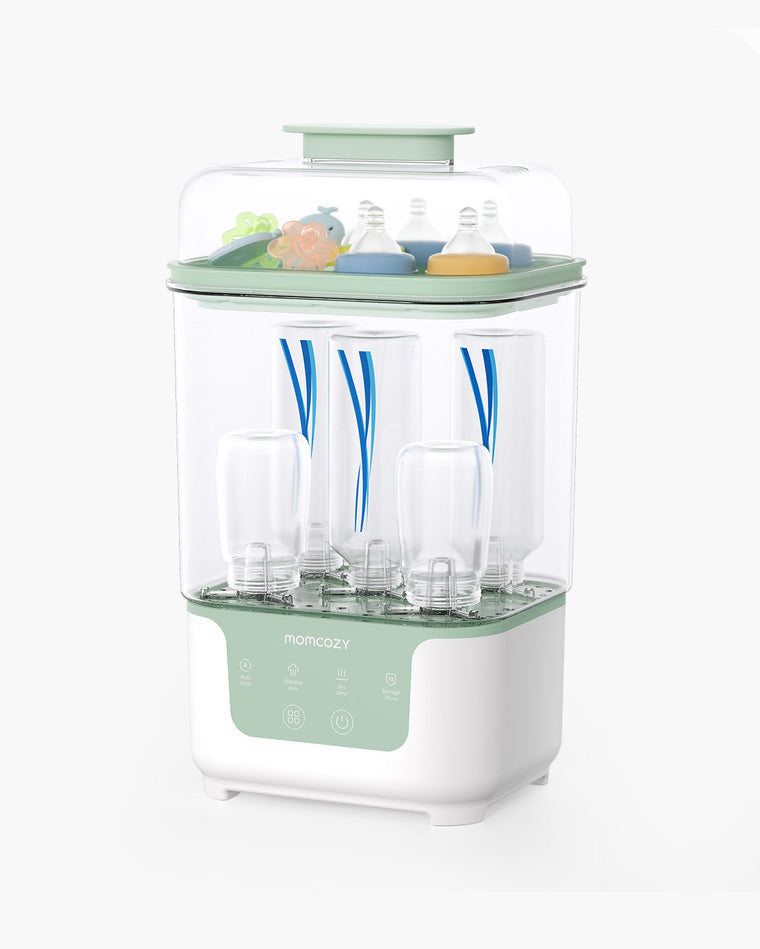
If you need more capacity in a single batch, the Momcozy Fast Bottle Sterilizer and Dryer uses a removable three-layer setup that holds 6 to 12 bottles plus pump accessories, with sterilizing wrapped up in about 9 minutes.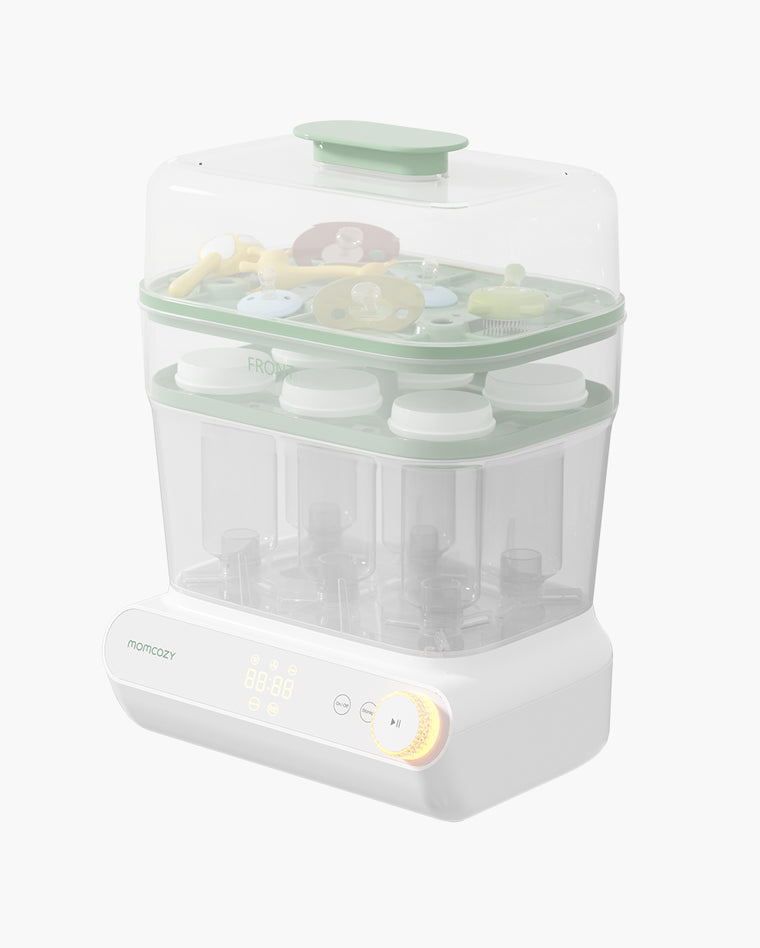 $159.99code ÉCONOMISEZ 20%
Microwave Sterilizers
Microwave steam bags are handy for travel or as a backup option when you're in a pinch. Stick closely to the fill lines and timing on the packaging, since microwave wattage isn't consistent across models and overheating can damage the bottle material.
Sterilizing Using Chemicals
Cold-water sterilizing tablets or solutions work by soaking bottles for a set amount of time. No electricity needed, which makes this a solid travel option, but you'll want to give everything a full rinse with cooled boiled water before use to clear out any leftover solution.
Steam vs. UV Sterilizing: What's Best for Your Baby's Bottles?

The two methods, using steam and UV, are very different in terms of killing germs, and there are advantages and disadvantages to each method. It does not really matter how sophisticated the technology may sound, but how it will fit into your daily feeding schedule.
Steam Sterilizers
Steam sterilizers generate high-heat steam in a chamber closed to the air, which kills bacteria in the presence of them. The advantage of steam for parents is that it can get into small crevices and narrow threads of the nipples that light-based methods may not be able to. The electric ones take less than 15 minutes to perform a cycle.
UV Sterilizers
UV sterilizers, on the other hand, employ UV light to destroy bacteria and viruses in their DNA wherever they touch. Because UV sterilizers don't rely on water or high heat, they can feel lower-maintenance and chemical-free—though coverage depends on light reaching every surface. However, UV works only if the light gets there, and if there is a shadowed area such as in a narrow bottleneck, you will need to use something that has been designed around that shadowed area to provide full coverage.
Which Sterilization Method is Best for Baby Bottles?
This is most often used when you're using steam, and it gets to the surface like it's supposed to without you having to worry about positioning. While it is true UV cannot be used for everything, it can be considered for smaller items that require a quick touch-up between full sterilizing sessions, such as pacifiers. Many parents end up using both, rather than choosing one and going through life with it alone. If you have any doubts, ask your child's doctor about how often your baby actually needs this.
Is an Electric Sterilizer Worth it?
While not every family needs an electric sterilizer, it is one of the useful bits of baby equipment rather than just another gadget for most parents. The answer to whether or not it is appropriate for you depends on two factors: what your baby needs and how your family functions on a daily basis.
Health Considerations
An electric sterilizer is consistent and does the job, cycle after cycle, especially during those early months of a baby's life when the immune system is still maturing. If your baby does need daily sterilization or if they don't, that's a question for your pediatrician, not a standard rule.
Lifestyle and Volume
The benefit of the automatic sterilizer is definitely worth the price if you have to pump multiple bottles per day, pump parts, and have a schedule that never seems to end. Manual techniques could suffice for smaller families or less strict schedules.
Eliminating Recontamination: Why the Drying Function is the Key to Hygiene
Sterilizing removes germs present on the bottle at the time of sterilization but doesn't protect against everything that happens after that. The treatment that bottles receive immediately after they've been sterilized is just as important as the actual process of sterilizing, and many routines fail to take the time to attend to this.
The Problem with Air Drying
It may appear harmless to leave sterilized bottles out on an open rack and air-dry them, but they are continually exposed to dust and airborne bacteria during the drying process. This would actually make it more difficult to keep them non-contaminated from the very start of their sterilization process.
Why Sterilizing Alone Is Not Enough: The Drying Gap Explained
This is where a combined sterilize and dry cycle reduces the gap. The Momcozy KleanPal Pro Baby Bottle Washer washes, sterilizes and dries your bottles and pump parts in one sealed cycle, then provides enclosed, sterile storage for up to 72 hours. You won't have an open window of opportunity for recontamination because the bottles are never left out exposed between sterilizing and use.
FAQs
Does a sterilizer use a lot of electricity?
Not really. Most electric bottle sterilizers use the same amount of power as a small kitchen appliance for a brief period, making the impact on your bill relatively small.
Do you have to sterilize baby bottles?
This would depend on your baby's age and health needs. Some parents may sterilize regularly until they are not using bottles, but your doctor can advise you what is best for your child.
How often should bottles be sanitized?
This one is different from house to house. Your pediatrician is the single best source for a recommendation specific to your baby.
Can I sterilize other items besides bottles?
Usually, yes. Small toys, pacifiers, teethers and pump parts may be okay, but remember to consult the manufactures' guidelines for any specific material before.
Conclusion
Both steam and UV sterilizing have a role to play, but the steam process is more likely to be the safer and more reliable option all day as it sterilizes every surface without a need for careful positioning. It depends on how much you're recycling and how you spend your days whether you opt for a compact countertop machine, a multi-layer sterilizer, or an all-in-one washer that cleans in one session. The key to ensuring your baby's feeding Utensils remain safe long after the cycle has been completed is pairing solid sterilization with correct drying and storage.








