WRITTEN BY

Nicki Davis, RN, BSN, IBCLC
Nicki Davis, RN, BSN, IBCLC, is a registered nurse and International Board Certified Lactation Consultant with more than 20 years of experience supporting breastfeeding families. She is the founder of Baby Whisperer Nicki, where she provides evidence-based breastfeeding education and individualized lactation support.
Breastfeeding comes with plenty of changes, and your breasts are no exception! One thing I frequently remind moms is that your breasts will change throughout your breastfeeding journey. Their size, fullness, and even how they feel can vary from one feeding to the next.
For moms with larger breasts, finding a nursing bra that provides adequate support without sacrificing comfort can be especially challenging.
As a registered nurse and International Board Certified Lactation Consultant (IBCLC), I've supported thousands of breastfeeding families. One thing I know is that comfort matters. Your nursing bra should work with your body, not against it.
Let's talk about what moms with larger breasts should look for in a nursing bra and why finding the right fit matters.
Why Finding a Nursing Bra for Large Breasts Can Be Challenging

When you have larger breasts, finding a bra that provides adequate support can feel like a balancing act. You want enough support to feel comfortable throughout the day, but you don't want a bra that feels restrictive, digs into your skin, or creates unnecessary pressure on your breast tissue.
Some supportive bras rely on thick padding, heavy materials, or rigid construction. While these designs may provide structure, they can also feel bulky, particularly when you're wearing your bra for extended periods.
During lactation, your breasts are constantly responding to your baby's feeding patterns and milk removal. It's normal for them to feel fuller before feeding and softer afterward.
Another consideration is warmth and moisture. Larger breasts may have more skin-to-skin contact, particularly underneath the breasts. Perspiration, milk leakage, and trapped moisture can make an otherwise comfortable bra feel irritating.
That's why I encourage moms to think beyond cup size. Support, coverage, breathability, and flexibility all matter.
What Should You Look for in a Nursing Bra?
1. Support Without Excessive Pressure
One misconception I frequently encounter is that a nursing bra needs to be tight to provide adequate support.
It doesn't.
A properly fitting nursing bra should support your breasts without creating concentrated pressure on your breast tissue.
For moms with larger breasts, a supportive underband helps distribute weight rather than relying entirely on shoulder straps.
My IBCLC tip: Pay attention to areas where your bra creates pressure or leaves deep indentations. Persistent localized pressure can cause discomfort, particularly when your breasts are fuller.
2. Coverage That Accommodates Your Breast Shape
If your breast tissue spills over the top or sides of your cups, the bra may be too small or the wrong shape.
Look for cups that comfortably contain your breast tissue without flattening or compressing it.
Remember, breast size and breast shape are different things. Two moms wearing the same cup size may need completely different nursing bra styles.
3. Breathability and Moisture Management
Let's talk about something that doesn't get enough attention: moisture.
For moms with larger breasts, perspiration and moisture can accumulate underneath the breast, where skin naturally rests against skin.
Lightweight, breathable materials can improve everyday comfort by allowing airflow and reducing the feeling of trapped heat.
If you're using nursing pads, change them when they become damp. Keeping your skin clean and dry can help minimize irritation.
4. Adjustability and Easy Nursing Access
Your breasts don't necessarily remain the same size throughout breastfeeding. Adjustable shoulder straps and multiple back-closure settings can help accommodate some of these changes.
And as I often remind families, feed your baby, not the clock.
Breastfeeding happens when your baby needs to feed. Convenient nursing clips make accessing your breast easier, especially when you're holding a hungry baby.
How to Know if Your Nursing Bra Fits Properly
Finding the correct size is about more than reading the label.
Here are a few practical fit checks I recommend:
Check the Cups
Your breast tissue should fit comfortably inside without spilling over the top or sides. The cups shouldn't flatten your breasts or leave noticeable gaps.
Check the Underband
It should sit securely around your rib cage without riding up your back or digging into your skin. You should be able to breathe and move comfortably.
Check the Straps
Shoulder straps should stay in place without digging into your shoulders. If you're relying on extremely tight straps for support, the band or cup fit may need adjusting.
Check Your Comfort Throughout the Day
A bra that feels comfortable immediately after breastfeeding may feel different when your breasts become fuller.
Reassess Your Size
Your breast size and shape can change throughout lactation, particularly during the early postpartum weeks. Don't assume your original nursing bra size will remain appropriate.
My advice? Try your bra while sitting, standing, moving, and accessing the nursing clips. It should feel supportive in all those situations.
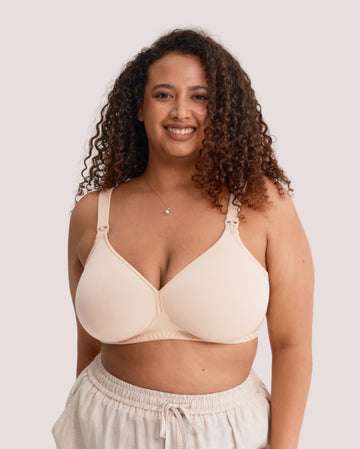
Product Spotlight: Momcozy AirMesh Nursing Bra for Larger Breasts
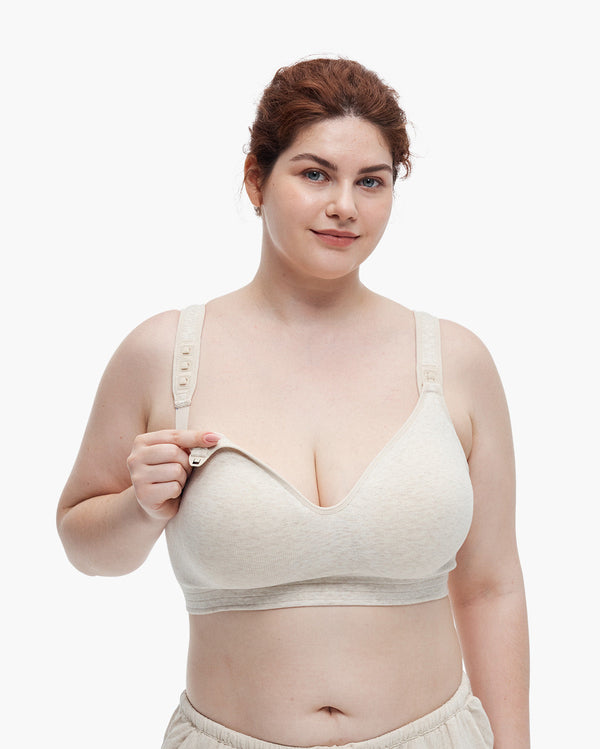
When evaluating nursing bras for moms with larger breasts, I appreciate designs that address several comfort and support challenges together. The Momcozy AirMesh Nursing Bra incorporates several features worth considering, particularly for moms who struggle to find a balance between adequate support and everyday comfort.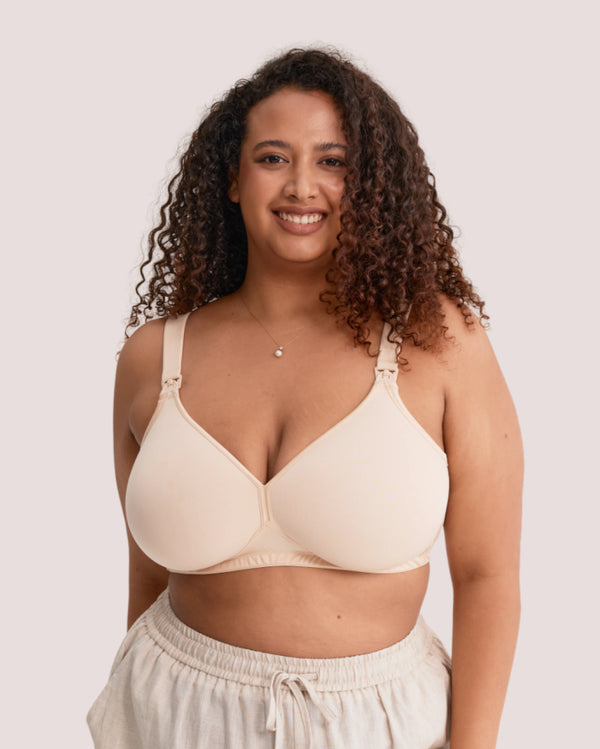
 Member price
Desde$29.99
$39.99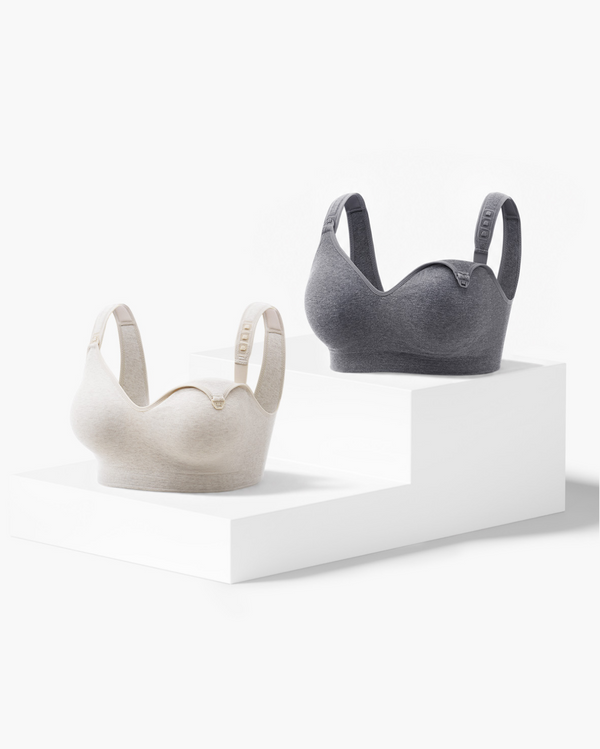 Member price
$71.89
$79.89
Lightweight Spacer Cups
One challenge for moms with larger breasts is finding a supportive nursing bra that doesn't feel heavy or bulky. Traditional bras designed for larger busts sometimes rely on thick padding or rigid materials, which can become uncomfortable during extended wear.
AirMesh uses lightweight, breathable spacer cups designed to provide structure without unnecessary bulk. This is particularly relevant for breastfeeding moms who may already experience warmth, perspiration, and moisture underneath their breasts.
Having a bra that offers support while allowing better airflow can make everyday wear more comfortable, especially when you're wearing it for several hours at a time.
Deep Molded Cups
If you have larger breasts, you probably know how frustrating it can be when your breast tissue spills over the top or sides of your bra. Not only can inadequate coverage be uncomfortable, but cups that are too small may also create unwanted pressure on your breasts.
The deep molded cups of the AirMesh Nursing Bra are designed to accommodate fuller breast tissue, providing additional coverage and structure without relying solely on compression.

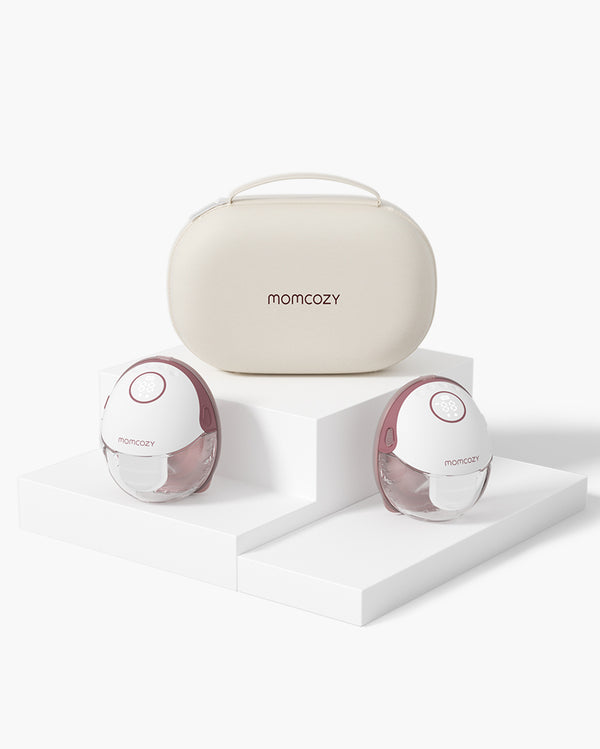
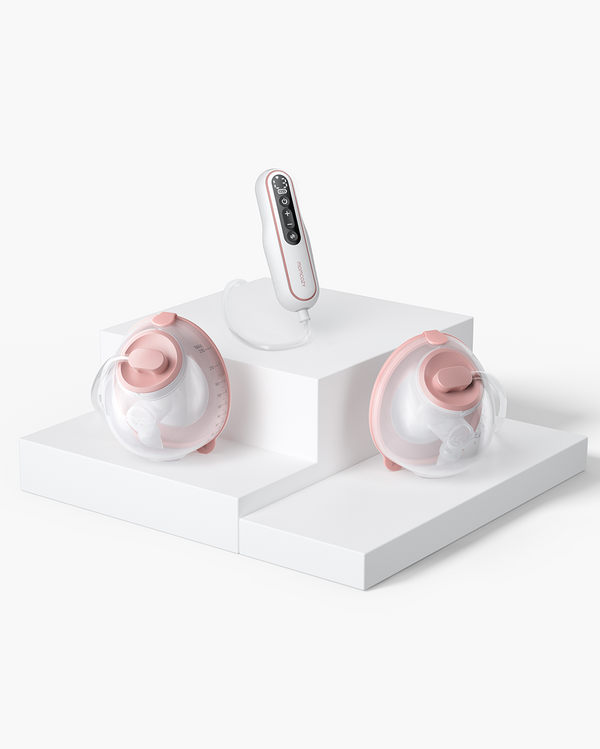
Another consideration is pumping. Many breastfeeding moms are also pumping, and wearable breast pumps have become an increasingly popular option.
One challenge with wearable pumps, particularly for moms with larger breasts, is finding a bra that has enough room to accommodate the pump without creating excessive pressure.
The deeper cup design of AirMesh may provide additional space for certain wearable breast pumps, making it a feature worth considering for moms who both breastfeed and pump.
My IBCLC tip: When using a wearable breast pump inside your bra, remember that proper positioning matters. Your nipple should be centered in the flange, and your bra should hold the pump securely without pushing it excessively into your breast tissue. Too much compression can cause discomfort and may interfere with effective milk removal. Always check the fit with your specific pump.
Crescent-Shaped Internal Sling
Support is especially important for moms with larger breasts, but support shouldn't mean squeezing or compressing breast tissue.
One distinctive feature of AirMesh is its crescent-shaped internal sling, designed to provide additional support within the cup.
For moms with fuller busts, this type of internal structure may help support the breast without relying entirely on tight shoulder straps or an overly restrictive band.

This is particularly relevant during breastfeeding, when your breasts may fluctuate in fullness throughout the day.
I encourage moms to look for bras that support the natural shape of their breasts while allowing room for these normal changes.
Padded Shoulder Straps
Let's talk about shoulder straps because this is something moms with larger breasts frequently struggle with.
When your breasts are heavier, poorly designed straps can dig into your shoulders, leaving uncomfortable indentations or creating pressure during extended wear.
AirMesh incorporates padded shoulder straps designed to distribute pressure across a broader area, which may improve everyday wearing comfort.

However, shoulder straps shouldn't be responsible for providing all the support. A properly fitting underband is equally important.
The AirMesh Nursing Bra also includes a supportive elastic underband and adjustable back closure, allowing moms to fine-tune their fit as their bodies change.
And let's not forget nursing access! Convenient nursing clips allow moms to access their breasts without having to remove or significantly reposition their bra.
As an IBCLC, I appreciate designs that consider these everyday challenges together. Breastfeeding moms need support, but they also need comfort, flexibility, and easy access to their breasts.
Ultimately, even the most thoughtfully designed nursing bra needs to fit your individual breast size and shape comfortably.
Member price
Desde$29.99
$39.99
Member price
$71.89
$79.89
My Final Advice for Moms With Larger Breasts

When choosing a nursing bra, ask yourself:
- Does it support my breasts without squeezing them?
- Do the cups provide adequate coverage?
- Is the fabric lightweight and breathable?
- Can I adjust the fit as my body changes?
- Can I easily access my breasts for feeding?
- Can I wear it comfortably throughout the day?
And here's something important: Your nursing bra shouldn't be something you're relieved to take off because it's been uncomfortable all day.
Your body is doing an incredible amount of work during lactation. You deserve clothing that supports that process rather than making it more difficult.
If you're looking for a nursing bra designed to balance lightweight comfort with thoughtful support, the Momcozy AirMesh Nursing Bra is one option worth exploring. Its breathable spacer cups, deep coverage, and supportive design details address several common concerns for moms with larger breasts.
Member price
Desde$29.99
$39.99
Member price
$71.89
$79.89
Because the best nursing bra isn't necessarily the one with the most features.
It's the one that allows you to comfortably breastfeed your baby while feeling supported yourself.