


You're preparing for the baby and suddenly realize you have no idea how many nursing bras to buy. One? Five? You don't want to over-invest in something that might not fit in six weeks — but you also can't be hand-washing a single bra at midnight while a newborn waits. It's a more complicated question than it sounds, and nobody gives you a straight answer.
Here's the honest answer — and how to make every bra count.
Why the answer isn't as simple as "just buy three"
Most advice says "get 3–5 nursing bras." That's a reasonable starting point, but it doesn't account for what kind of bras, when in your journey you are, or how your body changes. A bra that fits perfectly at 36 weeks pregnant may be two sizes too small when your milk comes in on day three postpartum. And a bra that works for nursing may not work for pumping — unless you choose one that handles both.
The smarter question isn't just how many — it's which types, when to buy them, and how to build a rotation that actually works.
Why you need more than one
Washing takes time
Nursing bras get milk on them. Daily. You need at least one to wear, one to wash, and one to spare — the classic rotation minimum.
Your size changes fast
Breast size can shift 3–5 cup sizes from pregnancy to milk coming in, then again as supply regulates. One bra won't span all of that.
Different needs, different times
You need a bra that works for nursing, one that handles pumping, and one gentle enough to sleep in — those don't always overlap.
Fabric needs to recover
Elastic loses shape faster when worn every day without rest. Rotating bras extends their life and keeps the support consistent.
Our recommended guide: how many by stage
According to IBCLCs at The Lactation Network, having at least three nursing bras is recommended — one to wear, one in the wash, and one spare. The right number for you, though, depends on where you are in your journey.
Third trimester — start with 1–2
Start with just 1–2 soft, wire-free bras. Size up from your current measurement — your ribcage is still expanding and your breast size will change again after birth.
Per IBCLC O'Connor via The Bump: "It's good to purchase one or two nursing bras in the third trimester to start, since breast size can change a lot post-birth."
First 6 weeks postpartum — — add 2–4 more
About a week after birth, once your milk comes in and your breasts have had a chance to settle into a size, add 2–4 more to your rotation. This is the highest-demand phase — feeding and pumping round the clock means you always want a clean one ready. Prioritize stretch and adaptability over structure.
Per IBCLC O'Connor via The Bump: "Pick up two to four more about a week or so after baby is born — this gives the breasts a chance to make milk and determine what size the nursing parent will land on."
6 weeks onward — 3 is your baseline
Once supply regulates and size stabilizes, 3 well-chosen bras tend to cover most moms comfortably. If you're pumping at work, consider adding one dedicated pumping bra to the rotation.
Per The Lactation Network (IBCLC): "Having at least three nursing bras is recommended — one to wear, one in the wash, and one extra."
Don't buy your full set before birth. Buy 2 in the third trimester, then add to your rotation in the first week postpartum once you know your actual nursing size. Most moms are surprised by how much their size changes.
Momcozy's picks — build your rotation
1. Best everyday rotation bra
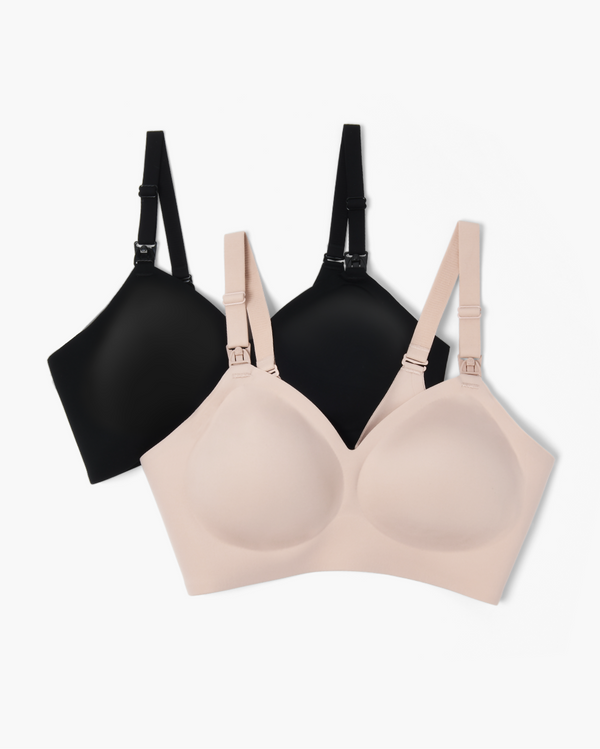
Momcozy ultra soft seamless nursing bra
The bra you'll want 2–3 of: soft enough for 24/7 wear, gentle enough for the early engorgement phase, and adaptable enough to span multiple cup sizes as your body changes.
Flexible sizing: the lightweight, stretchy fabric hugs your body like a second skin, naturally adjusting as your breast size changes — no gripping, no compressing.
Buttery-soft, breathable fabric: gentle on sensitive postpartum skin; seamless spot-gluing process eliminates any stitching or pressure lines against breast tissue.
OEKO-TEX Standard 100 certified: free from harmful substances — safe for your skin and the baby who spends so much time against it.
$59.98 USD


2. Best for reducing total bras needed
Momcozy 4-in-1 hands-free pumping bra — featured by Babylist & The Good Trade
One bra that replaces two: works as a pumping bra, nursing bra, maternity bra, and everyday bra — if you're both pumping and nursing, this cuts your total rotation needs significantly.
24/7 wear, single and tandem feeding: comfortable enough to wear around the clock, supports single, double, and tandem feeding and pumping throughout your journey.
Hands-free hold + one-step nursing clasp: flanges stay secure; one-step clasp releases the cup instantly for quick, private nursing without a bra change.
Wire-free fixed padding + hidden pump liner: smooth silhouette under any outfit — from home to office without changing.


3. Best start-early bra
Momcozy soft U.S. cotton seamless maternity bra — comfort from day one
Buy this one in the third trimester: gentle enough to start wearing in pregnancy and carry through weaning — the ideal "start early" bra that keeps fitting as your body changes.
Strong underband elasticity: provides greater accommodation for your changing body at every stage — from pregnancy through weaning.
U.S. cotton, OEKO-TEX certified: breathable and non-irritating — the safest choice for moms with sensitive or reactive skin.
No rigid structure: no underwire, no stiff panels — purely adaptive support that won't create pressure points as breast size shifts through the day.


What to watch out for
A common mistake is buying too many bras too early. As IBCLC O'Connor advises via The Bump, breast size can change dramatically after birth — pre-birth purchases may not fit once milk comes in. Start with just 1–2 in the third trimester, then build your rotation in the first week postpartum when you know your actual size. And if any bra leaves red marks on your skin at the end of the day, it's already too tight — size up before it becomes a clog.
Practical tips
Buy 2 in the third trimester, add 2–3 more in the first week postpartum once you know your nursing size
Always size up if between sizes — too tight causes more problems than too loose
If you pump and nurse, a 4-in-1 bra reduces how many total bras you need to own
Re-measure every 4–6 weeks for the first 3 months — size changes more than most expect
Not sure about your size? Use Momcozy Bra Size Calculator
Worried about bra fit causing clogs? Read our guide on how to identify and treat clogged milk ducts →








