Stroller shopping becomes confusing when every model seems to solve a different problem. A stroller may steer smoothly in a store but still be too heavy for apartment stairs, too wide for a trunk opening, or unsuitable for a newborn. The best choice is not the model with the longest feature list. It is the one that works on your regular routes, fits the spaces you use, and supports your child in a manufacturer-approved setup.
The easiest way to choose a baby stroller is to start with your real week. Map your routes, terrain, lifting and storage limits, regular caregivers, your child's stage, and whether you need one seat or two. This guide turns those constraints into a shortlist, then shows you how to check safety, folding, handling, comfort, and total cost before comparing models.
Key Takeaways: How to Choose a Baby Stroller
- Start with your route. Sidewalks, stores, public transit, parks, and rough paths create different wheel, size, and fold needs.
- Confirm your child's stage. Check the exact model's minimum age, weight limits, approved seat or bassinet setup, and instructions.
- Plan for the right number of riders. A single stroller, standard double, and convertible single-to-double stroller solve different family needs.
- Measure before buying. Compare folded dimensions with the trunk opening, closet, doorway, elevator, and any stairs you use.
- Prioritize functional safety. Look for a secure restraint, reliable brake, stable frame, and folding locks that fully engage.
- Test it yourself. Fold, lift, steer, brake, adjust, and load the stroller before making a final choice whenever possible.

Start With Your Daily Routine Before Comparing Strollers
The best starting question is not "Which brand is best?" It is "What will this stroller do most days?" Choose a primary use case, then treat occasional situations as secondary.
Where will you use it most?
For sidewalks, stores, and neighborhood errands, an everyday stroller may be the most balanced choice. Public transit, walk-up apartments, and stairs make folded size, weight, and a simple fold more important. Gravel, grass, or long park walks call for stronger wheels and suspension, even if the stroller is larger.
If running is the goal, look for a stroller specifically approved by its manufacturer for jogging. Large wheels alone do not make an ordinary stroller suitable for running.
Who will push, fold, and lift it?
List every regular caregiver. Each person should be able to reach the handlebar and brake, adjust the harness, fold the frame, and lift it safely. This matters when a recovering parent, shorter or taller caregiver, or grandparent will use the stroller regularly.
Where will it live?
Measure the usable trunk opening and cargo floor, not just published cargo volume. At home, check the doorway, elevator, hallway, and storage area.
How many children will ride?
One child may need a single stroller. Two current riders may need a double. If you expect another child while the older one still rides, a convertible stroller may prevent replacing the frame later. For twins, verify that the exact model supports two children at the same stage, including any two-newborn configuration you intend to use.

Understand the Main Types of Baby Strollers
Stroller categories overlap. A full-size stroller may also accept an infant car seat; a convertible stroller may begin as a single full-size stroller; and a compact stroller may be designed for travel. Use the labels to narrow the field, then verify the exact model.
| Stroller type | Best fit | Main trade-off | What to verify |
| Full-size or everyday | Daily walks, errands, longer outings | Larger folded size and more weight | Trunk fit, fold steps, storage, newborn setup |
| Lightweight, compact, or umbrella | Stairs, public transit, small trunks, travel | May have smaller wheels, less storage, or fewer configurations | Child-stage approval, recline, wheel performance, folded dimensions |
| Travel system | Frequent car-to-stroller transfers | Compatibility is model-specific; the setup can be bulky | Approved car seat, adapter, weight limits, included parts |
| Jogging | Running and rougher terrain | Longer frame, larger fold, specialized use | Manufacturer approval for running and child-stage guidance |
| Double | Two children who need seats now | More width or length; heavier when loaded | Doorway fit, seat limits, loaded steering, fold procedure |
| Convertible single-to-double | One child now with a likely second rider later | Higher initial cost; extra seats or adapters may be separate | All intended configurations, accessory cost, seat positions, limits |
| Stroller wagon | Gear-heavy outings and some older-child use cases | Different handling and age rules from a double stroller | Exact mode, restraint, age/weight limits, local use needs |

Single, double, or convertible stroller?
A single stroller is usually simplest for one rider. A standard double serves two riders now in a side-by-side or tandem layout. A convertible starts as one format and accepts approved components as the family grows.
Convertible strollers make sense when you expect to use the second seat. For a stroller for newborn and toddler at the same time, verify the approved combination plus steering, folding, and basket access in double mode. Flexibility can add weight, length, and cost.
The best convertible stroller is the one whose approved setups match your children, vehicle, storage, and budget. It may suit a family expecting a second rider soon, but not someone who mainly needs a light stroller for stairs or transit.
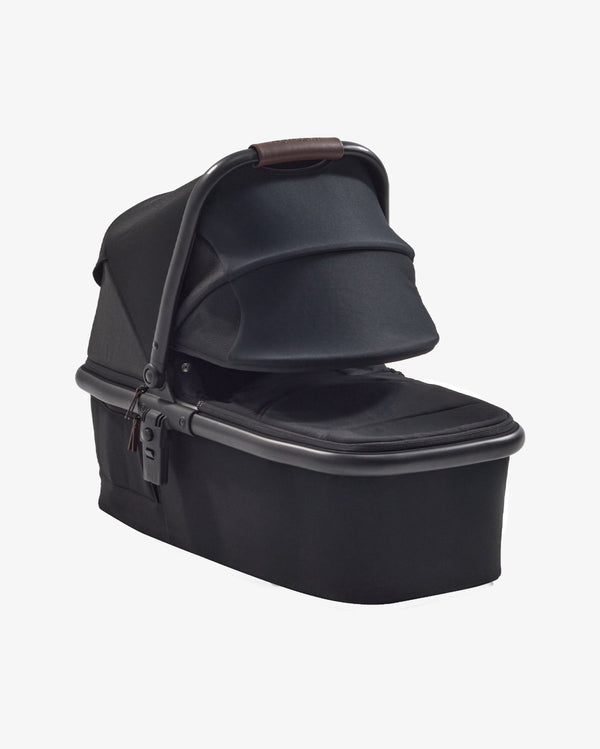
The Momcozy ChangeGo Convertible Stroller shows how this category can adapt as a family grows. ChangeGo supports up to 23 configurations, including single, tandem double, and wagon-style setups. Supported combinations include a bassinet with a toddler seat, two bassinets, or two toddler seats. The stroller-only package includes one bassinet and one toddler seat, while additional units and some accessories are sold separately. Use the ChangeGo user manual to confirm the correct setup, age and weight limits, and required components for your family.
If you are choosing between these formats, use the double stroller vs. wagon comparison; they are not interchangeable.

Member price
$179.99código Ahorrar 20%
Match the Stroller to Your Child's Stage
Your child's developmental stage and the manufacturer's instructions matter more than a generic age label.
Newborn setup
A newborn needs a configuration that the manufacturer explicitly approves from birth. Depending on the model, that may be a bassinet, an approved fully reclined stroller position, or a compatible infant car seat attachment. These options are not automatically interchangeable across products.
Check the minimum age and weight, required adapters, harness instructions, and limits on a bassinet or car-seat setup. Momcozy's guide to stroller options for infants explains the main newborn-ready formats, but the exact stroller manual remains the final guide for your model.
If a baby was born prematurely or has positioning, breathing, or mobility needs, general age guidance may not be enough. Follow the child's clinician and the manufacturer's instructions for the exact setup.
Transition to an upright seat
Move to a more upright stroller seat only when both the child and model instructions support it. Head and trunk control vary, and recline angles and seat designs differ. The guide to when your baby can sit in a stroller covers that readiness question in more detail.
Growing toddler
For a toddler, confirm harness fit, seat room, footrest support, and height and weight limits. Check these limits again after a growth spurt or when bulky seasonal clothing changes how the harness fits.
Check the Safety Features That Matter
In the United States, strollers are covered by the federal carriage and stroller standard in 16 CFR Part 1227. The Consumer Product Safety Commission addresses brakes, stability, restraints, latches, folding mechanisms, structural integrity, wheels, openings, and related hazards.
Use those categories as practical checks:
- Harness: Look for a five-point harness that adjusts snugly. Use it on every ride.
- Parking brake: It should be easy for the caregiver to apply and difficult for the child to release. Engage it whenever the stroller stops.
- Stability: Test the frame gently. Do not hang heavy bags from the handle; use the approved storage area and follow its load limit.
- Locks and hinges: Confirm that the open frame locks. Keep children away while folding or unfolding.
- Label and registration: Check the model number and manufacture date, register the product, keep the manual, and search the CPSC stroller recall listings, especially before buying used.
The American Academy of Pediatrics' stroller safety guidance also recommends a wide base, working brakes, a five-point harness, and careful use around folding hinges.
Choose Wheels and Suspension for the Surfaces You Actually Use
Small swivel wheels turn easily in stores and tight spaces. Larger wheels and more suspension generally manage cracks, gravel, grass, and curbs better, but add weight and folded bulk.
Check wheel material, swivel locks, suspension, turning radius, and maintenance together. For running, choose a jogging-specific stroller and follow its child-stage guidance; three wheels alone do not prove approval for running.
Compare Weight, Fold, and Storage in Real Conditions
A stroller is portable only if the caregiver can fold, control, lift, and store it repeatedly.
Before buying:
- Measure the trunk opening, cargo floor, closet, doorway, and elevator.
- Compare those measurements with the exact folded dimensions, including whether the seat remains attached.
- Fold and unfold the stroller several times without a salesperson's help.
- Lift it to the height of the trunk or storage shelf.
- Check whether it stands when folded and whether the handle or fabric touches the ground.
- Recline the seat and confirm that the basket remains accessible.
If frequent lifting is the main constraint, a dedicated lightweight option such as the Momcozy ClickGo Lightweight Stroller may be more relevant than a full-size model, but confirm the child's approved age and weight range before comparing convenience features. The Momcozy travel stroller guide covers carry-on constraints and other trip-specific trade-offs that do not need to drive an everyday stroller decision.
Member price
$179.99código Ahorrar 20%
Evaluate Everyday Comfort and Convenience Features
Prioritize convenience features that solve a frequent problem:
- A seat and harness that adjust correctly for the child
- A canopy that provides useful coverage and ventilation for the climate
- A handlebar that suits regular caregivers
- A basket that is accessible in the positions you will use
- Washable or wipeable materials
- Accessories that are genuinely needed and approved for the model
Check what comes in the box. Rain covers, organizers, adapters, bassinets, and second seats may be standard, optional, or bundle-only. Climate also changes the priorities: ventilation and canopy coverage matter in heat, while rain, snow, and road salt make drying, wheel cleaning, and replacement parts more important.
Decide Whether You Need a Travel System or Car-Seat Compatibility
A travel system includes an infant car seat or an approved way to attach one. It can simplify car-to-stroller transfers, but compatibility must be exact.
Before buying, verify the stroller model, car-seat model, adapter, approved attachment direction, child limits, and whether the adapter is included. Do not use an unapproved adapter because the parts appear to fit. If most outings begin on foot rather than in a car, a bassinet or stroller-seat setup may be more useful than paying for a travel-system function you rarely use.
Set a Realistic Budget and Calculate the Total Cost
Compare the full setup required for the first two or three years, not only the frame price. Include any bassinet, infant car-seat adapter, second seat, rain cover, travel bag, organizer, replacement parts, and shipping. Check the warranty terms and whether wheels, fabrics, and small components are available separately.
Compare one versatile primary stroller with the cost of adding a specialized lightweight or jogging model later. Buying for uncertain future needs can add unnecessary cost and weight.
How to Test a Stroller Before You Buy
Use this test with the actual diaper bag and all regular caregivers:
- Fold and unfold it three times. Check whether the sequence is intuitive and the frame locks clearly.
- Push and turn. Try tight corners, a straight line, and one-handed steering.
- Apply the brake. Confirm that the caregiver can reach it and a child cannot release it easily.
- Make every common adjustment. Try the seat, harness, canopy, footrest, and handlebar.
- Load the basket. Check access with the seat upright and reclined.
- Lift the folded stroller. Simulate your trunk, stairs, or storage shelf.
- Check clearances. Compare its width with doors and elevators, then test it in the vehicle if allowed.
A store test does not replace the manual. If you are comparing several models, use the same daily-use checklist for each one so the winner is the best fit for your routine, not simply the smoothest showroom impression.
Do You Need One Stroller or More Than One?
Use these questions to decide whether one stroller is enough:
-
How many days per week will you realistically use a stroller?
- Weekly use can justify a second model; a few trips a year usually cannot.
-
Will most outings be walking, driving, or traveling?
- Favor ride comfort and storage for walking; prioritize low weight and a compact fold for car or air travel.
-
Does a second stroller solve a recurring problem, or only an occasional one?
- Buy another only when the same limitation, such as stairs, running, or trunk space, keeps disrupting outings.
A full-size stroller plus a compact model can suit families who walk daily but also travel. A primary plus a jogging model may suit a regular runner. For two riders, a convertible infant and toddler stroller may be more useful than two single strollers.
Do You Need One Stroller or More Than One?
Start with one stroller built around the most frequent routine. Add a second only when a recurring need is distinct enough to justify the cost and storage.
A full-size stroller plus a compact model can suit families who walk daily but also travel. A primary plus a jogging model may suit a regular runner. For two riders, a convertible infant and toddler stroller may be more useful than two single strollers.
Frequently Asked Questions
Is a Lightweight Stroller Good as a Primary Stroller?
Yes, when portability is a daily requirement and the stroller still meets your child's stage, ride, storage, and durability needs. A useful test is whether the lightweight model can handle most regular outings without forcing you to leave essential gear behind or avoid your usual surfaces.
What If the Stroller Fits but Leaves No Room for Gear?
A physical fit is not always a practical fit. Check whether the folded stroller still leaves room for the diaper bag, groceries, or luggage you carry regularly. If an in-person load test is not possible, mark the folded footprint with tape or cardboard inside the cargo area.
Is It Okay to Buy a Used Stroller?
It can be, but only after you identify the exact model and check the CPSC recall database. Inspect the frame, harness, brake, wheels, folding locks, and all required parts, then obtain the correct manual before use. Do not treat a used car seat as an ordinary stroller accessory.
Do Baby Strollers Expire?
Strollers do not share one universal expiration date. Stop using a stroller if the manufacturer specifies an end date, the model is recalled, structural parts are damaged, locks or brakes fail, the harness is incomplete, or replacement parts and instructions are no longer available.
Can a Baby Sleep in a Stroller?
Do not use a stroller as a routine sleep space. If a baby falls asleep while riding, the American Academy of Pediatrics recommends moving the baby to a firm, flat, non-inclined sleep surface on their back as soon as possible. Its safe sleep guidance explains which sleep surfaces are appropriate and why sitting devices are different.
Choose for Your Real Routine, Not the Longest Feature List
The right stroller should fit the child, caregivers, and daily route. Confirm the approved child-stage setup, measure real spaces, check safety and handling, and compare the full cost. Then browse Momcozy stroller options with a shorter, more relevant checklist.