


If your nursing pillow feels too firm or uncomfortable during feedings, it’s reasonable to wonder if you need one. However, it is better to verify whether it is really the pillow’s hardness that makes you feel uneasy. You may feel uncomfortable because the pillow is too high or the pillow leaves a gap. Maybe it’s the chair you are sitting on that makes you feel that way. So before replacing your nursing pillow, consider those possibilities. Check them one at a time. If there’s nothing you can do to keep your current pillow, you can browse our current nursing pillow options.
This guide is about your comfort and fit on nursing pillows, whether your current pillow may work, whether its instructions may allow an adjustment, or whether another kind of support makes sense. These checks are here for a seated feed with your baby supported by you.
Key Takeaways
- A firm nursing pillow may also feel too high or poorly fitted for your preference. Evaluate your setup first before deciding to replace it.
- Check the model and its current instructions before browsing reviews; pillows from one brand can differ in shape and adjustment options.
- Evaluate the core feel, support height, and the opening around your body separately. Deciding based on support does not guarantee a comfortable feeding fit.
- Make adjustments your model only permits. Do not reshape its core, add padding, or use an adult strap as an infant restraint.
- Keep using a pillow according to its intended function and instructions. Never use a nursing pillow for infant sleep.
- When discomfort persists, seek help and advice from the manufacturer, a lactation professional, or a clinician.
Can a Nursing Pillow Be Too Firm for Your Setup?
Yes. Some nursing pillows can be too hard to the touch or just generally uncomfortable to use. Feeling uncomfortable with a nursing pillow doesn't mean that firmer pillows are generally not usable. It also doesn’t mean that a softer pillow automatically solves the problem. Every caregiver has their preferences when it comes to comfort, and what may feel stiff to you may be the right amount of firmness for someone else.
Every caregiver’s setup is different, so another person’s experience with a nursing pillow may not match yours. Start by working out where the discomfort comes from: the support itself, the pillow’s height, or how the pillow fits your body and chair. Consider all three before deciding the pillow is the problem.
A Soft Cover Is Not the Same as a Softer Core

The cover is the fabric on the outside; the filling or foam inside gives the pillow its shape and support. A cover can feel soft while the support underneath feels firm. Changing the cover may change how the fabric feels. It may not change the pillow’s height or how it fits around you.
To work out what is bothering you, ask yourself:
- Does the support feel hard against your body or arms?
- Does the pillow lift you higher than feels comfortable?
- Does it leave a gap around your body? Keep moving while you feed?
Make sure to follow the instructions for your pillow before trying to adjust the pillow. If it’s about height, gap, or slipping, check the pillow’s fit and setup first. A different cover may not help. The following sections will walk you through those checks.
Check the Exact Model Before Applying Reviews or Advice
A brand name may not always match the pillow you own. Nursing pillow product lines often include shapes, cores, and adjustability features to match the preferences and needs of caregivers. Sometimes recommendations for one may not always work for the other. So it’s important to check the manual for your model to see what would match your comfort.
Identify the Model and Variant
Check the product name or model number on the label or packaging. You can also check your order records or the manufacturer’s listing. Often, product lines may sell products with features; they may offer different shapes or adjustment options. Be sure to check and consider all of those factors carefully. Reviews can help you understand someone’s experience. An older comment is not a current specification. Do not assume a reviewer’s pillow has the core, cover, or opening as yours.
Verify What Is Adjustable
Find the manual and care label before trying to change anything. Confirm whether the pillow instructions allow you to alter the fill or height and whether the cover is compatible with your version. If you cannot identify the model, find directions or ask the manufacturer before opening, washing, or modifying it.
Is It Firmness, Height or Fit? Use This Check Table
“Too hard" can describe several different things. Use what you notice to choose what to check; the observations below are possibilities, not diagnoses. Make observations during a supported feeding setup. If you cannot keep your baby supported or the setup feels unstable, stop that setup. Do not continue experimenting.
|
What you notice |
Possible Explanation |
Next Check |
|
To you, the caregiver, the surface feels hard, while height and opening seem to fit. |
Core feel or personal comfort preference, may be the concern |
Confirm the exact model and its allowed adjustments. See “Check the Exact Model” and “Adjust Only What Your Pillow’s Instructions Permit.” |
|
The support feels high or crowded. |
The height or current setup may not feel comfortable. |
Check the instructed setup and whether your exact model permits a height adjustment. See “When the Pillow Feels Too High.” |
|
There is a gap to your body, or the pillow shifts. |
The shape, placement, or permitted strap use may not suit this setup. |
Check the model instructions. Do not fill the gap with loose items. See “Why a Firm Pillow Can Still Leave a Gap.” |
|
Comfort changes noticeably between chairs. |
The chair or the way you are supported may be part of the issue. |
Check the allowed setup before blaming the core. See “Check the Chair and Setup.” |
|
Discomfort or feeding difficulty continues after reasonable checks. |
The question may need help beyond choosing a pillow. |
Stop using the setup and ask the manufacturer, a lactation professional, or a clinician, depending on the concern. |
Pick one branch. Check the pillow in the manufacturer’s instructed awake feeding setup while you support the baby. Do not try to force the fit, change several things at once, or add a cushion to a gap. If you have a persistent problem, use the following steps rather than assume a replacement will resolve the issue.
When the Pillow Feels Too High Rather Than Too Hard
Sometimes the issue is more that the feeding surface is raised or crowded than that it is hard. You may observe yourself having to work around the pillow even though the surface of the pillow may not feel hard. If you feel raised or crowded, check the pillow’s placement. Check whether your exact model allows a height adjustment.
Check the Height in the Setup
First, check the chair and the pillow placement described for your model. Then check whether that model offers a way to change its height. Some pillows have a fixed core; others allow fill adjustments. Check your model’s instructions to see which kind you have. Do not assume a strap changes the pillow’s height or use a body-height formula to judge fit. If the pillow isn’t adjustable or is still uncomfortable in the setup, consider whether another structure may suit your needs or ask for feeding support. The nursing pillow buying guide can help once you have decided that you need to compare options.
Why a Firm Pillow Can Still Leave a Gap or Keep Shifting
Firmness and fit are separate questions. Even a firm pillow may leave a gap or shift in a setup. Notice when that happens, then check the shape, placement, and any strap instructions for your model.
Check Fit Separately from Firmness
If your pillow comes with an adult strap, follow the manufacturer’s instructions for using it. The strap is meant to secure the pillow to you, the caregiver. It is not an infant restraint, and it should never be used to carry your baby. Keep your baby fully supported with your own arms throughout the feed.
If you notice a gap between the pillow and your body, don’t fill it with towels, blankets, or other padding. Loose items can shift and change how your baby is positioned. Instead, adjust your own seating or the pillow’s placement as your model’s instructions describe. If you still can’t keep your baby fully supported, stop and ask the manufacturer or a feeding professional for help. For placement steps, see the guide to using a nursing pillow.
Check the Chair and Setup Before Blaming the Core
Comfort can change with the chair and setup. That does not prove the core is defective or that another pillow will fit better. Before drawing that conclusion, observe an awake seated feed:
- Are you seated and supported in a way that feels steady for you?
- Is the pillow placed as your model’s instructions describe?
- Does the same difficulty happen in another permitted seated setup or only in this chair?
A nursing pillow is for feeding support, not infant sleep. If the question is still positioning after these resources, reach out to a feeding professional for assistance, or check how to use a nursing pillow.
Adjust Only What Your Pillow’s Instructions Permit
All adjustability is model-specific. Some pillows have a fill that is removable, while others have a core that shouldn’t be changed. Before making any adjustments, double-check if your manual is still current, and do not assume that just because one model from the brand can be adjusted, the other models can be as well.
Permitted Adjustment Versus Modification
Some models allow fill and height adjustment. Confirm those features in the instructions before making the change. Just because a pillow is adjustable doesn’t mean you’ll get the comfort level you want or that a particular adjustment will be the one.
Do not try to soften or reshape a fixed core by cutting, soaking, heating, or compressing it. Add no padding; ask the manufacturer if the instructions are unclear. For safety of nursing pillows, see nursing pillow safety guidance.
A nursing pillow is for helping with feeding. Move your baby to a place to sleep after feeding as recommended by the CPSC guidelines and the AAP safe sleep guidelines.
Keep the Current Pillow or Consider a Different Structure?
It is not always necessary to buy a pillow if you feel your current pillow is firm. Before deciding whether to keep it or replace it, make sure you have the model and have followed the setup instructions. If it has a way to adjust, check the manual to confirm that option.
Keep It If It Works
If the pillow feels comfortable and works the way it is supposed to, keeping it is a choice. There is no need to upgrade just because a new design is available.
Compare Only After Identifying the Problem
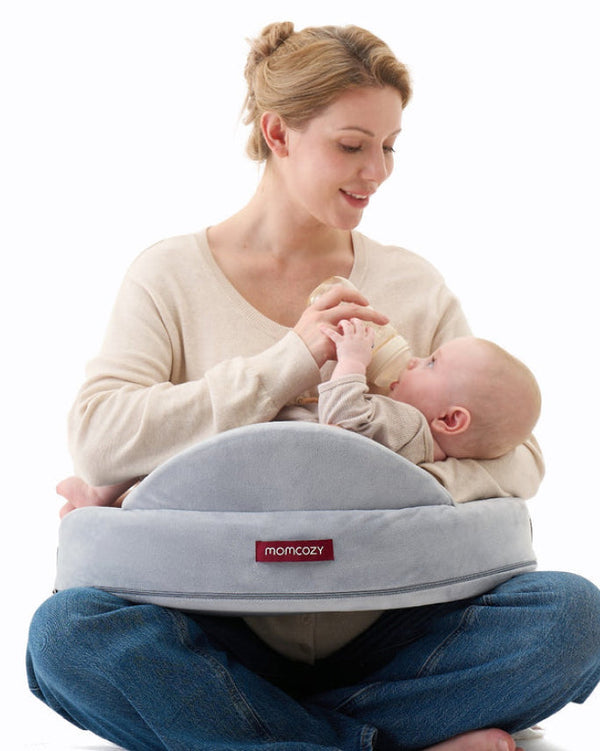
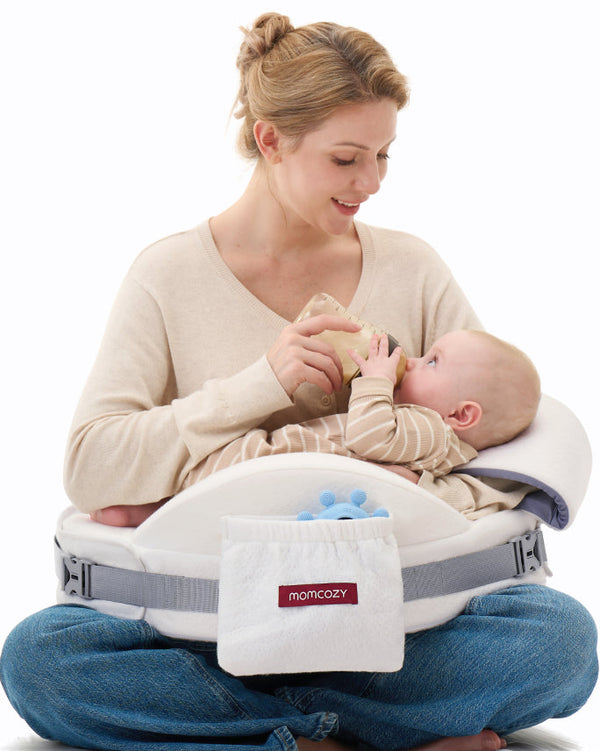
If an approved adjustment can fix the height problem, check those instructions before looking for a pillow. If there is still a problem, say what kind of structure you need. For example, if you need a structure that does not change or if you need a pillow that allows you to add or remove fill, etc. If you need a foam core and you check its height and fit, the Momcozy MaxSupport Nursing Pillow might be a choice.

The way to adjust depends on what's being adjusted. The Multifunctional and Adjustable Nursing Pillow page says this option allows you to take out some of the fill and change the height. Follow the instructions for the model you have. Do not assume that adjusting the pillow will make it softer. Once you decide you need an option, a nursing pillow buying guide or a comparison of nursing pillow designs might be helpful.
When to Stop Trying to Fix It and Ask for Help
If you can’t maintain a supported feeding setup, or you keep feeling back pain while nursing, stop using that setup. Don’t keep experimenting. Then reach out to the right person for your concern:
- The manufacturer, for questions about the product, your model or version, or its instructions.
- A lactation consultant, for feeding difficulties.
- A doctor, for ongoing pain or other health concerns.
- Emergency services, for anything urgent.
Frequently Asked Questions
Can I use any replacement cover on a firm nursing pillow?
Do not think a cover fits just because it looks the same. Check if it is compatible and read the care instructions for your model or ask the manufacturer. A replacement cover should not be seen as a way to change the firmness of the core, add padding, or fix a problem.
What if the pillow still looks squished after opening it?
Read the unpacking instructions for the product before using it. How it recovers can be different for each design. Follow the unpacking instructions. If the pillow still looks misshapen or you’re unsure whether it’s ready to use, contact the manufacturer. Don’t use heat or add padding unless the manufacturer’s instructions specifically allow it.
Can washing make a firm nursing pillow softer?
No. Washing won’t change how the core feels, so don’t try it for that purpose. Washing can also damage the core, and a machine-washable cover doesn’t mean the whole pillow can go in the machine. Check your model’s care label to see what can be washed and how. If the label doesn’t say, or you’re unsure about cleaning the core, ask the manufacturer before washing anything.
Does the comfort check work during bottle feeding?
Height and how the caregiver fits still matter. Use the pillow only as the instructions say and keep holding and supporting your baby. It is not a bottle holder or a place to sleep. If you need a feeding setup, follow the nursing pillow use guide.
Conclusion
A nursing pillow that feels too firm isn’t always the problem. Before you replace it, confirm your exact model and its instructions, then check the core’s feel, the height, the fit around your body, and your chair setup one at a time. Make only the adjustments your manufacturer allows, and never cut, heat, or pad the core to change how it feels.
If the pillow supports you comfortably once you’ve checked these things, there’s no need to replace it. If a problem remains, work out what you need, such as a different height or an adjustable fill, and compare options with that in mind. And if the setup feels unstable or feeding stays uncomfortable, stop and ask the manufacturer, a lactation consultant, or your doctor for help. Whatever pillow you use, it’s for awake feeding only, never for infant sleep.









