


According to the American Academy of Pediatrics, infants should sleep on their backs. They should also lay on a firm, flat surface. That is still the best sleeping position for a baby with a stuffy nose.
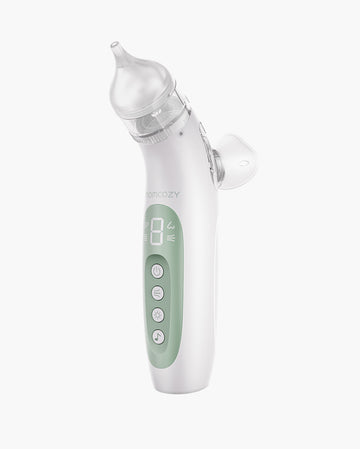
Yes, it can be frustrating when your baby sounds congested before bedtime. But, work to make their nose as comfortable as possible, either before sleep or when awake. This may be a matter of humidity, saline, gently clearing the nasal passages, or even a cool-mist humidifier, depending on what's causing the stuffiness and whether there's removable mucus. You can check out one category of nasal-care products, momcozy baby nasal aspirators.
The key is to decouple congestion care from sleep positioning. You can try nasal care at bedtime, but once your baby is ready for sleep, place their back in the normal safe sleep environment.

Key Takeaways
- Back is still best. The best sleeping position for a baby with a stuffy nose is flat on their back, for naps and nighttime sleep. Congestion is never a reason to try side or tummy sleeping.
- Keep the surface flat and firm. Don’t use pillows, wedges, towels, positioners, or an elevated mattress to ease congestion. They add suffocation risk without clearing the nose.
- Don’t let seats become sleep spots. Swings, rockers, bouncers, and car seats aren’t a routine sleep solution for a congested baby. If your baby dozes off in one, move them to a flat surface.
- Treat congestion while your baby is awake. Saline, added moisture, gentle suction, and a cool-mist humidifier may help, depending on your baby’s symptoms. Do this before sleep rather than changing how your baby sleeps.
- Know when to get help. Seek medical care if your baby has trouble breathing, color changes such as bluish lips or skin, significant feeding problems, or other symptoms that worry you.
What Is the Best Sleeping Position for a Baby With a Stuffy Nose?
A stuffy baby is safest sleeping on their back on a firm, flat sleep surface. Congestion doesn’t discriminate against infant safe-sleep rules. The AAP recommends putting babies to sleep on their backs, including naps, and that babies sleep on a firm, flat surface without using pillows, loose bedding, or any soft objects.
Back sleep remains the safest starting position
If they sleep differently, it’s reasonable to believe a congested infant would breathe easier. A parent may notice that a baby seems quieter when held upright, or in another position when awake, and ask if the same position will help during sleep.
This should not be used as an excuse to change the baby’s sleeping position.
The goal isn’t to find a special place for congestion. Instead, put your baby on their back as you normally would, and deal with the nasal discomfort separately.
Lying on his back also doesn’t mean covering or surrounding your baby’s face with soft items. Make sure the sleeping space is free of anything that could block the baby’s nose or mouth.
Keep a firm, flat, clear sleep surface
The sleeping surface of your baby should be flat, firm and covered with a sheet. Cribs should not have any pillows, blankets, stuffed animals, bumpers or other loose or soft items.
Should You Elevate a Congested Baby's Head or Crib Mattress?
No. Never prop up your baby’s head or crib mattress to relieve congestion during sleep.
Pillows, towels, wedges, positioners and an inclined mattress may appear to be simple ways to utilize gravity to help move mucus. But putting a baby on an incline or propping up a baby can cause a baby's head to fall forward or to the side, which can close the airway. Specifically, the AAP advises against propping a congested baby up with pillows or towels or raising the head of the mattress.
Why "propping up" is not a safe congestion solution
A baby's airway can be affected by head and neck position. While an incline may feel comfortable to an adult, infant sleep products and homemade setups that place a baby’s head above a flat surface can present undue risk.
For this reason, there is no recommended “safe incline angle” that can be used at home for a congested baby. Instead, keep the sleep surface flat.
This also means not needing to resort to makeshift solutions like:
- A pillow under the baby's head
- A towel underneath the mattress
- A wedge inside the sleep space
- A positioner intended to keep the baby tilted
- An inclined sleeper
- A cushion or nest designed to hold the baby in one position
The AAP suggests using a firm, flat sleeping surface, as inclined sleep products can cause airway problems.
Upright while awake is different from inclined sleep
There is a difference between holding your baby upright when they are awake and putting them upright or reclined for unsupervised sleep.
If you are comforting your baby at bedtime, you can try holding your baby upright when you are awake and watching. However, when it’s time for sleep, put them on their back on their own firm, flat sleep surface.

Can a Baby Sleep on Their Side or Stomach When Congested?
Congestion should not be an excuse to intentionally let an infant sleep on their side or stomach.
Side sleeping does not replace back sleeping and stomach sleeping should not be a treatment for congestion. The AAP recommends that all babies be placed on their backs for sleep because babies placed on their sides can roll over more easily onto their stomachs.
Side sleeping is not a congestion treatment
A baby might seem quieter in one position than another but a change in breathing sounds is not enough reason to use that position for sleep on purpose.
Always place your baby on his or her back to sleep at nap time and at nite.
What if your baby rolls independently?
A stuffy nose doesn’t change the rules for a baby who can roll. Always place your baby down on their back, and once they can roll easily in both directions, you don’t need to keep flipping them back, according to the AAP. Don’t use wedges, pillows, or positioners to keep a congested baby from rolling or to prop up their head. Treat the congestion while your baby is awake instead.
Check in with your pediatrician if your baby seems uncomfortable or is having trouble breathing.
Why Does a Stuffy Nose Feel Worse at Night for Babies?
A baby’s stuffy nose often seems louder and more troublesome at bedtime. Here’s why:
- Even a small amount of mucus or swelling can noticeably change your baby’s breathing sounds because of their tiny airways.
- Newborns and young infants breathe mainly through their noses, so a blocked nose can make nighttime feeding harder, too.
- Snorting, sniffling, and noisy breathing are much easier to hear at night.
- Dry air can irritate the nasal lining and thicken mucus, which adds to the stuffy sound.
Changing your baby’s sleeping position will not affect this. What you should do instead is adjust your bedtime routine. You can use saline or gentle suction before bedtime to help make your baby comfortable.
But try not to guess the cause. A stuffy nose can come with many conditions. It could be colds, allergies, reflux, RSV, and the flu. This article can’t tell you which one your baby has. If you’re worried about your baby’s breathing, feeding, or overall behavior, talk with your pediatrician.
What Can You Do Before Bed Instead of Changing Baby's Sleep Position?
Congestion care belongs in the bedtime routine, not in the sleep setup. Here’s how to handle each stage, from the first sniffle to lights out.
Before you start: look for mucus
A stuffy sound doesn’t always mean there’s mucus to remove. If you can see or feel loose mucus near the nostril, a gentle nasal aspirator may help. If you can’t, use moisture.
Loosen it first
Dry or sticky mucus rarely moves on its own, so soften it before you try to clear it:
- Saline drops or spray work directly in the nose to thin and loosen mucus.
- A cool-mist humidifier adds moisture to the room. The AAP lists it as one option for easing congestion. Clean it as the manufacturer directs.
Then clear what’s loose
Once mucus has softened and you can reach it, use gentle suction to remove it, but only if it’s getting in the way of comfort or feeding. A baby can still sound stuffy afterward, and that’s normal. Don’t raise the suction or repeat it to make the sound go away.
Don’t forget to feed
Babies breathe mainly through their noses. As such, congestion can make feeding harder. Still, you need to keep offering usual feeds. Just watch for trouble feeding or signs of low fluid intake, such as fewer wet diapers. Call your pediatrician if either shows up.
Then put them down the usual way
When your baby is ready to sleep, place them on their back on a firm, flat surface with nothing else in the sleep space. Whatever the nose sounds like, the sleep setup stays the same.
When Can a Nasal Aspirator Help Before Bed?

A nasal aspirator may be useful when your baby has visible or loosened mucus that is affecting comfort or feeding. But some moms mistakenly overly rely on it. Sometimes, they use it simply because bedtime is approaching and their baby makes a congested sound. But it does nothing if there’s actually no mucus.
Use suction for mucus, not for every congested sound
If there’s little or no mucus to remove, repeated suctioning won’t fix the underlying problem and can leave the nose irritated. The rule of thumb is simple:
|
Mucus is present |
No removable mucus |
|
gentle nasal clearing may help. |
don’t keep increasing suction to chase the sound. |
For specific technique or how often to use an aspirator, follow the instructions that come with your device or your pediatrician’s advice rather than setting a fixed bedtime routine.
Soften Dry or Sticky Mucus Before Suction
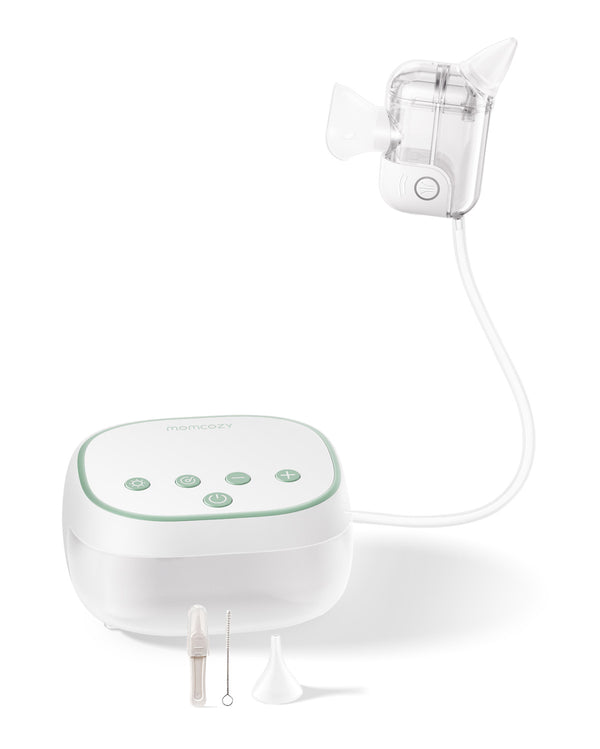
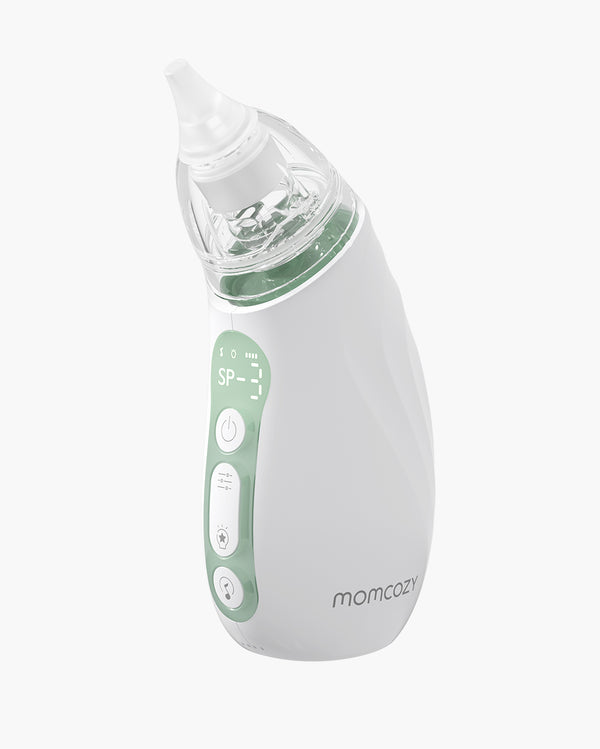
If mucus is dry or sticky, moisture should come first. Momcozy’s nasal aspirator collection recommends softening it with plain saline or the model-specific mist, then using gentle suction with the tip at the nostril opening rather than inserted deeply.
If you’d like a mist-and-suction option, the Momcozy BreezyClear™ 2-in-1 Spray & Suction Electric Nasal Aspirator combines both steps in one tool. But remember that using this does not mean your baby can sleep in other positions. This product is not a sleep aid, and it doesn’t make an unsafe sleep position safe.
Member price
$34.99código Ahorrar 10%
What If Mucus Is Too Dry or Thick to Suction Before Sleep?
Dry, sticky, or crusted mucus often won’t budge with suction. Some moms react by using stronger suction, but that rarely works. It can even irritate the delicate lining of your baby’s nose. That may then cause swelling that will make the stuffiness worse.
A little moisture can help. Saline drops, saline spray, or a cool-mist humidifier, may be able to soften and loosen the mucus. You can use a gentle aspirator to then remove it.
Do Not Brute Force It
Never dig deep into your baby’s nose to remove a hard booger. Repeated attempts can scratch the nasal tissue and cause more congestion. Stop and ask your pediatrician for advice. Contact them promptly if your baby is struggling to breathe, has trouble feeding, or seems unusually fussy.
What If Your Baby Sounds Congested but No Mucus Comes Out?
If there is little or no mucus to remove, a baby may sound stuffy or snorty.
If the aspirator isn’t sucking anything, don’t just increase the suction or push the tip further into the nostril. Instead, step back and get the big picture.
Think about it.
- Is your baby breathing alright?
- Are they eating normal for themselves?
- Are they awake, doing what they ought?
- Is there any visible mucus that needs to be cleared?
- Are symptoms getting worse or staying the same?
Babies can sound stuffy or snorty even when there’s little or no mucus to remove. Here’s what to do when the aspirator comes up empty:
- Stop suctioning. Don’t increase the force or push the tip deeper into the nostril. It won’t help and can irritate the nasal lining.
- Don’t guess the cause. A stuffy sound alone can’t tell you what’s behind it, so avoid diagnosing how your baby sounds.
- Keep the safe sleep setup. With no mucus to clear, a flat, firm surface and your baby on their back matter more than a perfectly quiet nose.
Safe vs. Unsafe Ways to Help a Congested Baby Sleep
|
Safer approach |
Avoid as a sleep solution |
|
Place baby on their back |
Intentionally placing baby on their stomach |
|
Use a firm, flat sleep surface |
Inclining the mattress |
|
Keep the sleep space clear |
Adding pillows or loose blankets |
|
Use appropriate saline or moisture before sleep |
Using pillows or wedges to prop the baby |
|
Use gentle suction when removable mucus is present |
Repeatedly suctioning when no mucus is present |
|
Use a cool-mist humidifier appropriately |
Using an inclined sleeper for congestion |
|
Hold baby upright while awake and supervised |
Letting baby sleep routinely in a swing or rocker |
|
Continue normal feeding and hydration support |
Changing sleep position because baby sounds congested |
When Should You Call the Pediatrician About Baby Congestion at Night?
Most congested babies don’t need to change how they sleep, but some symptoms need medical attention. Once any of the signs below appear, stop focusing on nasal care and get your baby evaluated.
Call 911 or seek emergency care if your baby:
- Is struggling to breathe or can barely cry or make sounds
- Has blue or gray color around the lips or face
Call your pediatrician if your baby:
- Is breathing much faster than normal
- Has real trouble feeding, is taking much less than usual, or shows signs of dehydration, such as fewer wet diapers
- Seems unusually sleepy, limp, or hard to wake
- Has congestion that lasts, gets worse, or comes with other symptoms that worry you
A note on fever and very young babies. Newborns and young infants can need medical care sooner than older babies, and fever guidelines vary by age. Ask your pediatrician what to do rather than relying on a general online number.
Frequently Asked Questions
Should I elevate my baby’s head when they’re congested?
No. Don’t use pillows, towels, wedges, or an inclined mattress to raise your baby’s head during sleep. Place your baby on their back on a firm, flat surface instead.
Can a baby sleep on their side with a stuffy nose?
No. Congestion is never a reason to use side sleeping, so always place your baby on their back for sleep.
Can a congested baby sleep on their stomach?
No. Don’t place your baby on their stomach to help clear their nose. Every sleep should start on their back.
What if my baby rolls onto their stomach?
Start every sleep with your baby on their back, with a clear sleep space. If you find a baby who is still learning to roll on their tummy, gently turn them back over. Once they can roll easily in both directions on their own, the AAP says you can leave them where they land. Congestion doesn’t change any of this, so save the nose care for when your baby is awake.
Should I suction my baby's nose before bed?
Gentle suction may be useful when your baby has visible or loosened mucus that is affecting comfort or feeding. It is not necessary to suction simply because your baby sounds congested, especially when no mucus is coming out.
Can saline help before bedtime?
Plain saline may help loosen nasal mucus before gentle suction. Follow appropriate product instructions, and avoid turning saline use into a reason to alter your baby's safe sleep position.
Can a cool-mist humidifier help at night?
A cool-mist humidifier adds moisture to the air and can help nasal congestion. Be sure to position it properly, clean as directed and follow manufacturer's instructions.
Why does my baby sound more congested at night?
Small nasal passages, mucus, nasal swelling, and dry air can make congestion sounds more noticeable at night. A quieter environment can also make normal breathing sounds easier to hear. However, nighttime congestion alone does not mean your baby needs a different sleep position.
What if my baby sounds congested but no mucus comes out?
Don’t just keep increasing suction because your baby still sounds congested. Because it doesn’t necessarily mean there’s mucus to be removed. Just observe breathing, feeding, comfort, and whether symptoms are continuous or worsening.
Can my baby sleep in a swing or car seat when congested?
A swing, rocker, or car seat should not be used as a routine sleep solution for a congested baby. If your baby falls asleep in one of these products, move them to a firm, flat sleep surface as soon as possible.
Conclusion
A stuffy nose does not alter the preferred sleeping position for an infant. It is recommended that the infant be placed on a firm, flat sleep surface on their back to sleep. Avoid placing any objects in the infant's sleeping area, including positioners, blankets, stuffed animals, etc.
If your baby is congested, focus on nasal comfort before sleep or while they are awake. Appropriate moisture, saline, gentle suction when removable mucus is present, a properly maintained cool-mist humidifier, and normal feeding support may help without changing the sleep environment.
Most importantly, do not use congestion as a reason to elevate your baby's head, incline the mattress, or intentionally choose side or stomach sleeping. If your baby develops breathing difficulty, significant feeding problems, color changes, dehydration concerns, or other concerning symptoms, seek medical guidance.
Back, firm, and flat remains the baseline. Congestion care happens around the sleep routine, not by changing the safe sleep position.









