


This guide explains how to choose a breathable maternity belly band for hot weather and how to wear it safely.
Hot afternoons can make every step feel heavier, and even a short errand can leave you sweaty and sore. A support band that lifts the bump can reduce lower-back and hip strain during daily activity, so you’re not fighting your body with every step. You’ll get clear, practical guidance on choosing a breathable band and wearing it safely in the heat.
Why Summer Makes Support Tricky
Summer heat can amplify pregnancy fatigue, thirst, and swelling, so comfort tools have to work with cooling habits. Pregnancy also increases blood volume by about 40–50%, and that extra fluid can show up as swelling, often called edema. By late afternoon, rings or sandals may feel snug, which is a common, heat-worsened sign.
Hydration needs increase with heat, and one recommendation is to add about 8 fl oz for every hour spent in the heat. If you’re outside for two hours, that’s roughly 16 fl oz on top of your usual water so you replace sweat losses.



Heat exhaustion can develop quickly during pregnancy, with signs such as dizziness, nausea, intense thirst, and rapid breathing or heart rate. If you move to shade, cool your skin, and still feel unwell after about 30 minutes, treat it as an urgent case.
What a Belly Band Is—and What It Isn’t
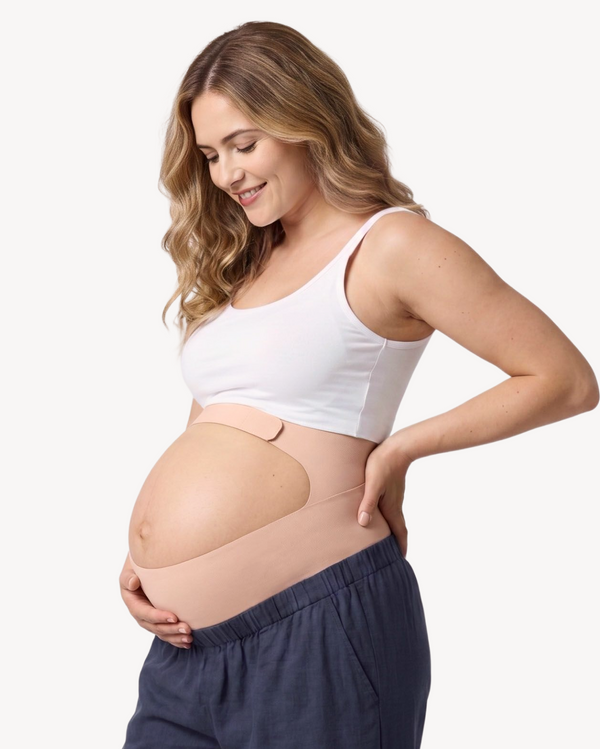
A pregnancy belly band is a flexible fabric band that provides gentle compression and support to the hips and lower back. It can also cover an unbuttoned waistband, so on a humid day, you can keep a favorite pair of shorts in rotation under a breezy top.
Support should feel like a lift, not a squeeze, because overly tight shapewear can be uncomfortable and may reduce blood flow. In summer, a too-tight band can also trap heat, so aim for a snug fit that doesn’t pinch when you sit. A quick sit-stand test in the car or at the kitchen table should show the band staying low under the belly without riding up.

Pros and Cons of Summer Pregnancy
The upside is real: support bands can help reduce lower back and pelvic pain. The trade-off is that they should be worn in short blocks, typically 2–3 hours at a time, so your core isn’t replaced by the band all day. For a long Saturday of errands, wear it for the first two hours, take it off for a cooling break and hydration, then reapply later if your back needs it.
Choosing a Breathable Band That Stays Comfortable
Fabric and Airflow
Breathable, soft materials are the foundation of a summer-friendly band, and adjustable support helps maintain comfort. Measure under the bump and at the fullest part of the hips, and use the pregnancy-specific chart so the band supports without squeezing. That foundation shines in designs like the Momcozy Maternity Belly Band, with its lightweight mesh fabric for airflow in humid heat, wide, adjustable Velcro for a customizable lift without pinching, and moisture-wicking material that stays dry during short walks or errands. It provides gentle hip/back support to ease strain while allowing easy breathing and movement—test the fit with a quick sit-stand (no riding up or squeeze), wear for 2–3 hours max with hydration breaks, and pair with loose tops for extra cooling. It's a practical pick for swollen afternoons, but always listen to your body and consult your provider if discomfort lingers. If a 10-minute walk leaves the band damp and sticky at your lower back, the fabric likely isn’t breathable enough for your climate.
Fit and Adjustability
Features like an adjustable back for easier fitting help you fine-tune support as your belly changes and as the day gets hotter. On a warm afternoon, loosening the back panel slightly can keep you comfortable while still giving lift. If you can’t adjust without taking the whole band off, it’s harder to manage swelling and heat over a long day.
|
Feature |
Why it matters in summer |
What to notice on your body |
|
Breathable fabric |
Reduces heat buildup and sweat |
Lower back feels less damp after a short walk |
|
Low, wide front panel |
Lifts the bump without squeezing |
Standing up feels supported, not tight |
|
Easy-adjust straps |
Lets you loosen in the heat |
You can tweak fit during a quick break |
Wearing It Well in the Heat
Keep wear time in short blocks—about 2–3 hours at a time—to avoid over-reliance and allow cooling breaks. If you’re out for a 3-hour baby shower, wear it for the first 2 hours, then remove it while seated and hydrated.
Pair the band with loose, light-colored, breathable clothing, and take cooling breaks indoors to keep your body temperature steady. Supportive shoes and a 20-minute feet-up break can also help with swelling on hot days. For an outdoor errand run, a cotton dress, a wide-brim hat, and a planned indoor stop can make the band feel like support rather than extra heat.

When to Pause and Call Your Provider
Sudden or severe swelling in hands, face, legs, ankles, or feet needs prompt medical evaluation, even in summer. If your rings stop fitting suddenly or your sandals feel tight by lunchtime, call your provider rather than assuming it’s just heat.
Heat exhaustion signs like dizziness, nausea, intense thirst, and fast breathing are a red flag, and feeling unwell after about 30 minutes of cooling can signal a medical emergency. If a cool shower and fan don’t help within half an hour, seek care.
Check with a healthcare professional before using a support band if you have circulation or blood pressure concerns. Bring the band to a prenatal visit and ask for a quick fit check to ensure the tension is safe.
A breathable band should make movement feel lighter, not hotter. Choose comfort you’ll actually wear, keep hydration and cooling at the center of your day, and trust your body’s signals.
Disclaimer
The information provided in this article is for general informational and educational purposes only. It is intended to share common experiences and practical tips for selecting and safely using breathable maternity belly bands (such as those offered by Momcozy) during summer pregnancy, focusing on heat management, short wear periods, hydration adjustments, fabric choices for airflow, and signs of discomfort or overheating. This does not constitute medical advice, diagnosis, or treatment. The suitability, fit, duration of wear, and safety of any pregnancy support band can vary significantly from person to person and may be influenced by individual factors such as pregnancy stage, heat tolerance, degree of swelling (edema), pre-existing conditions (e.g., high blood pressure, circulation concerns, or history of heat-related issues), activity level, or environmental conditions.
Any mentioned benefits—such as gentle lift to reduce lower-back, hip, or pelvic strain during activity, improved comfort in breathable materials, or easier movement in hot weather—are based on common user reports and general guidance (including ACOG recommendations on abdominal support for back pain relief and exercise during pregnancy), and are not guaranteed for every individual. Potential concerns with support bands, particularly in summer heat, include: heat trapping or buildup leading to increased risk of overheating, heat exhaustion (dizziness, nausea, intense thirst, fast breathing/heart rate), or heat stroke; restricted blood flow or circulation from overly tight fit (potentially exacerbating swelling, indigestion, heartburn, or reduced flow to the baby); skin irritation, dampness, or chafing from poor breathability; over-reliance potentially weakening core muscles if worn without breaks; or worsened symptoms in humid/hot environments. Sudden or severe swelling (hands, face, legs, ankles, feet), persistent heat exhaustion signs after cooling efforts (beyond ~30 minutes), or any unusual symptoms (e.g., rapid heartbeat, severe fatigue, or tightness) require immediate medical attention and should not be attributed solely to heat or band use.
Recommended practices—like limiting wear to 2–3 hour blocks with cooling/hydration breaks, choosing adjustable/breathable fabrics, performing sit-stand fit checks, pairing with loose/light clothing/shade, adding ~8 fl oz water per hour in heat, and seeking a prenatal fit check—are shared as general suggestions only and align with broader pregnancy heat safety guidance (e.g., from Mayo Clinic on avoiding core temperature rises and staying hydrated). Before using any maternity belly band, adjusting fit for summer conditions, extending wear based on comfort, or relying on it for pain or swelling management, please consult your doctor, obstetrician, midwife, or other qualified healthcare provider—especially if you have concerns about blood pressure, circulation, excessive swelling, heat sensitivity, or if symptoms like dizziness, rapid heartbeat, sudden tightness, or severe swelling arise. Momcozy and the content herein assume no liability for any consequences arising from reliance on the information in this article. You should make your own informed decision about whether any described product or approach is suitable for your pregnancy, and always prioritize personalized guidance from your healthcare professionals first.
Stay hydrated, listen to your body's signals, and keep cooling first in hot weather.








