Are you a new or expecting mother? Admit it or not, you can't get the expenses out of your mind. You're afraid they will skyrocket because you need to buy so many nursing supplies. But have you heard of FSA and HSA? These accounts let you save money by buying eligible products using pre-tax money. Fortunately, many nursing supplies are included in the list.
This article covers everything you need to know about using your FSA HSA breast pump benefit — plus other nursing supplies you can buy with pre-tax dollars.
Key Takeaways
- Breast pumps are FSA/HSA eligible — the IRS classifies them as qualified medical expenses under Publication 502, with no prescription required.
- All pump types qualify — manual, electric, wearable, and traditional plug-in breast pumps are equally covered.
- Insurance covers one pump per pregnancy — your FSA or HSA can fund a second pump, replacement parts, and accessories.
- Timing matters — FSA funds follow use-it-or-lose-it rules; HSA balances roll over indefinitely.
What Are HSAs and FSAs?
Here are explanations of what HSAs and FSAs are.
FSA
FSA stands for Flexible Spending Account or Flexible Spending Arrangement. It is a special account where you can put pre-tax money, which you use to pay for certain out-of-pocket health care costs. That is right. You do not have to pay taxes on this money, allowing you to save money.
For mothers, the covered expenses include items you need in your breastfeeding journey. That includes breast pumps and nursing accessories.
You can ask your employer about how to use your company's FSA. But generally, you need to submit a claim to the FSA through your employer. The claim should include proof of the medical expense and a statement that your plan hasn't covered it. Once confirmed, you will get a reimbursement.
Please note that FSAs are limited to $3,300 per year per employer. Then, only $660 can carry over and be used in the following year. That said, you should use the funds when you can instead of letting them expire untouched.
How To Set Up an FSA
Note: FSAs are only available if your employer includes them in their benefits package.
- During your employer’s annual open enrollment period, you choose whether to participate and decide how much money you want to contribute for the year. You can contribute up to the IRS annual limit.
- Your chosen contribution amount is divided evenly across your paychecks for the year. Each paycheck has that amount deducted before taxes, lowering your taxable income.
- Some employers allow you to access the full year’s contribution at the start of the year, even though deductions will continue from each paycheck.
HSA
HSA is a lot similar to FSA. It is an account that allows you to allocate pre-tax money to cover healthcare expenses. However, you can only contribute to an HSA if you have a High Deductible Health Plan (HDHP), which typically covers preventive care but requires you to meet a high deductible for other services.
The money in an HSA can grow tax-free through interest or investments, and you can use it anytime for eligible expenses. HSAs are offered by banks, credit unions, or financial institutions.
How To Open an HSA
- Check your eligibility. You must have a High Deductible Health Plan (HDHP) and no other conflicting coverage (e.g., Medicare or being claimed as a dependent). If unsure, confirm with your health insurer.
- Open an account. You can set up an HSA through banks, credit unions, insurance companies, or as part of an employer’s benefits package.
- Once the account is open, you can contribute up to the annual IRS limit.
Reminder: Some companies contribute money to the FSA or HSA accounts of their employees. If so, this is free money for you.
Are Breast Pumps FSA/HSA Eligible?
Yes, breast pumps are eligible for both Flexible Spending Accounts (FSAs) and Health Savings Accounts (HSAs) — as GoodRx's FSA breast pump guide confirms, the IRS treats pumps and lactation supplies as qualified medical expenses. You can also use these accounts for related supplies, such as nursing pads, milk storage bags, and pump accessories. This eligibility makes it easier to save money on essential breastfeeding items while reducing out-of-pocket costs.
Alta eficiencia
Múltiples modos
Control APP
Batería larga duración
Under IRS Publication 502, breast pumps and supplies that assist lactation are classified as qualified medical expenses — this applies to both FSA and HSA accounts equally. The IRS does not limit this to specific pump types: manual pumps, electric pumps, wearable pumps, and traditional pumps with a separate, larger motor unit are all covered. You also do not need a prescription or a letter of medical necessity for a standard breast pump purchase through either account. For the latest official guidance, you can check the IRS Publication 502 page and the FSAFEDS eligible expense search tool. One thing to keep in mind: while the pump itself and related supplies (flanges, valves, storage bags, nursing pads) are clearly eligible, items like regular nursing bras without a medical purpose and lactation supplements generally are not — unless you have a letter of medical necessity from your provider.
Benefits of Using an FSA/HSA Account for a Breast Pump
The main reason why you would want to use FSA/HSA to cover breast pump expenses is to be able to save money. If how it works is still unclear to you, here's a section that we hope can help clarify it for you. Here are the benefits of using an FSA/HSA for a breast pump.
1. Tax Savings
Contributions to an FSA or HSA are made with pre-tax dollars, which reduces your taxable income and saves you money overall. This can help offset the cost of a breast pump and related accessories.
2. Lower Out-of-Pocket Costs
By using pre-tax funds from your FSA or HSA, you avoid paying for a breast pump with after-tax money, effectively lowering your out-of-pocket expenses.
3. Less Expenses for Other Eligible Items
Both FSAs and HSAs cover not only the breast pump itself but also nursing accessories, spare parts, and storage bags. It makes it easier to access all the tools you need for breastfeeding.
4. Flexibility
If you’re enrolled in an HSA, the funds roll over from year to year, allowing you to save for future expenses. Unfortunately, FSAs often come with a "use-it-or-lose-it" rule, so only a small part of your funds roll over. Still, it's a great option if you're planning to use your funds within the plan year.
5. Easier Budgeting:
Setting aside money for breastfeeding supplies through an FSA or HSA helps you plan
ahead. It ensures you have the funds available when you need them.
6. Buy Breast Pumps and Other Equipment without Spending Your Own Money:
Some companies put money in their employee's FSA. Therefore, you could buy breast pumps and other nursing equipment without using your own money.
Batería larga
Para llevar puesto
Más comodidad
Many parents find that a pregnancy pillow is an essential tool for creating a more relaxing sleep environment when you're already stretched thin.
If your employer contributes to your HSA or FSA, that's essentially free money sitting in your account. Combine that with the tax savings, and a breast pump that costs $200 could effectively cost you closer to $130 to $150 in real dollars after factoring in the pre-tax benefit — depending on your tax bracket. That's worth keeping in mind when you're deciding how much to set aside during open enrollment.
Contribution Limits and Deadlines to Know for 2026
Understanding the numbers helps you plan smarter. For 2026, the HSA contribution limit is $4,300 for an individual plan and $8,550 for a family plan (with an additional $1,000 catch-up contribution if you're 55 or older). FSAs have a separate limit of $3,300 per year per employer, but here's the key difference: HSA funds roll over indefinitely — you never lose them — while FSA funds come with the "use-it-or-lose-it" rule. Most FSA plans now offer one of two safety nets: either a carryover of up to $660 into the next plan year, or a grace period of up to 2.5 months after the plan year ends to spend the remaining balance. Check which one your employer's plan uses — it makes a real difference in how you time your purchases. The IRS publishes the latest contribution limits each year; you can verify the current figures on the IRS Publication 969 page and see how FSAs work in more detail on the Healthcare.gov FSA guide. If you're approaching the end of your plan year with money left to spend, a breast pump or a round of replacement parts is one of the smartest ways to use those dollars before they disappear — What to Expect has a helpful roundup of other eligible items if you need ideas.
What to Consider When Choosing an FSA/HSA-Eligible Breast Pump?
Even when you use your FSA HSA breast pump benefit, you are still spending real money — so make sure the pump is worth every dollar. Look for a durable, high-quality model that delivers consistent results session after session.
It is also wise to get feature-rich breast pumps. For example, you should select hands-free breast pumps with adjustable suction. App-controlled breast pumps that let you set schedules and alerts are also great options.
To make informed decisions, Electric-powered pumps fall into two broad categories. Manual pumps are simple and battery-free, but require hands-on effort. Electric pumps automate the process and are far more efficient for regular use — which is why most moms who pump daily choose electric.
Here's a checklist you can use when buying a breast pump:
- Electric-powered
- Offers strong suction without causing pain
- Offers adjustable speeds and different modes
- Allows you to set alerts
- It can be used hands-free.
Here is something many moms discover only after months of pumping: electric breast pumps come in two main styles, and each is designed for a different part of your day. Wearable pumps tuck directly into your bra with no dangling tubes or wall outlet required. They are your go-to for pumping at work, running errands, chasing a toddler, or squeezing in a session between meetings — total freedom, anywhere you need it. The second style is a traditional electric pump with a larger motor in a separate base unit — the kind that sits on your nightstand or your dedicated pumping spot at home. The larger motor delivers steadier, more consistent suction from first minute to last — which is why many moms rely on them for morning and evening sessions when milk supply peaks and thorough drainage matters most. Momcozy's V3 (plug-in hospital-grade) and V3 Pro (portable/cordless smart) bring this traditional pump power to their lineup, alongside their popular wearables.. Both styles are fully FSA and HSA eligible. And for many moms, the smartest setup isn't choosing one — it's having both, each covering the moments where the other isn't ideal. The FDA provides guidance on how to choose a breast pump based on your needs, which is a helpful starting point. And if you'd like to see how wearable and traditional pumps differ side by side, take a look at our guide to the differences between portable and hands-free electric pumps — it walks through the trade-offs honestly, without pushing one over the other.
Which Momcozy breast pumps are FSA/HSA eligible?
Are you wondering which Momcozy breast pumps and accessories qualify for your Flexible Spending Account (FSA) or Health Savings Account (HSA)? Good news: many of our popular breast pumps and nursing essentials are fully eligible, allowing you to use your pre-tax dollars for your purchases. Because FSA/HSA rules can sometimes change, the easiest way to ensure eligibility for every product is to check our dedicated FSA/HSA essentials list.
How To Get a Breast Pump Using My FSA/HSA Account on Momcozy?
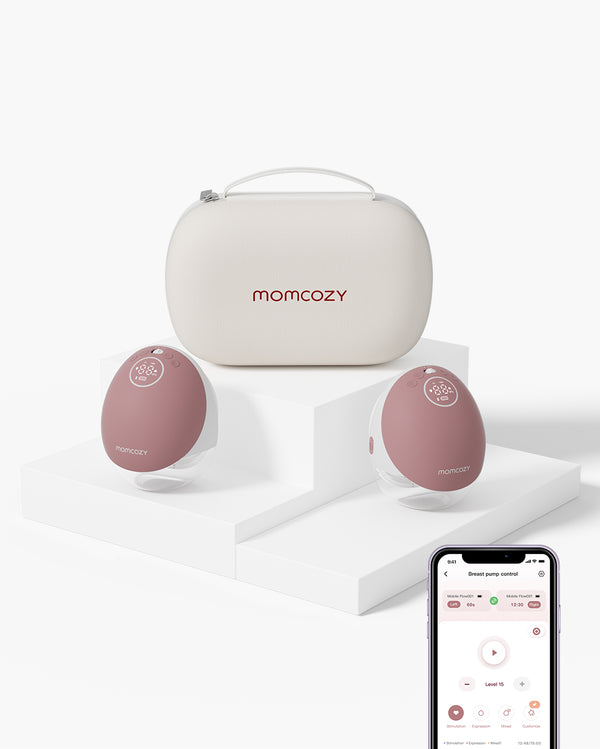
You can find several amazing breast pumps at Momcozy. The Momcozy M9, M6, M5, S12Pro, S9Pro, V1Pro, V2Pro and Air 1 are all highly efficient breast pumps that don't cause pain or discomfort. They are wearable, meaning you can use them hands-free. The good news is that you can buy these using your FSA/HSA account.
Batería larga
Para llevar puesto
Más comodidad
Here is a guide on the process:
Step 1. Checkout
Add the breast pump that you want to buy to your cart, and then click Checkout.
Step 2. Pay with FSA/HSA
Under the Payment section, select Flex | Pay with HSA/FSA. You will be redirected to a hosted Flex Checkout page.
Step 3. Fill Out the Form
Enter the necessary information. That includes your email address, full name, and FSA/HSA card information. Then click Pay Now. You will then be redirected back to the Shopify success order page.
A quick tip: after your purchase, save your receipt somewhere you can find it later. If you ever need to submit a claim for reimbursement — for example, if you paid with a regular card and need to get your FSA dollars back — your plan administrator will ask for the receipt showing what you bought, the date, and the amount. Most FSA and HSA administrators accept digital copies, so snapping a photo on your phone is usually enough. For HSA purchases specifically, the IRS allows you to reimburse yourself years later as long as the expense happened while the HSA was open — but you'll need that receipt if you get audited. For more details on what documentation to keep and how long to keep it, the IRS covers recordkeeping rules in Publication 969.
Tips for Maximizing Your FSA/HSA Benefits for Breastfeeding Supplies
As mentioned above, breast pumps are not the only products that you can buy with your FSA/HSA. You should leverage that to make your breastfeeding journey easier on your wallet.
Here are other breastfeeding supplies you can get with your FSA/HSA:
Spare Breast Pump Parts
Spare parts are vital for keeping your breast pump clean, functional, and comfortable to use — La Leche League recommends regular part replacement to maintain suction efficiency.. Over time, components like breast shields may wear out or need replacement to better suit your body. Tubing, which connects the pump to the collection system, can degrade with frequent use and require periodic replacement.
Additionally, small yet critical parts like valves and membranes play a big role in maintaining suction efficiency and should be replaced regularly. Using your FSA or HSA funds for these replacements ensures your pump works reliably, saving you from interruptions during your breastfeeding routine.
Milk Storage Bags
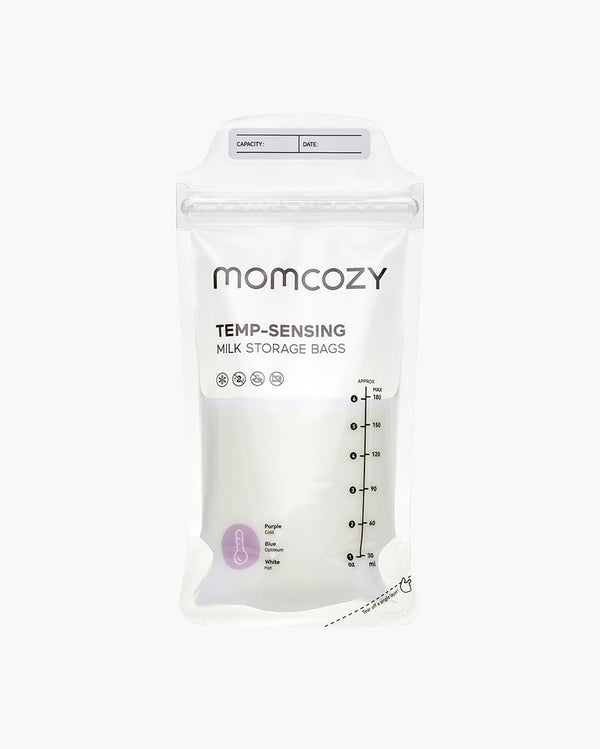
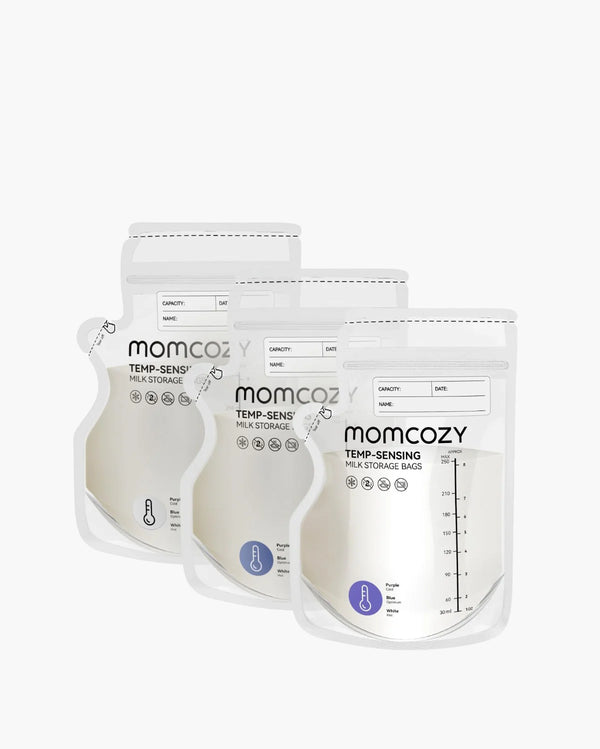
Milk storage bags are an indispensable tool for mothers who pump milk regularly. These pre-sterilized, disposable bags are designed for safe and hygienic milk storage, and many come equipped with double-zipper seals to prevent leaks. They are also freezer-safe, making them perfect for long-term storage.
Momcozy offers measurement markings, which help you track milk volumes and writable areas for labeling the date and time of expression. It also features an icon that changes color depending on the milk's temperature. With FSA/HSA funds, you can stock up on these practical supplies without the financial strain.
Storage Bottles
For mothers who prefer a reusable option, storage bottles are an excellent alternative to milk bags. These durable containers are ideal for storing, freezing, and transporting breast milk. Many are designed to be compatible with breast pumps, allowing you to pump directly into the bottles, minimizing milk transfer and spillage.
However, it's important to confirm with your plan provider, as most FSAs and HSAs cover storage bottles but not standard feeding bottles.
Build a Complete Pumping Setup with Your FSA/HSA Funds
Here's a strategy worth considering: most health insurance plans cover one breast pump per pregnancy at no cost to you under the Affordable Care Act. That's your starting point — usually a wearable pump, which many moms choose because of the flexibility it gives them. But if you're pumping regularly, especially if you're back at work or exclusively pumping, a second pump — like Momcozy's V3 (plug-in hospital-grade) or V3 Pro (portable/cordless smart) for your at-home sessions can make a meaningful difference in both comfort and output. The larger, separate motor in a traditional electric pump delivers steadier suction that holds up through long sessions, which is why it's so valuable for the first morning pump or the last session of the night — the times when milk supply tends to peak and when consistent, powerful expression matters most.
Your FSA or HSA dollars are the perfect way to add that second pump without stretching your wallet. Insurance handles the first one; your pre-tax account funds the complement. Together, you get a wearable pump that covers you on the go — at the office, in the car, while managing the kids — and a powerful home pump — whether that's a traditional plug-in like the V3 or a portable option like the V3 Pro — anchors your most important sessions. The Office on Women's Health has helpful breastfeeding guidance that emphasizes how the right tools can support your goals, and the World Health Organization recommends breastfeeding for two years and beyond — which means your pump needs to last. Investing in a two-pump setup early, funded partly by insurance and partly by your FSA/HSA, means you are covered for every scenario from month one through however long your journey continues. If you'd like a clearer sense of what a complete setup might cost, our breast pump price guide breaks down the numbers across every category.
Frequently Asked Questions About FSA HSA Breast Pump Purchases
Can I buy more than one breast pump with my FSA or HSA?
Yes. There is no IRS limit on how many FSA HSA breast pump purchases you can make. Your insurance covers one pump per pregnancy under the ACA, and your FSA or HSA can pay for a second pump, replacement parts, and accessories separately.
Do I need a prescription to use FSA/HSA for a breast pump?
No. A standard breast pump purchase through your FSA or HSA does not require a prescription or letter of medical necessity. However, for borderline items like lactation supplements or specialty nursing bras, some plan administrators may ask for a provider's letter.
Are wearable breast pumps FSA/HSA eligible?
Yes. Wearable (hands-free) breast pumps are fully eligible — the IRS does not restrict coverage to any specific pump type. Whether you choose a wearable, a traditional plug-in, or a manual pump, your FSA or HSA covers it equally.
What breastfeeding accessories can I buy with FSA/HSA funds?
FSA and HSA accounts cover breast pump replacement parts (flanges, valves, tubing, membranes), milk storage bags, nursing pads, nipple cream, pump cleaning wipes, and hands-free pumping bras. Standard feeding bottles and nursing bras without a medical purpose generally are not eligible.
What happens to my FSA money if I don't spend it by year-end?
Most FSA plans follow a use-it-or-lose-it rule. Some offer a carryover of up to $660 into the next plan year, or a grace period of up to 2.5 months after the plan year ends. HSA funds roll over indefinitely — you never lose them. Check your employer's plan for the specific rule.
Conclusion
Using HSA and FSA to get breast pumps and other breastfeeding supplies helps you reduce out-of-pocket expenses. Suppose your employer puts money into your account. That's like you are getting these products for free! That said, you should really utilize these accounts, especially FSA, because the funds don't carry over to the next year.
Your FSA or HSA is not just for one pump — it's your ticket to a complete setup. As we covered above, pairing a wearable pump (for freedom on the go) with a traditional plug-in or portable pump (for power at home) covers every moment of your day. With Momcozy's V3 and V3 Pro joining their wearable lineup, every pumping scenario is within reach. If you know someone who's expecting and figuring out their breastfeeding plan, share this article with them — the earlier they understand how to use their FSA or HSA for pump purchases, the more prepared they'll be when the baby arrives. And if you're curious about what else your account can cover beyond pumps, check out our complete list of FSA/HSA-eligible breastfeeding items, or explore our full electric breast pump collection to see everything that qualifies under your account.