Co-sleeping Definitions
According to ScienceDirect, co-sleeping is the practice of family members sleeping together. Sometimes, it means the family members, parents and children - for example, are sleeping in the same room. However, more often than not, the term "co-sleeping" is linked to bed-sharing. The family members are sleeping on the same surface.
The Sleep Foundation agrees on that definition. They say that co-sleeping could mean one of those two, or one more. It could also mean "rooming in." It is a type of room-sharing that happens in the hospital after your baby is born. In this practice, the hospital keeps your baby on their own sleeping surface near you for 24 hours a day.

=
Is Co-sleeping the Same as Bed-sharing?
Sometimes co-sleeping and bed-sharing have the same meaning. However, the definition of the term "co-sleeping" is loose. It could mean sharing the same bed or sleeping surface. In that case, yes, it is the same as bed-sharing.
But it could also mean the parent and the baby are sleeping in different beds in the same room. In that case, they don’t mean the same thing.
Because of this, we recommend using more accurate terms. Use bed-sharing for actual bed sharing, and room-sharing if they're in separate sleeping surfaces. This will help prevent confusion.
Should I Co-sleep with My Baby?
The answer depends on your definition of co-sleeping and your baby’s age. You can use this chart to decide:
| Baby’s Age |
Sleeping in the Same Bed? |
Sleeping in the Same Room |
| 0 - 6 months |
No |
Yes |
| 6 months - 1 year |
No |
Yes |
| 1 year and older |
Yes (with safety precautions) |
Yes |
The Biological Imperative: Why Parents Choose Co-Sleeping
The main reason why parents choose to co-sleep is to be close to their babies. It is better for child protection, as they can see the baby while they sleep. If the baby sleeps in a separate nursery, parents have to keep guessing how they are. Baby monitors can help here. These devices can alert parents if their baby needs help. Parents can also see the baby or talk to them without leaving the room through baby monitors. Still, room-sharing gives more peace of mind.
Furthermore, room-sharing with a baby makes nighttime feeds easier. You do not need to get up and go to a different room. Just pick up your baby, and you can breastfeed them there. As a result, that also helps improve the quality of your sleep.
Why Room Sharing is the Gold Standard (AAP Recommended)
The American Academy of Pediatrics recommends room sharing with your baby because it is a lot safer than the alternatives. Data shows that sleeping in the same room with your baby lowers the risk of sudden infant death by 50 percent.
In addition to that, room sharing offers convenience and other benefits. You can breastfeed your baby during the night more easily. Remember that newborns need frequent nighttime feeds. Being near them will make this stage less stressful. You don't need to get out of bed, go to a different room, then come back later.
The Science of Sleep Surfaces: What Makes a Bed "Safe"?
Several factors, like firmness and flatness, affect how safe a bed is for a baby to use, and creating a safe sleeping environment for your baby starts with choosing the right sleep surface and keeping the space clear of anything loose. Here are some pointers to help you pick a good one:
-
Choose mattresses with a firm surface - You should avoid soft mattresses, memory foam, or overly padded surfaces. These can mold around your baby’s face and make them sink into the surface. That can lead to suffocation. Opt for a mattress with a firm surface instead.
-
Avoid inclined sleeping surfaces - Your baby should sleep on a flat surface, not one that tilts or slopes above 10 degrees. They are unsafe because they can cause your baby's head to fall forward. That can then block their airway. A completely flat sleeping surface is the safest option.
-
Remove clutter - Your baby’s sleeping area should have nothing in it. There should be no pillows, blankets, toys, or bumper pads. These objects can accidentally cover your baby’s face or trap heat.
-
Use fitted sheets - Your baby is not yet in the safe zone once you have removed pillows and blankets. You should ensure that the sheets are properly fitted. Otherwise, it could come off while your baby is sleeping and cover their face.

What About Baby Swings?
Baby swings can help you soothe your baby and let you have breaks. However, you should not use one as a sleeping surface. Their function is to keep your baby calm or entertained while you rest for a bit.
Beidseitige Armlehnen
Von Eltern inspirierte Schaukelbewegungen
Bequemer Sitz
Auch als Standstuhl verwendbar
Patentierte 3D Swing Tech
6 Schaukelbewegungen
180° drehbarer Sitz
5-Punkt-Gurt
To ensure that your baby remains safe, pick baby swings that mimic natural motion. The weight the swing is able to support is also important to know. It ensures the swing will not collapse while your baby is lying on it.
Here are two top picks:
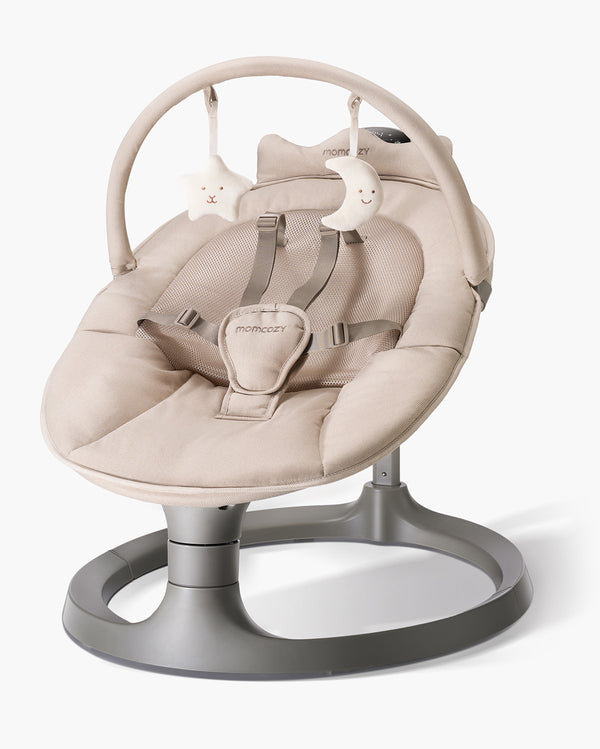
1. Momcozy 2-in-1 Electric Baby Swing
This electric baby swing copies a person’s natural motions. Furthermore, it offers 4 different motions and speeds to match your baby's mood. It supports babies up to 20 pounds.
The best thing about this baby swing is the dual-arm support system. It features one arm in the front, and one in the rear. These arms ensure that the seat stays securely anchored while the swing is in motion.
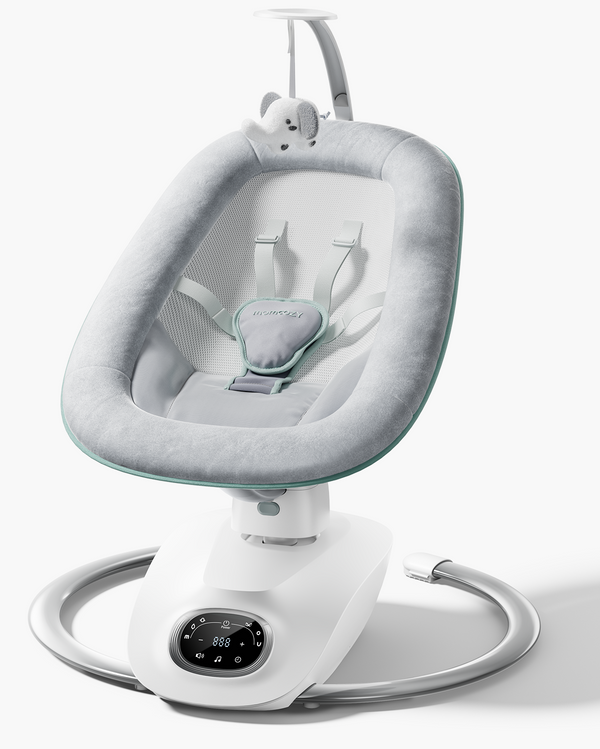
2. Momcozy CocoSway 3D-Motion Electric Baby Swing
The Momcozy CocoSway 3D can move in three directions, which helps replicate your swinging motion more accurately. It offers 6 different options, including side-to-side, swing, and wave motions. You can choose from 4 different speeds.
This baby swing also rotates 180 degrees, so you can easily adjust it to continue having face-to-face interaction with your little one.
How to Co-sleep Safely: Risk Mitigation Strategies
Here are some things you also need to remember in addition to sleeping in different beds.
- Keep the sleep surface firm and flat
The mattress should be firm and even. Soft or sagging surfaces can cause a baby to sink in, which may cause breathing difficulties.
- Keep pillows and blankets away from your baby
We recommend keeping pillows, comforters, and loose blankets away from your baby's sleep space. Doing so helps reduce the risk of suffocation.
- Place your baby on their back
You should always lay your baby on their back when they are sleeping. This position helps keep the airway open and lowers the risk of sleep-related accidents.
- Make sure the baby cannot fall or get trapped
Always check the bed area for gaps between the mattress and the siderails, headboard, and footboard. These spaces can trap your baby.
- Do not smoke
Do not smoke near your baby, no matter if you are inside or outside the room. Vaping and using electronic cigarettes are not safe for your baby either. Please stop these habits to protect your baby.
The "Red Line" Scenarios: When Co-sleeping is Strictly Forbidden
There are some circumstances when you should not consider co-sleeping with your baby. Doing so in these scenarios can put your baby in danger.
1. They don't have a Crib or a Bassinet
The golden rule is not to co-sleep with your baby if you're going to share a bed. First of all, adult mattresses are often too soft for babies. That can hinder their breathing. Also, you, your pillows, or your blanket may cover your baby's mouth and nose. Those will make it harder for them to breathe.
Sharing a bed can also cause overheating, which is not safe for your baby.
2. Sleeping on Uneven Surfaces
Sofas, armchairs, and waterbeds are also not suitable sleeping surfaces for babies. They are too soft and uneven; they're even worse than adult beds. That said, you should avoid co-sleeping with your baby if this is where they will sleep.
3. You or Your Partner Smokes
Do not co-sleep with your baby if you or your partner smokes or has smoked recently. Nicotine is harmful to your baby. It does not matter if you are outside the room or not when you smoke. If you can't stop, do not co-sleep with your baby.
Transitioning to Independence
One day, your baby has to sleep in their own room, and many families naturally start wondering when to move baby to their own room in a way that still feels safe and gradual.
It is your choice when to actually do this transition. Some parents stop co-sleeping once their baby is 6 months old. Others wait until their baby is at least 1 year old. It is safer and better for your baby.
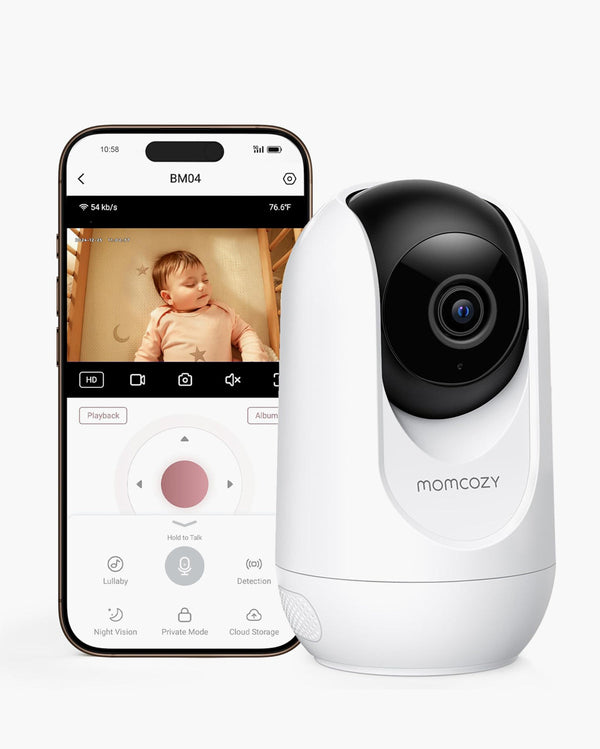
The good news is that tools like the Momcozy baby monitors can reduce stress. These devices allow you to see your baby through a camera connected to a screen. Some models use a direct connection, while others use wi-fi.
The video monitors offer you a crystal clear view of the room. Also, they feature a detection system. The device will notify you if your baby is out of the safe zone, crying, or if anything else needs your attention. With that, you don't need to be constantly checking the screen.
FAQs
What should my baby and I wear when co-sleeping?
Your baby should wear a sleep sack. This helps protect them from cold without the use of blankets, which are a safety risk. Sleep sacks also help prevent overheating.
As for you, you can wear any clothes that make you comfortable. Unless you are a breastfeeding mom. If you are breastfeeding, nursing tops and nursing bras become the smartest choice.
Can I co-sleep with twins or multiples?
Yes, you can room share with multiples like twins and triplets. There are two ways to room-share with multiples safely. One, you can give each one of them their own crib or bassinet. This is the safest choice. If you don’t have space, you can use a large crib instead. The twins can lie either side by side or head to head.
What bedding should I use for my baby when we co-sleep?
Your baby should sleep on a flat bed. The mattress should not tilt by more than 10 degrees. On top of that, the mattress should also be firm. It’s so that your baby will not "sink" and suffocate.
I'm worried I might fall asleep while I breastfeed my baby at night. Is this ok?
Try getting out of bed to shake off the sleepiness. Put a chair in one corner of the room and make that your feeding station. Sleeping while your baby sleeps also helps you not be drowsy during the feeding sessions.