Key Takeaways
-
•Crying is a late hunger cue.
-
•Early cues are subtle but easier to respond to.
-
•Feeding before distress improves digestion and latching.
-
•Fullness cues matter just as much as hunger cues.
-
•Proper positioning supports better feeding outcomes.
Introduction
Understanding baby hunger cues can completely change the way feeding feels. Babies communicate hunger long before they cry, using subtle body movements, rooting reflexes, and facial expressions. When parents learn to recognize these early baby hunger cues, feeding becomes calmer, smoother, and more responsive—often preventing overtiredness and frustration.
A supportive setup also makes a difference. Tools from the Momcozy Best Baby High Chair Collection and Momcozy Nursing Pillow Collection help position babies safely and comfortably during both milk feeds and solid meals, making it easier to observe hunger signals and respond at just the right time.
The Language of Crying Is a Late Language
Many parents assume crying is the first sign of hunger. In reality, crying is usually a late-stage baby hunger cue. By the time your baby cries, they may already be overwhelmed.
When baby cries from hunger:
- They may be overtired.
- Latching can become more difficult.
- They may swallow excess air.
- Feeding may feel rushed or stressful.
- They may tire quickly and not feed efficiently.
Crying also uses energy. An upset baby may need calming before feeding, which can delay the process even more. Recognizing earlier baby hunger cues helps prevent this cycle. Watching your baby's body language instead of waiting for tears builds confidence and creates a smoother feeding rhythm.
Early Feeding Cues – Baby Is Hungry
Early hunger cues are subtle and easy to miss. These quiet signals often appear before baby becomes fussy.
Common Early Baby Hunger Cues:
- Rooting (turning head toward touch)
- Sucking on hands or fingers
- Lip smacking
- Opening and closing mouth
- Tongue movements
- Gentle stirring during sleep
- Bringing hands to face
At this stage, the baby is calm and alert. Feeding now usually leads to:
- Better latch quality
- Less air intake
- More efficient milk transfer
- A relaxed feeding session
Responding early supports healthy digestion and may reduce gas or spit-up. It also helps maintain milk supply for breastfeeding parents, as calm babies tend to feed more effectively.
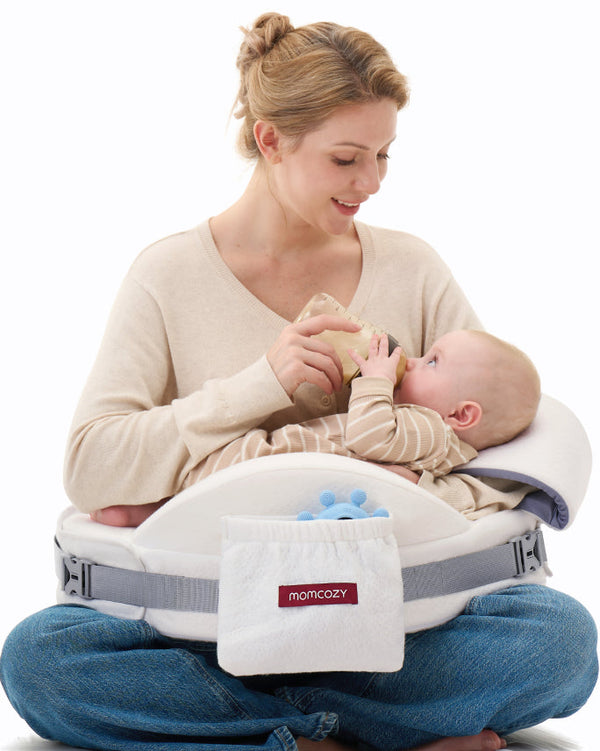
Recommended Support: Momcozy MaxSupport Nursing Pillow
Proper positioning makes recognizing and responding to baby hunger cues much easier.
The Momcozy MaxSupport Nursing Pillow is designed with:
-
Adjustable height layers to align baby at breast or bottle level
-
Firm, non-sagging support to prevent sinking
-
Wraparound stability to reduce shifting during feeds
-
Ergonomic elevation to ease shoulder and back strain
-
Removable, washable cover for easy cleaning
Its structured design helps maintain a safe feeding angle, which may reduce air swallowing and support smoother digestion. When the baby is well-positioned and the parent is comfortable, it's easier to stay attentive to early hunger and fullness cues. Comfort supports awareness—and awareness supports responsive feeding.
Mid Feeding Cues – Baby Is Really Hungry
If early signals are missed, baby hunger cues become more obvious and urgent. At this stage, your baby is clearly hungry but may be growing impatient.
Common Mid-Stage Baby Hunger Cues:
- Squirming or restlessness
- Fussing sounds
- Head bobbing toward the breast or bottle
- Strong rooting reflex
- Short, escalating cries
- Increased arm and leg movement
The baby is still ready to feed, but timing matters. Acting promptly helps prevent escalation into full distress. Preparing your feeding space in advance—having your pillow positioned or bottle ready—can make response quicker and smoother.
At this stage:
- Latching is usually still possible without much difficulty.
- The baby may feed more eagerly.
- Burping midway through feeding can help reduce air buildup.
For bottle-fed babies, paced feeding becomes especially important. Hold the bottle more horizontally rather than vertically to slow milk flow. Allow brief pauses every few minutes so the baby can regulate intake naturally. This supports digestion and reduces the risk of overfeeding.
Responding during mid-stage cues helps maintain calm, efficient feeding sessions and prevents unnecessary stress.
Late Feeding Cues – Baby Is Upset and Needs Calming Down Before Feeding
Late baby hunger cues occur when feeding has been delayed too long. At this point, baby is distressed and may struggle to feed effectively.
Common Late Hunger Cues:
- Loud, intense crying
- Red or flushed face
- Body stiffening or arching
- Frantic head movements
- Clenched fists
- Difficulty latching or staying latched
A highly upset baby may gulp air while crying, which increases gas and discomfort. Trying to feed immediately without calming may lead to shallow latch, choking, or more spit-up.
Before feeding, focus on soothing:
- Skin-to-skin contact
- Gentle rocking or swaying
- Soft talking or humming
- Slow, rhythmic bouncing
Once the baby begins to calm and breathing steadily, attempt feeding again. A brief soothing period often improves latch quality and reduces air swallowing.
Late hunger cues are common, especially during growth spurts or busy days. The goal isn't perfection—it's learning to recognize patterns over time. As you become more familiar with your baby's hunger rhythm, responding earlier becomes easier and more natural.
How Should I Respond to My Baby's Hunger Cues?
Responsive feeding means following your baby's signals instead of strictly watching the clock. While schedules can offer structure, babies' appetites vary daily depending on growth, sleep, and activity levels.
Healthy Responsive Feeding Includes:
- Feeding at early cues before crying begins
- Allowing baby to set the pace of sucking and swallowing
- Pausing to burp as needed
- Watching for and respecting fullness cues
- Offering both breasts (if breastfeeding) but not forcing it
Responsive feeding builds trust. Your baby learns that hunger will be met consistently, which supports emotional security as well as physical growth.
Growth spurts—often around 2–3 weeks, 6 weeks, 3 months, and 6 months—may temporarily increase hunger. During these periods:
- Feeding frequency naturally rises
- Baby may cluster feed
- Sleep patterns may shift
This is normal and supports rapid development. Increased feeding during spurts helps boost milk supply and meet rising calorie needs.
A baby swing quickly becomes one of the most-used items in your home—soothing baby with gentle motion during fussy awake periods while giving you much-needed hands-free moments.
How Are Cues Different for Bottle-Fed Babies?
Bottle-fed babies show the same baby hunger cues as breastfed babies. However, feeding mechanics differ slightly because milk flow can be faster and more continuous.
Differences May Include:
- Longer gaps between feeds due to larger volumes
- Higher risk of overfeeding if cues are ignored
- Faster milk flow, depending on nipple size
- Less effort required to extract milk
Because bottles may deliver milk more quickly, babies can consume more before the brain registers fullness. That's why paced bottle feeding is important.
- Hold baby upright rather than lying flat
- Keep the bottle horizontal to slow flow
- Allow brief pauses every few minutes
- Switch sides midway to mimic breastfeeding
- Stop when fullness cues appear—even if milk remains
Avoid encouraging babies to "finish the bottle." Watch body language instead of focusing only on ounces consumed. Feeding is about responsiveness, not volume targets.
The "False Alarms" (Hunger or Something Else?)
Not every cry or hand-to-mouth movement signals hunger. Babies use similar behaviors for multiple needs.
Babies may fuss because they:
- Are tired
- Need a diaper change
- Want comfort or closeness
- Have gas discomfort
- Are overstimulated
- Feel too hot or too cold
For example, sucking on hands can sometimes be self-soothing rather than hunger. A quick check of context helps you decide.
Before Feeding, Ask:
- When was the last full feed?
- Did the baby nap recently?
- Does the baby need burping?
- Is the diaper clean?
- Has there been a lot of stimulation?
If early baby hunger cues like rooting, lip-smacking, or searching with the mouth are present, feeding is appropriate. If cues are unclear, soothing first may resolve the fussiness without adding unnecessary feeding.
Learning the difference between hunger and other needs takes time. As you observe patterns, you'll begin to recognize your baby's unique rhythm with greater confidence.
Signs Your Baby Is Full
Fullness cues prevent overfeeding and discomfort.
Watch for:
- Turning head away
- Slower sucking
- Relaxed hands
- Pushing bottle away
- Sealed lips
- Calm disengagement
For babies eating solids, fullness may look like leaning back, refusing to open the mouth, or dropping food.
Recommended Support: Momcozy DinerPal High Chair
As the baby transitions to solids, posture becomes essential. The Momcozy DinerPal High Chair offers:
- Adjustable height settings
- Secure five-point harness
- Stable anti-tip base
- Removable, easy-clean tray
- Foldable, space-saving design
- Durable wipe-clean materials
Proper upright positioning promotes safer swallowing and allows parents to clearly observe hunger and fullness cues. The sturdy structure helps babies focus on eating while building independent feeding skills.
Ab $237.49 USD $329.99 USD
5 Modi
Sicherheitsdesign
Lebenslanger Gebrauch
Einfache Reinigung
Conclusion
Learning baby hunger cues turns feeding from guesswork into communication. Early cues allow calm, responsive feeding. Mid cues require quicker action. Late cues need soothing before feeding begins.
When you combine awareness with proper support—like ergonomic nursing pillows and a stable high chair—feeding becomes more enjoyable and less stressful. Over time, recognizing baby hunger cues builds confidence, strengthens bonding, and supports healthy growth at every stage.