By the third trimester, standing at the kitchen counter or walking through a store may leave your lower back sore. Back pain during pregnancy third trimester often develops as your growing belly changes your posture and increases pressure around the spine and pelvis. Gentle movement and added support may ease the strain. Severe pain or pain with other symptoms needs medical attention.
Is Back Pain Normal in the Third Trimester?
Yes. Mild to moderate lower back pain is common during the third trimester.
More than 60% of pregnant women experience lower back pain. As the uterus grows, the body’s center of gravity moves forward. The abdominal muscles also stretch and provide less support for the spine. This can cause aching, stiffness, or pressure across the lower back.
The American College of Obstetricians and Gynecologists lists posture changes and muscle strain among the common reasons for pregnancy-related back pain.
Pain that improves after rest or a position change is usually less concerning. Pain that is severe, constant, or linked with other symptoms should be assessed.
Common Causes of Lower Back Pain in the Third Trimester
Third trimester back pain often results from several physical changes happening at the same time.
Posture and Muscle Strain
As the belly grows, the body’s center of gravity moves forward. The pelvis may tilt forward, increasing the curve in the lower spine.
The muscles around the back, abdomen, hips, and pelvic floor must work harder to maintain balance. This extra workload can leave the muscles tired and sore, especially later in the day.
Pelvic Joint and Ligament Changes
Pregnancy hormones make the ligaments around the pelvis more flexible as the body prepares for birth. Ligaments are strong bands of tissue that connect bones and support joints.
Greater flexibility may reduce stability around the pelvis and lower back. Pain may be felt near the lower spine, hips, groin, or pubic area.
Baby’s Position and Back Pressure
The baby’s position may add pressure to the lower back as the baby moves deeper into the pelvis near the end of pregnancy. Back pain alone cannot confirm the baby’s position, so a prenatal exam provides a more reliable answer.
An occiput posterior position means the baby is head down with the back of the head facing the pregnant person’s spine. This position may place more pressure on the lower spine or tailbone during labor.
How to Relieve Third Trimester Lower Back Pain
Reducing strain throughout the day may make walking, sitting, and sleeping more comfortable.
- Change positions regularly. Avoid sitting or standing in one position for long periods. Choose a chair with firm back support and keep both feet flat on the floor.
- Lift with your legs. Bend your knees, keep the object close to your body, and use your leg muscles to stand. Turn your whole body instead of twisting at the waist.
- Keep moving gently. Walking, prenatal stretching, and approved strengthening exercises may help the muscles around the back and pelvis handle daily strain. Research on exercise during pregnancy indicates that regular physical activity may reduce pregnancy-related lower back pain.
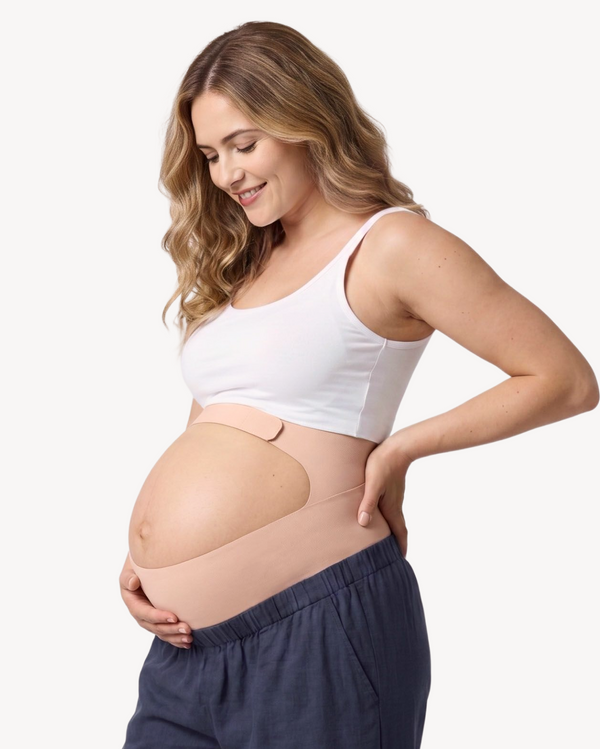
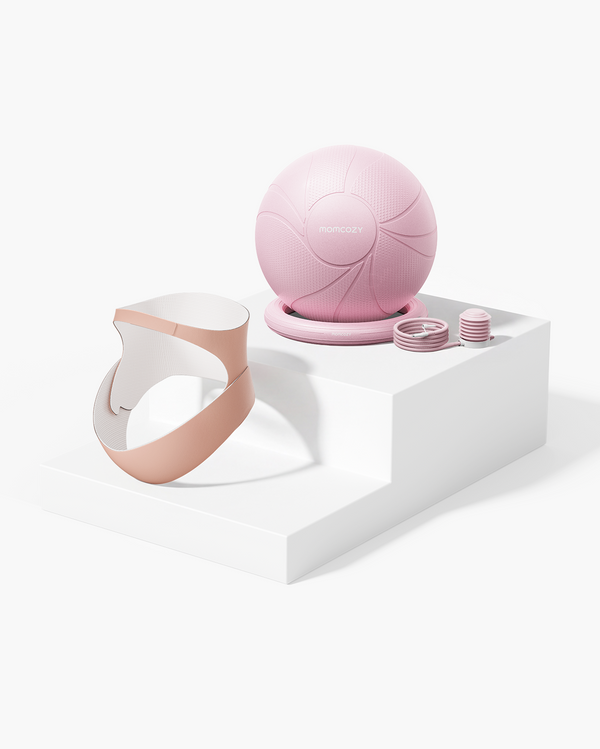
- Add support during active periods. A well-fitted belly band may help support the weight of the belly during walking, standing, or light household tasks. For growing bumps, the Momcozy Go As You Grow™ Maternity Belly Band offers adjustable support across the belly and lower back. Use the size chart to check the fit and follow the recommended wearing instructions.
Soutien du dos
Confort
Efficacité
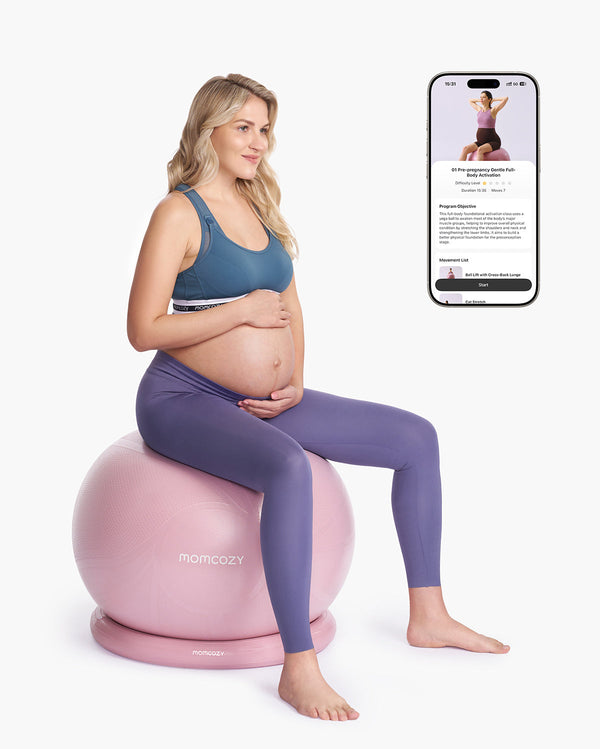
- Use a pregnancy ball for gentle movement. With approval from your maternity care provider, slow pelvic circles or side-to-side rocking may help ease stiffness. The Momcozy BirthEase Pregnancy Ball Set works well for light stretching, supported movement, and pelvic exercises at home. Place the ball on a nonslip surface and keep a wall or sturdy chair within reach.
Anti-Burst Design
Stability Base Included
Guided Training Program
- Support your body while sleeping. Place a pillow under the belly, between the knees, or behind the back to reduce twisting through the hips and spine. A full-body option such as the Huggable U Shaped Maternity Body Pillow can support several areas at once, including the belly, back, hips, knees, and feet. The Pregnancy Pillow collection also includes other shapes for different sleep positions and support needs.
Full Body Support
Effective Pain Relief
Soft and Comfortable
Multi-Purpose Use
What Makes Back Pain Worse in Pregnancy?
Daily posture and movement habits can place extra pressure on the lower back.
Common triggers include:
- Sitting or standing for too long
- Slouching in a chair
- Leaning backward to balance the belly
- Putting more weight on one leg
- Carrying a bag on one side
- Bending forward from the waist
- Twisting while getting out of bed
- Wearing shoes with poor stability
- Sleeping without support between the knees
- Increasing exercise intensity too quickly
Muscle fatigue can also make pain more noticeable later in the day. Track when the pain begins and what you were doing beforehand. This may help identify a chair, movement, pair of shoes, or repeated task that needs to be adjusted.
What Activities Should Avoid When Back Pain during Pregnancy Third Trimester
Complete rest is usually unnecessary unless your clinician has recommended it. Continue gentle movement, but avoid activities that cause pain or increase the risk of falling, injury, or overheating.
Avoid:
- Heavy lifting without help
- High-impact exercise that increases pain
- Contact sports
- Activities with a high fall risk
- Hot yoga
- Exercise in very hot or humid conditions
- Movements that cause sharp or shooting pain
The pregnancy exercise safety information from the American College of Obstetricians and Gynecologists covers activities that may carry fall, impact, or overheating risks.
Stop exercising if you develop bleeding, fluid leakage, painful contractions, chest pain, severe dizziness, or trouble breathing.
When Should I Worry About Back Pain in Pregnancy?
Contact your maternity care team if back pain occurs with:
- Vaginal bleeding
- Fluid leaking from the vagina
- Fever or chills
- Burning or pain during urination
- Regular tightening or contractions
- Reduced fetal movement
- Severe headache or vision changes
- Sudden swelling of the face or hands
- Severe or constant abdominal pain
- Pain that becomes rapidly worse
Pain under the ribs or along one side may also need assessment, especially when it occurs with fever, urinary symptoms, headache, or vision changes.
A dull and constant lower backache before 37 weeks may be a sign of preterm labor. Other possible signs include pelvic pressure, cramps, regular contractions, and changes in vaginal discharge.
When to Contact a Doctor
Call your prenatal office the same day if the pain continues after rest, interferes with walking or sleep, returns often without a clear trigger, or feels different from your usual pregnancy soreness.
For any warning sign listed above, contact your maternity unit promptly instead of waiting for your next appointment.
Seek urgent medical care for new leg weakness, numbness around the buttocks or genital area, or loss of bladder or bowel control. These symptoms may point to nerve compression and should be checked without delay.
Can Lower Back Pain Mean Labor Is Near?
Lower back pain alone does not confirm that labor is beginning. Ordinary pregnancy-related strain may continue for several weeks before delivery.
Labor becomes more likely when the pain follows a regular pattern. It may begin in the back and move toward the front of the abdomen. Contractions usually become longer, stronger, and closer together. They also continue after rest, hydration, or a change of position.
Other possible signs include:
- Water breaking
- Bloody or mucus-like discharge
- Increasing pelvic pressure
- Regular contractions
The signs of labor include contractions that become more frequent and intense. Follow the instructions your maternity team has given you about when to call or go to the hospital.
FAQs
Q1. Is It Safe to Use a Heating Pad on Your Back During Pregnancy?
Yes, gentle heat may help relax sore back muscles during pregnancy. Apply a warm heat pack over clothing or a towel for 10 to 20 minutes, and avoid placing it directly on your skin or belly. Remove it if your skin feels too hot or uncomfortable.
Q2. What Is the Best Way to Sleep During Pregnancy With Back Pain?
Sleep on your side with one or both knees slightly bent. A pillow between your knees can keep your hips more level, while another under your belly can reduce pulling on the lower back. A full-length body pillow may support both areas at the same time.
Q3. Where Is Preeclampsia Back Pain?
Preeclampsia is more commonly linked to pain in the upper abdomen or shoulder, often on the right side, rather than typical lower back pain. Seek prompt medical care if this pain appears with a lasting headache, vision changes, facial or hand swelling, nausea, or trouble breathing.
Q4. What Is Back Labor?
Back labor is intense pain in the lower back that begins during labor. It may become stronger during contractions and can remain uncomfortable between them. The baby’s head pressing toward the lower spine or tailbone is a common cause, although fetal position is not the only possible factor.
Q5. How Long Can Back Pain Last During Pregnancy?
There is no set number of days. Muscle and posture-related pain may come and go for several weeks as the belly grows and daily activity changes. Contact your maternity care provider if the pain becomes severe, persists despite rest, or occurs with fever, bleeding, urinary pain, contractions, or fluid leakage.
Check Your Symptoms and Adjust Your Routine
Track the movements and positions that trigger your pain, then adjust the parts of your routine that increase it. Add support during walking, sitting, and sleep as needed. Contact your maternity care team promptly if the pain becomes severe, develops a regular pattern, or appears with another warning symptom.