


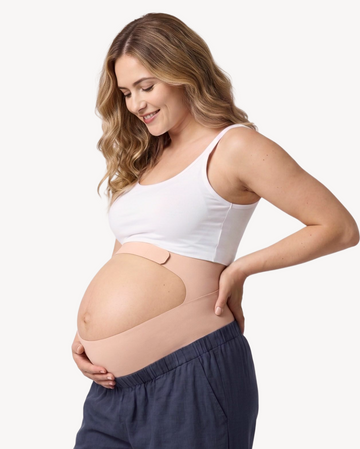
A twin pregnancy belly may become noticeable earlier or feel heavier sooner, but bump size alone cannot confirm twins or show how well the babies are growing. Ultrasound and regular prenatal care provide the answers that photos cannot.

What Is a Twin Pregnancy?
A twin pregnancy is a multiple pregnancy in which two fetuses develop in the uterus at the same time. Twins can begin when two separate eggs are fertilized or when one fertilized egg divides. Because a multiple pregnancy asks more of the pregnant body and carries additional risks, appointments and ultrasound monitoring are often more frequent than in a singleton pregnancy.
Early ultrasound does more than count babies. It also identifies chorionicity and amnionicity, meaning whether the twins have separate or shared placentas and amniotic sacs. According to the American College of Obstetricians and Gynecologists’ multiple pregnancy guidance, this information helps the care team understand which complications require closer monitoring.
What Are the Different Types of Twins?
Fraternal, or dizygotic, twins develop when two eggs are fertilized by two sperm. They are genetically similar in the same way as other siblings and may be the same or different sexes. Each baby usually has a separate chorion and amniotic sac.
Identical, or monozygotic, twins develop when one fertilized egg divides. Depending on when division occurs, the babies may have separate placentas and sacs, share a placenta but have separate sacs, or, more rarely, share both a placenta and an amniotic sac.
Placenta and sac arrangement matters more to prenatal monitoring than whether twins look identical. The NHS guide to being pregnant with twins explains that the first scan can often establish whether the babies share a placenta; if the result is unclear, another scan may be offered.
What Are the Signs of a Twin Pregnancy?
Possible clues include stronger nausea, breast tenderness, fatigue, quicker weight gain, or measuring larger than expected for dates. None is diagnostic. Symptoms overlap widely with singleton pregnancy, and some twin pregnancies cause few early clues. Ultrasound is the dependable way to confirm two fetuses.
During pregnancy, twins can make the belly feel fuller sooner, but early size still varies widely. Twins can share a pregnancy belly that looks round, wide, high, or low. Gestational age, torso length, muscle tone, previous pregnancies, bloating, fetal position, and fluid levels can all change how a bump looks.

Twin Pregnancy Belly Week by Week
In a pregnancy with twins, belly shape varies from person to person. The following trimester overview describes common patterns rather than required measurements. Your clinician will use ultrasound, blood pressure, lab work, and other assessments, rather than appearance alone, to follow the pregnancy.
Twin Pregnancy: First Trimester (Weeks 1 to 12)
During the first trimester, hormonal symptoms may feel strong even while the bump remains subtle. Bloating can make the abdomen look fuller before the uterus rises out of the pelvis. By the end of this stage, ultrasound commonly confirms twins and may identify whether they share a placenta or sac.
Prioritize scheduled prenatal care, hydration, foods you can tolerate, and any supplements prescribed by your clinician. Contact the care team if vomiting prevents you from keeping down fluids, or if you have bleeding, fainting, or severe one-sided or persistent abdominal pain.
Twin Pregnancy: Second Trimester (Weeks 13 to 26)
The abdomen usually becomes more visibly rounded as both babies and the uterus grow. You may notice skin stretching, round-ligament sensations, lower-back fatigue, pelvic pressure, or shortness of breath with exertion. Fetal movement often becomes easier to recognize, although it may be difficult to tell which twin moved.
Twin pregnancies commonly involve additional ultrasounds to assess anatomy, fluid, placentas, and growth. ACOG notes that ultrasound may be performed every four to six weeks beginning in the second trimester, with a different schedule when closer surveillance is needed. Keep every appointment even if you feel well.
Twin Pregnancy: Third Trimester (Weeks 27 to 40)
The bump may feel heavier and daily movements can require more planning. Sitting, rolling in bed, dressing, and standing for long periods may become tiring. Frequent small meals, activity pacing, supportive positioning, and planned rest can be more comfortable than pushing through fatigue.
Twins are more likely than singletons to be born before 37 weeks, so reaching 40 weeks is not the expectation for every twin pregnancy. Learn your care team’s preterm-labor instructions. ACOG’s signs of preterm labor include regular or frequent tightening, pelvic pressure, a constant low backache, changes in discharge, and a gush or trickle of fluid.

How Can I Stay Comfortable While Pregnant With Twins?
Comfort tools should support daily life without replacing prenatal care or treating a complication. Ask your clinician which options fit your pregnancy, particularly if you have pain, contractions, cervical changes, placenta concerns, blood-pressure problems, or an activity restriction.
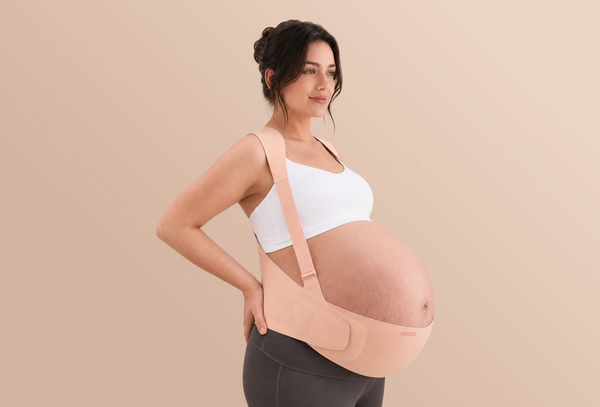
Use structured support for selected activities. The Momcozy Go As You Grow™ Maternity Plus Size Belly Band is designed specifically for twin, multiple, or fast-growing bumps. Its integrated three-zone system combines a wide contoured cradle that supports from underneath, the 2.0 Ergonest Support Structure™ with dual-side stays for the lower back, and an ergonomic racerback with padded straps to distribute weight across a broader area.
Adjustable shoulder straps, grab handles, dual-side adjustments, airflow channels, soft fabric, and grip strips are designed to help create a tailored, stable fit. The belly panel should lift gently rather than squeeze. Momcozy’s current guidance says to limit wear to 2 to 3 hours per day, using the band when support is most useful and consulting your healthcare provider with questions. For other support levels, compare the Momcozy belly band collection.
Build a supportive sleep setup. The Huggable - U Shaped Maternity Body Pillow is a 100% polyester, U-shaped pillow designed to support the head, back, belly, sides, knees, hips, and feet. Its flexible shape can also be arranged for lounging, reading, watching TV, or nursing later. Velvet and cooling cover choices are currently listed on the product page. Explore additional shapes in the Momcozy pregnancy pillow collection.
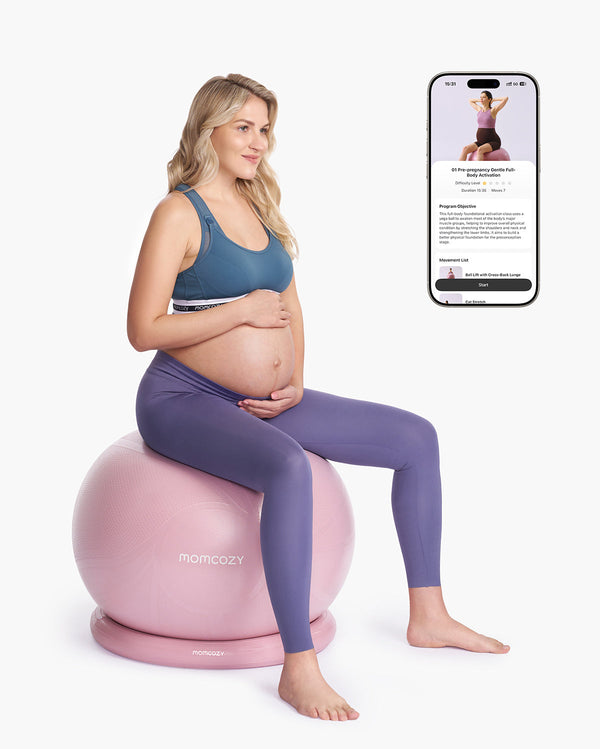
Choose clinician-approved movement. ACOG says activity can be beneficial in a multiple pregnancy, although strenuous exercise may need to be avoided and individual complications can change the plan. If your clinician approves ball-based movement, the Momcozy BirthEase Pregnancy Ball Set, a maternity exercise ball, has a textured anti-slip surface, reinforced base, BPA-free PVC, anti-burst construction, and stage-based video courses in the Momcozy App. The website lists a maximum supported weight of 330 pounds and notes that the ball is designed to deflate slowly if punctured, not to be unbreakable. Avoid sharp objects and follow the product’s instruction to consult your doctor before exercising.
Small habits matter too: change positions regularly, use supportive shoes, keep commonly used items within easy reach, sit down to dress, and accept help with lifting or prolonged chores.
Possible Complications With Twins
Most people carrying twins receive closer monitoring because complications are more common than in singleton pregnancy. This does not mean a problem will occur; it means early detection matters.
- Preterm birth: ACOG identifies birth before 37 weeks as the most common complication of multiple pregnancy.
- Preeclampsia and gestational hypertension: High-blood-pressure disorders occur more often and may begin earlier in multiple pregnancy.
- Gestational diabetes and anemia: Screening, nutrition guidance, supplements, or treatment may be needed based on individual results.
- Growth differences: One twin may grow more slowly than the other, so ultrasound is used to monitor both babies.
- Twin to twin transfusion syndrome (TTTS): This can occur when monochorionic twins share a placenta and blood flow becomes unbalanced.
- Delivery complications: The safest birth plan depends on the babies’ positions, gestational age, growth, health, and the pregnant parent’s health.
Use the CDC’s urgent maternal warning signs as a general safety reference. Seek prompt medical care for bleeding or fluid leakage, severe or persistent abdominal pain, trouble breathing, chest pain, fainting, a severe headache or vision change, extreme swelling of the hands or face, fever, or a clear slowing or stopping of the babies’ usual movement.
Factors Influencing Belly Size in Twin Pregnancy
The belly of a twin pregnancy is shaped by many variables, so its appearance cannot tell you how your body should look at a particular week. A larger or smaller bump does not by itself indicate fetal size or health.
Genetics and Body Type
Height, torso length, rib-cage and pelvic structure, abdominal muscle tone, and natural fat distribution can affect how far forward or wide a bump appears. Previous pregnancy may also change how early the abdomen becomes noticeable because tissues have stretched before.
Maternal Health and Weight Gain
Pre-pregnancy body size, nausea, appetite, fluid retention, and medically appropriate weight gain all influence appearance. Twin pregnancies often require different nutrition and weight-gain planning than singleton pregnancies, but there is no universal target for every body. Use the personalized range provided by your obstetric clinician or registered dietitian rather than comparing with social media.
Amniotic Fluid Levels
Each baby’s amniotic fluid contributes to uterine size. Higher or lower fluid levels may change the bump’s measurements and can sometimes signal a condition that needs monitoring. Only clinical measurement and ultrasound can assess fluid accurately.
Baby Positioning
Two babies can lie head-down, breech, transverse, or in changing combinations. Their positions may make the abdomen appear higher, lower, wider, uneven, or different from one day to the next. Position also matters when the care team discusses delivery planning.

What Not to Do When Carrying Twins
Avoid treating twin pregnancy as a reason for automatic bed rest or, at the other extreme, assuming your usual routine never needs adjustment. Follow your own care plan.
- Do not skip prenatal visits, growth scans, lab tests, or recommended monitoring.
- Do not smoke, drink alcohol, use recreational drugs, or start medication, herbal products, or supplements without professional guidance.
- Do not begin strenuous exercise or a new pregnancy-ball routine without asking your clinician. Stop activity for bleeding, painful contractions, fluid leakage, dizziness, chest pain, unusual shortness of breath, or balance-affecting weakness.
- Do not let a support belt become painfully tight or wear it to sleep. Remove it if it causes numbness, breathing difficulty, skin injury, or increased discomfort.
- Do not ignore preterm-labor signs or reduced fetal movement. Call the maternity team rather than waiting for the next appointment.
- Do not use another person’s bump, weight gain, or delivery timing as your target.
How Soon Do You Get a Baby Bump With Twins?
Some people notice a fuller abdomen in the first trimester, while others do not show clearly until the second. Twins may make the uterus grow faster, but bloating can also create an early bump and body shape changes what is visible. An earlier or larger bump is a clue at most, not proof. Ultrasound, often around the first-trimester dating scan, confirms twins.
FAQs
Are Twin Pregnancy Bellies Bigger?
They often measure larger than singleton bellies at the same gestational age because the uterus contains two babies, their fluid, and placental tissue. However, individual ranges overlap. A smaller-looking twin bump can still contain normally growing babies, and a large singleton bump can be healthy. Clinical growth monitoring matters more than appearance.
Is Twin Belly Growth Faster Than Singleton Growth?
It can be, especially as pregnancy progresses, but growth is not linear and every body carries differently. Fundal-height measurement may be less informative in a twin pregnancy, so ultrasound is used to assess each baby, fluid, and growth pattern.
What Month Are Twins Usually Conceived?
Twins can be conceived in any month of the year. Fraternal twins begin when two eggs are fertilized in the same ovulatory cycle; identical twins begin when one fertilized egg later divides. Pregnancy dating usually starts from the first day of the last menstrual period, so the gestational-age clock begins before actual fertilization.
How Is a Twin Pregnancy Belly Different From a Singleton Belly?
With twins, the pregnancy belly may become noticeable sooner, expand faster, or feel heavier earlier. None of these differences is guaranteed. Twin pregnancies also require closer attention to placentas, sacs, fluid, and two separate growth patterns. These details cannot be read from the outside.
Your Twin Pregnancy, Your Journey
Every twin pregnancy belly tells a different visual story, but prenatal monitoring tells the medical one. Keep appointments, learn warning signs, and choose comfort tools that match your clinician’s advice. Thoughtful abdominal support, a well-arranged pregnancy pillow, and approved low-impact movement can make daily life easier without replacing the specialized care a twin pregnancy deserves.








