


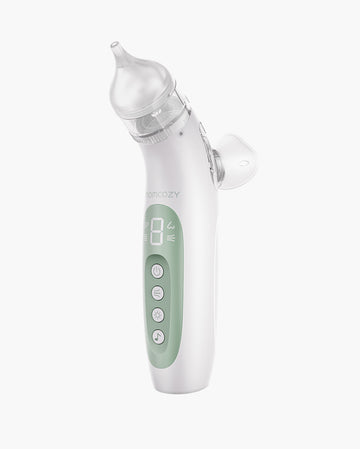
Using a Momcozy nasal aspirator is easier when you follow the same sequence each time: assemble the clean, dry parts; use approved mist to loosen thick or dried mucus when needed; choose a soft tip that rests at the nostril entrance; begin with gentle suction; then clean the removable components. This routine is designed for the BreezyClear model, while other baby nasal aspirator options may have different features and care instructions.
This guide focuses on the Momcozy BreezyClear™ 2-in-1 Spray & Suction Electric Nasal Aspirator. Its model-specific spray-and-suction features may differ from those of other Momcozy aspirators, so confirm details such as tips, controls, washable parts, and approved liquids in the current product information and official setup video.
Before choosing a device, consider how electric and manual nasal aspirator options may fit different routines and cleanup preferences.
Key Takeaways
-
The 2-in-1 routine uses approved mist to loosen thick or dried mucus before adjustable suction removes it.
-
Start with the lowest suitable suction setting and increase only when needed and tolerated.
-
Keep the soft silicone tip at the nostril entrance; do not insert it deeply.
-
Wash approved removable parts after use and let every component dry completely before reassembly.
-
The official video’s assembly and cleaning steps show the full reassembly sequence visually.
What Comes With the Momcozy 2-in-1 Nasal Aspirator?
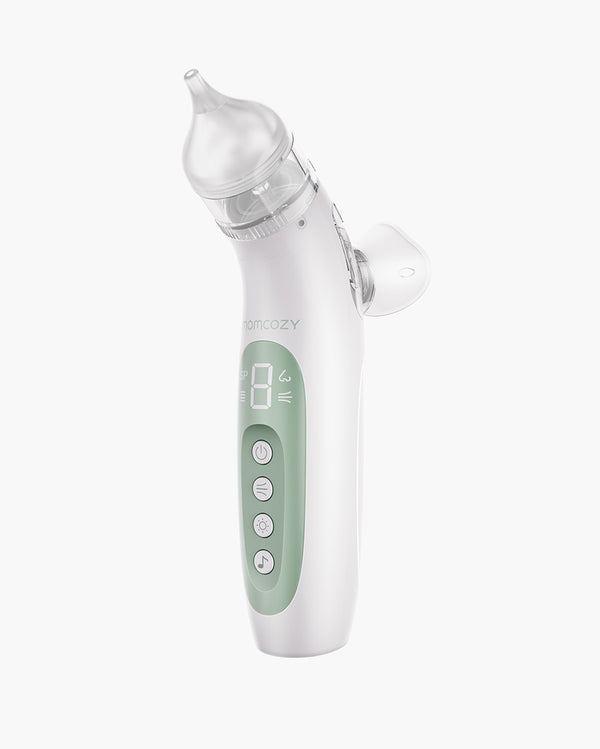
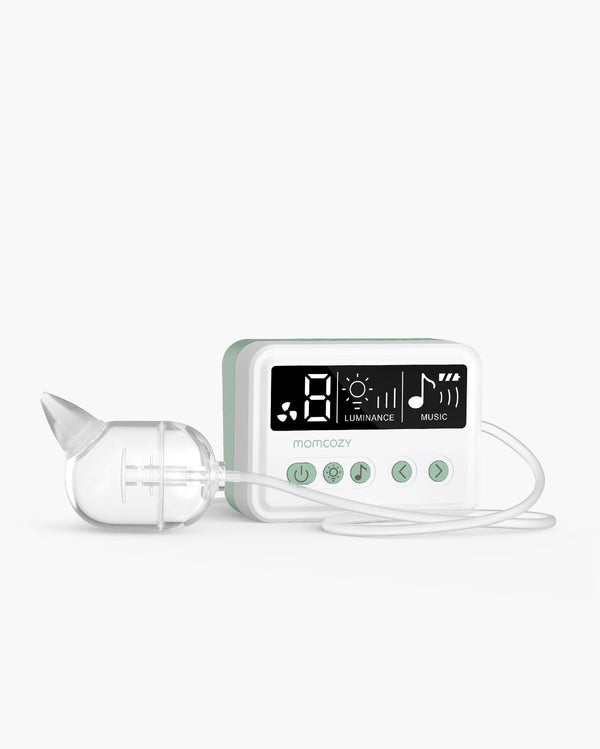
Before first use, identify the powered body, spray or mist components, mucus collection parts, silicone tips, controls, seals, connectors, charging accessories, and storage items included in your package.
Confirm exact quantities and features against current approved product assets. Do not assume that every Momcozy aspirator has the same tips, settings, controls, or washable components.
Inspect each part before assembly. Do not use anything cracked, distorted, loose, or difficult to clean.

How Do You Assemble the Momcozy Nasal Aspirator Before First Use?
Correct assembly matters because the seal, collection chamber, suction head, and tip must fit securely for the aspirator to work as intended.
Wash your hands and place all parts on a clean, dry surface. Any previously washed component should be fully dry before assembly. Moisture around a seal or airflow opening can make it harder to confirm a secure fit.
Follow the official demonstration in the same order every time:
- Check that the seal is clean, dry, and seated evenly.
- Attach the mucus collection components in the orientation shown in the video.
- Connect the suction head securely to the powered body.
- Select the appropriate silicone tip and press it firmly into place.
- Prepare and attach the spray or mist component as directed.
- Test the controls away from the child.
Do not force a component that does not fit smoothly. Remove it, check its orientation, and compare it with the official demonstration.
What Should You Put in the Spray or Mist Compartment?
Fill the sprayer module with clean water or saline solution. Do not add medicated drops, homemade saline, essential oils, fragrances, herbal mixtures, or any other liquid.
For thick, sticky, or dried mucus, use the spray first to add moisture before suction. The spray stops automatically after six seconds; press the spray button again if you need to stop it sooner.
Mist or saline is most useful when mucus is sticky, thick, or dried. Moistening it before suction can make removal gentler and more controlled. Thin or runny mucus may not require mist.
For thick or dried mucus, a brief saline-first preparation step can help soften it before you begin suction.
Which Nasal Aspirator Tip Should You Use?
BreezyClear includes two silicone tips with different purposes. Use the Gourd Shape Tip when you want shallow placement; its shape is designed to help prevent the tip from going too far into the nostril. Use the Long Tip for thinner, runnier mucus. Do not force either tip or press it against the inside wall of the nostril.
|
Situation |
Recommended tip or step |
Why |
|
Shallow placement or a child who may move suddenly |
Gourd Shape Tip |
Its shape is designed for shallow placement and helps prevent deep insertion. |
|
Thin or runny mucus |
Long Tip |
We recommend the long tip for thinner mucus. |
|
Thick or dried mucus |
Water or saline spray first, then Gourd Shape Tip for shallow placement |
The spray helps soften mucus before suction; BreezyClear does not list a separate thick-mucus tip. |
|
Child appears uncomfortable, cries intensely, or has breathing difficulty |
Stop and reassess |
Do not continue suction when the child is distressed or cannot be positioned safely. |
Rest the tip at the nostril entrance. Do not push it deeply or press it against the nasal wall. Replace any tip that is damaged, rough, discolored, or no longer attaches securely.
What Suction Level Should You Start With?
Start with the lowest appropriate suction level. Increase only when the device is assembled correctly, the tip forms a gentle seal, the mucus has been softened when necessary, and the child remains comfortable.
Before increasing the setting, check:
- Is the seal seated correctly?
- Is the collection chamber secure?
- Is the tip or airflow opening blocked?
- Is the tip held at the correct angle?
- Has the mist had time to loosen the mucus?
A higher setting cannot correct an incomplete seal or blockage. Increase one level at a time only when needed, then reassess the child immediately.
Stop for significant distress, pain, bleeding, worsening breathing, or another concerning response. Practical guidance on choosing a nasal aspirator suction level can help you reassess the setting without relying on longer or stronger suction.
How Should You Position Your Child for Nasal Suction?
Use the aspirator only while the child is awake, directly supervised, and securely supported. Keep the head steady enough to prevent sudden movement while the tip touches the nostril.
A supported upright or semi-upright position can make the nostril easier to see and keep the airway unobstructed. Support the back of the head gently without forcing the chin toward the chest.
For a wiggly child:
- Prepare the tip, mist, and device before positioning.
- Ask a second caregiver to support the shoulders and head calmly.
- Remove the tip immediately if the child turns suddenly.
Do not use forceful restraint. If safe positioning cannot be maintained, stop and try again later.
How Do You Use the Momcozy 2-in-1 Nasal Aspirator Step by Step?
This is the central part of the routine. Prepare everything first so the active spray and suction period remains short.
- Step 1: Wash Your Hands and Check the Parts
Confirm that the tip, seal, collection chamber, suction head, and mist components are clean, dry, and assembled correctly.
- Step 2: Choose the Tip
Select the approved tip that sits comfortably at the nostril entrance. Do not choose it based on how deeply it can enter.
- Step 3: Fill and Attach the Sprayer Module
Add clean water or saline solution to the sprayer module, then attach it firmly to the aspirator before use.
- Step 4: Position the Child
Keep the child awake and supported. Make sure you can see the nostril and remove the device immediately if the child moves.
- Step 5: Apply Mist When Needed
For thick, sticky, or dried mucus, apply the approved mist as directed. Allow a brief moment for it to loosen the mucus. Do not keep spraying simply because suction has not yet removed the blockage.
- Step 6: Begin With Gentle Suction
Turn on suction away from the child and select the lowest appropriate level.
- Step 7: Place the Tip at the Nostril Entrance
Create a light seal. Do not insert the tip deeply or press it against the internal nasal wall.
- Step 8: Use a Short, Controlled Pass
Apply suction briefly, then remove the tip and check the child’s comfort. Avoid holding suction in one place for a prolonged period.
- Step 9: Reposition or Repeat Only If Needed
If mucus does not move, first check the angle, seal, mist preparation, and assembly. Increase the setting only when necessary and tolerated. Repeat on the other nostril only if it is also congested.
- Step 10: Stop and Clean the Device
Turn off the aspirator and disassemble the approved removable parts before mucus dries inside them.

How Do You Handle Thin, Thick, or Dried Mucus?
Use small adjustments rather than stronger or longer suction.
- Thin or runny mucus: Mist may not be necessary. Start low and use a brief pass.
- Thick or sticky mucus: Fill the sprayer module with water or saline solution, use the six-second spray first, wait briefly for the mucus to soften, and then begin gentle suction.
- Dried mucus near the nostril: Soften it and wipe only around the outside. Do not scrape inside the nose.
Do not promise that every blockage will be removed in one session. Stop if the nostril becomes red, painful, irritated, or starts bleeding.
What If Your Child Cries, Turns Away, or Will Not Stay Still?
Introduce the sound before bringing the aspirator near the face. Turn it on briefly at a distance so the child can hear it without immediate contact.
Prepare all parts before positioning your child. You can turn on the colored lights or one of the six built-in lullabies before bringing the aspirator near your child’s face, and ask another caregiver to help support the shoulders and head.
Keep the session brief. Do not treat forceful completion as necessary. Stop when the child cannot be positioned safely.The basics of safe use across common baby nasal aspirator designs also support shallow tip placement, secure positioning, and short, calm sessions.
When and How Often Should You Use a Nasal Aspirator?
Use the aspirator when congestion interferes with comfort, feeding, or sleep rather than following a fixed schedule.
- Use short sessions instead of prolonged or repeated suction.
- Allow irritated nasal tissue time to recover.
- Contact a pediatrician if frequent suction seems necessary.
If frequent suction seems necessary, ways to avoid overusing a nasal aspirator can help you limit unnecessary repetition while you decide whether to contact a pediatrician.
How Do You Clean and Reassemble the Momcozy Nasal Aspirator?
Cleaning is essential because mucus left in the tip, cup, or airflow components can dry, block suction, and affect hygiene.
Turn off the aspirator and disconnect any charging cable. Follow the official video to remove the silicone tip, mucus collection parts, seal, spray components, and other approved removable pieces.
Remove the silicone tip, sprayer module, collection cup, rubber seal, and detachable suction head for cleaning after use. Rinse the silicone tip and collection cup thoroughly with hot water between uses so mucus does not dry and clog the device. Wash the sprayer module and clean the rubber seal before reassembly.
Do not wash or immerse the main housing, including the charging port. Wipe the housing with a soft, dry cloth only. Do not use abrasive cleaners, thinners, or benzene.
Wash or rinse after use:
- Silicone Gourd Shape Tip or Silicone Long Tip
- Sprayer module
- Collection cup
- Rubber seal
- Detachable suction head
Do not immerse:
- Main housing
- Charging port and charging components
Place the cleaned removable parts on a clean surface with good airflow. Let every part dry completely, check the seal and connections, then reassemble the aspirator.
Do not reassemble wet parts or use abrasive cleaners, solvents, or unapproved disinfectants.

How Should You Store and Prepare the Aspirator for the Next Use?
Store the clean, fully dry device and accessories together in a protected location. Before the next session:
- Check the charge and tip condition.
- Confirm that the seal is present and undamaged.
- Make sure collection and mist parts are empty and dry.
Empty and clean the sprayer module after use. Store the fully dry aspirator and accessories in the storage box, away from direct sunlight, dust, humidity, and heavy impact.
What If the Momcozy Nasal Aspirator Is Not Working as Expected?
Keep troubleshooting brief:
- Check the charge and selected mode.
- Confirm that the cup, seal, head, and tip are assembled correctly.
- Look for blocked or wet removable airflow parts.
Do not open the powered housing or attempt an internal repair. For persistent weak suction, leaks, unusual noise, charging failure, or damaged parts, use the electric nasal aspirator troubleshooting guide or contact Momcozy Customer Support.
When Should You Stop Suctioning and Contact a Pediatrician?
Stop suctioning immediately if you notice bleeding, visible nasal injury, increasing irritation, significant distress, worsening breathing, or difficulty keeping the child safely positioned.
Seek urgent medical help if the child has severe breathing difficulty, bluish or gray lips or skin, marked weakness, reduced responsiveness, or appears seriously unwell.
Contact a pediatrician if congestion is interfering with feeding or if the child has fewer wet diapers, a dry mouth, unusual sleepiness, or other possible signs of dehydration.
Also contact a pediatrician when:
- Feeding problems continue after the nose is cleared.
- Frequent suction seems necessary.
- Irritation or bleeding returns.
- You are unsure whether home care is appropriate.
A nasal aspirator removes mucus. It does not diagnose or treat the cause of congestion and does not replace pediatric care.
FAQs About Using a Momcozy Nasal Aspirator
Q1. Can the Spray and Suction Functions Be Used Separately?
Yes. Mist can loosen thick or dried mucus, while suction alone may be enough for thin, runny mucus. Follow the controls for the exact product version.
Q2. Which Parts Can Go Under Water?
Wash the silicone tip, sprayer module, collection cup, rubber seal, and detachable suction head after use. Do not wash or immerse the main housing or charging port. Clean the housing with a soft, dry cloth and let all removable parts dry completely before reassembly.
Q3. Can the Same Tip Be Shared Between Children?
Do not move an uncleaned tip directly from one child to another. Clean and dry it according to the approved instructions. Separate tips may simplify hygiene.
Q4. Should the Device Be Used While Charging?
Do not assume use while charging is supported. Charge the device before the session, disconnect it, and follow the current model instructions.
Q5. What Should Be Checked Before First Use?
Before first use, make sure the child is within the recommended 2–12 age range, charge the aspirator, and check that the silicone tip, collection cup, rubber seal, and sprayer module are clean and dry.
Key Steps for Safe Daily Use
A reliable routine follows a clear order: assemble clean and dry components, use water or saline solution in the sprayer module when mucus needs loosening, begin with gentle suction, keep the tip in the correct position, use short passes, and clean and air-dry the washable parts afterward.
Watch the official setup and cleaning demonstration before first use. To compare options or confirm current features, explore Momcozy’s baby nasal aspirators or view the BreezyClear 2-in-1 spray and suction nasal aspirator.
Stop when irritation, bleeding, significant distress, or unsafe positioning occurs. Contact a pediatrician when congestion affects feeding, possible dehydration signs appear, or breathing becomes difficult.








