


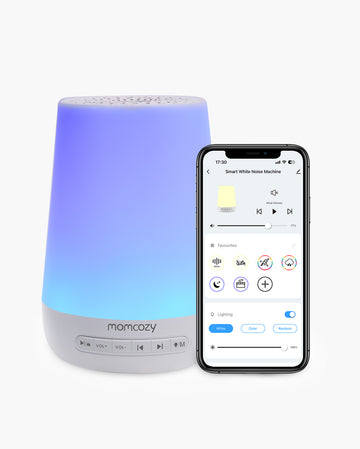
The volume number on a baby sound machine does not tell you how loud the sound actually reaches your baby. A 40% setting can produce different readings across devices, sound tracks, rooms, and distances. The useful number is the reading at your baby’s sleep position. An adjustable model such as the Smart Baby Sound Machine with App Remote Control makes small volume changes convenient, but its app setting is still a control level, not a decibel reading.
Key Takeaways
- Measure at the baby’s normal sleep position, not beside the sound machine.
- A device volume percentage is not the same as decibels.
- Published baby-sleep recommendations use different numbers, so avoid treating one value as a universal safety cutoff.
- Phone apps can provide a useful screening estimate, while calibrated sound level meters provide greater measurement confidence.
- Start with the lowest effective volume and adjust volume and distance together.
- Recheck after changing the room, machine location, sound track, or usual volume.
- In a small nursery, lower the volume and measure again rather than forcing one fixed distance rule.
Why the Volume Percentage on Your Sound Machine Is Not a Decibel Reading
A setting such as 40%, 52%, or 60% tells you where the device control is set. It does not tell you the sound pressure level reaching the crib.
The result can change with speaker design, the selected sound, distance, room size, walls, furniture, doors, and other surfaces that reflect or absorb sound. Even the phone or meter you use can affect the reading. For example, one setting may produce three different readings when measured beside the machine, at the crib mattress, and across a larger room. The crib-level measurement is more useful because it represents the location you are actually trying to evaluate.

How Should Parents Interpret 45 dB, 50 dB, 60 dB and Other Numbers?
You may find 45 dB, about 50 dB, under 60 dB, or even higher figures when searching for a safe decibel level for a baby sound machine. Those numbers come from different sources and assumptions, so they should not be flattened into one universal rule.
The often-cited 50 dBA figure needs particular context. A 2014 Pediatrics study measured 14 infant sleep machines at maximum volume from 30, 100, and 200 cm. All exceeded 50 dBA at 30 cm, while three exceeded 85 dBA at that distance. In that study, 50 dBA was a hospital-nursery comparison point rather than a universal home-use safety threshold.
For infant sleep machines, AAP parent guidance recommends placing the device as far from the baby’s head as possible and limiting use to a short time.
A practical way to interpret the numbers is:
| Number You May See | How to Treat It |
|---|---|
| 45 dB | A conservative value found in some parenting guidance, not a universal Momcozy limit |
| About 50 dB | A commonly used conservative reference point, but its source and measurement conditions matter |
| Under 60 dB | Appears in some published advice; do not turn it into a separate universal threshold |
| Higher levels | Often come from different exposure contexts and should not be adopted as an infant sleep-machine target |
Why Distance Changes What Your Baby Actually Hears
Moving a sound source farther away usually reduces the level reaching the listener. That is why volume and distance work together rather than as two separate rules.
In a 2014 Pediatrics study of 14 infant sleep machines, researchers measured maximum output at 30, 100, and 200 cm, showing why placement distance matters when evaluating what reaches the baby.
Real nurseries make this more complicated. Walls, hard surfaces, furniture, and room shape affect sound, and a compact nursery may not allow the same machine placement as a larger room.
Instead of assuming every room needs one fixed distance, maximize the practical distance, use a lower volume, and measure again at the sleep position.
Where Exactly Should You Measure the Sound Level?
For measurement only, place the phone or meter temporarily where your baby’s head normally rests in the crib or bassinet. Do not leave the device, meter, cord, or any other testing item in the sleep space while your baby is sleeping. Keep the sound machine in its usual position and play the sound you normally use.

Do not measure a few inches from the speaker. That tells you how loud the speaker is at that point, not what reaches your baby.
Record the machine location and approximate distance so later measurements can be compared under similar conditions.
Once the check is complete, remove the phone or meter and any related cords or accessories before placing your baby in the crib or bassinet.
Phone App or Sound Level Meter: Which Should You Use?
A phone can make crib-level checking convenient, but different measurement tools provide different levels of confidence.
The NIOSH Sound Level Meter app for iOS has been tested and validated by NIOSH, which reports accuracy within ±2 dBA under its stated testing conditions. The agency also notes that it cannot provide equivalent validation across Android devices because microphone hardware and audio processing vary between manufacturers.
When a tool supports it, dBA is useful for this type of check because A-weighted decibels account for both sound intensity and the way human hearing responds to different frequencies.
| Tool | Best Use | Limitation |
|---|---|---|
| NIOSH SLM on iOS | Practical screening with a validated app | Follow its stated measurement conditions |
| Generic phone app | Quick estimate or repeated comparison | Accuracy can vary by phone and app |
| Calibrated sound level meter | Higher-confidence absolute measurement | More equipment than most families need for a routine check |
A phone reading is useful for screening and comparison. It should not be treated as a hearing test or a guarantee of safety.
How to Measure Your Baby Sound Machine at the Crib — Step by Step
Use the same setup your baby normally has so the result reflects real use.
- Set up the room normally. Keep doors and windows in their usual sleep-time positions and leave the machine where you normally use it.
- Choose your usual sound and volume. Write them down so you can reproduce the test.
- Check the background first. Before starting the sound machine, note the room’s existing sound level.
- Measure at the sleep position. Place the phone or meter temporarily where your baby’s head normally rests.
- Take a short sample. Hold the tool still and unobstructed for about 30–60 seconds, focusing on the average rather than one brief spike.
- Repeat if readings jump around. Two or three checks from the same position can show whether the result is reasonably consistent.
- Change one variable at a time. Lower the volume first, then change placement if needed, measuring again after each adjustment.
- Clear the crib. Remove the phone, meter, cords, and other testing items before sleep.
Using the same method each time makes later comparisons much more meaningful.
Should You Measure Background Noise Before Turning the Sound Machine Up?
Yes. Background noise gives you useful context before you add more sound.
Traffic, siblings, HVAC systems, televisions, or a barking dog may already be raising the room level. Turning up white noise immediately can add more sound without addressing what changed.
Start with the source where practical. Lower the TV, close a door, move active play farther away, or place the sound machine closer to the incoming household noise rather than closer to the crib.
Masking works by making sudden changes less noticeable. It does not need to overpower everything in the house. The broader benefits and limits of white noise for baby sleep are separate from the measurement question here.

How Do You Find the Lowest Effective Volume?
Start lower than you think you need. Increase the sound gradually only until the household noise you are trying to mask becomes less noticeable at the baby’s sleep position.
Then measure again.
If the background noise gets quieter later, the machine may not need to stay at the same setting. Remote adjustment can make that easier. With the Momcozy Smart Baby Sound Machine with App Remote Control, you can make small sound adjustments without moving the machine closer or entering the nursery. Its 34-sound library and adjustable controls also mean a track or volume change should be followed by another crib-level check when it materially changes the setup.
The app controls the machine. It does not turn the displayed volume setting into a decibel measurement.
What If Your Nursery Is Too Small for a Preferred Distance?
A small room does not require inventing a new “safe minimum” or giving up on the machine.
Work with the variables you can control:
- maximize the practical distance from your baby;
- keep the device outside the crib or bassinet and out of reach;
- lower the sound-machine volume;
- measure at the sleep position;
- adjust and measure again.
If moving the machine farther away is difficult, lowering the volume becomes especially important.
A compact nursery can still be evaluated with the same measurement process. The useful question is what actually reaches the baby’s sleep position, not whether the room matches a diagram made for a larger nursery.
If you cannot find a setup you are comfortable with, discuss the situation with your pediatrician or pediatric audiologist.
Does the Measurement Change When You Travel or Move the Machine?
Yes. A hotel room, grandparents’ house, vacation rental, or another nursery changes distance, background noise, surfaces, and sound reflections.
Measure again when the setup changes materially. Portable use can also place the sound source closer than it would be at home, making lower volume and rechecking especially useful.
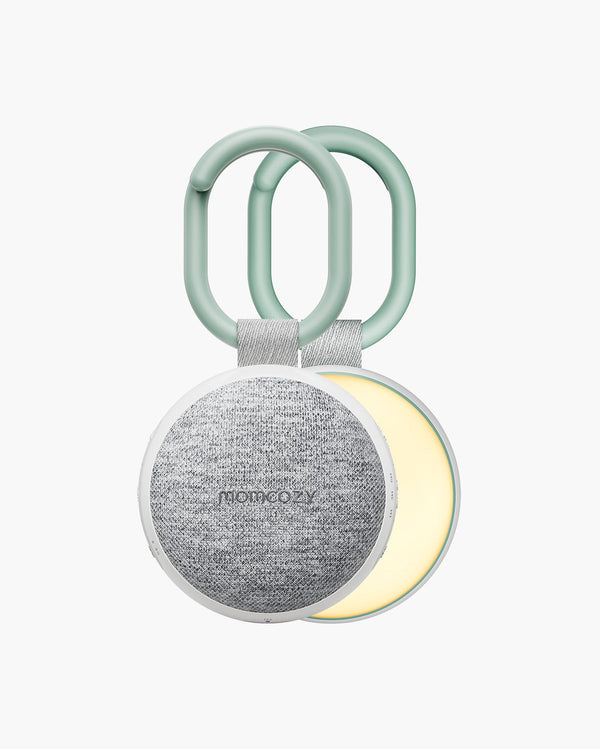
Families deciding how to handle sound away from home can compare a portable sound machine and a phone app for baby travel without assuming that a home measurement carries over to a new room.
A simple rule works well: new room, new check.
When Should You Recheck the Volume?
You do not need to measure obsessively every night. Recheck when something meaningful changes, such as:
- moving the sound machine;
- switching rooms;
- changing the usual volume;
- choosing a different sound track;
- moving the crib or bassinet;
- replacing or resetting the machine;
- another caregiver changing the settings;
- using the machine to mask a new household noise.
Changing a sound track can matter because its frequency content may produce a different reading even when the displayed volume setting stays the same.
For broader questions about daily setup and routines, sleeping with a sound machine involves more than the crib-level measurement itself.

FAQs About Baby Sound Machine Volume
Is the Percentage Shown in My Sound Machine App the Same as Decibels?
No. A percentage shows the device’s control setting, while decibels describe measured sound level. The same percentage can produce different readings depending on the machine, track, room, distance, and measurement tool.
Should I Measure White Noise With the Crib Mattress in Place?
Yes. Measure with the normal sleep setup in place so the room conditions are as close as practical to ordinary use. Put the phone or meter temporarily at the baby’s usual head position, then remove it before sleep.
Should I Use Average dB or the Highest Peak Reading?
For a steady sound machine, an average reading over a short sample gives a more useful picture than reacting to one momentary spike. Still note unusual peaks if they occur repeatedly, especially when other household sounds are contributing to the measurement.
Does White Noise Measure Differently From Pink or Brown Noise?
It can. Different sounds contain different frequency patterns, and measurement results can change when the track changes. Keep the volume, location, and measurement position consistent when comparing tracks, then recheck instead of assuming the same setting produces the same crib-level reading.
Can I Use an Android Decibel App if I Do Not Have an iPhone?
A generic Android app can be useful for a rough screening estimate or for comparing changes made with the same phone and method. Treat the absolute number cautiously and consider a calibrated meter when greater measurement confidence is needed.
Why Do Two Decibel Apps Give Me Different Readings?
Apps can process microphone input differently, and phones do not all use identical microphones or calibration. For more useful comparisons, keep the phone, app, location, sound track, and sampling method consistent.
Does Closing the Nursery Door Change the Crib-Level Reading?
It can. A door changes how outside noise enters the room and can also change the room’s sound reflections. If the door is normally closed during sleep, measure with it closed. If your routine changes, repeat the check.
Should I Measure Again After Moving the Machine From a Dresser to a Wall Shelf?
Yes. Changing height, distance, wall proximity, and surrounding surfaces can change the sound reaching the crib. Keep the usual track and volume the same, then measure again at the baby’s sleep position.
Can a Fan or Air Conditioner Change the Sound-Meter Result?
Yes. HVAC, fans, traffic, and other background sounds contribute to the total reading. Measuring the room before turning on the sound machine helps you understand how much background noise is already present.
When Should I Stop Using a Baby Sound Machine?
There is no single stopping age that belongs to this measurement question. If your family is ready to reduce use, the newborn white-noise safe-use and weaning guide covers when-to-stop and gradual step-down decisions separately.
Conclusion: Measure at the Crib, Then Set the Level
Do not set a baby sound machine by percentage or distance alone. Check the sound where your baby actually sleeps, starting with the room’s background level and your usual setup. If you make a change, adjust one variable at a time and measure again. This process gives you a repeatable way to manage volume without pretending one device setting or distance works for every room. It is practical measurement guidance rather than individualized medical or audiology advice.








