


There is no single birthday when every family needs to stop using white noise for a baby. A better question is whether the sound still has a useful job, such as masking household noise or supporting a familiar bedtime routine, and whether your child can also settle when it is unavailable. If greater flexibility would help, white noise can be reduced gradually rather than removed all at once.
Key Takeaways
- There is no universal age when every baby or toddler needs to stop white noise.
- Liking white noise at home does not automatically mean dependence if your child can sleep without it elsewhere.
- Consider reducing it when travel, daycare, device problems, or your child’s own preference make the routine less practical.
- You can lower the volume, shorten playback, or remove white noise from selected naps or locations first.
- If a change clearly disrupts sleep, return to the last workable step and try again later.
- Continued use still needs appropriate volume, placement, and duration, which are separate from the decision to wean.
- Current evidence does not establish an age when every child should stop using white noise.
Is There a Right Age to Stop Using White Noise?
There is no consistent evidence-based stop age. Parents will find very different recommendations online. Some sleep resources suggest reducing white noise during late infancy or toddlerhood, while other families continue using low-level background sound for much longer. That range is exactly why a birthday alone is a weak decision rule.
Instead, look at what the sound is doing now.
If it still masks siblings, traffic, pets, or evening household activity, it may still have a practical role. If your toddler regularly sleeps without it at daycare or a relative’s home, keeping it at home may simply be a preference.
A child who begins asking for a quieter room gives you another useful signal. The right time to change the routine can come from how well it still fits your child and family rather than an age printed on a calendar.

Sleep Association, Preference, or Dependence: What Is the Difference?
These terms describe different situations.
A sleep association is a familiar cue connected with settling. Dim lights, a bedtime book, pajamas, a particular song, and white noise can all become part of that repeated sequence.
A preference means your child likes the sound or seems to settle more comfortably with it, but does not necessarily need the exact same setup every time. If a toddler naps without white noise at daycare, that can be one useful sign of flexibility, though it does not by itself show how they will respond in other sleep settings.
Practical dependence becomes more relevant when the routine creates real limitations. For example, travel becomes extremely difficult without the machine, an outage consistently prevents sleep, or ordinary alternative sleep settings become hard to use.
Calling a normal sleep preference an “addiction” overstates the situation. The more useful question is how flexible the routine is.
Do You Actually Need to Stop Yet?
Use what is happening in real life to decide whether a change would solve a problem.
| What You Notice | Possible Next Step | Why |
|---|---|---|
| Child sleeps without it at daycare, while traveling, or with relatives | No urgent need to wean | The sound may be a home preference rather than a rigid requirement |
| White noise mainly covers siblings, pets, traffic, or evening activity | Keep or reduce selectively | It still has an environmental job |
| Child asks for it quieter or turned off | Try reducing it | Follow the child’s response rather than preserving the routine automatically |
| Travel, daycare, or device failure causes major sleep disruption | Build more flexibility | Gradual reduction or another bedtime cue may make the routine easier to manage |
| Sleep is already unsettled by illness, teething, travel, or another transition | Consider waiting | Avoid stacking another unnecessary change unless there is a practical or medical reason |
| Hearing, speech, feeding, or developmental concerns are present | Ask a qualified professional | A general weaning plan cannot replace individualized advice |
The goal does not have to be complete silence. It can simply be a bedtime routine that works in more than one setting.
What Are the Signs Your Child May Be Ready for Less White Noise?
Readiness often shows up through ordinary behavior rather than a developmental milestone.
Your child may be ready to experiment with less sound if they:
- occasionally fall asleep without it and sleep about as expected;
- nap successfully at daycare or another home without the same setup;
- ask for the machine to be quieter or switched off;
- no longer need it to cover a specific household noise;
- adapt easily when the device is forgotten;
- seem comfortable in quieter sleep environments.
Your family’s needs count too. Easier travel, fewer devices to pack, more flexible sleep locations, or simply wanting a quieter bedroom are all practical reasons to test a change.
These are clues for experimentation, not signs that your child has reached a required weaning stage.

When Is It Reasonable Not to Rush Weaning?
If white noise still solves a real noise problem, your child sleeps well, and the setup works for your household, there may be no practical reason to force a transition just because your child has reached a certain age.
Homes with siblings, pets, open floor plans, traffic, apartment noise, or adults who stay active after bedtime may continue to have a clear use for background masking.
Timing matters as well. Starting a new daycare, recovering from illness, traveling, moving house, or dealing with a difficult sleep period can already introduce several changes. Adding white-noise weaning at the same time may make it harder to tell what is actually affecting sleep.
For broader questions about how sound fits into an ongoing bedtime routine, using a sound machine during baby sleep has its own considerations beyond the decision to stop.
How to Wean White Noise Gradually: Change One Thing at a Time
If you want to reduce white noise, change one part of the routine at a time. This makes it easier to see how your child responds without changing naps, nighttime sleep, volume, and bedtime cues all at once.
Start with one stable sleep period and choose the adjustment that best matches your goal:
Lower the Volume
Reduce the sound in small steps while keeping the rest of the bedtime routine familiar. If your child continues settling normally, you can decide whether another small reduction makes sense. There is no evidence-based rule that requires a certain percentage drop or a fixed number of nights between changes.
Shorten How Long It Plays
Keep white noise during settling, then turn it off earlier once your child is asleep. This can help when you want to reduce playback time while keeping the familiar bedtime cue at first.
Try Sleeping Without It in One Situation
Choose one lower-pressure setting, such as a nap, a quiet evening, or a familiar stay with grandparents. You can learn whether your child already manages well without white noise before changing every sleep period.
Whichever method you choose, keep other familiar cues such as pajamas, books, lighting, and the usual bedtime sequence steady. Give each adjustment enough time to see how it works before making another one.
If sleep clearly becomes harder, return to the last setup that worked and try again later. The goal may be easier travel, lower volume, shorter playback, or less reliance on the machine. Complete silence does not have to be the finish line.
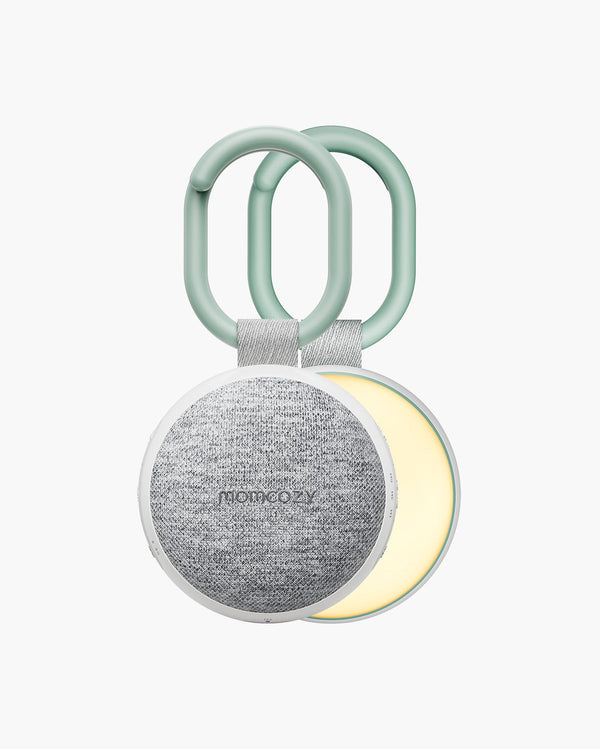
For families using the Momcozy Smart Baby Sound Machine with App Remote Control, remote volume adjustments and the auto-off timer can make small routine changes easier without entering the room. These controls give you more flexibility over the transition, while the pace can still follow how your child responds.
Use Travel, Daycare and Grandparents’ Homes as a Flexibility Check
A different sleep environment can reveal something useful: your child may already be more flexible than the home routine suggests.

If daycare does not use the same white noise and naps still happen, that is practical evidence that your child can settle without that exact cue. The same applies to successful naps with grandparents or an occasional night when the machine was forgotten.
If easier travel is your goal, test a small change at home before making a hotel room the first white-noise-free night.
You also do not have to choose weaning simply because you travel. A portable sound option can be reasonable when consistency matters more to your family. Comparing a portable sound machine with a phone app for baby travel can help you decide whether portability solves the problem better than removing the cue.
Flexibility means having workable choices. It does not require eliminating white noise from every location.
What If Your Baby or Toddler Sleeps Worse Without White Noise?
One difficult night does not prove that your child cannot sleep without white noise.
Look at the circumstances first. Was your child teething, sick, traveling, overtired, adjusting to a new schedule, or sleeping through an unusually noisy evening? Any of those factors can make a weaning test harder to interpret.
If you recently lowered the volume or shortened playback, return to the last setup that worked and keep it there for a while before trying another change.
Also ask whether white noise had a real environmental job. If it was covering traffic or a noisy sibling, removing it may have exposed the original problem. Managing that noise source may make more sense than forcing complete silence.
The opposite can happen too. Some children appear equally comfortable, or even settle more easily, when the sound is removed. Observe what your own child does rather than assuming white noise must help or must go.
Persistent or severe sleep difficulties deserve professional evaluation rather than an endless series of DIY changes.
What Does Current Research Say About Long-Term Use and “Dependence”?
Research on sound exposure and the practical habit of wanting white noise should be kept separate.
A 2024 scoping review of continuous white-noise exposure during sleep raised concerns about excessive intensity and prolonged exposure while also finding that optimal intensity and duration for children remain insufficiently defined. It does not establish an evidence-based birthday when every child should stop using white noise.
That evidence should not be stretched into a claim that white noise creates a behavioral addiction. Hearing exposure, developmental research, and a child’s preference for a familiar bedtime cue are different questions.
For families who continue using a machine, detailed questions about sound-machine volume, distance, and crib-level measurement belong to the dedicated safety resource rather than the weaning decision itself.
The practical question for this page remains simpler: does the routine still work for your family, and can your child cope when the sound is unavailable?
If You Continue White Noise, Keep the Safety Rules Separate From the Weaning Decision
Choosing not to wean yet does not mean every current setting should stay unchanged.
Keep the machine outside the sleep space and use the lowest effective sound level with appropriate distance. White noise should serve a defined sleep or masking purpose rather than becoming constant background sound throughout a child’s waking day.
Parents of younger babies can keep newborn-specific questions with the dedicated guidance on white noise during newborn sleep. The broader benefits and limitations of white noise for baby sleep are also separate from deciding when to wean.
If you need exact decibel or measurement guidance, use the dedicated safety resource rather than trying to turn the weaning process into a sound-exposure calculation.

FAQs About Weaning a Baby Off White Noise
Is It Okay if My Toddler Still Asks for White Noise Every Night?
A nightly preference alone does not tell you that your toddler is dependent. Look at flexibility instead. If they can sleep elsewhere without the same setup and the sound still fits your household routine, there may be no urgent reason to remove it solely because they are older.
Does Needing White Noise at Home Mean My Child Is Dependent if Daycare Naps Are Fine?
Probably not in the practical sense described here. Successful daycare naps show that your child can settle without the exact home cue in at least one familiar setting. White noise at home may be a preference or a way to mask household sound.
Should I Stop White Noise for Naps Before Nighttime Sleep?
You can start with naps if they feel like the easier test, but there is no required order. Choose one stable sleep period, keep the rest of the routine familiar, and see how your child responds before changing another part of the day.
Can I Switch From a Sound Machine to a Fan Instead of Going Straight to Silence?
You can test another steady background sound if your goal is flexibility rather than complete silence. Keep in mind that a fan creates its own sound and should still be positioned safely. The new setup should solve the practical problem you are trying to address.
What Should I Do if the Sound Machine Breaks During the Weaning Process?
Use the situation as information rather than assuming the night will fail. Keep the rest of bedtime familiar and see how your child responds. If sleep becomes difficult, you can use another familiar cue while deciding whether to replace the machine or continue reducing reliance.
Is It Better to Turn White Noise Off After Sleep Onset or Keep It Low All Night?
There is no single answer for every child, and the all-night exposure question is separate from this weaning guide. If shortening duration is your goal, turning it off after settling can be one gradual step. Keep broader overnight-use decisions within the dedicated safety and routine guidance.
Can Siblings Share a Room if Only One Child Still Wants White Noise?
They can, but the setup needs to work for both children. Try a low level, consider where the sound source sits, and watch whether either child is bothered by it. A shared room may also encourage gradual flexibility if one sibling no longer needs the same cue.
Should I Wean White Noise Before a Vacation or Wait Until We Get Home?
Avoid making the first major change in an unfamiliar hotel room if you expect that to add stress. Test flexibility at home first, or keep the familiar routine through the trip and try reducing it after you return. Either approach can be reasonable.
Can a Child Choose to Keep Using White Noise Even After They Can Sleep Without It?
Yes. Being able to sleep without white noise does not mean your child has to dislike it. Some children may continue to prefer gentle background sound because it masks household or outside noise. The important questions are whether the routine remains flexible and whether the sound is being used appropriately.
Conclusion: Change One Thing at a Time
There is no universal age for when to stop using white noise for a baby. Consider changing the routine when the sound no longer serves a useful purpose, begins to limit travel or other sleep settings, or your child or family would benefit from greater flexibility.
Gradual reduction is optional, and the pace can follow how your child responds. If you are not ready to wean yet, keep the setup conservative and periodically reassess whether the sound is still needed. Because research has not established one ideal long-term intensity or duration for every child, ongoing use should not be treated as a fixed routine that never needs another look.








