


MEDICALLY REVIEWED BY

Mary Bicknell, MSN, BSN, RNC, ANLC
Mary Bicknell possède plus de 30 ans d'expérience en tant qu'infirmière autorisée (IA) en unité de soins intensifs néonataux (USIN). L’éducation des mères sur l’importance d’un allaitement sain lui tient particulièrement à cœur. Maintenir un allaitement réussi peut s'avérer complexe lors de situations difficiles ou de longues hospitalisations. Mary s'engage à aider les familles à définir ce que représente pour elles un allaitement réussi et à les accompagner pour atteindre leurs objectifs. Après avoir quitté les soins au chevet des patients, Mary est devenue infirmière leader, veillant à ce que l'éducation et le soutien à l'allaitement soient toujours accessibles aux familles de son unité. Remarque : le texte original (en anglais) a été révisé par des experts ; le présent texte est une traduction en français de cette version.
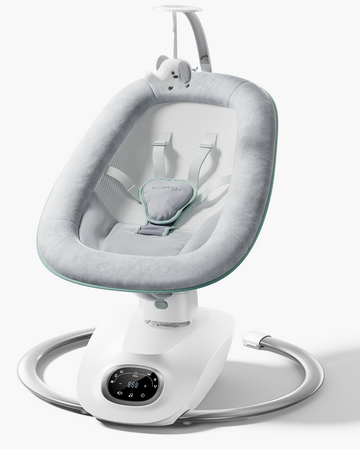
A baby swing may offer a brief, gentle soothing option while your baby is awake and continuously supervised, but it does not treat colic—and no swing direction or speed is proven best. If your baby falls asleep, move them to their own firm, flat sleep space rather than leaving them in the swing. Safe sleep guidance for babies Guidance on babies sleeping in swings
First: is this likely colic, or does your baby need medical help?
Colic describes excessive crying without an obvious cause in an otherwise healthy baby. It commonly improves by age 3 to 4 months, but that does not mean every prolonged crying spell is colic. Hunger, wind, reflux, constipation, illness, and other concerns can also cause crying. Read the NHS guide to colic
A colic-like pattern may include a baby who is difficult to soothe and cries intensely, often in the afternoon or evening. They may clench their fists, turn red, pull their knees toward their tummy, arch their back, or seem windy. These signs are not specific to colic.

Before trying more motion, use this decision point:
- Try ordinary soothing if your baby otherwise seems well and you have checked feeding, burping, and comfort needs.
- Contact a pediatric clinician or other healthcare professional if you are unsure why your baby is crying or you are worried about them.
- Seek emergency assessment for a weak, high-pitched, or distinctly abnormal cry—especially if it does not sound like your baby’s usual cry.
You do not need to wait for a crying pattern to become established before asking for help.
There is no “best” swing motion for colic
Gentle rocking and steady rhythmic movement may help soothe some babies with colicky crying. A swing can be one way to offer that movement, but it is not a treatment and will not settle every baby.
Importantly, current guidance does not establish that one consumer-swing setting works better than another. There is no proven winner among:
- side-to-side versus front-to-back movement
- rocking versus bouncing
- vibration versus no vibration
- a low setting versus a faster setting

That means higher intensity is not a sign that the motion is more effective—or safer. Instead of looking for a magic setting, let your baby’s response guide a cautious trial.
A simple, cue-based movement trial
- Check the basics first. Consider feeding, burping, a diaper change, and whether your baby seems too warm or cool.
- Start with the gentlest manufacturer-approved motion.
- Watch your baby, not the control panel. If they relax, reduce crying, or settle, keep the session brief and supervised.
- Stop or change course if crying increases. More speed, more vibration, or longer use is not automatically the answer.
- Try another calming approach if the swing is not helping: holding, gentle rocking in your arms, a calming sound, or a feeding or burping check.
Gentle rhythmic movement is simply one possible soothing input, not a test your baby has to “pass.”
Set up an awake swing session carefully
A swing is for awake soothing only, used exactly as its manufacturer intends. The product manual—not a universal online rule—sets the applicable age, weight, developmental, recline, and harness limits.
Before placing your baby in the swing:
- Confirm that your baby is within the product’s stated weight and developmental limits.
- Use the harness every time, following the product instructions.
- Use only the manufacturer-approved setup and recline position for your baby’s stage.
- Stay actively present and watch your baby throughout the session; being elsewhere in the room is not the same as continuous supervision.
- Check that your baby’s head and neck remain in a stable position.

Stop immediately if your baby’s chin drops onto their chest, their head position becomes unstable, they slump, or they shift into a position you cannot safely correct according to the manual.
Young infants may not be able to maintain a safe head-and-neck position in a seated product. Do not try to solve slumping by adding unapproved padding, changing the harness beyond the instructions, or leaving your baby in place to see whether they settle.
There is no evidence-based universal number of minutes for an awake swing session. Follow the manual and your baby’s cues rather than treating a timer as proof that a position remains safe.
The moment sleep begins, the plan changes
A swing may calm a crying baby, but its success at soothing does not turn it into a safe nap or overnight sleep space.
If your baby is awake |
If your baby falls asleep |
A swing may be used briefly for supervised soothing, within the product instructions. |
End swing use and move your baby promptly. |
Watch for slumping, unstable head position, or distress. |
Place your baby on their back in their own crib, bassinet, or portable crib. |
Use the harness as directed. |
Use a firm, flat, level sleep surface. |
For sleep, infants should be placed on their backs on a firm, flat, level surface. CDC safe-infant-sleep guidance makes this distinction clear: a baby’s sleep space should be designed for sleep, not simply a place where they happened to fall asleep.
This can be frustrating when movement seems to be the only thing that works. Still, the safest next step is transfer—not leaving the swing running, watching from a distance, or deciding that a supervised nap is safe because an adult is nearby.
Keep the swing as one tool in a wider routine
If a swing settles your baby, it can be useful as one short, awake soothing option. It should not become the only place your baby spends time when upset.
Switching positions across the day gives your baby opportunities to be held, moved, and placed differently while awake. Prolonged time with the head in one position can contribute to flattening at the back of the head. Repositioning and supervised tummy time while your baby is awake are emphasized for preventing or improving minor to moderate positional head flattening. Guidance on preventing flat spots

Also keep developmental changes in view. A cradle swing product category may be intended from birth until a baby begins pushing up on hands and knees—approximately 5 months—but the specific product’s instructions always control. CPSC guidance on infant and cradle swings
When crying starts, a practical safety-first path is:
- If your baby otherwise seems well, try a gentle, supervised awake soothing attempt.
- If movement does not help, rotate to holding, feeding or burping checks, calming sound, or tummy time when your baby is awake and alert.
- If your baby falls asleep, transfer them to a firm, flat sleep surface.
- If the crying feels different, severe, persistent, or worrying, contact a pediatric clinician promptly.
A swing does not need to solve every hard moment. Gentle support, close observation, and a willingness to seek help when something feels wrong are the more reliable next steps.








