


MEDICALLY REVIEWED BY

Mary Bicknell, MSN, BSN, RNC, ANLC
Mary Bicknell possède plus de 30 ans d'expérience en tant qu'infirmière autorisée (IA) en unité de soins intensifs néonataux (USIN). L’éducation des mères sur l’importance d’un allaitement sain lui tient particulièrement à cœur. Maintenir un allaitement réussi peut s'avérer complexe lors de situations difficiles ou de longues hospitalisations. Mary s'engage à aider les familles à définir ce que représente pour elles un allaitement réussi et à les accompagner pour atteindre leurs objectifs. Après avoir quitté les soins au chevet des patients, Mary est devenue infirmière leader, veillant à ce que l'éducation et le soutien à l'allaitement soient toujours accessibles aux familles de son unité. Remarque : le texte original (en anglais) a été révisé par des experts ; le présent texte est une traduction en français de cette version.
For most newborn households, dry storage plus a wash rhythm of every 2–3 days is the practical starting point. Use a pail or airy basket where most diaper changes happen, use wet bags for portable handoffs, or combine both. Do not store diapers soaking in standing water.
The first month is a high-turnover period. The best choice is not the container that promises the most odor control; it is the setup your household can empty, wash, clean, and dry reliably.
Plan for the diaper volume before choosing storage
Newborns average roughly 10–12 diaper changes a day, although individual needs vary. Another early-weeks guide describes changes for wetness every 1–3 hours, with bowel movements 2–5 times a day. Those figures are useful for planning, not a guarantee of what your baby will use.

At that pace, a two-day wash interval means handling approximately 20–24 diaper changes before allowing for a delayed load, an especially messy day, or diapers still being washed or dried. A three-day interval can mean 30–36 changes.
That does not translate directly into a precise number of diapers, covers, or wet bags to buy. Your actual system also depends on:
- How often covers can be reused under your own care instructions
- Whether your washer is available when you need it
- How long diapers take to dry
- Whether another caregiver can start a load
- How much storage space you have near the changing area
Set a realistic wash-day ceiling first. If you know laundry will be difficult to start on day three, plan around a two-day rhythm rather than buying storage that makes postponing easier.
Choose the storage method that matches where diapers collect
Cloth diapers can wait until wash day in either a dry pail or a wet bag, as outlined in this cloth-diaper washing guidance. The meaningful difference is workflow.
Setup |
Best fit |
Trade-off to plan for |
Dry pail or airy basket |
Most changes happen at home and diapers stay in one place until laundry day |
Needs a safe, out-of-reach location; an open container may not suit every home |
Sealed pail with liner |
You want higher at-home capacity and more contained storage |
The pail and liner still need regular cleaning and washing |
Several wet bags |
Small spaces, shared laundry, daycare, travel, car use, or multiple caregivers |
Limited airflow can mean bags need washing more often |
Hybrid system |
Home storage and out-of-home transport are separate needs |
Requires a simple handoff routine so bags return and get washed |
When a pail makes daily life easier
A dry-pail approach is useful when the main changing area is close to the laundry route and diapers generally remain at home. Guidance on dry pailing favors keeping diapers as dry as possible in an airy, lidless basket or similar container so moisture can evaporate; that can slow ammonia formation.

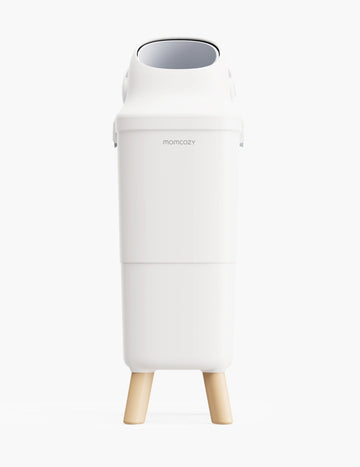
A sealed pail can offer more capacity and contained storage, but it is not maintenance-free. Regular cleaning matters, particularly because ammonia can build up. Do not assume a lid automatically solves odor or eliminates the need to wash on schedule.
An open or airy setup also has a clear limitation: it must be inaccessible to children and pets. If that is not possible in your home, choose a storage location and closure that keeps diapers safely out of reach while still supporting your laundry routine.
When wet bags are the better primary tool
Wet bags are most useful when diapers need to move: from nursery to shared laundry room, from caregiver to parent, or from a day out back to the house. Their portability and contained closure can simplify a handoff.
But a wet bag is not automatically leakproof, odor-proof, machine-safe, dryer-safe, or large enough for an entire two- or three-day stash. Check the bag’s dimensions, seams, closure, material, and care label before assigning it a role.
For a newborn routine, think in functions rather than trying to find one universal bag:
- Out-and-about bag: holds diapers during an outing and returns home afterward.
- Caregiver or daycare bag: gives another caregiver one clear place to put used diapers.
- Overnight handoff bag: useful if the nighttime changing spot is separate from the main collection point.
- At-home storage bag: only if its documented size and care requirements fit your wash rhythm.
A sealed bag trades airflow for portability and contained storage. That can be useful, but it also means the bag itself belongs in the laundry plan.
Build a rotation instead of relying on one container
The most workable systems have a backup. A pail liner should be washed with each cloth-diaper load, so two liners allow one to be in use while the other is being laundered and dried. Wet bags also need regular washing: moisture and contamination can create conditions that support mold and mildew.
A simple first-month setup might look like this:

- Choose one main at-home collection point. Put it where most changes happen or where the laundry handoff is easiest.
- Assign one portable wet bag. Use it for outings, the car, or caregiver handoffs—not as an indefinite holding place.
- Keep a clean backup liner or bag ready. This prevents a missed wash from turning into an improvised storage solution.
- Make “return home” part of the routine. After an outing or care day, move diapers into the main collection point or start the wash if it is wash day.
- Before bed, check the next handoff. Confirm there is a clean bag or liner available for overnight changes or the morning caregiver transition.
Wash storage items according to their care labels and dry them fully before returning them to use. If a bag holds moisture or smells after laundering, it needs attention as part of the system—not just another load of diapers added to it.
Safety note: Do not wet-pail diapers by leaving them soaking in water. Standing-water storage can breed bacteria, is hard on diapers, and creates a drowning hazard. Store all diaper containers safely away from children.
Handle stool by feeding stage, then store dry
The storage decision becomes simpler when stool handling is decided before the diaper goes into the pail or bag.
If your newborn is exclusively breastfed
Cited cloth-diaper guidance makes an exception for exclusively breastfed stool: solid waste does not need to be removed before washing. Put the diaper into dry storage and proceed with your normal wash routine. However, check your diaper manufacturer’s instructions and local wastewater guidance, as some may recommend rinsing even for breastfed stool.
This exception is specifically for exclusive breastfeeding. It should not be treated as a universal rule for all newborn stool.
If your baby is formula-fed or mixed-fed
Outside that exclusively breastfed exception, remove solid poop into the toilet before placing the diaper in dry storage. For formula-fed or mixed-fed babies, follow the diaper manufacturer’s instructions and applicable local wastewater guidance, since the cited guidance does not provide separate detailed protocols for those two feeding patterns.
When feeding changes later
Once feeding changes and stool becomes more solid, continue to remove solid waste into the toilet before storage. Check your diaper maker’s instructions rather than building a new soaking routine.
Let the wash routine—not the container—do the cleaning
Storage is temporary. The wash routine is what removes the soil.
A practical evidence-based sequence uses two washes:

- Run a short first cycle with a small amount of detergent to remove the heaviest soil.
- Run the washer’s longest heavy-duty cycle with the full recommended detergent amount.
- Dry diapers, covers, liners, and bags according to their individual care labels.
Keep cycle settings, water temperature, detergent amounts, additives, and drying within the instructions for your washer, detergent, diapers, covers, and bags. If you have hard water, testing it and following softener directions may be necessary to prevent mineral buildup.
Do not judge every diaper by appearance alone. Some staining can remain even when a diaper is clean. A persistent bad smell after washing is the more useful signal that the wash routine needs review.
Make the first-month choice
Choose a pail or larger at-home storage system when diapers mostly stay in one location and laundry is predictable. Choose multiple wet bags when portability, small-space storage, daycare, shared caregiving, or travel shapes the day. Choose both when home collection and on-the-go containment are separate jobs.
The right system is the one every caregiver can use consistently: dry-store diapers, wash on schedule, launder the liners or bags, and fully dry everything before the next round.








