


Table of Contents
Sore nipples can make every latch, pump session, and even contact with clothing feel uncomfortable. You’d want to use a product to soothe them. If you are comparing nipple cream vs. nipple balm, the first thing to know is that brands sometimes use these terms interchangeably. Still, the two often feel different on the skin and may work better for different needs.
This guide explains what nipple cream is, what nipple balm is, how they compare, and which option may be better for soreness, cracked nipples, pumping friction, daily care, and overnight protection.
What Is Nipple Cream?
A nipple cream is a topical skincare product. It is very similar to lotion. Nipple creams are soft, fast-absorbing, and easy to spread. Unlike nipple balms, nipple creams are not greasy, which a lot of women like. As for their usefulness, nipple creams help moisturize the nipples. It can help soothe soreness and protect the skin from dryness.
- lanolin
- shea butter
- cocoa butter
- calendula
- coconut oil
- olive oil
- plant oils and waxes
- Vitamin E
- aloe vera
When to Use Nipple Cream
If you have sore nipples, use a nipple cream daily. It helps prevent dryness, which helps soothe sore nipples. Apply nipple cream:
- After breastfeeding or pumping for moisture
- Before wearing a bra/breast pads for light friction protection
It's in your best interest to choose nursing-safe formulas. These nipple creams do not contain ingredients that need to be wiped off before feeding. Choose ones that do not contain the following:
- parabens
- petroleum jelly
- alcohol
- anesthetics
- artificial fragrances
What Is Nipple Balm?
Compared to nipple cream, a nipple balm is thicker and also more occlusive. It's like ointment and often waxy. Nipple balm can stay on the skin longer and offer longer protection due to that. And lasting long is important. Very dry, chapped, cracked or irritated nipples need protection that doesn’t easily go away.
Nipple balms usually contain these ingredients:
- beeswax
- lanolin
- shea butter
- cocoa butter
- coconut oil
- sunflower seed oil
- olive oil
- jojoba
- calendula-infused oil
The Hidden Cons of Traditional Nipple Balms
1. Thick, Greasy, and Messy Stains: Nipple balms are highly occlusive and heavy. They leave a greasy residue on the skin that easily transfers onto your bras or breast pads, leaving oily stains that ruin your clothing.
2. Clumpy, Uneven, and Painful in Cold Weather: Most traditional balms rely heavily on dense animal waxes or thick oils. During the winter or in cooler ambient temperatures, these oils crystallize and harden, causing the balm to become clumpy with a gritty, uneven texture. Rubbing a gritty, hard balm over an already bleeding or cracked nipple wound causes excruciating friction pain.
3. Disruptive to Nighttime Sleep During Cluster Feeding: Applying a traditional balm in the middle of the night is a sleep-depriving chore. Because balms require you to scoop the product out with your fingers, you are forced to get out of bed to wash your greasy hands under cold water. This extra step shocks your nervous system awake, making it incredibly difficult to fall back asleep.
4. Passive Healing (Occlusion Only): A traditional balm offers zero immediate pain relief. It simply suffocates the nipple under a layer of wax to let the skin slowly heal on its own.
When to Use Nipple Balm
We recommend using a nipple balm after breastfeeding or pumping, if your nipples are cracked or very dry. Also consider using nipple balm if contact between your nipples and clothes/breast pad makes the soreness worse. Leave it overnight for longer protection. Please note that traditional balms are only ideal for overnight use when you have extended stretches without feeding, as the messy application makes them inconvenient for frequent nighttime awakenings.
Like with nipple cream, confirm if the formula is nursing-safe or not before feeding. Wipe it off if it is not.
Nipple Cream vs. Nipple Balm — Key Differences
|
Nipple Cream |
Nipple Balm |
|
|
Texture |
Soft, creamy, spreadable |
Thick, waxy, ointment-like |
|
Absorption |
Absorbs faster |
Slow, as it leaves a protective layer |
|
Finish |
Lighter, less greasy |
Heavier, more occlusive |
|
Best For |
Mild soreness, dryness, daily use |
Cracking, chapping, intense dryness, nighttime use without feeding |
|
Skin Feel |
Soft and hydrated |
Coated and protected |
|
Winter Texture |
Remains silky and smooth |
Can become clumpy, gritty, and uneven |
Which Is Better for Sore Nipples?
The following are the common causes of sore nipples:
- frequent breastfeeding
- friction from pumping
- a baby's shallow latch
- dry skin
- friction from contact with clothes
In these cases, nipple cream is often enough. It moisturizes your skin without heaviness. That helps support your nipples without causing more discomfort.
However, some scenarios may call for a nipple balm instead. For example, balms are better if there's also chapping. Likewise, this is the better option if you need protection for a long time, like overnight.
Which Is Better for Cracked or Bleeding Nipples?
Suppose your nipples are cracked or bleeding. They need careful attention. But a latch that's not improving, pumping, friction from clothes, and repeated trauma can worsen the condition. So you need a solution that's stronger than a basic cream.
While nipple cream can help hydrate your skin, it may not stay in place for a long time. Nipple balm is the better choice here. It offers a thicker barrier and helps reduce clothing/breast pad friction.
To maximize its effects, some moms express milk first, then air-dry their nipples before applying the balm.
Seek Help If:
Talk to your doctor if any of these are true for you:
- Your nipples are very painful, and they are bleeding.
- There are no improvements in your nipples, even though you have tried all that you can..
- You also see swelling, pus, or discharge on your nipples.
- Your nipples feel warm,
- The soreness in your nipples has led to a fever.
- Your baby is having latching trouble.
Easy to Remember Guide:
|
Feel |
Course of Action |
|
dry/tender |
Choose nipple cream |
|
rubbed/raw |
Choose nipple balm |
|
Very painful |
Talk to your lactation consultant |
Which Is Better for Daily Maintenance?
The best option is to use nipple cream daily and nipple balm every night. Why?
Nipple Cream for Daily Care
Nipple cream helps keep your skin moisturized and comfortable, and it also helps reduce friction. Since nipple cream is not sticky, easy to spread, and light, you can use it during the day without it interrupting your schedule much. It will also not cause other small inconveniences, like winter clumping or permanent clothing stains—that heavier nipple balms might.
Nipple Balm for Nighttime Protection
At night, you will need longer protection since you may not be able to reapply the product as often. Nipple balms are better for this. Likewise, this option is better for nipples prone to dryness or chapping. If your breastpad or breast pump also makes you uncomfortable, you should use nipple balm too.
Times When They're Most Useful
- It's your first few weeks of breastfeeding.
- You are in the cluster feeding stage.
- You do frequent pumping.
- The weather is dry or cold.
- You are returning to work.
Can You Use Nipple Cream and Balm Together?
Yes, you can do that since they have different roles. Nipple cream helps moisturize your skin, while nipple balm adds a protective seal. Here are some examples of routines that use both products:
Mild dryness: Use nipple cream after feeds and then use nipple balm at night or if you're going to wear breast pads.
Pumping friction: Use nipple cream before pumping, if the product can be used for that. Please check the packaging to confirm. The nipple cream can act as a lubricant, which will reduce friction. Use a nipple balm after pumping.
Cracked/very dry nipples: Use nipple cream for hydration, which will help soothe your nipples. Then, use nipple balm to add a layer of protection. Please keep an eye out for infection. If you notice any signs, consult your doctor.
Day/night: You can use nipple cream during the day. Its lightness and fast absorption will not make you feel uncomfortable. At night, switch to nipple balms, which are longer-lasting.
Important Reminders:
- Avoid layering too many fragranced or active products. They may trigger skin irritation.
- Always follow product instructions. Check if you need to wipe the product before nursing.
- You should also wipe the nipple cream or nipple balm off if your baby shows signs of disliking them.
Why Momcozy Nipple Cream?
So, where can you find an effective but nursing-safe nipple cream? Momcozy gives you three nipple cream formulas, so there is something for you regardless of your preferences.
All three contain neither lanolin nor beeswax. These ingredients, which come from animals, can affect sensitive skin. Instead, they are made with plant-based ingredients. Not only does that make them better for sensitive skin, it also makes them better for breastfeeding. You do not need to wipe them off.
Momcozy ComfortNip Cooling Comfort Nipple Cream
This nipple cream offers a lightweight, easy-to-apply product. Instead of relying on a thick wax barrier to let the skin heal passively, it comes with a cooling ceramic tip that provides active pain management.


- 5-Second Instant Physical Cooling: The moment your skin feels raw or burning from pumping friction, the built-in cooling ceramic tip instantly numbs the burning sensation and calms inflammation on contact.
- Zero Hand-Washing, Perfect Sleep: No need to dip your fingers into a jar in the dark. Simply glide the cooling tip directly over the skin. Your hands remain completely clean, meaning you can flip over and go right back to sleep without a trip to the bathroom sink.
Momcozy ComfortNip Multi-Care Nipple Cream Pen
The multi-care nipple cream pen offers fast-absorbing nipple care in an electronic, touch-free applicator. It is designed for moms who want a convenient way to care for sensitive nipples before or after feeding or pumping, featuring advanced therapeutic technology:
À partir de €12,99 EUR

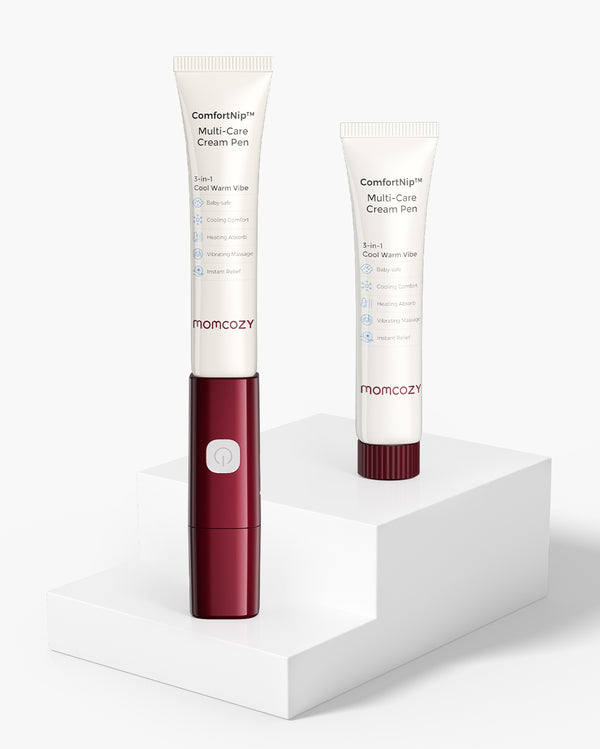
- Smart Powered Cooling: Features a sustained 59°F (15°C) electronic cooling tip that targets intense soreness and bleeding nipples, instantly soothing localized pain receptors.
- Soothe and Speed Repair with Warmth: In addition to cooling relief, the pen offers a gentle thermal setting. This soothing warmth accelerates the absorption of the plant-based cream into the deep dermal layers for faster tissue repair. It also helps relax the breast muscles before pumping to stimulate an easier milk letdown.
- 15,000 RPM Gentle Micro-Vibrations: Mimics a professional lactation massage to relieve breast heaviness, reduce engorgement, and keep milk flowing smoothly.
You can use the Momcozy Classic Nipple Cream for moisturization or as a lubricant for pumping. Unlike balms that freeze up in winter, this cream stays perfectly silky. It is made with only 6 plant-based ingredients, namely:
- shea butter
- olive oil
- candelilla wax
- sunflower seed oil
- sea buckthorn oil
- Calendula flower extract
That is remarkable because of two things.
- The ingredient list is very short. That significantly lowers the chances of the product irritating your skin. It is also nursing-safe.
- It is plant-based. It has no lanolin, which can affect sensitive skin.
How to Choose the Right Product Type
Here's a detailed guide that will point you to the product that you need more of.
Cream-Type — Best For
- Daily use
- Mild dryness and tenderness
- Touch-free nighttime application during cluster feeding
- Active cooling pain relief
|
Look for |
Avoid |
|
|
Balm-Type — Best For
- Chapped, cracked, very dry nipples
- Extended overnight use (only when not actively feeding or cluster-feeding)
- Moms looking for long-lasting protection
|
Look for |
Avoid |
|
|
Decision Guide
|
Scenario/Needs |
Best Choice |
|
Lightweight moisturization |
Nipple Cream |
|
Strong protection |
Nipple Balm |
|
Nipples are dry during the day, and active pain relief/nighttime sleep protection is needed |
Momcozy Touch-Free Cooling Nipple Creams |
|
Severe pain, cracking, bleeding, or latch issues. |
Consult a doctor or a lactation consultant |
FAQs
Here are some frequently asked questions about nipple creams and nipple balms.
What Is the Difference between Nipple Cream and Nipple Balm?
Nipple cream is usually lighter, softer, and faster-absorbing, while nipple balm is usually thicker, waxier, and more occlusive. Choose nipple cream for lightweight moisture and nipple balm for longer-lasting protection. However, traditional balms can clump up in winter and leave messy oil stains on clothes
Can I Use Nipple Cream and Balm Together?
Yes, you can use them together. In fact, that is a wise move. Apply nipple cream in the morning to moisturize and prevent dryness, then use nipple balm at night to protect and aid repair. Using both together helps soothe and reduce discomfort. However, if you are waking up frequently at night, a touch-free cream like Momcozy is better to avoid the messy hand-washing required by balms.
Which Is Better for Cracked Nipples — Nipple Cream or Nipple Balm?
Traditional nipple balm offers a thicker occlusive barrier to seal cracks. However, for active recovery, a high-tech product like the Momcozy Multi-Care Pen is ideal; its thermal setting accelerates cream absorption for faster repair, while its smart cooling instantly numbs crack-related pain.
Do I Need to Wipe Off Nipple Cream Before Breastfeeding?
Some nipple creams need wiping off, while others don’t. It all boils down to the ingredients used to create them. Products like the Momcozy nipple creams contain only natural ingredients. As such, they are safe to ingest. That said, you don’t need to wipe the cream off if you’re using a Momcozy Nipple Cream.
Is Nipple Balm Better than Nipple Cream for Pumping?
It depends on when you use the product. Before pumping, a lightweight nipple cream may work better as a lubricant if the product is designed for that use. After pumping, nipple balm may be better if your nipples feel rubbed, raw, or friction-prone. It leaves a longer-lasting protective layer.
Can I use nipple cream every day?
Absolutely! Nipple creams are lightweight and fast-absorbing. They are not sticky or greasy, so they won't leave messy stains on your clothes or bother you after application. Additionally, with touch-free applicators, they are incredibly easy and fast to apply.
Conclusion
Why choose between nipple cream and nipple balm when you can use both? Nipple cream can provide moisturization, which can help soothe your nipples. Meanwhile, nipple balm adds a protective layer that prevents further damage. Using the two in the same routine can help reduce the discomfort you may feel.
Momcozy’s innovative nipple cream lineup replaces heavy animal waxes with silky, plant-based hydration, while incorporating ceramic cooling and smart electronic technology to actively stop the pain.
Remember to use nursing-safe formulas to avoid inconvenience. These formulas allow you to breastfeed without wiping the cream or balm off.








