


Table of Contents
Do you see purple stretch marks on your skin? Are they on your belly, thighs, and other nearby areas? Many other moms also experience that. These are one of the most common pregnancy skin changes. It does not mean something is wrong with your body or your baby's development. So no need to worry about that.
But still, you'd want them gone. You can find the solution below. This article covers what purple stretch marks during pregnancy are, why they happen, and how to care for them. It will also touch on the subject of pregnancy-safe stretch marks. You will learn that while they can't rewrite genetics, they can improve your skin and help prevent these marks.

Why Are Your Stretch Marks Purple? The Science Behind the Color
Human skin is composed of multiple layers. The middle layer is called the dermis. In pregnancy, this layer gets stretched and torn quickly. That causes an inflammation, which becomes obvious due to skin thinning. The purple color is caused by your blood vessels showing through.
What's Actually Happening Beneath Your Skin
The biggest physical change when you are pregnant is the rapid belly expansion and weight gain. Here's the thing. These changes can stretch your skin faster than it can adapt.
Think of a balloon inflating too quickly. It puts stress on the balloon's material. That weakens it and may cause the balloon to pop. But do not worry. Unlike the balloon, nothing dangerous will happen to you. Stretch marks appearing are normal in pregnancy. The balloon analogy explains what happens to your skin, though.
The dermis contains collagen and elastin fibers. These are responsible for keeping your skin firm and flexible. However, when your skin stretches quickly due to pregnancy, these can be disrupted. Stretch marks are the result of that.
At first, they look either red or purple. As mentioned above, this is your blood vessels becoming more visible due to the active inflammation and thinning of the skin.
What Do the Different Colors of Stretch Marks Mean?
Some stretch marks are purple or red, and some are white. Stretch mark color stages reflect the age of the stretch marks.
Purple/Red Stretch Marks
Purple and red stretch marks are striae rubrae. These are new stretch marks, still in the inflammatory stage. Since the inflammation is active, these marks may feel tender, itchy, or tight.
But here's the thing. It is at this stage that your skin is most receptive to treatment. So if you plan to use a stretch mark cream, now is the time.
Pink Stretch Marks
Pink stretch marks are a sign that the inflammation is calming down. It is a transition stage to mature stretch marks.
White/Silver Stretch Marks
White/silver stretch marks are called striae albae. They have this color because they have lost more pigment. The problem with these is that they have become more fibrotic. Since they are scars, making them visibly improve is difficult.
When and Where Do Purple Stretch Marks Show Up During Pregnancy?
If you want to prevent stretch marks, it's important to know when and where they appear.
Pregnancy Timeline: When Do Stretch Marks Appear
Let's talk about the pregnancy trimesters and the likelihood of stretch marks appearing in each one.
First trimester: Your skin and hormones are already changing in this stage. However, rarely do stretch marks appear at this stage.
Second trimester: Your belly's growth often accelerates at around 5 - 6 months in pregnancy. It is the time when some moms begin noticing red or purple stretch marks.
Third trimester: The third trimester, 7 - 9 months in pregnancy, is a high-risk period. It is when the belly, breasts, hips, and thighs may expand quickly. That results in collagen disruption, which causes stretch marks.
Please note that those are what typically happen. They are not always true. Some moms may notice stretch marks appearing earlier, and some later. Stretch marks may even appear only in postpartum. Factors like genetics, skin elasticity, weight gain rate, and body changes are all factors affecting this timing.
Still, it is a common scenario. That is why a stage-based belly care routine can help.
If you look at Momcozy's Chrono-Care approach, you'll see it sets the first trimester as a preconditioning phase. It's time to start moisturizing to prepare for what's to come. The second and third trimesters are times to actively defend against stretch marks. Then, postpartum is the time to take steps for repair and recovery.
Common Areas Where Purple Stretch Marks Appear
Stretch marks may appear in more than one area. They may also be symmetrical or not. Focusing on areas where they often appear saves you time and effort. It also makes your defense more effective. So, what are the spots where they usually appear?
Stretch marks on the belly are the most common. After all, your belly and abdominal skin are the parts that grow the most during pregnancy.
Stretch marks on the thighs are also common due to weight gain and fluid changes in the body. The increased blood volume and hormone-induced fluid retention often cause swelling in this part, which stretches the skin.
Stretch marks on the breasts may develop as your breast tissues grow. That is a change that occurs to prepare for breastfeeding.
Stretch marks on the hips and buttocks can also be expected. These are areas often affected by fat distribution shifts during pregnancy.
Stretch marks on the lower abdomen are caused by the rapid stretching of the skin late in pregnancy. Your center of gravity shifts, which also affects your skin, especially if it is not elastic enough.
Who Is More Likely to Get Purple Stretch Marks?

These are the women who face a higher risk of getting purple stretch marks:
Women with Family Member Who Also Got Stretch Marks
Family history is shown to have an effect on whether or not a woman gets stretch marks or not. Those who have a sister or mother that got pregnancy stretch marks often get them as well. Genetics also influences the severity of the case.
Genetics is outside of your control. However, it does not make supportive skincare pointless. You can tame down the severity and lower the risks by improving your skin's elasticity and firmness.
Women Who Experience Rapid Weight Gain
Slow and steady weight gain is normal in pregnancy. However, some women experience rapid weight gain due to complications like gestational diabetes. The thing is that the faster you gain weight, the less time your skin has to prepare for stretching.
Women Who Carry Twins or Multiples
The belly of a mom carrying twins or multiples is noticeably larger than normal. They are carrying more than one baby inside, after all. The skin also stretches faster because of that, increasing the chances of stretch marks appearing.
Women with Lower Baseline Skin Elasticity
Those with a low baseline skin elasticity have a higher chance of getting stretch marks. Their skin is less prepared for the rapid stretching that happens during pregnancy.
Young Expecting Mothers
Expecting mothers at the age of 20 and under are also in the higher-risk group. As such, their skin is not as ready for pregnancy changes as older moms' skin.
Women Carrying Their First Baby
If it's your first pregnancy, the chances of stretch marks appearing are higher. That is because your skin is stretching beyond its limits for the first time.
Are Purple Stretch Marks Something to Worry About?
The honest answer is yes. The appearance of purple stretch marks in pregnancy is very common. In fact, the NHS says that stretch marks affect about 8 out of 10 women. The overall stats are around 50 - 90% of all pregnant women.
These lines can be a sign of how your body responds to pregnancy. It's not a health problem, though. So you don't need to worry about your or your child's safety when you see purple stretch marks.
Understandably, the color can be scary. Purple is not something you usually see on the skin. But please keep in mind it's caused by visible vascular/inflammatory activity beneath the skin and nothing life-threatening.
When Should You See a Doctor?
When to see a doctor for stretch marks? You don't really need to see a doctor for just stretch marks. However, other skin symptoms may appear alongside them. They may deserve medical attention. Here are the signs that should have you on alert:
- You feel severe itching all over your body, and it feels intense. That is different from ordinary dryness, so having a doctor take a look is wise.
- You see rashes with blisters.
- Rashes that expand beyond where stretch marks appear are also often a sign of a problem.
- You feel burning or pain, or experience swelling in large areas of your body.
- You have Pruritic urticarial papules and plaques of pregnancy (PUPPP). It is a common itchy pregnancy rash that requires evaluation if symptoms are significant.
- Pemphigoid gestationis and other pregnancy-related skin conditions are less common. Still, they require medical care when you experience them.
The key thing to remember is that ordinary purple stretch marks usually do not require treatment. On the other hand, you should consult your doctor for any unusual rash or severe discomfort.
Why the Purple Stage Is the Best Time to Act
Purple stretch marks, which are newer, as well as the surrounding skin, are still responding to the stretching. As such, this is the stage when they are most receptive to skincare support . It's the best time to treat stretch marks.
That is why early-stage stretch mark treatment is better. While it does not guarantee that you won't get stretch marks, it lowers the chances. It improves modifiable factors, like elasticity and hydration, to help prevent stretch marks.
Furthermore, a consistent skincare routine helps reduce issues that often come with stretch marks. The list includes dryness, itchiness, and tightness, all of which cause discomfort.

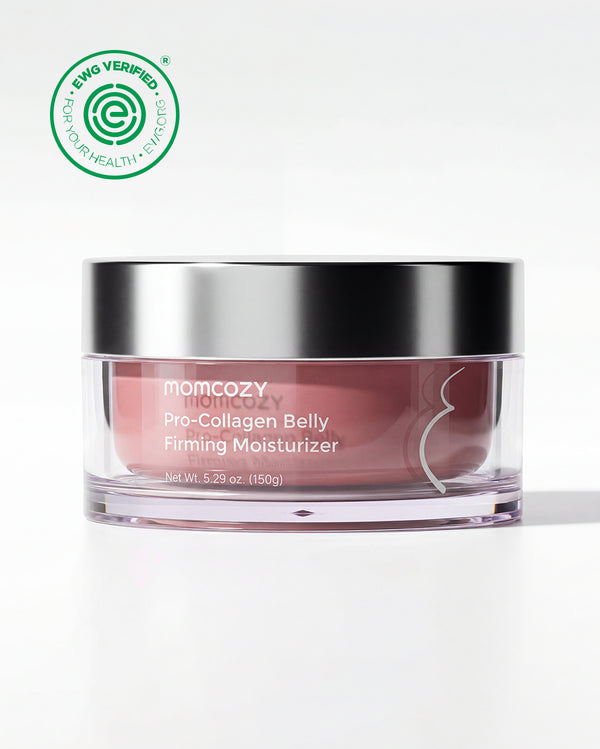
A pregnancy-friendly stretch mark cream can help you with this. The Momcozy Pro-Collagen Belly Firming Moisturizer is an example. This product is built for this pregnancy-to-postpartum window. It supports elasticity, barrier comfort, and a smoother-looking skin texture. It pairs effective ingredients like peptides, Centella Asiatica, Shea butter, and botanical oils to achieve this. Only safe, effective ingredients like these are used, as verified by EWG. This product does not contain ingredients that can be harmful to you.
À partir de €13,95 EUR

Key Ingredients to Look for in a Stretch Mark Cream
There are many effective stretch mark creams. They do more than just sit on the surface of the skin. They go in deeper and address the issues that cause stretch marks. They support hydration, elasticity, and barrier comfort. Furthermore, the belly cream should be usable daily.
But when you are pregnant, it's not just effectiveness you should be concerned about. Safety is always a big factor, but it's even bigger now. That said, you should avoid stretch mark cream with retinoids, no matter how effective they are. These can cause developmental problems with your baby.
Instead, choose belly creams with effective but pregnancy-safe ingredients:
- Hyaluronic Acid - is a powerful humectant that draws water into the skin, which helps make it feel plumper.
- Centella Asiatica - is a plant-based ingredient with effects on collagen-synthesis, often used for skin repair and conditioning.
- Vitamin E - is an antioxidant that helps lock in deep moisture and support skin recovery.
- Shea butter - is a botanical fat that is a rich emollient. It locks in moisture and helps prevent inflammation. Also, shea butter helps soften tight, dry skin. Momcozy's formula includes this ingredient for this reason, as well as barrier comfort.
- Botanical Oils - Meadowfoam seed oil helps lock in moisture, sunflower seed oil helps nourish the skin and soothes irritation, and olive fruit oil helps prevent damage and premature aging.
- Cocoa butter - a traditional baby-care ingredient that can soften the skin and improve the moisturized feel.
Peptides
Essential skin proteins like collagen and elastin are both made with peptides. That said, skincare products with peptides help signal your body to produce more collagen. It supports the look, firmness, and texture of your skin.
Products with multiple peptides, like the Momcozy Pro-Collagen Belly Firming Moisturizer, which contains four, are recommended for the best results.
Multi-peptide formula matters because it targets the issue at different angles. Each of the peptides in Momcozy’s belly cream has its own role:
- Palmitoyl Tripeptide-1 - Promotes a more resilient, plumper skin.
- Carnosine - An anti-aging agent that protects the skin from visible signs of glycation.
- Palmitoyl Pentapeptide-4 - Supports skin health and makes it feel firmer.
- Acetyl Hexapeptide-8 - Helps soften wrinkles and visible marks.
Ingredients to Avoid
- Retinoids - Retinoids are Vitamin A derivatives, which are linked to fetal developmental issues.
- Salicylic acid - High concentrations of exfoliating acids, like salicylic acid, should be avoided unless approved by a healthcare provider. Just like retinoids, they can cause development problems and birth defects.
Always check with your health provider if you are unsure.
Tip for Choosing a Belly Cream
When choosing a belly cream, a helpful way to evaluate them is by asking if they have two functions. Do they combine skin support with daily comfort, or do they offer only one of the two?
The belly cream should be comfortable to use daily. Also, they should be supported by consumer or clinical evaluation results . Safety is also a big factor. The belly cream must be EWG-verified, trusted by dermatologists, and hypoallergenic. The Momcozy Pro-Collagen Belly Firming Moisturizer ticks all of these boxes. As such, it is a great choice.

What Results Can You Realistically Expect?
Nothing can fully erase or prevent stretch marks - not even the most effective stretch mark creams. What they can do instead is help prevent them.
Consistent use of a great stretch mark cream can:
- Relieve dryness and tightness
- Keep your skin soft and moisturized
- Support elasticity and firmness
- Improve the look of newer red or purple marks over time
Also note that timing and consistency matter. If you start using a stretch mark cream early, your skin will be better prepared for the changes. Also, if you consistently use the product, your skin can better absorb its benefits. That often leads to less visible stretch marks, especially after they have matured.
Intertek's clinical trial for the Momcozy Pro-Collagen Belly Firming Moisturizer can be a reference. Intertek has evaluated the formula with the help of 33 moms. Ninety-seven percent (97%) of those who used the product consistently saw visible improvements in the appearance of their stretch marks and their skin's elasticity and firmness.
How to Use Stretch Mark Cream for the Best Results
Effective ingredients alone are not enough. Proper usage of the stretch mark cream is also needed. Here's your guide to that. Learn when to start using the cream, where to apply it, and more.
When to Start
The earlier you start, the better prepared your skin can be for stretching. Ideally, begin in the first trimester, before rapid belly growth starts. If purple stretch marks have already appeared, start as soon as possible instead of waiting for them to fade on their own. Postpartum use can also help support skin texture, firmness, and recovery.
Stage-based Routine
First trimester: precondition your skin using an effective stretch mark cream before rapid belly growth.
Second and third trimesters: defend the moisture barrier as the belly expands fastest using belly creams with Centella Asiatica.
Postpartum golden window: continue using belly cream to support skin repair and improve the visible texture as the body recovers. In the first 42-days of postpartum, which focuses on recovery, continue firmness and hydration support by using the stretch mark cream.
Momcozy's Chrono-Care approach follows this very pregnancy-to-postpartum timeline. As such, the Momcozy Pro-Collagen Belly Firming Moisturizer is useful before, during, and after the rapid expansion of your skin due to pregnancy.
How to Apply It: Technique Matters
Shower first before applying the belly cream. It makes the skin slightly damp, which is good for locking in moisture.
- Take a small amount of cream between your palms and warm it up.
- Massage gently over your belly, hips, thighs, breasts, and other areas prone to stretch marks. Use circular motions to support local circulation and ensure even coverage.
- Move from the center outward and cover both the stretch marks and the surrounding skin.
- Continue massaging until your skin has fully absorbed the product. It usually takes around 2-3 minutes.
Notes:
Please avoid aggressive rubbing, especially if your skin is itchy, tender, or irritated.
Use a belly cream with a fast-absorbing, non-greasy texture, like the Momcozy Pro-Collagen Belly Firming Moisturizer. It uses an exclusive oil capsule cream texture, which gives the nourishment benefit of belly oil with the easier absorption of a cream. It will help you feel comfortable with the cream under clothing.
How Often Should You Use It?
Using stretch mark cream at least two times a day is ideal. Use it once in the morning and in the evening. However, please check the product directions as there might be specific instructions for that.
Use a patch test first before committing, especially if you have sensitive skin. This will help you check if your skin will have negative reactions upon contact with the product.
Once marked safe, you'd want to apply it consistently rather than apply it once with a heavy amount. It is better for absorption and comfort.
Keep using the product consistently for weeks. Don't stop when you don't see improvements in the first few weeks. They usually appear around 4 - 8 weeks.
However, stop using the belly cream and consult a healthcare provider if you experience burning, swelling, hives, or unusual irritation.
Take Care of Your Skin — Starting Today
Purple stretch marks are normal during pregnancy. It may cause an alert because of the unusual coloring, but it only means the stretch marks are new. Actually, it can be treated as a good sign. Newer stretch marks are more responsive to treatment, so the color purple signals it's not too late to improve the texture.
If you're looking for a pregnancy-safe stretch mark cream that supports skin through pregnancy and postpartum, look for a formula with active ingredients, nourishing moisturizers, and a texture you will actually use every day.
The Momcozy Pro-Collagen Belly Firming Moisturizer combines a 4X Pro-Collagen Peptide Complex with 9 botanical extracts in a fast-absorbing oil capsule cream texture designed for daily belly care.
Don't wait for purple marks to turn silver before starting care. The sooner you support your skin, the better your routine can work for comfort, resilience, and visible texture.
FAQ
Are purple stretch marks normal during pregnancy?
Yes, purple stretch marks are very common during pregnancy. They usually appear when the skin stretches quickly due to the growth in the belly, breasts, hips, or thighs. The purple or reddish color happens because blood vessels beneath the skin become more visible during the early stage of stretch mark development.
Why are my pregnancy stretch marks purple instead of white?
Purple stretch marks are considered newer stretch marks. Their color comes from inflammation and visible blood vessels beneath the skin after rapid stretching causes small tears in the skin's support structure. Over time, these marks often fade into lighter silver or white lines as the skin gradually heals.
Can stretch mark cream get rid of purple stretch marks?
Stretch mark creams may help improve the appearance of purple stretch marks, especially when used early. Many creams focus on keeping the skin hydrated and supporting elasticity, which may reduce how noticeable the marks become over time. However, completely removing stretch marks is impossible without surgery.
What ingredients should I look for in a pregnancy stretch mark cream?
Look for ingredients that help support skin hydration and elasticity. Common ingredients include peptides, shea butter, cocoa butter, hyaluronic acid, vitamin E, Centella Asiatica, and nourishing oils like coconut or almond oil. Many people also prefer fragrance-free and dermatologist-tested products for sensitive pregnancy skin.
When should I start using stretch mark cream?
Start using stretch mark cream during the first trimester or while you are trying to conceive. Starting early may help keep the skin moisturized and supple as it stretches. Consistent use throughout pregnancy is commonly recommended for the best possible support.
Can I use stretch mark cream postpartum?
Yes, stretch mark cream can still be helpful after pregnancy. Postpartum application may support skin hydration and help improve the texture and appearance of stretch marks while the body recovers. Continued moisturizing can also help the skin feel softer and more comfortable during the healing process.
Reference
Momcozy Care Team. When Do Stretch Marks Appear in Pregnancy – And When To Start Using Stretch Mark Cream? [Internet]. Momcozy; 2026 Apr 10 [cited 2026 Jun 3]. Available from: https://momcozy.com/blogs/pregnancy/when-do-stretch-marks-appear-in-pregnancy
TeamMomcozy. How to Prevent Stretch Marks During Pregnancy And When to Start Using Stretch Mark Cream [Internet]. Momcozy; 2026 May 21 [cited 2026 Jun 3]. Available from: https://momcozy.com/blogs/pregnancy/how-prevent-stretch-marks-while-pregnant
NHS. Stretch marks in pregnancy [Internet]. NHS; 2022 Nov 25 [cited 2026 Jun 3]. Available from: https://www.nhs.uk/pregnancy/common-symptoms/stretch-marks/
Walker K, Basehore BM, Goyal A, Zito PM. Hyaluronic Acid [Internet]. StatPearls. Treasure Island (FL): StatPearls Publishing; 2023 Jul 3 [cited 2026 Jun 3]. Available from: https://www.ncbi.nlm.nih.gov/books/NBK482440/
National Library of Medicine. PubMed record: PMID 10796111 [Internet]. PubMed; [cited 2026 Jun 3]. Available from: https://pubmed.ncbi.nlm.nih.gov/10796111/
Momcozy Care Team. Why Peptides Matter in a Pregnancy Stretch Mark Cream [Internet]. Momcozy; 2026 Apr 23 [cited 2026 Jun 3]. Available from: https://momcozy.com/blogs/pregnancy/peptides-in-pregnancy-stretch-mark-cream
Villines Z. What are the benefits of vitamin E for the skin? [Internet]. Medical News Today; 2021 Apr 28 [cited 2026 Jun 3]. Available from: https://www.medicalnewstoday.com/articles/vitamin-e-for-skin
Cleveland Clinic. 6 Incredible Benefits of Shea butter [Internet]. Cleveland Clinic; 2022 Oct 19 [cited 2026 Jun 3]. Available from: https://health.clevelandclinic.org/shea-butter-benefits
Yetman D. Can Meadowfoam Seed Oil Improve the Health of Your Hair and Skin? [Internet]. Healthline; 2020 Oct 23 [cited 2026 Jun 3]. Available from: https://www.healthline.com/health/meadowfoam-seed-oil
Lio P. Skin barrier benefits of sunflower seed oil [Internet]. Dermatology Times; 2015 Jul 13 [cited 2026 Jun 3]. Available from: https://www.dermatologytimes.com/view/skin-barrier-benefits-sunflower-seed-oil
PubMed Central. PMCID: PMC3114665 [Internet]. National Library of Medicine; [cited 2026 Jun 3]. Available from: https://pmc.ncbi.nlm.nih.gov/articles/PMC3114665/








