


Table of Contents

All-day wear can work when a pumping bra fits well and stays supportive, and the right clothing and routine make workplace pumping easier.
Is your first week back a blur of meetings and a bra that suddenly feels too tight by 10:00 AM? The right hands-free pumping bra can turn those breaks into calmer, predictable moments you can actually fit into a workday. You will get clear guidance on all-day wear, what to wear over it, and how to balance comfort and milk supply.
What all-day wear means and how pumping bras differ
A pumping bra holds pump flanges in place so you can express milk hands-free; nursing bras are built to unclip for direct feeding, and some styles combine both functions. That difference matters at work because pumping bras are designed to keep the shields steady without you holding them, which is the key to hands-free breaks.
Pour tous les tire-lait
Mains libres
Sangle spongieuse
Plus Size
À partir de €49,99 EUR


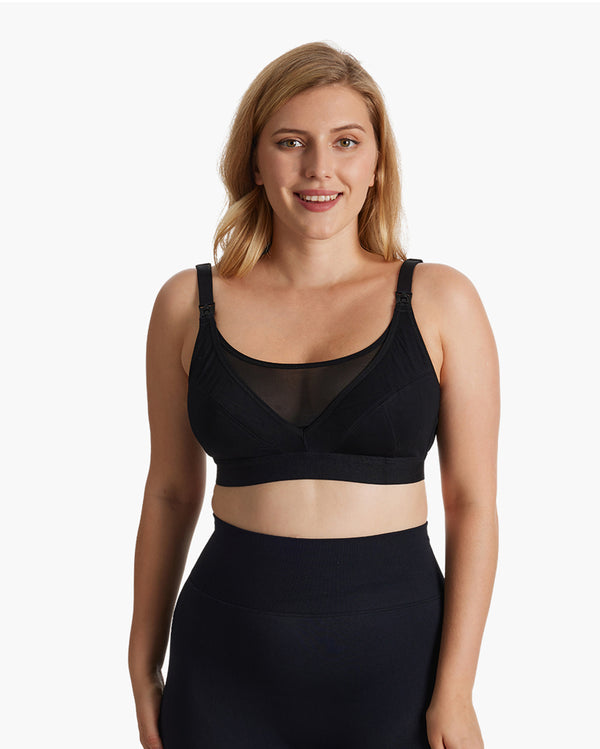


Most parents find that hands-free designs generally fall into three categories: all-in-one bras with drop-down cups and flange slits, pump-only bras that replace your regular bra, and clip-on add-ons that attach to a nursing bra. If your workday includes client meetings, a clip-on can live in your pump bag so you can keep your usual support; if simplicity matters most, an all-in-one can stay on from the commute to the last session.

Pros and cons of wearing a pumping bra all day
User testing shows that hands-free support makes pumping easier, and a good fit and stable suction keep a work session from turning into constant readjustment. All-day wear can reduce wardrobe changes, keep you covered in shared spaces, and make it realistic to drink water or answer a quick email while you pump.
That stability shines in designs like the Momcozy Hands-Free Pumping Bra, with adjustable straps that hold flanges securely to prevent slipping, breathable mesh to stay cool under a blouse all day, and a seamless silhouette that layers discreetly under professional tops—no bulk for meetings or quick email checks. It supports multitasking without restriction (test for easy breathing and no rolling), but keep a backup in your bag for fit shifts; it's a workday ally for supply and sanity, as long as comfort stays first.
All-day styles are not one-size-fits-all; real-world try-ons show support levels and sizing can vary a lot, and some bands run small or roll as your body shifts postpartum. I learned the hard way that a band that feels fine at 8:00 AM can dig by lunch once milk comes in, so I keep a softer backup bra in my bag.
Because fit can change and movement can shift your setup, a pumping bra should feel snug without restricting breathing, and it's helpful to plan regular washing if you wear it all day. Weekly washing, or more often if you leak, keeps it comfortable and clean.

Fit and comfort check for all-day wear
Support and access style
Reviewers who tried a wide range of styles note that support levels range from light lounge bras to high-support options, so the right pick depends on how much lift you want under work clothes. If you want a smoother, more traditional shape under a blouse, a structured clip-down style can feel closer to a standard bra; if speed matters, a no-clip X style can be faster when you are hopping between meetings.
Alignment during pumping
Since proper flange placement is essential, a hands-free bra that shifts when you twist in your chair can affect comfort and output. Do a quick check after you sit down, and again a few minutes into pumping. Adjust the straps if the nipple drifts off center; it is a small habit that saves you from sore spots later.
Professional clothes that play nicely with a pumping bra
In day-to-day office life, work clothes with stretch and easy access, like button-downs, wrap pieces, tunics, and soft layers, make pumping breaks smoother. Pieces that require two hands or full undressing, like bodysuits, strapless tops, heavy embellishments, hidden fasteners, or dry-clean-only items, tend to slow you down and add stress.
A stretchy tank layered under a blouse keeps your midsection covered when you lift the top to pump, which can feel especially reassuring in shared spaces. Button-up shirts and wrap dresses can also work in business-casual settings, and a hands-free pumping bra in your bag adds coverage during sessions.
If necklines shift as your size changes, nursing camisoles can adjust coverage while still providing access. Some workplace style advice favors V-necks for access, while other advice notes that low-cut necklines can feel too revealing at work. The difference is usually how much coverage you want versus how fast you need access, so try both in front of a mirror. Nursing pads, prints, or a neutral scarf can also save you from stress if a let-down surprises you.

Pumping rhythm, time math, and workplace basics
A steady routine often means pumping about every 3 hours, and a double electric session typically takes about 20 to 25 minutes, including setup and cleanup. On an 8-9 hour shift, three sessions can add up to roughly an hour or a bit more of total pumping time, so block it on your calendar. Under the Fair Labor Standards Act, employers must provide reasonable break time and a private, non-bathroom space during the first year, and a lactation specialist can help if supply concerns keep arising.
Workplace logistics get easier when you schedule pumping like a meeting and secure a private space with outlets. If you are away from a fridge, a portable breast milk cooler can hold up to 16 oz and keep it insulated and leak-proof for up to 24 hours, which can cover a long day or commute.
Milk handling details matter, so refrigerate pumped milk promptly if you will not use it right away. Plan for about 4 to 6 bottles for a full workday, and keep parts clean so you are not scrambling between meetings.

So, can you wear it all day? A practical decision guide
User testing shows that fit, comfort, and stable suction are the non-negotiables for a pumping bra that can last all day. If the band still feels comfortable after a full morning and the flanges stay centered without digging, all-day wear is usually workable; if you notice pressure points or shifting, plan to swap into a softer bra between sessions.
In practice, hands-free pumping bras come as all-in-one, pump-only, or clip-on styles, and the best choice depends on how you want to dress between sessions. A clip-on add-on works well if you want to keep a structured bra for meetings, while an all-in-one is easiest if you prefer to get dressed once and be done.
Returning to work while pumping is a big transition, and your comfort matters as much as your output. If all-day wear feels good, it can simplify the day; if it does not, swapping bras is a small change that protects your body and your confidence.
Disclaimer
The information provided in this article is for general informational and educational purposes only. It is intended to share common experiences and considerations related to wearing pumping bras (such as those offered by Momcozy) all day while returning to work, compatibility with professional clothing, and hands-free pumping support, and does not constitute medical advice, diagnosis, or treatment. Breastfeeding, pumping routines, bra fit, skin comfort, milk supply maintenance, and all-day wear suitability can vary significantly from person to person and may be influenced by individual factors such as pumping frequency, breast size fluctuations, work environment, skin sensitivity, lactation stage, or other health circumstances. Any benefits mentioned (such as discreet pumping under clothes, reduced leaks, improved mobility at work, or posture support) are based on common user experiences and general guidance, and are not guaranteed for every individual. References to fit tips, layering with blazers/shirts, potential concerns (e.g., skin irritation from prolonged wear, overheating, strap pressure, or impact on milk let-down), recommended break schedules, washing routines, or when to upgrade sizes are shared for awareness only and should not replace personalized professional guidance. Before using any pumping bra for extended workdays, layering under professional attire, or adjusting your pumping routine post-return-to-work, please consult your doctor, lactation consultant, obstetrician, midwife, breastfeeding specialist, or other qualified healthcare provider—especially if you experience pain, skin rashes, reduced milk supply, nipple issues, or concerns about work-related pumping logistics. momcozy and the content herein assume no liability for any consequences arising from reliance on the information in this article. You should make your own informed decision about whether any described product or approach is suitable for your routine and always prioritize the guidance of your healthcare and lactation professionals first.
Returning to work is a big step—prioritize your comfort and supply as you ease back in.








