Introduction
Tummy time helps babies build neck, shoulder, back, and core strength, but many infants resist it at first. Utilizing a nursing pillow for tummy time can make short practice sessions feel less frustrating by creating a gentle, supportive incline. This guide explains how to position your baby safely, what common mistakes to avoid, and how to choose a cushion that effectively supports feeding, propping, and supervised play. Note that the AAP strictly recommends tummy time only when babies are fully awake and supervised.
Why Does Tummy Time Matter?
Tummy time gives babies a chance to strengthen the muscles they need for head control, rolling, reaching, and later crawling. It also helps reduce constant pressure on the back of the head, which is one reason pediatric guidance encourages supervised tummy time during awake periods.
Newborns can usually start with very short sessions after coming home from the hospital. The AAP suggests beginning with 2 to 3 sessions per day for 3 to 5 minutes, then gradually increasing as babies get stronger.
Some babies dislike tummy time because the flat floor makes lifting the head feel difficult. In that case, a gentle incline can help them practice without becoming overwhelmed.
How Can A Nursing Pillow Help With Tummy Time?
A nursing pillow for tummy time works by slightly elevating the baby’s chest. This shifts some body weight away from the head and gives the baby a better angle for lifting, looking forward, and pushing through the arms.
This supported position can be useful between chest-to-chest tummy time and independent floor tummy time. It is not meant to replace the floor completely. Instead, it gives babies a more comfortable way to build tolerance during short, supervised sessions.
When Is It Most Helpful?
A pillow may help when your baby face-plants quickly, gets frustrated after a few seconds, or needs extra support to bring the elbows under the chest.
Many parents introduce supported tummy time once the baby has enough early head control to benefit from the position. If your baby has reflux, muscle tone concerns, prematurity, or developmental delays, ask your pediatrician or physical therapist first.
How Do You Position Your Baby Correctly?
Correct positioning matters more than the pillow itself. The goal is an active pushing posture, not a passive draped position.
Place the pillow on a firm, flat floor. Do not use it on a bed, sofa, recliner, or any elevated surface. CPSC warns against leaving babies unattended on nursing pillows, especially on beds or sofas, because movement can create suffocation or fall risks.
Set The Chest On The Pillow
Position your baby so the upper chest rests against the inner curve or top support area. The baby should not be hanging loosely over the front edge.
Their face, mouth, and nose must stay clear. If the pillow is too soft or the baby sinks into it, choose a firmer setup.
Tuck The Arms Forward
The elbows and forearms should rest under the chest or slightly forward on the pillow. This gives the baby leverage to push up.
If the arms dangle over the front, the baby loses support and may become frustrated quickly. Think of the goal as helping the baby practice a small push-up, not simply lying over a cushion.
Engage At Eye Level
Sit or lie in front of your baby. Use your face, a mirror, a soft toy, or a high-contrast card to encourage looking up.
Keep sessions short at first. If your baby becomes tired, fussy, sleepy, or unable to keep the face clear, end the session and try again later.
What Safety Rules Should Parents Follow?
Safety is the most important part of using any infant support product. A nursing pillow should never be used for sleep, lounging, or unattended positioning.
The CPSC has specifically warned that nursing pillows are for feeding support, not infant sleep, and new safety labeling warns that babies can suffocate while using these products for sleep or lounging.
Use Only While Awake And Supervised
Your baby must be awake and watched the entire time. Active supervision means staying close enough to reposition your baby immediately.
If the baby falls asleep, move them to a safe sleep space. The CDC supports AAP safe sleep recommendations, which emphasize a separate, firm, flat sleep surface without soft objects.
Choose The Right Time
Do tummy time when your baby is alert, calm, and not immediately full. Waiting after feeding may reduce spit-up discomfort.
If your baby has reflux or frequent vomiting, ask a healthcare professional how long to wait and which positions are safest.
Keep The Surface Firm And Clear
Use the floor with a clean mat or blanket underneath. Avoid pillows, sofas, beds, loose blankets, and soft surfaces.
A firm surface helps the baby push through the arms and lowers the risk of sinking into soft material.
What Features Matter When Choosing A Nursing Pillow?
When choosing a nursing pillow, the best pillow for supported tummy time is firm, stable, easy to clean, and versatile. It should help your baby stay positioned without forcing the body into an awkward angle.
Firmness And Shape Retention
A pillow should be soft enough for comfort but firm enough to prevent sinking. Dense foam or structured fill can help maintain a stable incline.
If the pillow collapses under the baby’s chest, it may not provide enough support for effective tummy time.
Washable Cover
Spit-up, drool, and milk stains are common during early baby care. A removable, machine-washable cover makes daily use easier.
The pillow core should be cleaned according to manufacturer instructions. Many cores should not be machine-washed.
Secure Fit For Feeding And Play
A waist strap or stable shape can help during nursing or bottle-feeding. For tummy time, the pillow still needs to remain stable on the floor and should not slide while the baby pushes.
A multipurpose pillow offers better long-term value when it supports feeding, propping, supervised tummy time, and later sitting practice.
How Long Should Tummy Time Last?
Start small. Short, frequent sessions are often better than one long session. The NIH Safe to Sleep program notes that babies can begin with 2 to 3 short sessions of 3 to 5 minutes each day and gradually build up; by about 2 months, many pediatricians recommend 15 to 30 total minutes daily.
If your baby dislikes tummy time, try 1 to 2 minutes several times a day. You can use chest-to-chest time, floor time, and pillow-supported practice as different ways to build tolerance.
Stop before your baby becomes exhausted. A positive short session is more useful than a long stressful one.
What Common Mistakes Should You Avoid?
One common mistake is using the pillow as a place for the baby to rest or nap. Nursing pillows are not sleep products.
Another mistake is placing the pillow on soft furniture. Even if you are nearby, babies can wiggle, roll, or slide quickly.
Parents also sometimes position the baby too far forward, leaving the arms hanging. This makes it harder for the baby to push up and can increase frustration.
Finally, avoid comparing your baby’s progress too closely with another baby’s. Strength, tolerance, and timing vary. If you are concerned about development, ask your pediatrician.
Momcozy Nursing Pillows For Different Needs
When choosing a pillow, match the design to your main use case: feeding support, caregiver fit, space, and supervised play.
Momcozy MaxSupport Nursing Pillow
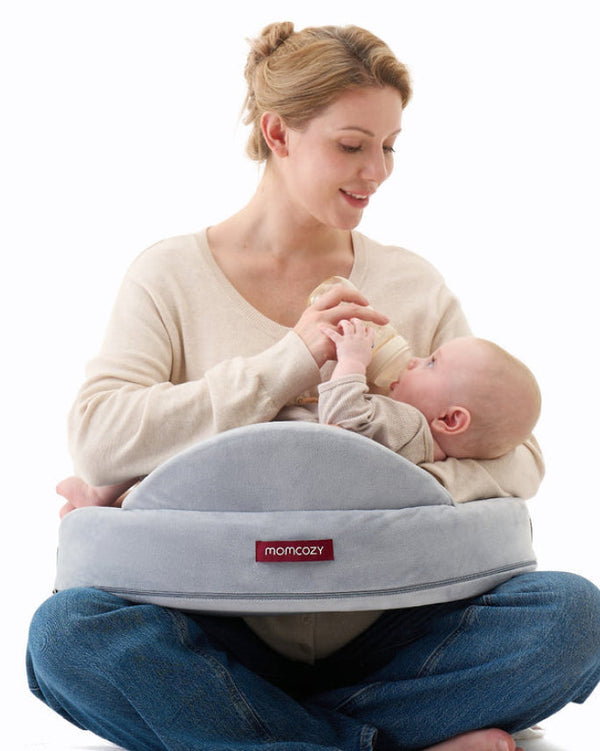
The Momcozy MaxSupport Nursing Pillow is designed around ergonomic support and firm comfort. Its 100% ergonomic support memory foam helps keep baby at a more comfortable feeding height while reducing arm fatigue for the caregiver.
Its distinctive feature is the built-in safety fence design, which is intended to help reduce slipping during feeding. The wider cushion size also provides more arm support during longer nursing sessions. For families who want a supportive feeding pillow that can also assist supervised play, this is the more structured option.
Momcozy Multifunctional And Adjustable Nursing Pillow
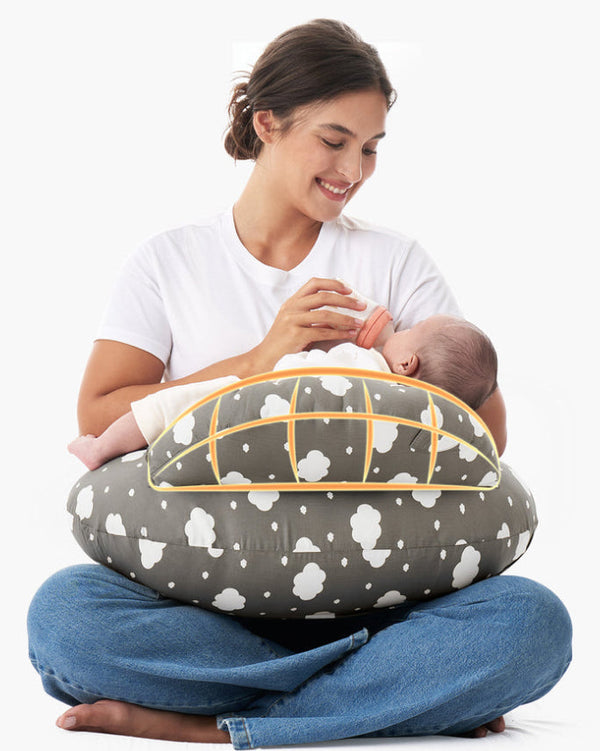
The Momcozy Multifunctional and Adjustable Nursing Pillow focuses on versatility. Its larger size and widened sides provide broad arm support, while the adjustable waist strap helps different caregivers keep the pillow close to the body.
This model is designed for feeding from birth, propping around 3 months, supervised tummy time around 6 months, and sitting support around 9 months. It is not for sleep, and all non-feeding uses should happen only while the baby is awake and supervised.
Make Tummy Time Safe and Easy
A nursing pillow can make tummy time more comfortable when used correctly, but safety comes first. Keep your baby awake, supervised, and on a firm floor. Position the chest and arms so your baby can actively push up, and stop when they become tired. With the right setup, a supportive pillow can turn short tummy time sessions into a calmer daily routine.