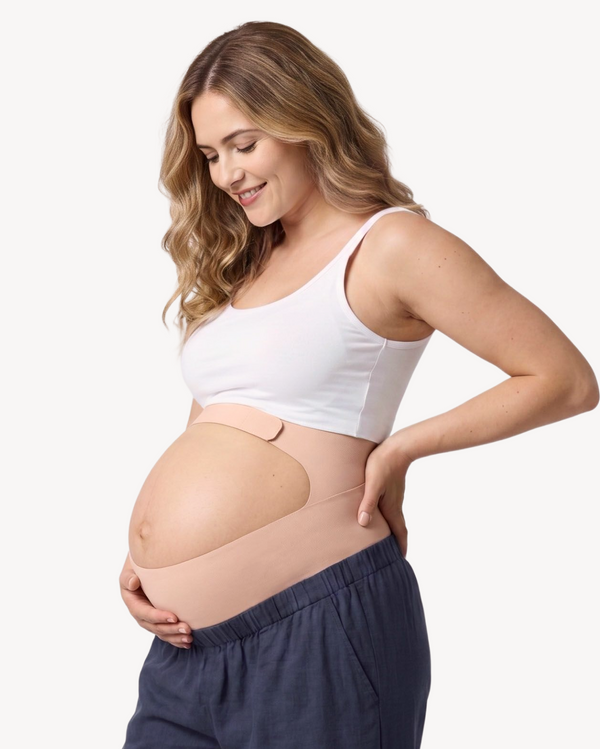
If your pelvis feels like it’s splitting in half…
If rolling in bed feels like a workout…
If walking a few blocks feels like a marathon…
Mama — this is for you.
Pelvic pain during pregnancy is common. But it is NOT something you just have to live with. In my online and NYC physical therapy practice, one of the simplest tools I use for pelvic pain in pregnancy?
Birth ball exercises
It’s gentle.
It’s safe.
And it works.
À partir de $79.99 CAD $85.00 CAD
Soutien du dos
Confort
Efficacité
What Happens to the Pelvic Floor During Pregnancy?
During pregnancy, your pelvic floor is doing a LOT more work than you think.
These muscles sit at the bottom of your pelvis and support your:
As your baby grows:
- More weight presses down
- Hormones make tissues more flexible
- Your posture shifts forward
This means your pelvic floor can become:
- Overworked and tight
- Stretched and weak
- Or a mix of both
That’s why you may feel:
- Pelvic pain
- Pressure or heaviness
- Leaking
- Pain with movement
Your pelvic floor is not just something to “squeeze.” It needs to move, support, and coordinate with your core.
Why Pelvic Floor Health Matters During Pregnancy?
Your pelvic floor is part of your entire support system, the core muscles.
It works with:
- ✔ your deep core
- ✔ your breathing (diaphragm)
- ✔ your posture
When this system works well:
- ✨ Less pelvic pain
- ✨ Less back and hip pain
- ✨ Better support for baby
- ✨ Easier labor
- ✨ Faster recovery postpartum
When it doesn’t work well:
- ⚠️ More pressure
- ⚠️ More pain
- ⚠️ More leaking
- ⚠️ Harder recovery
Common Causes of Pelvic Pain During Pregnancy
- Hormonal changes loosening joints
- Increased weight and pressure
- Postural shifts
- Core muscle stretching
Common Types of Pelvic Pain During Pregnancy
Now let’s break down the three most common types of pelvic pain pregnancy — and how to calm each one.
1. Pubic Symphysis Pain (SPD)
(aka, Lightening Crotch, Front pelvic bone pain pregnancy)
1.1 What Are the Symptoms?
- Sharp or shooting pain in the front of the pelvis or groin
- Sometimes it lingers and aches — almost like a toothache in your pelvic bone
1.2 What Makes It Hurt?
- Getting out of a car
- Rolling over in bed
- Putting on pants
- Standing on one leg
- Walking up or down stairs
If these movements make you wince, your pubic symphysis is likely irritated.
This is the small joint at the front of your pelvis where the two pelvic bones meet (see illustration). During pregnancy, hormones make this joint looser and more flexible. If one side moves more than the other or it carries too much pressure, it can get irritated and painful — causing that sharp or lingering ache in the front of your pelvis or groin.
We don’t fix this by stretching more.
We fix it by stabilizing it.
2. SI Joint Pain
(Back pelvic pain in pregnancy)
2.1 What Are the Symptoms?
- Pain on one side of low back
- Pain into the butt
- Worse with walking
- Worse climbing stairs
- Worse turning in bed
The SI joints (sacroiliac joints) are the two joints in the back of your pelvis. They sit on either side of a triangle-shaped bone called the sacrum and connect your spine to your pelvic bones. (refer to illustration)
During pregnancy, the SI joints can get irritated easily.
2.2 What Makes It Hurt
SI joint pain usually gets worse when your weight is not even.
It can hurt more when you:
- Stand on one leg
- Take big steps
- Turn or twist quickly
- Get in or out of the car
- Climb stairs
- Roll over in bed
- Carry something on one side
Your SI joints don’t like twisting or uneven pressure right now.
Keeping your weight even helps calm the pain.
3. Round Ligament Pain
(Sharp lower belly pregnancy pain pelvic)
Round ligament pain is very common — especially in the second trimester as your uterus grows
You have two round ligaments, one on each side of your uterus. They help support and hold your uterus in place.
Each ligament starts near the top of the uterus (the fundus) and travels down toward the pubic bone and groin. (refer to illustration)
As your belly grows, they stretch.
If they stretch quickly or suddenly, that’s when you feel the sharp pain.
Sudden movement = sudden pull = sharp pain.
It’s uncomfortable.
But not dangerous for you or your baby.
3.1 What Are the Symptoms?
- Sharp stabbing or pulling in lower belly and pelvis
- Groin pain (usually one side more than the other)
- Tugging in the vulva or vagina
3.2 What Makes It Hurt?
- Standing up quickly
- Rolling in bed
- Getting out of a chair
- Sneezing, coughing, or laughing
- Walking fast
- Sudden twisting
How to Relieve Pelvic Pain During Pregnancy?
During pregnancy:
- Your joints are looser (hello pregnancy hormones!)
- Your center of gravity shifts forward
- Your core muscles stretch
- Your pelvis has to support more weight
That’s a lot of change!
You can use a birthing ball to:
- ✅ Take pressure off your pelvis
- ✅ Allow gentle movement
- ✅ Improve circulation
- ✅ Relaxe tight muscles note: spelling mistake Relax not Relaxe
- ✅ Encourage better posture
- ✅ Reduce compression
Movement is medicine.
Stillness creates stiffness.
And the ball lets you move safely.
If you’re dealing with pubic symphysis pain (SPD) during pregnancy, these simple exercises on the Momcozy birth ball can help.
À partir de $79.99 CAD $85.00 CAD
Soutien du dos
Confort
Efficacité
- Sit tall (no slouching) with the stability ring underneath. Stay near a table or chair for light support if needed.
- Feet hip-width apart
- Knees stacked over ankles
- Place a 9-inch ball, or towel roll (6 inches thick) or small pillow between knees
- Gently squeeze
- Keep squeezing as you stand up and sit back down
- Relax the squeeze
- Repeat 3–5 times
Keeping the squeeze, the whole time helps your pelvis move as one unit — improving alignment and reducing strain at the pubic symphysis joint, one of the biggest causes of pregnancy pelvic pain.
More support = less irritation.
Prevent Pubic Symphysis From Getting Worse
If you feel this type of pain, keep your weight even on BOTH legs.
Avoid one-legged activities that twist your pelvis:
- No pushing heavy objects with one leg
- Get in/out of car with both legs together
- Skip Tree pose
- Skip deep Warrior poses
- Avoid lunges
- Sit down to get dressed
Small Tweaks = Big Relief
- When rolling in bed → squeeze knees together
- When standing up → squeeze knees together
- If stairs hurt → walk sideways
Your pelvis loves symmetry right now.
Two feet down = less strain.
If you're experiencing SI joint pain, try these to ease the discomfort:
4 & 5. One-sided pain, hand on one knee, that foot raised 2 inches and foot turned out, push out
Step 1 – Outer Hip Press
- Sit tall
- Hands on outside of knees
- Bend forward at the hips
- Press knees into hands (don’t let them move)
- Hold 10 seconds
- Repeat 3 times
Step 2 – Inner Thigh Squeeze
- Sit tall
- Place 9-inch Ball (or towel roll, or pillow) between knees
- Squeeze gently
- Hold 10 seconds
- Repeat 3 times
If one side hurts more:
- Bend your knee and lift the foot on the sore side about 2 inches off the floor
- Turn that foot slightly outward
- Place your hand on the outside of that knee
- Gently press your knee into your hand (don’t let it move)
- Hold for 10 seconds
- Repeat 3 times
These gentle press-and-hold moves activate the muscles around the joint, helping support it, reduce shifting, and calm pain — without big movement.
More stability = less shifting = less pain.
Prevent SI Pain From Getting Worse
If your SI joint is irritated during pregnancy, the goal is simple: reduce uneven pressure and sudden twisting.
Here’s how:
- Keep your weight even on both legs when standing.
- Avoid standing on one leg
- Take smaller steps when walking.
- Avoid fast pivots or sharp turns
- Sit down to put on pants or shoes.
- Keep knees together when rolling in bed.
- Skip Tree pose
- Skip deep Warrior poses
- Use supportive shoes (inside and outside)
Small Tweaks = Big Relief
- Pillow between knees at night
- Sit to dress
- Get in and out of the car with both legs together.
- Avoid crossing your legs when sitting.
- Keep feet planted when standing
- Take stairs one at a time
Your SI joint doesn’t like twisting or uneven loading right now.
Less twisting.
Less wobbling.
Less pain.
Even pressure = calmer joint.
Less twisting = less pain.
Prevent Round Ligament Pain From Getting Worse
To help relieve round ligament pain, try the following:
1. Birth Ball Moves
- Sit tall
- Glide one heel back and forth x10
- Lift one bent knee toward chest x10
- Side bend stretch gently x3 each side
Keep it controlled. Not aggressive.
2. Self-Massage (Dry Pull Technique)
No lotion or oil.
If you have cream on, wash it off first.
Never press hard. This should feel soothing, not painful.
This is a gentle “lift,” not a glide.
- Lie on the floor or your bed and rest both legs comfortably on top of the birth ball.
- Place one or both hands on one side of your abdomen, where belly meets groin (right or left).
- Use your palm or flat fingers (no poking).
- Gently scoop the tissue upward and slightly inward toward your belly button.
- Hold that lift for 10–20 seconds while you take slow breaths
- Repeat 3–5 times
- Repeat on the other side if you have pain on that side too.
By lifting and holding the tissue upward, you reduce the tension in the ligament — and that helps calm the sharp pain.
Note: If you feel a painful spot, keep the lift and add tiny circles with your fingertips (very light) at the point you feel pain for 10 seconds, then hold the lift again.
3. Slow Down Your Transitions
Before up standing from bed:
- Bend knee and straighten the knee on the sore side a few times
- Roll onto your side first
- Use your arms to help push up
- Move slowly as you get up
Before coughing or sneezing:
- Lean slightly forward
- Support belly with hands as you cough or sneeze.
Less sudden stretch = calmer ligament and less pain.
Besides using a birth ball for relief, you can:
- Wear a maternity support band
- Lift belly gently when moving
- Rest on side with pillow between knees and another pillow supporting your belly
What Not to Do If You Have Pelvic Pain?
- ❌ Aggressive bouncing
- ❌ Huge circles
- ❌ Slouching
- ❌ Stretching into pain
We want control — not chaos.
When Should I Call My Healthcare Provider?
If you have:
- Pain waking you at night
- Severe pelvic bone pain pregnancy
- Leg weakness
- Pain worsening weekly
You deserve help.
Report this to your healthcare provider and try to see a pelvic physical therapist.
Early treatment makes a huge difference.
The Big Takeaway
Pelvic pain during pregnancy is common.
But it is treatable.
Whether it’s:
Gentle stabilization + smart movement works.
Your body isn’t broken.
It’s adapting.
And with the right support, you can move through pregnancy with less pain and more confidence.
FAQs
1. How Can You Strengthen Your Pelvic Floor?
Focus on coordinated movement, not just squeezing.
2. Will Pelvic Girdle Pain Affect Future Pregnancies?
It may recur, but can be managed with proper care.
3. Struggling to walk because of pelvic pain during pregnancy?
If walking is painful during pregnancy — that is not normal. It is treatable. Seek help early.
4. Struggling to sleep because of pelvic pain during pregnancy?
Sleep on your side with a pillow between your knees and one supporting your belly — your pelvis will thank you in the morning.
5. How Often Should You Use the Birth Ball?
Daily. Even 5–10 minutes helps.
Subtle movement all day = less stiffness.