Looking for a stretch mark cream to keep your skin moisturized and prevent stretch marks? There are factors you need to keep in mind when choosing one. Safety is one of the biggest concerns.
What makes a pregnancy-safe stretch mark cream? It should be gentle and deeply moisturizing. Furthermore, daily use of the product should not cause any problems.
This article expands upon this to keep you well-informed. Please continue reading to know more.
Quick Summary: What Is the Best Pregnancy-Safe Stretch Mark Cream?
The best pregnancy-safe stretch mark cream is not just the richest or oiliest one. A strong formula should check five boxes:
- A pregnancy-conscious ingredient profile
- Deep hydration for dry, tight belly skin
- Elasticity support as the belly grows
- A comfortable texture for twice-daily use
- Clinical testing or safety validation for extra peace of mind
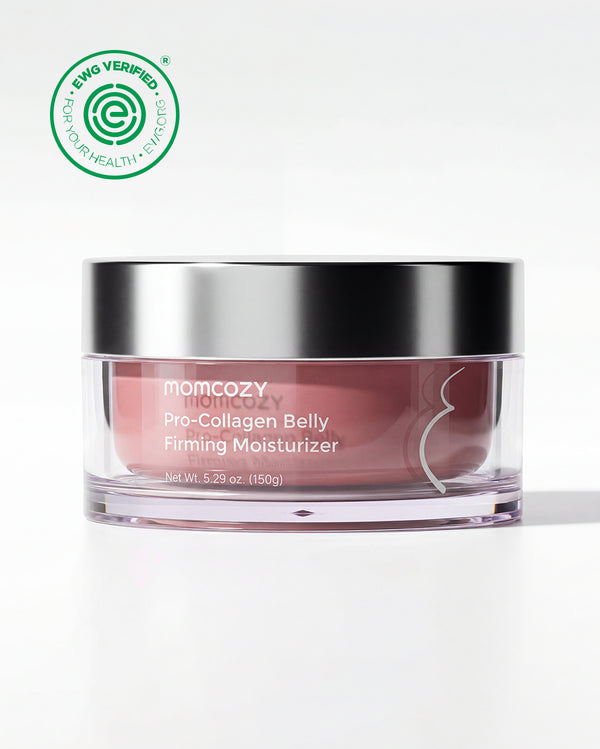
Momcozy Pro-Collagen Belly Firming Moisturizer is designed around these needs, with peptides, Centella Asiatica, Shea Butter, Soluble Collagen, botanical extracts, an oil-in-cream texture, and safety cues such as EWG Verified, dermatologist-tested, and hypoallergenic.
Why Pregnancy-Safe Skincare Is Different From Regular Skincare
In this section, you will learn why you should be more selective of the skincare products you use when you are pregnant.
Your Skin Changes During Pregnancy
Pregnancy skin changes include the expansion of the belly, breasts, hips, and thighs. It causes the skin barrier to feel tighter and more fragile. It's not just size that changes, though. There are also changes in moisture retention.
There might be products that you love using before, but are now causing itchiness or redness. This happens more frequently with products that have harsh actives or fragrances.
Hormonal shifts - triggered by pregnancy - are the cause of that. Your skin becomes more sensitive and reactive because of that. It can make several areas dry, itchy, or prone to irritation.
That is why it is important to look for a pregnancy-safe stretch mark. It should support the skin barrier during pregnancy.
Some Ingredients Need Extra Caution During Pregnancy
Medical experts recommend avoiding certain skincare ingredients during pregnancy for two reasons. One is that studies may have shown them to have negative side effects. The other is that there may be limited data on how they affect pregnancy.
Not all skincare products need to be avoided, though. There are effective formulas that use pregnancy-safe ingredients. These do not raise safety concerns.
It is always a good idea to consult your doctor if you are unsure about a product, especially if you have a high-risk pregnancy, skin disease, or allergies.
Ingredients to Avoid When Choosing a Pregnancy Stretch Mark Cream
When choosing a pregnancy stretch mark cream, the safer approach is to avoid harsh or unnecessary actives and focus on gentle daily belly care.
| Ingredient |
Why Avoid or Use With Caution |
| Retinoids / Vitamin A derivatives |
Most medical providers recommend avoiding them during pregnancy |
| High-concentration Salicylic Acid |
Stretch mark care does not need aggressive exfoliation; hydration, elasticity, and barrier support matter more |
| Certain Essential Oils |
Some may be too stimulating or sensitizing, and pregnancy safety data may be limited |
| Strong Fragrance |
May irritate sensitive skin or feel overwhelming when pregnancy makes smell sensitivity stronger |
| Parabens |
A debated preservative category; some moms prefer paraben-free formulas for peace of mind |
Be Careful With Certain Essential Oils
Some moms assume that “plant-based” always means safe. But that is not always true. Essential oils are highly concentrated plant ingredients, and some may be too strong for pregnancy skincare.
Essential oils often avoided or used with caution during pregnancy include:
- Aniseed
- Araucaria
- Atractylis
- Australian lemon balm
- Basil
- Birch
- Camphor
- Cinnamon
- Hyssop
- Mugworth
- Parsely
- Pennyroyal
- Rosemary
- Sage
- Tansy
- Tarragon
- Thuja
- Wintergreen
- Wormwood
That said, moms do not need to worry about every plant-based ingredient. This does not mean all botanical ingredients are unsafe. Many gentle plant oils and botanical extracts can still be nourishing, comforting choices for dry, tight pregnancy skin.
Want to know which ingredients can actually help support your skin during pregnancy? Keep reading.
Ingredients to Look for in a Pregnancy-Safe Stretch Mark Cream
Here are the ingredients that signal it's an effective, pregnancy-safe stretch mark cream.
Hyaluronic Acid
Hyaluronic acid is a product already present in your body. Since that is the case, you can rest assured it is pregnancy-safe.
As for its benefits, hyaluronic acid helps attract and hold water in the surface of the skin. It helps improve the quality of dry, tight pregnancy skin. When your skin is well-hydrated, it tends to be softer, smoother, and more flexible skin as the belly expands.
Centella Asiatica
You can find Centella Asiatica in skincare products that promise to repair the skin and improve the skin barrier. It is good for sensitive, compromised, or stretched skin. Because of that, it is considered one of the best ingredients for products that require daily use.
You can find Centella Asiatica in products like the Momcozy Pro-Collagen Belly Firming Moisturizer. It helps soothe and support the skin barrier as the belly expands.
Peptides
Peptides are short amino acid chains naturally found in the body. In pregnancy skincare, they are helpful because they support collagen, elasticity, and smoother-looking skin without using retinoids.
As the belly grows, hydration alone may not be enough. Peptides help support the skin’s natural firmness and resilience, making them a gentle choice for daily pregnancy belly care.
For example, Momcozy Pro-Collagen Belly Firming Moisturizer uses a 4X peptide complex, including Palmitoyl Tripeptide-1, Palmitoyl Pentapeptide-4, Acetyl Hexapeptide-8, and Carnosine / L-Carnosine. It pairs them with Centella Asiatica, Shea Butter, Soluble Collagen, and botanical extracts to help keep stretching skin moisturized, soft, and elastic.
Shea Butter and Cocoa Butter
Shea and cocoa butter are rich emollients. Their benefits include softening rough, tight, or dry skin. They help you feel comfortable by reducing water loss from the skin's surface.
Admittedly, evidence that points out that these butters can help prevent stretch marks is mixed. But there's no denying they are excellent for maintaining skin comfort and hydration during pregnancy.
Vitamin E and Vitamin C
Vitamin E is a known antioxidant. It helps nourish the skin and enhance moisturization. Meanwhile, Vitamin C can stimulate collagen and brighten the complexion or fade spots in the skin.
These vitamins can help protect the skin barrier when you are pregnant, a time when your skin is most vulnerable. They support your skin's look and texture.
Powerful as these vitamins may be, they are still not the "magic cure" for stretch marks. No stretch mark cream ingredients can make stretch marks fully disappear.
Botanical Oils and Extracts
Plant-based ingredients provide nourishing fatty acids. These support the skin barrier and moisturize your skin. They help make you feel comfortable.
- Meadowfoam seed oil
- Sunflower seed oil
- Olive fruit oil
- Sweet almond oil
- Grape seed
Do not confuse them with essential oils - these are much gentler on the skin.
Look for formulas with multiple botanical extracts, like the Momcozy Pro-Collagen Belly Firming Moisturizer. It contains 9 of them, helping to keep your skin nourished.
How to Read a Stretch Mark Cream Label Before You Buy
Here's a guide on how to evaluate a stretch mark cream before making a purchase.
Start With the INCI List
Skincare ingredients are usually listed by their INCI names. They are also often arranged from highest to lowest concentration.
Look for water, oils, glycerin, butters, and humectants. This gives you an idea of how good the product is for moisturization.
Check not just the front label claims but also the full ingredient list. The first 5-7 items in the ingredients usually make up most of the product. Thus, these are the most important to evaluate.
Watch for Hidden Vitamin A Derivatives
As discussed in our ingredients section, pregnant women should avoid retinol and retinoids. These don't always appear as "retinol" in the ingredient list. They may be listed as:
- retinyl palmitate
- retinyl acetate
- retinal
- tretinoin
The gist is that you should treat "retin" or "retinyl" as a red flag. Avoid these unless approved by a medical provider.
Look for Safety and Suitability Claims
Stretch mark creams may have safety and suitability labels, which can speed up your search. The labels may say "pregnancy-safe" or "dermatologist-tested" and the like.
Almost every pregnancy cream will claim that it’s safe. Therefore, you should not judge a product based on the label alone. Seek for credible third-party validation, such as dermatology testing, hypoallergenic testing, or EWG certification.
You can also check the FAQs and usage instructions, especially when buying online.
Let's look at the Momcozy Pro-Collagen Belly Firming Moisturizer. It is EWG-Verified and dermatologist-tested. These unbiased opinions and certifications prove that the product is pregnancy-safe.
Which Stretch Mark Formula Should You Choose: Cream, Oil, or Gel?
Pregnancy-safe stretch mark products can have different consistencies. They can come in cream, oil, or gel form.
Some assume that the richer and oilier the product is, the better. But pregnancy belly care is not just about that. Moms should also consider whether the product can truly comfort dry, itchy, tight skin. Suitability for daily use also matters.
How do you choose between these, then?
Stretch Mark Cream
Stretch mark creams are easier to wear under clothes since they are lightweight, making them daytime-friendly. As for their benefits, they are great for dry, tight, or itchy pregnancy skin. However, some creams may be too thick and sticky. That makes them hard to spread.
There are unique ones that do not have that downside. Products like the Momcozy belly cream combine water-based hydration with oil-based nourishment. They absorb faster than oil but provide more nourishment than gels. The result is good support for hydration, elasticity, and barrier comfort without feeling too greasy.
Stretch Mark Oil
Massaging stretch mark oils is smoother. They help lock in moisture, so they are great for very dry skin. Because of this, stretch mark oils are best used after a shower.
However, oils can't hydrate your skin as well as water-based formulas. That said, they are best applied after a water-based moisturizer. They are like a second layer rather than a standalone product.
Please also note that some moms dislike how long it takes oil to absorb and the greasy film it leaves. It can also transfer onto clothes. Spray or bottle packaging can feel messy, leaky, or slippery, too. If these are things that you know would bother you, opt for the alternatives instead.
Stretch Mark Gel
Stretch mark gels are the opposite of stretch mark oils. They are lightweight and fast-absorbing. They also feel refreshing due to that. It makes gels suitable for oily skin or hot weather.
The downside is that stretch mark gels may not provide enough richness for very dry or stretched skin. You may need to layer it with a richer product for the best results.
What Else Should You Consider Before Choosing a Pregnancy Stretch Mark Cream?
Here are other factors that you need to consider when buying a stretch mark cream.
Sensitive or Allergy-Prone Skin
Pregnancy makes your skin more sensitive. As a result, products that may not have caused negative side effects before now do. We recommend always doing a patch test before committing to a product. Use it on a small area of your skin. If it triggers swelling, rash, or severe itching, stop using the belly cream.
Fragrance Preference
Some moms become more sensitive to scents when they are pregnant. A product safe for the skin may cause nausea because of its fragrance. That said, some moms opt for fragrance-free formulas or those with light, naturally derived scents. For example, they may choose a cream with a gentle, fresh citrus note. Since it is not overpowering, it is less likely to cause dizziness.
Texture and Daily Use
Products that target pregnancy stretch marks need to be used two times a day to be effective. As such, the best product is one that the user can apply consistently every day.
A great product absorbs faster and does not transfer to clothes or cause stains. They also work well after showering, which helps seal moisture in.
Clinical Evidence and Testing
All brands say that their stretch mark solution works well at fading stretch marks. It's hard to put your trust in that alone. Third-party testing can clear those doubts. They are unbiased, making them a more credible source.
For example, Intertek has conducted an independent 8-week clinical trial on Momcozy Pro-Collagen Belly Firming Moisturizer. A total of 33 moms participated. The results showed visible improvements in stretch mark appearance, firmness, and elasticity.
Quick Checklist: How to Choose a Pregnancy-Safe Stretch Mark Cream
- Contains no retinol or retinoids.
- Fragrance-free or suitable for sensitive skin.
- Contains humectants like hyaluronic acid or glycerin, which are great for hydration.
- Contains nourishing emollients (shea butter, cocoa butter, or plant oils).
- Includes ingredients like centella asiatica, peptides, vitamin E, or collagen-supporting ingredients.
- Absorbs well and are not greasy, making them perfect for twice-daily use since they absorb well and are not greasy.
- Has a full ingredient list that is easy to find and understand.
- Designed for the belly, hips, thighs, breasts, and changing pregnancy skin. These are the parts most affected by pregnancy.
- Clearly states that they only improve the appearance and comfort of stretched skin. They do not claim to erase stretch marks completely.
- Instructions for safe, first-time use are available.
- Have safety certifications. They are either dermatologist-tested, hypoallergenic, EWG Verified, or have similar third-party validation.
- Their effectiveness in pregnant or postpartum women have been studied by experts.
Conclusion
How to choose a pregnancy-safe stretch mark cream? It boils down to a number of factors, including safety and comfort. A pregnant mom should look for dermatologist- and clinically-tested products. At the same time, they should look for creams that are comfortable to use daily.
That is why the Momcozy Pro-Collagen Belly Firming Moisturizer is a fantastic choice. It combines a 4X Pro-Collagen Peptide Complex, Centella Asiatica, Shea Butter, and 9 botanical extracts. This formula puts them in a fast-absorbing oil-in-cream texture designed for daily belly care. It is EWG Verified, dermatologist-tested, and clinically studied for visible improvements in stretch mark appearance, firmness, and elasticity.
FAQs
What makes a stretch mark cream pregnancy-safe?
A pregnancy-safe stretch mark cream uses ingredients considered low risk during pregnancy and avoids substances that may be harmful to developing babies. It should focus on moisturizing, supporting skin elasticity, and maintaining skin comfort without containing ingredients commonly discouraged by healthcare professionals.
What Ingredients Should Pregnant Women Avoid in Stretch Mark Creams?
Pregnant individuals should generally avoid stretch mark creams containing retinoids, high-dose salicylic acid, and other ingredients that may not be recommended during pregnancy. Always review ingredient labels carefully and consult a healthcare provider if you have concerns about product safety.
What are the best ingredients for stretch marks during pregnancy?
Some of the most popular ingredients for pregnancy stretch marks include peptides, shea butter, cocoa butter, hyaluronic acid, Centella Asiatica, glycerin, and botanical oils. These ingredients help keep skin moisturized, support elasticity, and reduce dryness as the body changes throughout pregnancy.
Is cream or oil better for pregnancy stretch marks?
Both creams and oils can help maintain skin hydration during pregnancy. Creams often provide longer-lasting moisture because they contain water and emollients, while oils help seal hydration into the skin. Many people use both together for additional moisturizing benefits.
When should I start using stretch mark cream during pregnancy?
Many people begin using stretch mark cream during the first trimester or as soon as they learn they are pregnant. Starting early helps maintain skin hydration and elasticity before significant stretching occurs.
Can I use stretch mark cream if I have sensitive skin?
Yes, but it is important to choose products formulated for sensitive skin. Look for fragrance-free options with gentle moisturizing ingredients and minimal irritants. Performing a patch test before a full application can help identify potential reactions or skin sensitivities.
EWG Verified is a designation from the Environmental Working Group that indicates a product meets specific ingredient transparency and safety criteria. While it does not guarantee pregnancy safety, many consumers use it as one factor when evaluating skincare products during pregnancy.
Which Stretch Mark Cream Is Best for Sensitive Pregnant Skin?
For sensitive pregnant skin, choose a hypoallergenic stretch mark cream with no harsh actives, strong fragrance, or heavy irritation triggers. A good formula should help comfort dry, itchy, tight belly skin while being easy to use every day.
What Stretch Mark Cream Contains Peptides?
Momcozy Pro-Collagen Belly Firming Moisturizer contains a 4X peptide complex, including Palmitoyl Tripeptide-1, Palmitoyl Pentapeptide-4, Acetyl Hexapeptide-8, and Carnosine / L-Carnosine. These peptides help support skin elasticity, firmness, and smoother-looking belly skin during pregnancy and postpartum.
What Should I Use for Belly Care in Early Pregnancy?
In early pregnancy, start with gentle daily moisturization. Choose a pregnancy-safe belly cream that avoids retinoids, harsh acids, and strong fragrance, and look for ingredients that support hydration and skin comfort, such as Shea Butter, glycerin, Centella Asiatica, and Soluble Collagen.
What Stretch Mark Cream Is Best in the Second Trimester?
In the second trimester, the belly starts growing faster, so the best stretch mark cream should support both hydration and elasticity. Look for a formula with peptides, Centella Asiatica, Shea Butter, and botanical oils, with a texture that absorbs well enough for twice-daily use.