After birth, even ordinary movements such as standing up, feeding your baby, or walking across the room can make your abdomen and back feel unfamiliar. The right support garment may add comfort and confidence, provided it fits well and complements your recovery instead of trying to rush it.
What Is Postpartum Compression Wear?
The term covers garments that apply controlled pressure to part of the body after childbirth. Depending on the design, that pressure may be placed around the abdomen, lower back, pelvis, hips, thighs, calves, or feet.
A postpartum compression garment can be a flexible belly wrap, supportive brief, bodysuit, pair of leggings, or graduated compression socks. Some options are intended mainly for physical support. Others are shapewear designed to create a smoother outline under clothing. Those purposes overlap occasionally, but they are not interchangeable.
Compression is optional. It does not determine whether someone is recovering well, and choosing not to wear it is entirely reasonable.
What Postpartum Compression Garments Actually Do
Well-fitted compression can create a secure feeling around tissues that are sore, stretched, or weak. An abdominal wrap may provide external support when standing, coughing, or holding a baby, while a leg garment may support venous blood flow. MedlinePlus explains how compression stockings support blood flow in the legs.
Evidence on abdominal binders is most encouraging for short-term comfort after cesarean birth. A systematic review of randomized trials found lower pain and distress scores at some early time points among binder users. That does not mean every parent will benefit, and a garment should not replace prescribed pain relief, wound care, movement, or follow-up.
Compression cannot melt fat, permanently shrink the waist, force the uterus to recover faster, or rebuild muscle. It also cannot close diastasis recti by itself. A belly band may remind you to use better posture, but Cleveland Clinic notes that binders do not heal abdominal separation or strengthen the core. Gradual, medically appropriate core rehabilitation remains important.
Postpartum Compression Garments vs. Shapewear: The Difference That Matters
The clearest distinction is purpose. Recovery support prioritizes stability and adjustable comfort, while shapewear prioritizes how clothing sits on the body.
| Feature |
Recovery support garment |
Shapewear |
| Main purpose |
Support the abdomen, back, pelvis, or legs |
Smooth or shape the silhouette |
| Pressure |
Usually gentle, targeted, or adjustable |
Often firmer and distributed for shaping |
| Best use |
Short periods during recovery, as comfortable |
Daily dressing after the wearer feels ready |
| Medical role |
May complement clinician-guided recovery |
Not a treatment for an incision, swelling, or diastasis recti |
| Fit priority |
Easy breathing, movement, circulation, and skin comfort |
A smooth look without rolling, pinching, or pain |
A garment marketed for postpartum use is not automatically a medical device. Read its stated purpose, check the size chart, and ask your clinician whether compression is suitable if you have an incision, circulation concerns, significant swelling, pelvic floor symptoms, or another health condition.
Various Styles of Post Pregnancy Support Garments Available
Coverage and pressure vary widely, so the most useful style is the one that addresses the area where you actually want support. A full-body option is not inherently better than a sock, brief, or wrap.
Compression Socks
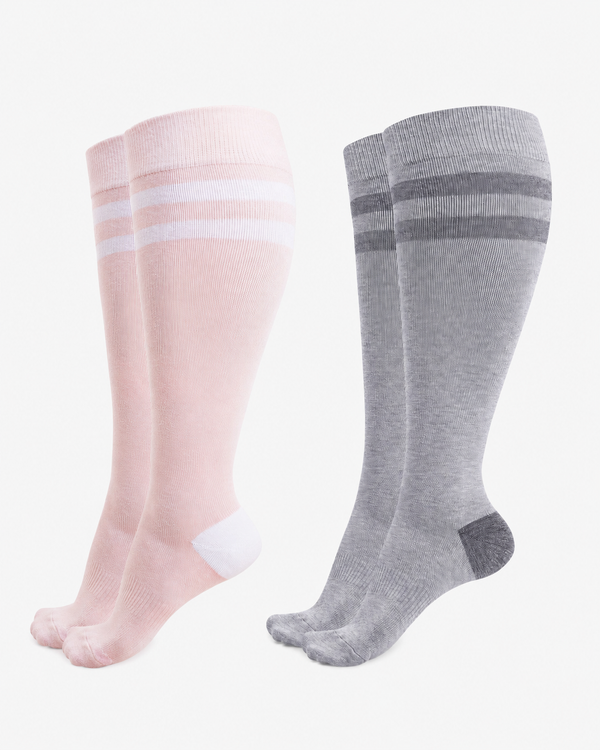
Graduated socks are tighter near the ankle and gradually less firm higher on the leg. They may feel helpful for tired or mildly swollen legs, but one-sided swelling or calf pain needs medical assessment rather than self-treatment.
Momcozy currently offers two distinct options. The Momcozy Compression Socks for Women Wide Calf page lists wide-calf sizing from XL through 5XL, depending on color. The Momcozy Wide Calf Compression Socks 20-30mmHg for Sports, 2 Pairs page lists 20-30 mmHg compression and sizes S through XL. Because pressure level matters, ask a healthcare professional which strength is appropriate if the socks are being used for a medical concern.
Graduated Compression
Soft and Breathable
Snug Fit
Pregnancy & Postpartum
Postpartum Belly Wrap
A flexible wrap circles the abdomen and may extend across the lower back. Adjustable tension can make it easier to change support as swelling and comfort shift during the day.
The Momcozy Ergowrap Postpartum Belly Wrap uses the brand's Ergonest Support Structure, a 3D abdominal lifting design, targeted adjustable compression, ventilation holes, and a pull tab. The official page offers Standard and Petite heights and presents the wrap as abdominal and lower-back support. It should support the body comfortably, not press aggressively on an incision or restrict normal breathing.
Soporte Lumbar
Comodidad
Eficacia
Compression Pants Post Pregnancy
High-rise compression pants combine abdominal, hip, and leg coverage. They can feel more stable than a separate wrap because the garment moves as one piece, although getting them on may require more bending and pulling. Choose a soft waistband that does not land on a tender incision, and avoid any pair that increases pelvic pressure.
Compression Leggings and Shorts
Leggings provide coverage from the waist to the ankles, while shorts stop at the thigh. These styles can be useful when support across several areas feels better than concentrated abdominal pressure. Watch for waistbands that roll, leg openings that dig in, and fabric that traps moisture.
Postpartum Recovery Garment
This broad label may refer to supportive briefs, shorts, bodysuits, or multi-panel garments. Check the product description instead of relying on the category name. A true recovery-focused design should emphasize comfort, fit, mobility, and support rather than promising rapid body transformation.
The Momcozy Shapewear Bodysuit is described on its official page as postpartum-friendly, invisible under clothing, supportive of tummy and hip shaping, and designed for skin comfort. These are daily dressing and shaping features. The bodysuit should not be treated as a substitute for a clinical abdominal binder or rehabilitation plan.
Postpartum Girdle With Abdominal Support
A girdle usually has firmer panels and more structure than a soft wrap. It may extend over the waist, hips, and upper thighs. Firm support can feel reassuring, but stiffness can also make sitting, feeding, and toileting less comfortable. Start with the least pressure that provides the desired support.
Full-Torso Compression Garments
A full-torso garment may extend from the bust to the hips or thighs. It creates a continuous layer under clothing, but it can be harder to put on and remove. Nursing access, bathroom access, seam placement, and heat retention matter as much as shaping strength.
Postpartum Support Briefs
Support briefs are simpler when only light abdominal coverage is wanted. The Momcozy Seamless Tummy Shapewear Panties are offered on the current product page in black and nude, with sizes M through 2XL. They are seamless shapewear for postpartum and daily dress, not a treatment for surgical healing or circulation problems.
Which Garment Is Right for Your Recovery?
Start with the support you need, then consider how easily you can put the garment on, care for your baby, use the bathroom, and take breaks. With post pregnancy compression, a wearable light or moderate fit is usually more useful than maximum tightness.
Post Pregnancy Compression After Vaginal Delivery
After an uncomplicated vaginal birth, a soft wrap or supportive brief may be comfortable once you feel ready. Pelvic floor heaviness, significant perineal pain, difficult urination, or increased bleeding are reasons to pause and speak with your clinician. Abdominal compression should not create downward pressure through the pelvis.
Postpartum Compression After a C-Section
Ask the obstetric or surgical team before placing a retail garment over or near the incision. Some hospitals use binders soon after surgery under clinical supervision, but home products differ in width, pressure, and seam placement. The Momcozy Ergowrap page advises waiting until the incision has begun to heal, typically 1 to 2 weeks, and checking with a doctor first.
Choose breathable material, keep the incision clean and dry, and stop if the garment rubs, pulls, increases pain, or hides a change in the wound. A wrap may improve comfort, but it does not protect an incision from infection or replace postoperative instructions.
Postpartum Support for Diastasis Recti and Core Weakness
A wrap can provide a temporary sense of stability and a cue for posture. It cannot rebuild the deep abdominal system. A pelvic health physical therapist can assess breathing, pressure management, pelvic floor function, and abdominal movement, then tailor exercises to the individual.
Postpartum Compression for Swelling in the Legs and Feet
For mild swelling in both legs, elevation, gentle walking when approved, hydration, and properly fitted socks may help. Sudden swelling, redness, warmth, tenderness, or pain in one leg can signal a blood clot. The NHS cesarean recovery guidance advises contacting a midwife or doctor promptly for lower-leg pain or swelling.
When to Start Wearing Postpartum Compression
There is no single start date for every birth or every garment. Delivery type, bleeding, swelling, skin condition, incision healing, sensation, mobility, and personal comfort all affect timing.
When to Start After a Vaginal Delivery
With an uncomplicated delivery, light support can often begin within a few days if it feels comfortable and the maternity care team has no concerns. Start with a short session while awake. Remove the garment if bleeding, pelvic pressure, pain, dizziness, or breathing discomfort increases.
When to Start After a C-Section
Follow the surgical team's instructions, especially if there were wound complications, infection, heavy bleeding, or other medical concerns. If a binder was provided in the hospital, use it exactly as directed. For a separate retail wrap, confirm that its edge and compression will not irritate the incision.
How Long to Wear Postpartum Compression Each Day
Begin with a limited daytime period and check your skin and symptoms after removal. For the Ergowrap specifically, Momcozy recommends sessions of 2 to 3 hours at a time with short breaks, and advises against continuous 24-hour or overnight wear. Other garments have different instructions, so follow the label and your clinician's advice.
Longer is not automatically better. Muscles still need gradual, pain-free movement, and skin needs time without trapped heat or pressure.
How to Get the Fit Right
Measure the body as it is now rather than ordering from a pre-pregnancy size. Use the brand's chart for the exact garment, since sizing can differ even within the same company.
A suitable fit should:
- Stay in place without rolling into a tight cord.
- Allow a full breath, comfortable sitting, feeding, walking, and bathroom use.
- Feel supportive without causing throbbing, numbness, tingling, reflux, pelvic heaviness, or increased pain.
- Leave no deep grooves, blisters, or lasting color changes.
- Avoid rubbing an incision or holding moisture against healing skin.
Recheck the fit as swelling decreases. If the garment no longer supports evenly, adjust it within the product instructions or reassess the size rather than pulling it tighter.
Safety Considerations
Do not use compression to cover up a symptom that needs care. Remove the garment and seek advice if it causes pain, circulation changes, breathing difficulty, worsening pelvic pressure, skin injury, or incision irritation.
Ask a clinician before using leg compression if you have peripheral arterial disease, neuropathy, fragile or infected skin, heart failure, major leg swelling, reduced sensation, or a history of blood clots. Prescription anti-embolism stockings and retail compression socks are not the same product.
Get urgent help for chest pain, trouble breathing, seizures, thoughts of self-harm, severe abdominal pain, or leg pain with swelling and tenderness. ACOG lists these among postpartum symptoms requiring urgent or emergency care. A garment should never delay assessment.
FSA, HSA, and Insurance Coverage for Postpartum Compression Garments
Eligibility depends on the product, its medical purpose, and the rules of the account administrator. The current Momcozy Ergowrap page displays an FSA/HSA eligible label, but that label should not be assumed to apply to every Momcozy garment or every purchase situation.
The IRS definition of medical expenses focuses on costs primarily used for diagnosis, treatment, mitigation, or prevention of disease, not items that are merely beneficial to general health. Before buying, confirm eligibility with the FSA or HSA administrator and ask whether a prescription or letter of medical necessity is required. Keep the itemized receipt and supporting documentation.
Direct insurance reimbursement is separate and varies by plan. Ask the insurer whether postpartum binders or compression hosiery are covered as durable medical equipment, whether the item must come from an approved supplier, and whether prior authorization is needed. A plan's Summary of Benefits and Coverage is a useful starting point, but a benefits representative can confirm the exact policy.
Frequently Asked Questions
Comfort, timing, and delivery history make these decisions personal. The answers below provide a practical starting point, while individual medical advice should come from the clinician who knows your birth and recovery.
Q1. Should You Wear Compression Postpartum?
Only if it feels helpful and is safe for your circumstances. Compression may add temporary abdominal, back, pelvic, or leg support, but it is not required for recovery. Stop if it creates pain, numbness, breathing restriction, pelvic pressure, or skin problems.
Q2. What Is the 3-3-3 Rule for Postpartum?
The 3-3-3 rule is a nonclinical pacing idea that is commonly summarized as three days resting in bed, three days mainly on the bed, and three days staying close to the bed. It is not a formal medical protocol and may not suit someone who needs early movement to reduce clot risk or has specific postoperative instructions. ACOG describes postpartum care as an ongoing, individualized process, so follow the activity plan given by your care team.
Q3. How Long Do I Wear a Postpartum Compression Garment?
There is no universal number of days or weeks. Use it for the period when it adds comfort, take regular breaks, and reassess as mobility and strength improve. Follow the manufacturer's instructions and any clinician guidance rather than wearing it continuously.
Q4. Can I Wear a Postpartum Compression Garment After a C-Section?
Often yes, once the obstetric or surgical team approves the specific garment and timing. It should not rub, press aggressively on, or trap moisture around the incision. Remove it if wound pain, redness, drainage, odor, warmth, or swelling worsens, and contact the care team.
Q5. What Is the Difference Between a Postpartum Recovery Garment and an Abdominal Binder?
A recovery garment is a broad category that may include briefs, shorts, leggings, bodysuits, or wraps. An abdominal binder is specifically designed to circle and support the abdomen, often with adjustable closure. Some recovery garments are mainly shapewear, so their product descriptions and intended use matter more than the category label.
Conclusion
The best post pregnancy support garments are not the tightest or most elaborate. They address a clear comfort need, fit without interfering with breathing or circulation, and work alongside rest, gradual movement, wound care, nutrition, and professional follow-up. Whether you choose socks, briefs, a wrap, or no compression at all, recovery should feel supported rather than forced.