


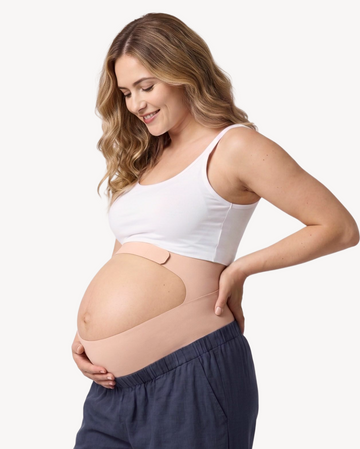
Shifting in your chair right now, trying to find the one position that doesn't pull on something? That's groin pain during pregnancy, and it's more common than you'd think from how little anyone talks about it. Nobody warns you. You just wake up one day with an ache in a spot you didn't know could ache, and start Googling at midnight.
Here's the thing: groin pain and pregnancy basically go together. Not always. Not for every mom. But often enough that it deserves an honest breakdown instead of a one-line mention in a symptom list. So let's get into why it happens, how it shifts by trimester, what actually helps, and when it's worth picking up the phone instead of waiting it out.
Why Does My Groin Hurt So Bad While Pregnant?
Short answer: your body's doing a lot, fast, and something's going to complain about it.
Longer answer — your uterus is growing well past its usual size, and that stretches the ligaments holding it in place. Especially the round ligaments. These are two cord-like bands running from the front of your uterus down into your groin, and as they stretch to keep pace with your baby, they can throw sharp, out-of-nowhere pain into your lower belly, groin, or inner thigh. Some people call this groin muscle pain pregnancy. Others call it inguinal pain during pregnancy. Same thing, different name.
Then relaxin. Your body releases this hormone to loosen up the ligaments around your pelvis and joints, getting things ready for labor. Great for delivery day. Not so great right now, because loose joints mean less stability, and less stability tends to show up as groin area pain during pregnancy that goes deeper than just the ligaments — sometimes into your hips, sometimes your lower back.
And don't forget the physics of it. Bigger baby, shifted center of gravity, different posture, more weight pressing down on your pelvis, bladder, and thighs. All of that adds up to groin discomfort pregnancy that never really feels the same two days in a row. Dull ache Tuesday. Sharp catch Wednesday when you stand up too fast. A weird pulling sensation Thursday that lands more as inner thigh groin pain pregnancy than anything else. And if it's worse on one side — left groin pain pregnancy is just as normal as right, for what it's worth.
Is Groin Pain Common During Pregnancy?
Yes. Genuinely, very common. Groin pain during pregnancy sits near the top of the list of pregnancy symptoms nobody prepares you for, and most moms notice it ramping up through the second and third trimesters.

Sore groin pregnancy isn't a sign anything's wrong. It usually just means your body's stretching, adjusting, and doing the physical work pregnancy demands. Doesn't make it comfortable. Doesn't mean you're doing something wrong either. The World Health Organization's guidance on antenatal care frames a positive pregnancy experience as one that addresses common physical discomforts like this, not just the prevention of complications.
Groin Pain During Early Pregnancy

Early Pregnancy
This one surprises people. Achy groin early pregnancy shows up way before most moms expect pain to start — a lot of us assume it's a third-trimester thing. It's not. The uterus starts expanding almost immediately, and the ligaments around it start stretching right along with it. Groin pain during early pregnancy usually shows up as small twinges, a low pulling feeling, maybe some soreness after a longer walk or standing up too quickly. Mild, mostly. Goes away with rest.
Second Trimester
Bigger bump, bigger pain. Groin pain during pregnancy in the second trimester tends to bring round ligament pain front and center — sharp, sudden, often just one side, and it has a talent for showing up at the worst times. Rolling over in bed. Standing up from the couch. Sneezing, of all things. Underneath the sharp jolts, there's usually a steadier ache too, that groin pain pregnancy second trimester soreness that just sits there through the day. Getting in the car stops being automatic. Turning over at night takes actual planning.
Third Trimester
By now, groin pain in the third trimester (or groin pain in the third trimester, whichever you want to call it) has probably become part of your daily routine. Some days it's just background noise. Other days it's bad enough to slow your walk to a careful shuffle. Groin pain during pregnancy in the third trimester can also bring on something sharper — a jolt low in the pelvis nicknamed "lightning crotch," which happens when the baby settles lower and presses against a nerve on the way down. Crotch pain during pregnancy tends to peak right here, alongside pelvic girdle pain, after months of hormones and posture changes stacking on top of each other. This is the stretch where it really helps to have someone in your corner — partner, mom, sister, physical therapist, whoever. You don't get bonus points for toughing it out alone.
Common Causes of Groin Area Pain During Pregnancy

A few things tend to be behind groin area pain pregnancy, sometimes more than one at once:
- Round ligament pain — sharp, sudden, one or both sides of the lower belly, usually lasting a few seconds to a minute or two, triggered by quick movement.
- Pressure from the baby — as the uterus grows, it pushes on your bladder, pelvic floor, thighs. This is a big reason groin pain and pregnancy go hand in hand as the months go on.
- Pelvic girdle pain — pain around the pelvic joints, front and back, that can radiate into your groin, hips, thighs, lower back. Gets worse with stairs, standing on one leg to get dressed, that kind of thing. The American Pregnancy Association notes that pregnancy-related changes can contribute to joint and muscle discomfort as your body adjusts to the growing baby.
- Muscle strain — extra weight plus a different way of walking equals muscles working harder than they used to.
- Hormonal changes — relaxin can cause loosening your joints for labor, leaving you feeling less stable in the meantime.
- Old injuries — a hip or groin issue from years ago can decide now's a good time to reappear.
How to Relieve Groin Pain During Pregnancy
There's no single fix for groin discomfort during pregnancy. But a few things tend to help, and most moms end up combining several.
- Rest, obviously. Take breaks. Back off whatever's clearly making it worse — you'll usually know within a day or two what that is.
- Stretch, gently. Pelvic tilts and a slow cat-cow (hands and knees, arch your back, then round it) work well for round ligament and pelvic tension. Go slow. Stop before it gets sharp. Prenatal yoga's a good structured way into this if you're not sure where to start.
- Move slower into and out of positions. Sounds small but makes a real difference in how much that sharp round ligament pain hits you. Bonus trick — flex your hips a little before you cough, sneeze, or laugh. Take some of the strain off right when it would otherwise yank on the ligaments.
- Sleep on your side, pillow between the knees, another one under the belly. Takes pressure off the round ligaments and pelvis, and a lot of moms say it helps circulation too.
-
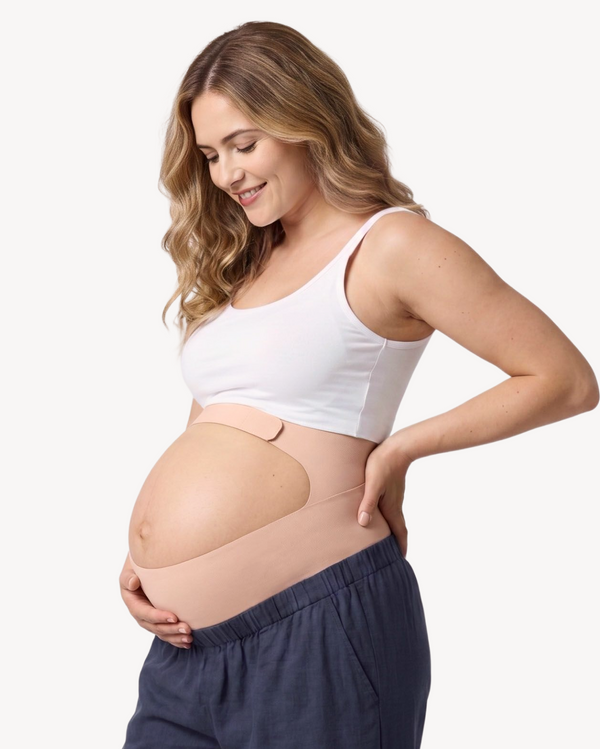
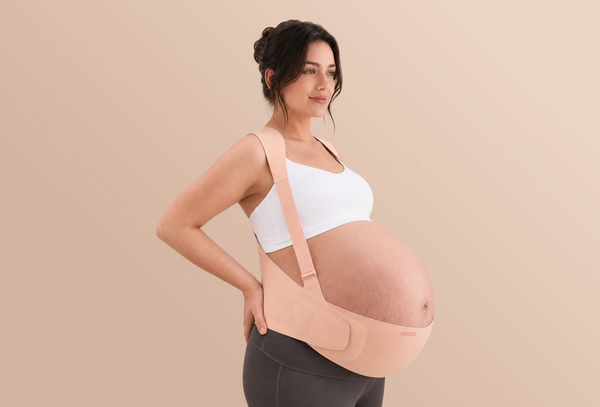
A belly band can genuinely help. The BumpEase - Momcozy Ergonest Maternity Belly Band is built to help shift some of that weight and pressure off your belly and pelvis. If you want to see what else is out there, Momcozy's pregnancy belly bands collection has more options.
- Warm baths, not hot ones. Heating pads are fine too, just keep them off your belly directly, and check with your doctor first.
- Don't stay stuck in one position too long — standing or sitting. Move around. Take short walks. Skip standing on one leg while getting dressed if you can manage it.
- Wear real shoes. Flat, supportive, low. Your posture's already dealing with enough.
- Ask your doctor about pain relief options and physical therapy. Acetaminophen's generally fine for pregnancy but check with your provider first based on your own history. Ibuprofen and other NSAIDs are usually a no unless your doctor says otherwise. And if the pain's bad enough to limit how you move, ask for a referral to a pelvic health physical therapist — it tends to help more than generic stretches you find online.
When to Seek Medical Advice
Most groin pain while pregnant is annoying, not dangerous. Still worth knowing where the line is, though.
CDC's Hear Her campaign flags severe belly pain that won't go away as one of several urgent warning signs during pregnancy. The full list also includes:
- Sudden, severe pain that doesn't ease up
- Bleeding or unusual discharge
- Fever or chills
- Not being able to walk or bear weight
- Pain that comes with contractions or pressure
Specifically with round ligament pain — call your provider if it doesn't ease up with rest or a position change, or if it shows up with bleeding, fever, nausea, or contractions. The Cleveland Clinic notes that round ligament pain is normal and not dangerous on its own, but that combination of symptoms together is rare and can point to something that needs quick attention. For a second, government-backed overview covering similar ground, Pregnancy, Birth and Baby from the Australian Government is a solid resource too. A quick twinge on its own, tied to movement? Usually fine. Anything that feels off, though — trust that instinct and make the call.
Can Barely Walk Due to Groin Pain During Pregnancy?
If it's gotten to the point where walking is genuinely hard, you're not being dramatic, and you don't need to just push through it. That level of pain is often tied to more advanced pelvic girdle pain, and it's a completely legitimate reason to reach out to your doctor rather than wait for it to pass.
Ask about physical therapy — a pelvic health specialist can often help more than you'd expect. Support belts help. In tougher cases, so does a cane, at least for getting through the worst stretches. None of that is anything to feel weird about. It's just a practical response to a real physical limit, not a sign you're handling things badly.
FAQs
Is Walking Good for Pelvic Girdle Pain?
Yes, in moderation. It keeps joints mobile, but overdoing it can make groin pain during pregnancy worse. A physical therapist can help you figure out where your personal limit is.
Crotch Pain During Pregnancy: Lightning Crotch vs. Groin Discomfort Pregnancy
Groin discomfort during pregnancy usually feels like a deep, dull ache. Lightning crotch is sharper and sudden — a nerve jolt from the baby pressing down as they shift lower.
Groin Pain and Pregnancy: When Does It Usually Start?
Can start as early as the first trimester, honestly, when the uterus first starts stretching those ligaments. Usually gets more noticeable through the second and third trimesters as things keep growing.
Does Groin Pain Mean Labor Is Coming?
Not exactly. It can mean your body's prepping for birth — but labor itself is regular, timed contractions, not groin pain by itself.
Does Groin Pain Mean Dilation?
Nope. Only a physical exam can tell you that.
Can Contractions Start in Your Groin?
Not typically. Most people describe contractions as pressure in the lower back or belly, not the groin specifically.
Is Groin Pain in Pregnancy a Normal Symptom?
Yes. Uncomfortable, sure. But normal — your body preparing for birth, doing what it needs to do.
How Long Does Groin Pain Last After Pregnancy?
Usually a few weeks postpartum before it fades as everything settles back into place. If it sticks around longer or gets worse, check in with your doctor.
Conclusion
Groin pain during pregnancy is uncomfortable, common, and — for almost everyone — manageable. Rest when you need to. Move gently. Try a belly band if it helps. Make the small adjustments that add up. And call your doctor when something feels off instead of waiting to see. You're not the only one dealing with this — plenty of moms are going through the exact same thing, at the exact same stage, right now.








