Las primeras semanas con un recién nacido pueden parecer un proceso interminable de dar de comer, hacer eructar, cambiar pañales e intentar dormir entre una cosa y otra. Justo cuando estás a punto de quedarte dormido, tu bebé abre los ojos. Es totalmente normal preguntarse sobre la frecuencia alimentación recién nacido noche.
Las tomas nocturnas no son señal de que algo vaya mal. Al contrario, son algo biológicamente previsible. Los bebés nacen con un estómago pequeño, un metabolismo rápido y una gran necesidad de calorías para sustentar el rápido desarrollo del cerebro. Tienen un ciclo de sueño corto y sus ritmos circadianos aún no están completamente desarrollados.
Saber cuántas veces hay que dar de comer al recién nacido por la noche te ayudará a tener unas expectativas realistas y a minimizar las preocupaciones innecesarias. Podemos simplificarlo y hacerlo más práctico.
Con qué frecuencia hay que alimentar a un recién nacido por la noche (según la edad)
La frecuencia de la alimentación nocturna recién nacido cambia rápidamente durante los primeros meses y el horario tomas recién nacido puede variar según las necesidades de cada bebé.
0-2 semanas de edad
Durante las dos primeras semanas de vida, la mayoría de los recién nacidos deberían poder alimentarse cada 2 o 3 horas, incluso por la noche. Si te preguntas cada cuánto come un recién nacido, esto suele equivaler a entre ocho y doce tomas en 24 horas. A esta edad, los bebés digieren la leche rápidamente y su estómago es bastante pequeño. Sin embargo, es especialmente importante que tu bebé siga recuperando el peso que tenía al nacer, por lo que no debes dejar que duerma más de tres o cuatro horas sin alimentarlo, a menos que tu pediatra te indique lo contrario. Asegúrate de que tu bebé no pase más de 3 o 4 horas sin comer, contando desde el inicio de una toma hasta el inicio de la siguiente, hasta que haya recuperado su peso al nacer y el pediatra te dé el visto bueno.
Las tomas nocturnas recién nacido 2 semanas siguen siendo esenciales para favorecer un crecimiento saludable y mantener una buena hidratación.
2-4 semanas de edad
Durante las dos primeras semanas, muchos recién nacidos siguen alimentándose por la noche cada dos o cuatro horas. Otros pueden empezar a espaciar un poco más las tomas, entre tres y cuatro horas, pero estos despertares frecuentes no son motivo de preocupación. Los picos de crecimiento recién nacido a esta edad pueden aumentar la frecuencia tomas nocturnas bebé, sobre todo por la tarde y por la noche.
1-3 meses de edad
Entre el primer y el tercer mes, en algunos bebés se produce un aumento natural en la frecuencia de las tomas, que suele situarse en intervalos de tres a cuatro horas durante la noche. Muchas familias se preguntan cuánto duerme un bebé de 3 meses, aunque algunos podrán dormir durante periodos más largos, de cuatro a cinco horas, sobre todo después de una toma completa. Sin embargo, la variación es considerable. Algunos bebés siguen despertándose, especialmente los que se alimentan de leche materna.
La alimentación nocturna bebé 3 meses sigue siendo habitual en muchos casos.
3-4 meses de edad
Entre tres y cuatro meses después, los bebés reducen el número de tomas nocturnas a una o dos. Otros pueden seguir despertándose con más frecuencia, sobre todo durante los saltos o retrocesos en el desarrollo. Lo más importante en cualquier momento es que el bebé gane peso de forma constante y que se moje o ensucie los pañales con regularidad, más que el hecho de que duerma durante largos periodos de tiempo.
El aumento temporal de los despertares nocturnos bebé que se produce alrededor de los 4 meses puede estar relacionado con la regresión del sueño 4 meses. Durante las fases de retroceso, sigue siendo adecuado alimentar al bebé si muestra signos de hambre.
¿Hay que despertar a un recién nacido para darle de comer por la noche?
Durante las primeras semanas, por lo general se recomienda despertar al recién nacido para comer suavemente durante las tomas, con el fin de asegurarse de que recibe la alimentación que necesita. Se debe considerar la posibilidad de realizar tomas nocturnas programadas en caso de que el bebé no haya nacido con un peso normal, haya nacido prematuro o su aumento de peso sea lento. La mayoría de los profesionales sanitarios no recomiendan que los recién nacidos duerman más de 3 o 4 horas sin comer durante las dos primeras semanas.
Muchos padres se preguntan cuándo despertar al bebé por la noche, especialmente durante el primer mes.
En cuanto tu bebé empiece a ganar peso a un ritmo constante y el pediatra confirme que se está desarrollando correctamente, es posible que puedas permitirte dejar que duerma durante periodos más largos. Cada bebé es diferente, por lo que siempre es mejor contar con un profesional que te oriente sobre las necesidades de tu bebé.
¿Cuánto tiempo puede pasar un recién nacido sin comer por la noche?
Durante las dos primeras semanas de vida de la mayoría de los recién nacidos, el intervalo entre tomas recién nacido máximo permitido es de 2 a 3 horas. Los bebés pueden estar tranquilos hasta cuatro o cinco horas después del primer mes, y algunos pueden estar cómodos hasta cinco o seis horas a partir de los dos o tres meses.
Muchos padres se preguntan cuántas horas puede dormir un recién nacido sin comer, pero dormir más no es necesariamente más saludable. Lo más importante es el consumo total en 24 horas y un aumento de peso adecuado. Si tu bebé duerme muchas horas seguidas, pero observas que no se alimenta bien o no aumenta de peso, acude al pediatra.
Lactancia materna frente a alimentación con leche de fórmula por la noche
Por lo general, existen ligeras diferencias en los patrones nocturnos de los bebés alimentados con leche materna y los alimentados con leche de fórmula. La leche materna se digiere más rápido que la leche de fórmula, por lo que es posible que los bebés alimentados con leche materna se despierten con más frecuencia para comer. La lactancia materna nocturna también ayuda a mantener la producción de leche, ya que los niveles de prolactina, la hormona responsable de la producción de leche, son mucho más elevados por la noche. Estas tomas pueden resultar fundamentales para muchas madres lactantes a la hora de establecer y mantener la producción de leche durante los primeros meses.
Los bebés alimentados con leche de fórmula pueden tener intervalos más largos entre tomas debido a que la leche de fórmula se digiere más lentamente. No obstante, durante la primera infancia siguen necesitando alimentarse con frecuencia durante la noche.
La alimentación con fórmula por la noche sigue siendo habitual en muchos hogares durante los primeros meses.

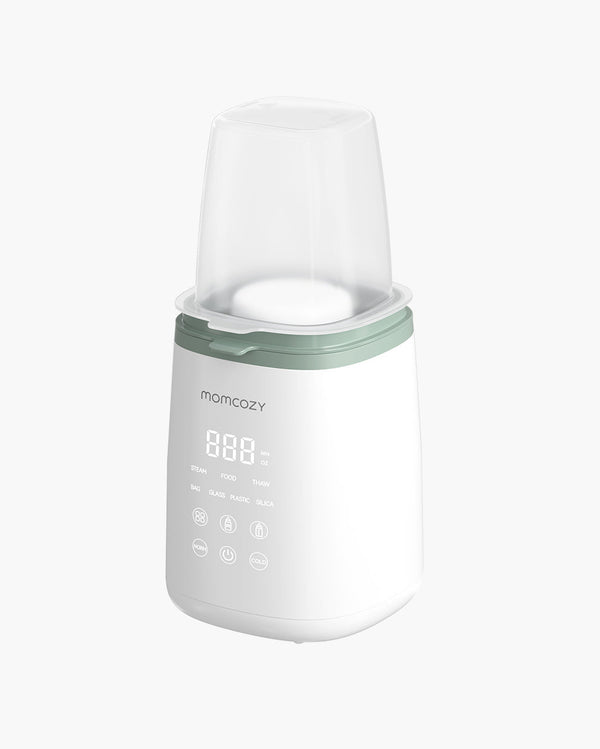
En las familias en las que, por la noche, alimentan al bebé con biberón, ya sea con leche extraída o con leche de fórmula, la rapidez en la preparación puede ser fundamental. Un bebé que llora puede despertarse por completo en poco tiempo, lo que dificulta que todos vuelvan a conciliar el sueño. El calientabiberones Momcozy NightPro se ha diseñado específicamente para facilitar la alimentación del bebé durante la noche. Su principal ventaja es que calienta la leche de forma rápida y precisa, manteniéndola a la temperatura ideal para dar de comer al bebé. Su precisión en la regulación de la temperatura y su funcionamiento silencioso ayudarán a reducir las molestias durante las tomas nocturnas. En lugar de esperar a que el agua se caliente o de tener que consultar temperaturas aleatorias en el controlador digital, los padres pueden preparar un biberón de forma eficaz y acostar al bebé más rápido, lo que facilita el cuidado nocturno.
Calentamiento rápido
Calentamiento a vapor
Mantener caliente
Fast Night & Day
One-Touch Ease
Smart & Safe
Easy Clean
Los calientabiberones Momcozy ofrecen una amplia variedad de opciones, lo que garantiza que, tanto si estás de viaje como en casa, puedas satisfacer las necesidades de alimentación de tu bebé en cualquier momento y en cualquier lugar.
Señales de que tu recién nacido necesita comer por la noche
Una señal de hambre tardía suele ser el llanto. Antes de empezar a llorar, los bebés siempre dan pequeñas señales de hambre recién nacido que indican que están a punto de comer. Estas señales pueden consistir en movimientos de búsqueda, chasquidos de labios, chuparse las manos o mover o girar la cabeza para buscar contacto. Si se reacciona ante estas señales desde una edad temprana, la toma nocturna se convertirá en un proceso más sencillo y breve.
Muchos padres se preguntan cómo saber si mi bebé tiene hambre, y aprender a reconocer estas señales tempranas puede marcar una gran diferencia durante las noches.
Lleva tiempo conocer a tu bebé y sus señales particulares, pero cuando lo consigas, ya no habrá más momentos problemáticos e inesperados a la hora de alimentarlo.
El sueño del recién nacido y la alimentación nocturna
El ciclo del sueño del recién nacido es considerablemente más corto que en los adultos, y suele durar menos de una hora. Los recién nacidos suelen dormir en fases más ligeras, por lo que es normal que se despierten con frecuencia. Los relojes biológicos internos no se han desarrollado aún en absoluto hasta aproximadamente los tres meses de edad, por lo que esperar demasiado pronto que se consolide el sueño nocturno puede provocar frustración.
En lugar de centrarse en eliminar las tomas nocturnas, es mejor centrarse en la eficacia de estas. Utilizar luces tenues, reducir al mínimo los estímulos y preparar la comida antes de acostarse puede reducir considerablemente la duración del sueño de todos los individuos. Mantener una rutina nocturna bebé estable y regular ayuda a que tu bebé comprenda que no es hora de jugar, sino de volver a dormirse.
FAQ
¿Cuánto debe comer un recién nacido?
La cantidad leche recién nacido varía según la edad y el método de alimentación. Muchos padres se preguntan cuánto come un recién nacido, especialmente durante las primeras semanas. Los bebés alimentados con leche de fórmula pueden empezar con entre 30 y 60 ml por toma durante la primera semana y aumentar gradualmente hasta alcanzar entre 90 y 120 ml al cumplir un mes. Los bebés alimentados con leche materna regulan su ingesta de forma natural al mamar. Un número adecuado de pañales mojados —normalmente seis o más al día a partir de la primera semana— es un indicio tranquilizador de que la ingesta es suficiente.
¿Cuánto tiempo debe durar una toma?
La duración toma recién nacido puede variar de un bebé a otro. Las tomas de leche materna suelen durar entre veinte y cuarenta minutos durante la etapa neonatal, mientras que muchos padres se preguntan cuánto dura una toma de biberón, que normalmente puede prolongarse entre quince y treinta minutos. Con el tiempo, los bebés suelen adquirir mayor destreza y pueden alimentarse más rápidamente.
¿Cuánto tiempo debe dormir un recién nacido por la noche sin despertarse para comer?
Durante las primeras semanas de vida, las horas de sueño recién nacido suelen ser cortas y fragmentadas, por lo que se espera que los bebés no pasen más de tres o cuatro horas sin comer. Una vez que se ha producido un aumento de peso constante, algunos bebés pasan automáticamente a intervalos de cuatro a seis horas, aunque esto varía.
El sueño nocturno bebé recién nacido evoluciona progresivamente durante los primeros meses.
¿En qué consiste la regla del 5-3-3 para la alimentación nocturna?
La regla 5-3-3 bebé consiste en un sueño inicial de cinco horas y dos periodos de sueño de tres horas cada uno. Este enfoque de alimentación nocturna método 5-3-3 es más adecuado para bebés de más edad y no suele recomendarse en el caso de los recién nacidos, que necesitan alimentarse con mayor frecuencia.
Nota: La regla del 5-3-3 está pensada para bebés de más edad (normalmente a partir de los 4-6 meses) que ya han alcanzado un aumento de peso saludable y a los que se les ha dado luz verde para el entrenamiento del sueño. NO se recomienda para recién nacidos, que necesitan alimentarse con mayor frecuencia para sustentar su rápido crecimiento.
¿Qué pasa si un recién nacido pasa cinco horas sin comer?
Durante las primeras semanas de vida, un recién nacido muchas horas sin comer puede reducir el aporte calórico total y afectar a los niveles de azúcar en sangre. Aunque un único intervalo prolongado en un bebé sano y que crece con normalidad no siempre es perjudicial, existen ciertos riesgos de no alimentar al recién nacido si estas separaciones prolongadas se producen de forma múltiple y recurrente durante el primer periodo neonatal.
En estos casos, se debe informar al médico.
Conclusión
Conocer la frecuencia con la que se alimenta el recién nacido por la noche te permitirá tener expectativas realistas sobre esta etapa. Al principio, es habitual y necesario realizar varias tomas nocturnas del recién nacido entre dos y tres veces por noche. A medida que el bebé crece y gana peso, y si notas que tienes que levantarte menos veces por la noche, esto suele producirse de forma natural con el paso del tiempo.
Las tomas nocturnas no son un inconveniente, sino un proceso esencial para el crecimiento del bebé. Es posible hacer más llevadero este periodo complicado centrándose en el aumento gradual de la ración, prestando atención a las señales de hambre y estableciendo una rutina nocturna eficaz. Con el paso del tiempo, tu bebé dependerá cada vez menos de las tomas nocturnas y empezará a dormir durante periodos más largos. La paciencia, la preparación y el apoyo te ayudarán a superar esta etapa hasta que llegue ese momento, especialmente al alimentar al bebé por la noche de forma adecuada y constante.