


When does time fall back in 2026? In US areas that observe daylight saving time, clocks move from 2 a.m. back to 1 a.m. local time on Sunday, November 1. The repeated hour does not guarantee extra sleep for a baby or toddler, so use this checklist to confirm local timing, coordinate familiar routines, and keep caregiver notes consistent. If your family already uses one of our baby sound machines, include its existing settings in your household check. For the official date and clock-change rules, consult the National Institute of Standards and Technology's daylight saving time guidance.
The aim is not to force every child onto a perfect schedule before Sunday morning. It is to make the transition easier to manage by separating three things: what the clock does, what your child actually needs, and what your household's devices are configured to do.
Key Takeaways
- In most US locations observing daylight saving time, clocks fall back on Sunday, November 1, 2026, at 2 a.m. local time.
- The clock repeats an hour, but a baby or toddler does not automatically sleep for an extra hour.
- Hawaii, most of Arizona, and several US territories do not observe daylight saving time; verify local rules before changing routines.
- Families can prepare gradually or keep familiar care routines and adjust responsively afterward.
- Newborn feeding, comfort, safe sleep, and clinician-directed care take priority over clock-based changes.
- Check the actual settings and behavior of existing sound machines and monitors rather than assuming they update every routine automatically.
- New equipment is optional. A simple household checklist and shared caregiver notes may be all your family needs.

When Does Time Fall Back in 2026?
In most parts of the United States that observe daylight saving time, the clocks fall back on Sunday, November 1, 2026. At 2 a.m. local daylight time, clocks move backward to 1 a.m. local standard time. The hour between 1 a.m. and 2 a.m. occurs twice.
The change usually happens overnight between Saturday, October 31, and Sunday, November 1. Families do not need to stay awake to watch it happen. Most people adjust manually operated clocks before going to bed, while many internet-connected phones and computers update automatically. Devices that are not connected to a time service may need to be checked individually.
The exact rule applies to locations that observe daylight saving time, not every place that uses a US time zone. Confirm whether your location follows the change before adjusting a household schedule or interpreting a device's displayed time.
The 2026 US Clock-Change Dates
|
Date |
Change |
What happens at 2 a.m. |
|
Sunday, March 8, 2026 |
Daylight saving time begins |
Clocks move forward to 3 a.m.; one hour is skipped |
|
Sunday, November 1, 2026 |
Daylight saving time ends |
Clocks move back to 1 a.m.; one hour is repeated |
Both transitions follow the current US schedule for locations that observe daylight saving time. November's fall-back transition is the focus of this family checklist.
If you are searching for when does the time change 2026, the fall date is November 1. If you are asking when do clocks go back, the answer is 2 a.m. local time in participating locations. And if you want to know when daylight saving time ends, it ends on the first Sunday in November under the current federal schedule.
What Should You Do Before the Change?
First, confirm the date for your actual location. Then decide whether you want to make small adjustments in advance or wait and respond to your child's behavior after the transition.
Check which clocks and devices need attention. A wall clock, an older appliance, a monitor display, and an app-controlled device may not all behave the same way. You do not need to change every setting simply because the calendar changes. The goal is to identify what actually requires a check.
Do We Gain or Lose an Hour When Clocks Fall Back?
When clocks fall back, the clock repeats for one hour. That is why people often say they gain an hour. In spring, clocks move forward and skip an hour, which is why that transition is commonly described as losing an hour.
However, the clock calculation and a person's actual sleep are two different things.
During the fall transition, the clock may show 6 a.m. when a child's body is still following a routine that previously lined up with 7 a.m. The child may therefore wake earlier according to the new clock, even though the clock change technically creates a repeated hour.
For example, imagine that a toddler regularly wakes at 7 a.m. before the change. If the toddler's internal timing does not shift immediately, the same waking pattern may appear as 6 a.m. on the new clock. This is an illustration of the clock difference, not a prediction that every child will wake at 6 a.m.
Some children adapt quickly. Others may show temporary changes in waking, naps, bedtime behavior, or daytime tiredness. Some families may barely notice a difference.
Does the Extra Hour Mean My Child Will Sleep Longer?
Not necessarily.
The clock change creates an additional hour on the clock, but it does not require a baby or toddler to sleep through it. A child may wake according to a familiar routine, need feeding or comfort, or show signs of tiredness at a time that seems earlier than expected.
That is why it is better to observe your child than to assume that the new clock will immediately change their routine.
If your child wakes earlier than expected, check the actual time, consider how the previous day's routine went, and respond to the child's needs. Avoid interpreting one early morning as proof that the entire sleep schedule needs to be rebuilt.
Do We Lose an Hour of Sleep Tonight?
For the fall-back transition on November 1, 2026, clocks in participating US locations move backward, so the clock repeats an hour rather than skipping one. Whether a family actually sleeps more, less, or about the same depends on when everyone goes to bed and wakes up.
The phrase "tonight" also depends on the date and location. It should not be treated as an evergreen instruction because the transition happens on a specific date and not every location follows it.
For a household with a baby, the most useful next step is to record actual waking and bedtime observations rather than assuming the clock change automatically provides an extra hour of sleep.
Which States Do Not Observe Daylight Saving Time?
Not every US location changes its clocks in November. Hawaii and most of Arizona remain on standard time throughout the year. The Navajo Nation observes daylight saving time, so Arizona requires particular care: the state is not a single uniform example of clock-change behavior.
Several US territories also do not observe daylight saving time, including American Samoa, Guam, Puerto Rico, and the US Virgin Islands. The current NIST daylight saving time page lists the major exceptions.
This matters when a family lives near a boundary, travels during the transition, or coordinates childcare across locations. A caregiver may hear that clocks fall back on November 1 and assume that every device or household in the same broad region needs to change. That assumption can be wrong.
Confirm Your Location Before Changing Settings
Before making adjustments, ask:
- Does the place where we live observe daylight saving time?
- Will we be staying somewhere else on the transition weekend?
- Do the caregivers or family members coordinating care live in different locations?
- Is a device displaying local time or another time zone?
- Does the device update automatically, or does its current manual require a separate check?
If your location does not observe the transition, you generally should not shift a child's routine simply because another state is changing clocks. Keep the actual local time and the child's needs as the reference points.
This article is not a complete legal guide to every local or tribal timekeeping rule. When the location is unclear, verify the actual destination rather than relying only on a national headline.
Why Do We Have Daylight Saving Time?
Daylight saving time shifts clock-labelled daylight toward the evening during part of the year. It does not create additional sunlight. Instead, the clock is adjusted so that daily activities follow a different relationship with daylight.
In the United States, daylight saving time was formally introduced nationally in 1918. The rules have changed over time, and the current schedule generally begins on the second Sunday in March and ends on the first Sunday in November. The US Naval Observatory's daylight time FAQ provides additional context on US timekeeping.
The history of daylight saving time is more complicated than one person inventing it. Benjamin Franklin wrote about the possible benefits of making better use of daylight, but that does not make him the sole creator of the modern system. Later proposals and government decisions shaped the policies that countries adopted.
Why Babies and Toddlers May Wake Earlier After Fall Back
Babies and toddlers do not necessarily adjust their routines at the same speed as the clock. The clock can change in a single moment, but a child's pattern of sleeping, waking, feeding, playing, and resting may take time to respond.
After falling back, some younger children may seem ready for bed earlier or may wake earlier according to the new clock. The American Academy of Pediatrics explains that seasonal clock changes can affect children's sleep routines and that gradual preparation may be helpful for some families. Read its daylight saving time guidance for families.
The key word is may. A clock change does not produce the same response in every child.
A toddler who usually wakes at 7 a.m. might begin waking at 6 a.m. on the new clock. Another child may continue waking at 7 a.m. A baby may have a variable pattern already, making it difficult to attribute a particular waking to the time change alone.
Clock Time and a Familiar Routine Are Different
Clock time is what a phone or wall clock displays. A routine is the sequence of events a family follows, such as waking, feeding, playing, resting, eating, bathing, and settling down for the night.
These two things can temporarily diverge.
A toddler may seem tired before the usual bedtime because the clock changed but their pattern has not fully adjusted. A baby may need feeding or comfort at a familiar interval regardless of what the clock says. A family may find that naps shift for a few days, or they may not see a clear pattern.
Instead of assuming that a particular clock time is the only acceptable time to sleep, observe the child and keep care responsive.
For newborns, feeding, comfort, safe sleep, and any clinician-directed plan take priority over clock-based adjustments. Do not delay a feed or keep a newborn awake simply to make the new clock schedule look consistent.
What If My Child Wakes Early for Several Mornings?
Start by recording what happened rather than immediately making several changes.
Write down the actual waking time, the previous bedtime, naps, feeding or comfort notes, and any changes to the usual routine. These observations may help you see whether the early waking is consistent or was a one-off event.
If early waking continues, consider the broader context. Was the child overtired? Did the household schedule change? Was there travel, illness, a different sleeping environment, or a disrupted day? The clock change is one possible influence, not the only explanation.
For a deeper explanation of how internal rhythms and sleep patterns relate, see Momcozy's guide to baby circadian rhythms. This article only needs enough background to help you make the immediate clock-change decision; it is not a full sleep-science guide.

Choose a Manageable Approach Before the Clock Change
There is no single preparation plan that every family must follow. Two reasonable approaches are to make optional, gradual adjustments before the transition or to keep familiar care routines and adapt afterward.
The best choice depends on your household's capacity, your child's needs, and whether advance changes would make the week more manageable or more stressful.
Option 1: Prepare Gradually if It Suits Your Child
Some families prefer to make small changes in advance so that the clock transition does not represent the entire adjustment at once.
For fall back, a gradual approach generally means shifting relevant parts of the routine a little later on the old clock over several days. The reason is that the clock will move backward, making the same clock-labelled time occur earlier in relation to the old schedule.
For example, a family might make a small later adjustment to bedtime or another routine element, observe how the child responds, and make another modest change if appropriate. This is an illustration, not a required timetable or a prescription for every age.
The advantage is that the change may feel more gradual for the family. The trade-off is that it requires coordination. Parents may need to remember the adjusted times, communicate with another caregiver, and respond flexibly if the child seems tired earlier than expected.
Option 2: Keep Familiar Care and Adapt Afterward
Some households do not want to change anything in advance. Work schedules, childcare arrangements, travel, and the general demands of family life can make preparation difficult.
It is reasonable to keep familiar routines, make sure the household knows when the clocks change, and respond to the child's actual behavior afterward.
The advantage is that there is less advanced coordination. The trade-off is that the family may need more flexibility in the mornings or around bedtime while the routine settles into the new clock time.
If the child wakes early, offer appropriate care and observe what happens over the next few days. Keep familiar calming activities where they are useful, but do not insist that the child follow an exact time regardless of hunger, comfort, or tiredness.
How Should You Choose?
Use these questions to make a practical decision:
- Does advance planning usually help our household? If small changes reduce stress, gradual preparation may be worth considering.
- Would advance changes create more work than they save? If so, keeping familiar routines and adapting afterward may be simpler.
- Does the child have individual feeding, health, or sleep instructions? Follow the appropriate plan rather than substituting generic daylight-saving advice.
- Can every caregiver follow the same approach? A simple shared plan is more useful than a detailed schedule that no one can consistently maintain.
- Are we treating the plan as flexible? A child's actual needs still matter more than completing a schedule.
For more detailed age-related routine questions, use Momcozy's infant daily schedules guide. This article intentionally does not reproduce a full age-by-age schedule or feeding plan.
Keep Familiar Sleep Cues Without Ignoring Your Child's Needs
A clock change can make the evening feel different. The sun may set earlier according to the new clock, and a child may seem ready for bed at a time that feels unexpectedly early to the adults in the household.
Familiar routines can help families maintain a sense of continuity. Depending on the child's age and usual preferences, this might mean keeping a predictable sequence of quiet activities, a story, cuddling, or calm music. The point is not that one activity guarantees sleep; it is that familiar cues can make the evening easier to manage.
Daylight during appropriate waking hours may also be part of the family's usual rhythm. However, there is no need to turn the transition into an elaborate lighting plan. Avoid applying one rule to every baby, especially newborns, whose sleep patterns and needs can differ from those of older children.
Keep Safe Sleep Separate From Clock Adjustments
A clock change is not a reason to change safe-sleep practices.
For infants, follow current pediatric safe-sleep guidance. The American Academy of Pediatrics recommends placing babies on their backs for sleep on a firm, flat sleep surface, with the sleep space kept clear of loose bedding and other soft items. Review the AAP's safe-sleep information for the relevant guidance.
Do not use a swing, lounger, or inclined product as a substitute sleep space because a baby seems tired after the clock changes. Do not introduce a weighted product or change the baby's sleep environment simply to force a faster adjustment.
What About Familiar Sleep Clothing?
If a sleep sack is already part of your child's routine, check its fit and use instructions rather than assuming that the clock change calls for new clothing. Our baby swaddles and sleep sacks collection includes different formats, so the appropriate choice depends on the child's current stage and the product's specific instructions.
For a practical diaper-change feature, the Momcozy Baby Sleep Sack 1.5 TOG has a two-way zipper according to its product page. That is a convenience detail, not evidence that the sleep sack improves sleep or solves daylight-saving disruption. Check current product suitability and fit before choosing it for your child.

Do not start or restart swaddling as a way to manage the time change. If swaddling is already part of an infant's care routine, follow current safe-use guidance and stop when the baby shows signs of attempting to roll. A clock change should never override a developmental safety boundary.
If the question becomes a broader concern about day-night confusion or how to support day and night cues, Momcozy's day-night learning guide is the more appropriate resource. Keep this article focused on the clock-change workflow.
Use This Before, Day-Of, and After Checklist
A useful family checklist should be simple enough to complete. It should help caregivers confirm the date, coordinate the approach, check existing devices, and record what actually happens.
You do not need a new app or product to complete it. A shared note on a phone, a paper sheet, or a family calendar can work.

Before November 1
- Confirm whether your location observes daylight saving time.
- Record the local fall-back date: Sunday, November 1, 2026, where the change applies.
- Decide whether your household will prepare gradually or adapt after the change.
- Make sure all caregivers understand the plan and know that it remains flexible.
- Record the child's usual routine as a reference rather than a rigid target.
- Review any feeding, medical, or care instructions that should not change because of the clock.
- Check which household clocks update automatically and which may require manual adjustment.
- Identify the exact sound machine or monitor model in use.
- Check the current device settings, power, app access, and any relevant instructions.
- Confirm that devices, plugs, and cords remain outside the baby's sleep space and out of reach.
- Keep the child's sleep space aligned with current safe-sleep guidance.
- Share any planned routine changes with the next caregiver.
On Sunday, November 1
- Confirm the actual local time after the transition.
- Check any clock or device that may not have updated automatically.
- Follow the household's chosen approach without forcing the child to meet an exact time.
- Respond to feeding, comfort, and tiredness as appropriate.
- Observe whether the child wakes, naps, or settles differently.
- If a sound machine or monitor is used, check what it actually displays or does.
- Do not assume that a device's timer or saved routine is tied to the calendar clock.
- Share relevant observations with the next caregiver.
After the Change
- Record actual wake time, nap start and end times, and bedtime if useful.
- Add feeding, comfort, or other context when it helps explain the day.
- Note any device setting that was changed and what happened afterward.
- Avoid making several routine changes in response to a single difficult morning.
- Reassess whether gradual adjustments or responsive adaptation is working for your household.
- Seek individual advice if sleep, feeding, or other concerns persist or extend beyond ordinary routine questions.
A Simple Family Log
During the repeated hour, caregivers can add a note if it helps distinguish the two occurrences of 1 a.m. Otherwise, simply recording the actual local time and date is often enough.
Keep the log descriptive rather than evaluative. The goal is not to score your child's sleep or prove that a particular approach worked. It is to make handoffs clearer and help you notice patterns without relying on memory alone.
This checklist is an editorial planning aid, not a validated clinical protocol. Use it to coordinate household tasks, not to diagnose sleep problems or replace professional guidance.
Review Sound Machine Settings at Home and Away
If your family already uses sound or light settings as part of its usual routine, the clock change is a good opportunity to check what the device is configured to do. It is not, by itself, a reason to buy new equipment.
Start by distinguishing an elapsed-time timer from a clock-based schedule. A timer that runs for a selected duration is not necessarily the same thing as a schedule that begins at a particular time of day. Do not assume a product supports automatic daylight-saving changes unless the current model documentation confirms that behavior.
At Home: Check the Settings You Already Use
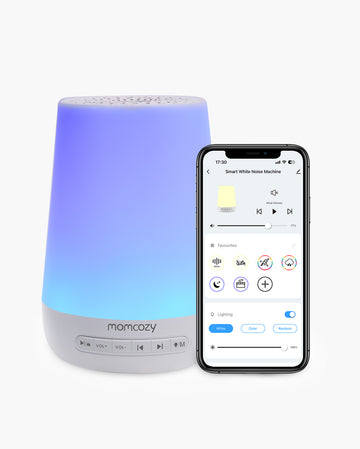
The Smart Baby Sound Machine with App Control product page describes app-based control of sound and light, brightness adjustment, and an auto-off timer.
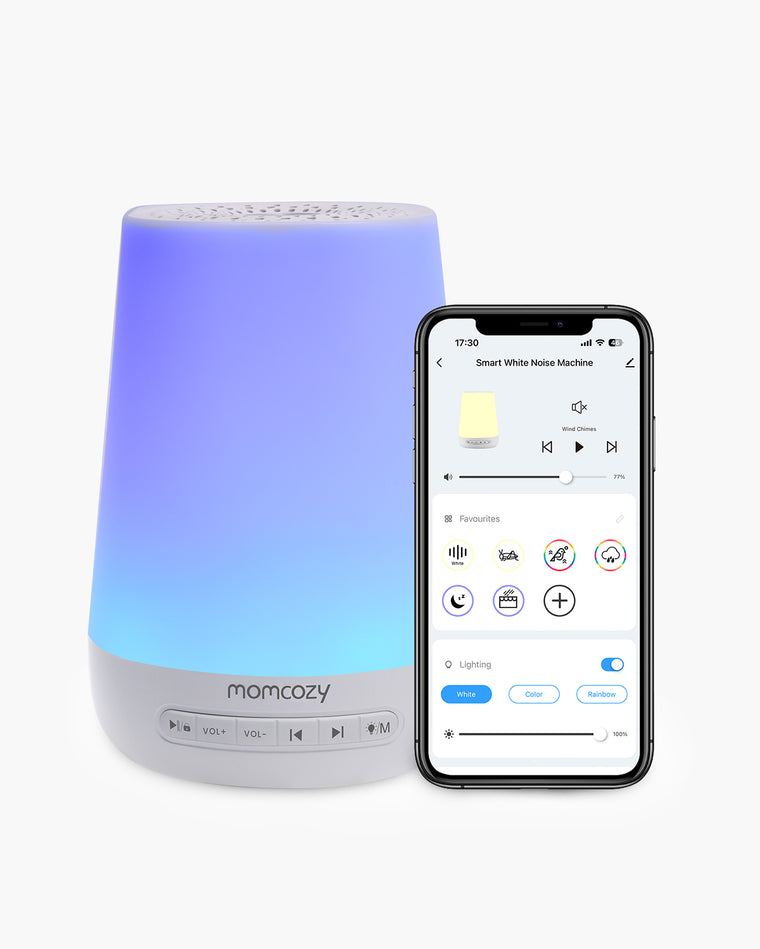
For a family that already uses this model, the practical question is whether its current settings match what the household intends to use after the clock change. Check the app, verify the selected settings, and observe the device's actual behavior rather than assuming a saved setting has shifted with the calendar.
The app's convenience does not mean the device resets a child's body clock, treats sleep difficulties, or guarantees improved sleep. It is a control tool for the settings the product supports.

Away From Home: Check Power and the Actual Timer
For families who use familiar sound away from home, the Portable Sound Machine product page describes a compact, rechargeable design with adjustable light and timer options of one, three, or six hours.
Before travelling, check the charge and the settings you intend to use. After the clock change, do not assume that a listed timer duration is a calendar schedule or a recommendation for how long an infant should be exposed to sound.
The key decision is whether the family's existing equipment meets its practical needs. If it does, keep using it according to its current instructions. If a feature or timing behavior is unclear, consult the exact model's documentation rather than guessing.

Check Monitor Access and Choose the Viewing Method You Need
A monitor may be part of a household's normal care setup, but the time change does not automatically mean a family needs a different monitor.
Instead, check the viewing method you already use, confirm authorized access, and verify the device's actual behavior if timestamps or summaries are relevant.
If You Use App-Based Viewing
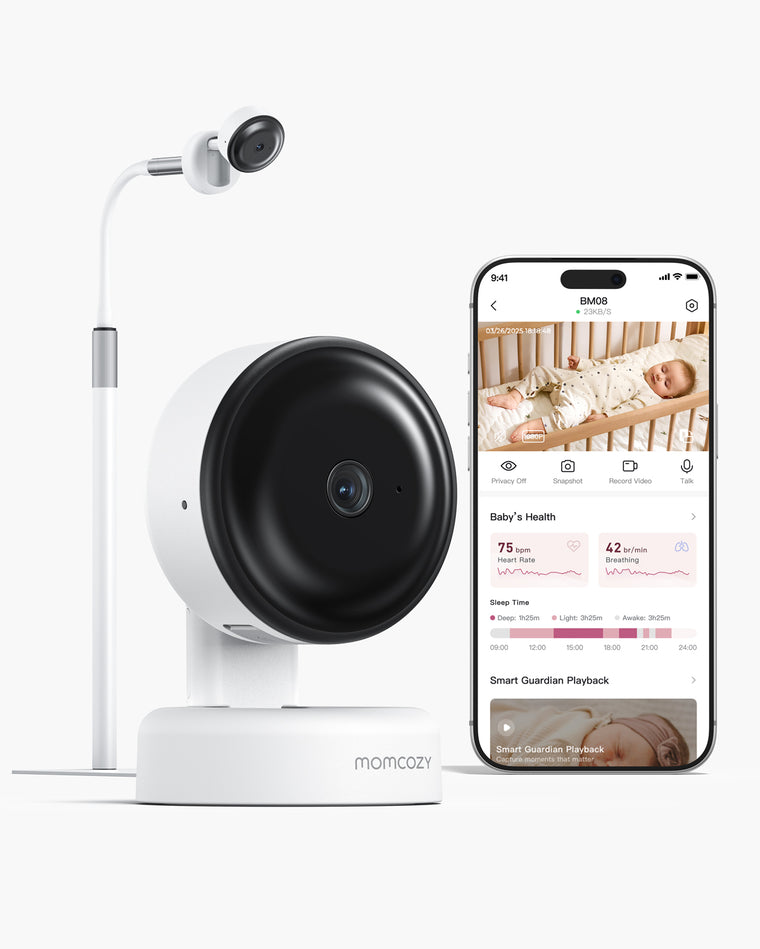
The BM08 Contact-Free Smart Baby Monitor product page describes app-based viewing and sleep reports that summarize duration, patterns, and segments. The page's FAQ says Wi-Fi is required and that the model does not have a separate physical display.
For a family that already uses BM08, the useful question is whether the app is accessible and whether the information it displays is being interpreted appropriately during the transition. If a report contains times or summaries, check the actual time and date context before drawing conclusions.
The product page contains inconsistent wording about a parent unit, so avoid claiming that BM08 includes a separate physical screen. Confirm the current specification with Product before publishing any stronger claim.
If You Prefer a Dedicated Screen as Well as an App
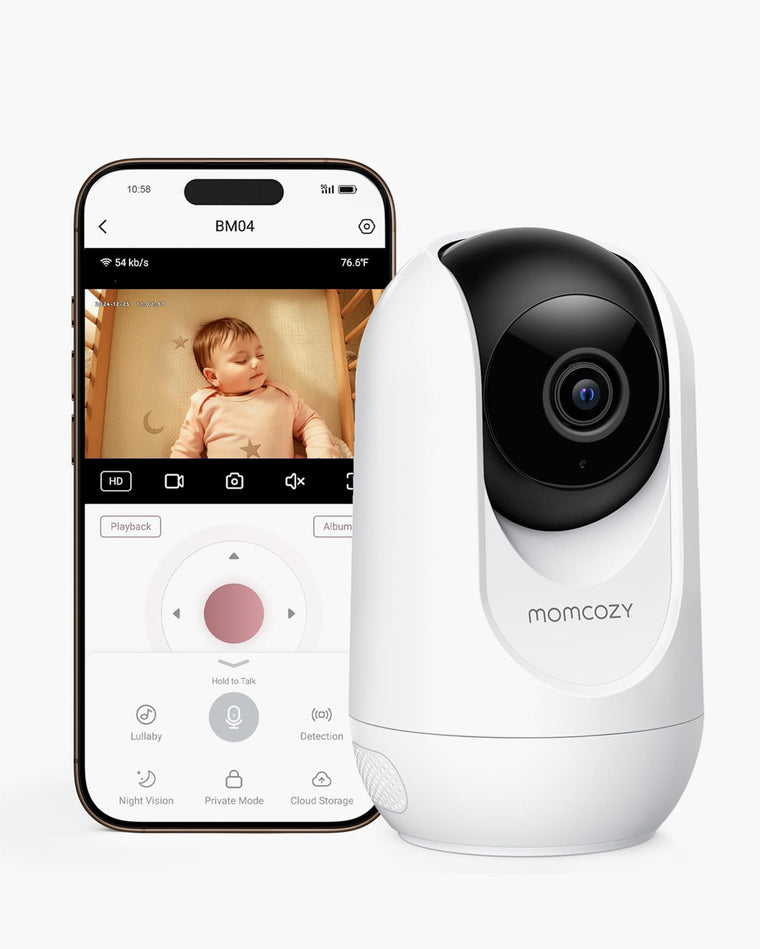
The BM4 Dual-mode Smart Baby Monitor product page describes app viewing and a dedicated screen, with a local viewing option that does not require Wi-Fi.
That distinction may matter to a household that prefers an at-home display in addition to app access. However, do not infer that remote app viewing works without internet or transfer BM08's sleep-report features to BM04.
The practical checklist is straightforward:
- Confirm that the intended caregiver can access the relevant viewing method.
- Check power and any connection requirements in the current model instructions.
- Verify actual timestamps if they matter to your household notes.
- Avoid assuming that saved routines, summaries, or device clocks handle daylight saving time automatically.
- Keep an adult responsible for care; a monitor does not replace supervision or safe-sleep practices.
If your household is comparing viewing formats more broadly, use the baby monitors collection to explore available options. The purpose of this article is not to rank devices, but to help you decide whether the equipment you already have needs attention.
Track the First Few Days and Know When to Ask for Advice
After the clock changes, give yourself permission to observe rather than solve everything immediately.
A few simple notes can help you see whether the child's routine appears to be shifting. You may notice earlier waking, a change in nap timing, earlier tiredness, or no obvious difference. Each observation is a useful context, but none alone proves that the clock change caused the behavior.
If you keep notes, focus on what actually happened. Record waking, naps, bedtime, feeding or comfort context, and any routine or device changes. Avoid turning the log into a sleep-performance score or checking every small variation throughout the day.
When the Question Is No Longer Just the Clock Change
If a child continues to have difficulty sleeping, has feeding concerns, or has individual medical circumstances, consult the child's pediatrician or other appropriate clinician. Generic daylight-saving advice should not replace individualized care.
Newborns especially need responsive feeding and care rather than a clock-based adjustment plan. Do not delay feeds, prescribe a new sleep schedule, or use a device report to diagnose a problem.
If the issue becomes a distinct nap problem rather than a short-term clock-change concern, Momcozy's short infant naps guide is the relevant next resource. It covers a different question and should not be reproduced in full here.
Frequently Asked Questions
Do I need to stay awake until 2 a.m. to change a manual clock?
No. Many people adjust manual clocks before going to bed on Saturday, October 31. Others check them the next morning. If you have a device that does not update automatically, confirm the current instructions and adjust its displayed time as needed. The important thing is that caregivers use the correct local time after the transition.
Should I shift my newborn's feeding times by an hour?
Do not delay or skip feeds simply to match the new clock. Newborn feeding, comfort, safe sleep, and clinician-directed care take priority over a generic daylight-saving schedule. If you have specific feeding instructions or concerns, follow your clinician's advice rather than applying a one-size-fits-all adjustment plan.
Will my sound machine or monitor update automatically?
That depends on the exact model and how its timekeeping and settings work. Do not assume that a device's clock, timer, saved routine, or report timestamps all update in the same way. Check the current model documentation and observe actual behavior. The product information referenced in this guide does not establish that the listed Momcozy devices automatically adjust every setting for daylight saving time.
Do I need to buy new sleep equipment for fall back?
No. Buying new equipment is optional. Many families can manage the transition by confirming local time, keeping care routines responsive, checking existing devices, and sharing brief notes with other caregivers. Consider a product only if it addresses a genuine household need—not because the clock changes.
What would permanent daylight saving time mean?
Permanent daylight saving time would mean keeping daylight-saving clock time year-round instead of returning to standard time in the fall. Under the current schedule described by NIST, participating US locations return to standard time on the first Sunday in November.
Conclusion
In most US locations that observe daylight saving time, clocks fall back on November 1, 2026, repeating the hour between 1 a.m. and 2 a.m. If you're wondering when does time fall back, confirm local rules, choose a manageable routine approach, and check the devices your family already uses.
Keep care responsive, record useful observations, and remember that new equipment is optional. Explore Momcozy's baby sound machines if you're looking for tools to support your family's existing bedtime routine.








