When stretch marks start to appear, most people's response is to reach for a rich moisturizer. But stretch marks are not simply a dry-skin problem. They start much deeper, in the structural layer of the skin. The root is where collagen and elastin fibers are stressed beyond their limits. That means a truly effective stretch mark cream during pregnancy needs to do more than hydrate the surface. It needs to support the skin's underlying architecture.
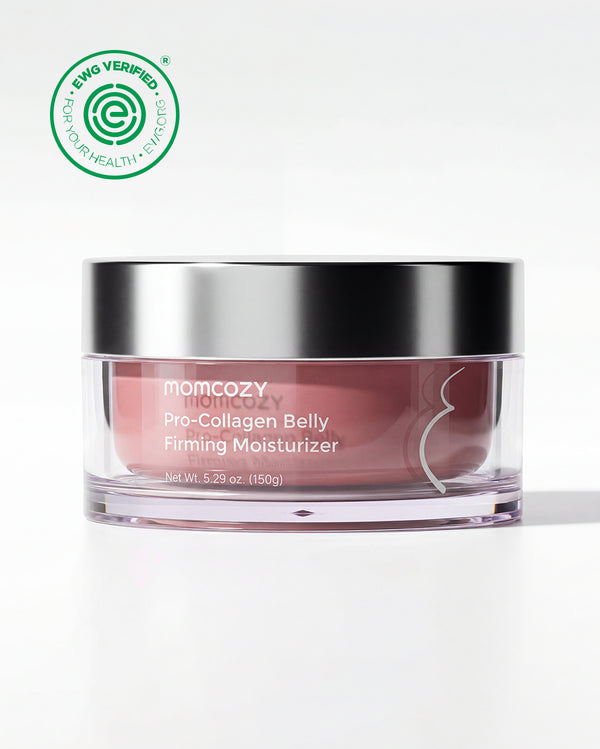
This article breaks down exactly how pregnancy stretch marks form and which ingredients are safe and effective for prevention and fading. It also discusses why peptides have become one of the most compelling choices for pregnancy-conscious skincare. Furthermore, it introduces how Momcozy's Pro-Collagen Belly Firming Moisturizer brings all of this together in one clinically tested formula.
1. How Pregnancy Stretch Marks Form
If you understand how pregnancy stretch marks form, you will find it easier to understand how the solutions work.
1.1 Stretch Marks Start in the Dermis, Not Just on the Skin Surface
Your skin is made up of multiple layers. Stretch marks originate in the middle one, called the dermis. This layer is built from a dense network of collagen and elastin fibers. Collagen provides firmness and tensile strength, while elastin allows the skin to spring back after being stretched. In short, it gives your skin its structural strength.
Now, when skin is pushed to grow faster than these fibers can adapt, micro-tears form in the dermis. This structural damage causes scars that we call stretch marks. They are visible lines that are red or purple at first and fade to silver or white over time. No amount of surface moisture can reverse it.
That reveals the solution to the problem. According to the AAP, stronger collagen and elastin fibers make skin less likely to break during rapid growth and leave resulting stretch marks.
1.2 Why Pregnancy Makes Stretch Marks More Likely
Pregnancy concentrates several stretch-mark risk factors at once.
The belly, hips, thighs, and breasts can all expand rapidly in the second and third trimesters. Often, it happens faster than the skin's natural regeneration cycle. As a result, your skin can’t keep up.
Pregnancy also causes hormonal shifts. One change is the elevated cortisol levels. It can weaken dermal collagen integrity. This makes the skin more susceptible to tearing.
Studies suggest that up to 90% of pregnant women develop stretch marks to some degree. So it has a common issue. The good news is that proactive skincare can meaningfully reduce how visible your stretch marks are. Starting early and being consistent also increases your chances of success.
1.3 Why Dryness, Itching, and Redness Still Matter
Skin tightness, itching, and redness are surface symptoms of stretch marks. They are not the root cause. Even so, they are signals worth taking seriously. They indicate that the skin barrier is under stress. It is alarming because a compromised barrier makes the skin less resilient overall.
That said, keeping your skin hydrated and comfortable is still part of any effective prevention strategy. That is why the best stretch mark creams for pregnancy address both deep structural support and surface-level comfort.
2. Pregnancy-Safe Ingredients for Stretch Marks: Peptides, Centella, and More
Here’s information on what ingredients you should look for in stretch mark creams. It will highlight how effective retinoid is but not for pregnant women. Furthermore, you will learn why peptides are the go-to alternatives.
2.1 Best Pregnancy-Safe Stretch Mark Cream Ingredients
Not all effective skincare actives are safe for use during pregnancy. Some aggressively override your skin’s natural biology. You should avoid them and look for stretch mark prevention ingredients that are gentler to your body. With that said, a good stretch mark cream for pregnancy contain the following:
-
Peptides - Peptides are short amino acid chains that signal the skin to support collagen and elastin production.
-
Centella Asiatica (Cica) - This botanical extract with strong clinical evidence for reducing stretch mark development.
-
Hyaluronic Acid - is a humectant that draws moisture deep into the skin, helping maintain suppleness and barrier integrity.
2.2 Stretch Mark Ingredients to Avoid During Pregnancy: Retinoids and Salicylic Acid
Two popular skincare actives frequently come up in stretch mark discussions — but both require caution during pregnancy:
-
Retinoids (Retinol, Retin-A, Tretinoin) - These vitamin A derivatives are among the most studied ingredients for collagen remodeling and skin renewal. However, high-dose topical retinoids are associated with potential developmental risks, and most dermatologists and OBs advise pregnant women to avoid them.
-
Salicylic Acid - A BHA exfoliant commonly used for acne and texture, salicylic acid at high concentrations (such as peels) is generally flagged as something to avoid in pregnancy. Lower concentrations in wash-off products are considered lower risk, but the guidance varies by provider.
The bottom line is that retinoids are not the answer if you're pregnant and searching for a stretch mark cream that's genuinely pregnancy-safe. This is exactly where peptides fill an important gap.
2.3 Peptides vs Retinol for Pregnancy Stretch Marks
The peptides vs retinol comparison is one of the most common questions in skincare forums, and for good reason. Both ingredients target collagen support, and both are effective. However, how they achieve that are two entirely different mechanisms.
Retinol works by accelerating cell turnover and signaling collagen production via vitamin A receptors. The catch is that it can cause irritation, photosensitivity, and barrier disruption. Retinol is also off-limits for pregnant women since high levels of Vitamin A often causes developmental problems.
Peptides, by contrast, are generally regarded as a gentle, skin-compatible alternative. They work by delivering amino acid signals to skin cells to produce collagen. Here, it is more like nudging the skin's own biological processes rather than forcing dramatic cellular change.
So, for pregnant women who want retinol-level results without the retinoid risk, peptide-based formulas are the most practical and widely recommended solution.
3. Why Peptides Help Prevent and Fade Pregnancy Stretch Marks
Here is a deeper into why peptides are effective at preventing stretch marks or making them less visible.
3.1 The Different Types of Peptides in a Stretch Mark Cream
Peptides is a broad category. Different peptides have different effects on your body. So let’s limit it to the ones used in cosmetic skincare. These three are the most relevant types:
-
Signal Peptides - These trigger skin cells (fibroblasts) to produce new collagen and elastin. They directly address the structural deficit that causes stretch marks.
-
Neurotransmitter-Inhibiting Peptides - These peptides help relax the micro-tension in skin cells. Effectively, they reduce the mechanical pulling that contributes to tearing.
-
Enzyme-Inhibiting Peptides - These help slow the breakdown of existing collagen, preserving the structural integrity already present in the dermis.
Each type targets a different part of the stretch mark problem. This is why multi-peptide formulas, which combine all three types, are significantly more effective than single-peptide products.
3.2 How Peptides Support Skin Elasticity and Firmness
Peptides work as biological messengers. When applied topically, they penetrate the outer skin layer and communicate with fibroblasts - the cells responsible for producing collagen, elastin, and hyaluronic acid. Signal peptides in particular have been shown in published research to upregulate collagen synthesis. They directly support the structural resilience that prevents stretch marks from forming.
Consistently using topical treatment with peptides often leads to skin that is more resistant to tearing. It is also more elastic under rapid growth stress and better able to repair micro-damage before it becomes a visible scar.
3.3 Why a Multi-Peptide Stretch Mark Cream Formula Matters
A single peptide can only do one job. Combine two or more, and it is a different story. Let’s paint a picture. Signal peptides will build collagen, neurotransmitter-inhibiting peptides will reduce tension, and enzyme-inhibiting peptides will slow collagen degradation. Together, they address the stretch mark problem from three directions at once.
This multi-angle approach is the key distinction between a peptide-rich pregnancy stretch mark cream and a basic moisturizer with a trace of peptides on the label.
3.4 Are Peptides Safe During Pregnancy?
Peptides are one of the most widely recommended pregnancy-safe skincare actives. That is because they work through gentle, cell-signaling mechanisms rather than aggressive chemical action. Unlike retinoids, they are not associated with developmental concerns. Though, as with any skincare, it's always good practice to check with your healthcare provider.
4. Why Peptides Work Better Than Oils Alone for Stretch Mark Care
Peptides help with collagen synthesis. Meanwhile, plant-based ingredients such as shea butter and olive oil helps improve your comfort and also solve skin dryness. Combining the two leads to a formula that addresses all issues that stretch marks cause.
4.1 Why Pure Plant Oils Alone Are Not Enough
Pure plant oils, such as rosehip, almond, or coconut oil, are popular ingredients for stretch mark prevention. These oils help soften your skin and improve surface hydration. Additionally, they help reduce the tight, uncomfortable feeling of stretched skin. So they genuinely do help.
But plant oils work entirely at the surface level. They do not penetrate deeply enough to support the dermis, and they do not signal the skin to build more collagen.
So, if your stretch mark cream relies solely on oils, it is addressing only half the problem.
4.2 What Centella, Shea Butter, and Botanical Oils Do Well
Plant-based ingredients still play an important supporting role in a stretch mark formula. But as standalone solutions, they often come short because they lack some essential aspects. Still, they’re worth using as they bring some amazing benefits.
Here are some common plant-based ingredients and what they do:
-
Centella Asiatica Extract (Cica) - In a landmark clinical study, a Centella-containing formulation was found to reduce the rate of stretch mark appearance by 89% compared to placebo.The American Academy of Dermatology also notes the findings of researchers pointing that products containing Centella may help prevent stretch marks.
-
Shea Butter - A rich emollient that seals moisture in, reduces transepidermal water loss, and helps maintain the soft, supple surface feel that makes consistent application easier.
-
Botanical Oils (Meadowfoam Seed, Sunflower, Olive, Sweet Almond, Grape Seed) - Botanical oils nourish and soften the skin, while also supporting the skin barrier. They make the formula feel luxurious and comfortable without leaving a heavy residue.
4.3 Why Peptides and Plant Ingredients Work Better Together
According to studies, peptides and plant-based ingredients have good synergy. Cica and peptides, in particular, create a complementary action. Centella promotes collagen synthesis, while signal peptides amplify that effect by delivering additional cellular messaging. Furthermore, cica's anti-inflammatory properties also help reduce the barrier stress that can make skin more vulnerable to tearing.
The two ingredients form a collagen-support system that neither can achieve alone. On top of that, the botanical oils ensure the formula is comfortable to use every single day. That matters enormously for long-term results.
5. Momcozy Stretch Mark Cream: Ingredients, Clinical Testing, and Safety
Here is information about the Momcozy Pro-Collagen Belly Firming Moisturizer.
5.1 The Four Peptides in Momcozy's Stretch Mark Moisturizer — and What Each Does
Momcozy's Pro-Collagen Belly Firming Moisturizer includes four distinct peptides, each targeting a different mechanism:
|
Peptide
|
Type
|
Function
|
|
Palmitoyl Pentapeptide-4
|
Signal Peptide
|
Stimulates fibroblasts to synthesize new collagen
|
|
Palmitoyl Tripeptide-1
|
Signal Peptide
|
Promotes collagen and elastin production
|
|
Acetyl Hexapeptide-8
|
Neurotransmitter-Inhibiting Peptide
|
Relaxes micro-tension in skin cells, reducing mechanical stress
|
|
Carnosine
|
Enzyme-Inhibiting Peptide
|
Slows collagen degradation, protecting existing structural fibers
|
This is what a genuine multi-peptide stretch mark formula looks like. It is not one peptide at a trace concentration, but four distinct types addressing the full stretch mark formation cycle.
5.2 Full Ingredient Breakdown
Beyond the peptide complex, the formula includes:
-
Centella Asiatica Extract - clinically studied for stretch mark reduction
-
Soluble Collagen - conditions and supports skin texture
-
Shea Butter - deep emollient comfort and moisture sealing
-
Lactic Acid - gentle exfoliation to support skin renewal
-
Organic Meadowfoam Seed Oil, Sunflower Seed Oil, Olive Fruit Oil, Sweet Almond Oil, Grape Seed Oil - nourishing botanical oils for softness and barrier care
Momcozy used only EWG-verified ingredients (safe for humans) to formulate this cream. It helps minimize the risks of irritation and allergic reactions as much as possible.
The Momcozy Stretch Mark Cream went through an 8-week third-party testing by Intertek. The participants are 33 women, and they agree that using the product has led to visible improvements. All participants claim that the color of stretch marks became lighter and that their skin became smoother after using the product for weeks. Furthermore, 97% agreed that their skin became more elastic. The same number of participants agreed that this cream is fast-absorbing.
5.3 Texture, Scent, and Safety Cues
Momcozy's belly moisturizer uses an oil-in-cream burst texture. That is rich enough to deliver meaningful moisture but still fast-absorbing. As such, it doesn't leave a heavy, greasy layer on skin that gives many women an ick. For pregnant women applying cream twice a day to a growing belly, that texture balance is genuinely important.
The formula is also paraben-free and designed for sensitive, pregnancy-conscious skin. Suppose you're shopping for a stretch mark cream and specifically looking for hypoallergenic, clean-formula markers. Or you’re looking for ingredient-conscious alternatives to heavily fragranced options. This cream for stretch marks fits that profile.
6. How to Use Stretch Mark Cream for Best Results During Pregnancy
In this section, you will learn how and when to use stretch mark creams.
6.1 When to Start Using Stretch Mark Cream During Pregnancy
Don't wait until stretch marks appear. The best time to start is before you see them, ideally in the first trimester, when belly growth begins to accelerate. Collagen support is most effective as a preventive measure. It's harder to fully reverse established scar tissue than to keep skin resilient before the damage occurs.
Nevertheless, starting later is still worthwhile. Even in the third trimester, consistent use of a peptide-rich formula can reduce the severity of new marks forming.
6.2 How Often to Apply Stretch Mark Cream
For best results, apply twice daily: once in the morning and once at night. The more regularly you maintain collagen-signal messaging and barrier hydration, the better-equipped your skin is for handling rapid growth.
If your belly skin feels particularly tight, itchy, or uncomfortable in the evenings, adding a third application is perfectly fine.
6.3 Where and How to Apply Stretch Mark Cream
Stretch marks during pregnancy most commonly appear on the:
-
Belly: primary focus, especially the lower abdomen
-
Hips and sides: often overlooked but frequently affected
-
Thighs: particularly the inner and upper thighs
-
Breasts: as they grow and change in preparation for feeding
Apply with gentle, circular massage strokes to encourage absorption and stimulate circulation. There's no need to apply aggressively, as the goal is full, even coverage rather than deep pressure.
Stretch Mark Cream FAQ
What ingredients are best in a stretch mark cream during pregnancy?
The most evidence-supported pregnancy-safe ingredients are peptides (particularly signal peptides), Centella Asiatica extract, and hyaluronic acid. Together, they address collagen support, barrier care, and hydration, which are the three core pillars of stretch mark prevention.
Are peptides safe during pregnancy?
Yes, topical peptides are widely considered one of the safest and most pregnancy-compatible skincare actives available. They work through gentle amino acid signaling rather than chemical disruption. Also, they are not associated with the developmental risks linked to retinoids.
Always confirm with your healthcare provider if you have specific concerns.
Peptides vs retinol: which is better for skincare during pregnancy?
Retinol is a powerful collagen stimulator, but high-dose topical retinoids are generally avoided during pregnancy due to potential risks. Peptides offer a pregnancy-safe alternative with a genuinely complementary mechanism. They signal collagen production without the associated concerns. For pregnant women, peptides are the more appropriate choice.
Can stretch marks be removed completely?
Stretch marks are a form of scarring, and no topical treatment, regardless of ingredients, can erase them entirely. What consistent, evidence-based skincare can do is reduce their severity and limit new formation. They can also help existing marks fade significantly over time, particularly if treatment begins early.
Why are my stretch marks itchy or red?
Redness and itching in new stretch marks are signs of active skin stress. The dermis is actively being stretched and micro-damaged. This is also when the skin is most responsive to topical care. Red stretch marks respond better to treatment than mature white or silver ones, so starting a peptide-rich routine as soon as you notice them is ideal.
When should I start using stretch mark cream during pregnancy?
You should start using stretch mark creams as early as possible, ideally in the first trimester. Prevention is significantly more effective than treatment. If you're already further along, start now rather than waiting.
Conclusion
Stretch marks don't start at the skin’s surface. Thus, the most effective way to prevent and minimize them is to support the deeper structural layer where they actually form. That means choosing a stretch mark cream with ingredients that do more than just moisturize the skin. Opt for ones that signal collagen synthesis, protect existing fibers, and reduce the mechanical stress of rapid skin expansion.
Peptides fit this brief better than almost any other pregnancy-safe active. They work with the skin's biology and are gentle enough for pregnancy use. Furthermore, they offer a meaningful alternative to retinoids for women who want real results without the risk.
Momcozy's Pro-Collagen Belly Firming Moisturizer is built around the kind of ingredient logic that actually addresses how stretch marks work. It pairs multiple peptides with Centella Asiatica's clinically proven stretch-mark-reducing properties, botanical oils for daily comfort, and soluble collagen for texture support.
References: