



Pregnancy can cause one's brain to do crazy things at the worst of times. One might put one's keys somewhere safe and secure, only to go and walk away, never thinking of returning to get them. One could find oneself standing in a room, with no recollection of how one got there. One might have an often told story, but one's brain would suddenly forget the most common word one would use to tell that story.
If that sounds familiar, you may have wondered, is mom brain real? And if it is, how long does mom brain last?
The reassuring answer is that, yes, it is real, but the popular belief that motherhood reduces women’s intelligence for good is an overstatement. The process of pregnancy leads to significant changes in a woman’s brain, which in turn leads to forgetfulness, but not a decrease in intelligence; the culprit in this situation is lack of sleep, along with stress and an overburdened mind.
A lot of what makes motherhood so wonderful can make your brain feel a bit foggy. But remember that a foggy brain doesn't mean a permanently damaged brain.

Key Takeaways
- Mom brain refers to common thoughts about impaired cognitive function associated with pregnancy and new parenthood.
- Pregnancy causes significant changes in a woman’s brain, such as reductions in grey matter and regions associated with social cognition. Although these alterations could explain some functional impairments, they do not reflect deficits but rather adaptations to parenthood.
- The cognitive changes were generally subtle, although most moms report being much more tired and stressed, which may contribute to feelings of haziness and distractibility.
- There is also no clear consensus on how long ‘mom brain’ lasts. However, many women report that their minds begin to sharpen as their sleep patterns return to normal. On the other hand, it should be noted that some of the described structural changes can be permanent, although not necessarily pathological.
- Observance of sleeping rituals, offloading some of the cognitive tasks, setting up reminders, engaging in physical activity, and seeking assistance are several effective mechanisms of coping with the described temporary condition during pregnancy or after childbirth.
What Is Mom Brain? Mommy Brain, Baby Brain, and Pregnancy Brain Fog
Mom brain is a term used to describe forgetfulness, lack of concentration, and other cognitive changes that can occur during pregnancy and after childbirth.
It may also be referred to as mommy brain, baby brain, pregnancy brain, or pregnancy brain fog. The terms are unofficial, and researchers do not agree on a formal definition for the condition. It can involve various effects, from being unable to remember things to having trouble communicating clearly. It can involve various effects, from being unable to remember things to having trouble communicating clearly.
Mommy brain symptoms can manifest themselves in a variety of ways, including:
- Forgetting names, appointments, and the locations of everyday objects
- Confusion or difficulty finding the right words when speaking
- Memory loss
- Problems paying attention
- Inability to concentrate
- Becoming more easily distracted
- Issues maintaining or holding onto information
- Feeling like your thoughts are slipping away
- Your mind going blank
Pregnancy brain fog and postpartum brain fog are not always the same, as there can be a variety of potential causes for each one. When pregnant, many things happen in the body due to high hormone levels. A woman may also feel more stressed and tired because of pregnancy. This is also because you have to make new plans and prepare for the birth of your child.
The nickname is definitely understandable in this case, as almost every pregnant woman experiences these issues. However, kidding about "momnesia" is embarrassing for the pregnant women, because it makes light of the situation and makes the mother sound irresponsible, ignorant, and stupid.
Is Mom Brain Real? What the Science Actually Says
Yes, mom brain is real as a lived experience and as a period of substantial brain change, but it is not evidence of permanent cognitive decline.
Research Says About Pregnancy Brain Fog
Research notes an intriguing difference between what moms report to doctors and what doctors find on tests: lots of pregnant people say they feel more forgetful and have a harder time focusing. One clinical summary reports on studies that suggest that 80% of pregnant people experience some degree of memory or concentration problems.
Feeling Like You Are Losing Your Marbles May Be Normal
Yet laboratory tests cannot demonstrate this kind of severe deficit consistently. There is evidence that taking into account differences in sleep, stress, and other variables, such a deficit may not even exist.
This discrepancy is crucial since it means that one's subjective feeling of being "foggy" may not be caused by an actual physical damage or degeneration.
Pregnancy Can Change the Maternal Brain
Not only hormones but also gray matter in the brain change during pregnancy. As shown by a ground-breaking study published in the journal Nature Neuroscience, there are significant shifts in gray matter around pregnancy, primarily in regions of the brain responsible for social behavior. The changes in gray matter were positively correlated with motherly feelings. Moreover, these changes were long-term as similar differences were detected at least two years after childbirth.
However, the latest studies on precision medicine imaging have demonstrated that the changes to one’s brain during a pregnancy might be even more extensive than previously thought. Namely, a study conducted in 2024 revealed that throughout the observed period (before conception, during pregnancy, and two years after childbirth), the patient’s gray matter, cortical thickness, and white matter underwent significant transformations. Nevertheless, it is important to point out that the study was performed on only one woman, which means that the results may not be relevant to all women.
Thus, it is legitimate to claim that the mommy brain is real; however, it is vital to underline that real does not mean negative.

What Happens to the Brain During Pregnancy and Postpartum?
Pregnancy can fine-tune brain networks that control sociobehavioral processes such as parenting and social interaction. The brain’s gray matter, which plays a critical role in these functions takes part in a long and involved restructuring process.
Hormonal Changes Are Able To Affect Brain Structure
Pregnancy causes several hormonal changes in a woman's body. The hormone levels of estrogen, progesterone, cortisol, oxytocin, and many more are imbalanced. These drastic changes can be incredibly taxing on a woman's body and mind. The shifts continue after delivery, and understanding postpartum hormone recovery can help you anticipate what comes next. However, scientists believe that these hormonal changes could also have an effect on the restructured, or rewired, brain structure of pregnant women.
Gray Matter Changes Do Not Automatically Mean Brain Function Is Lost
MRI studies have shown decreases in gray matter volume in specific areas of the brain during pregnancy. However, hearing about decreases in gray matter can be alarming, since most people think of this as a decrease in cognitive function. In reality, the brain is not a simple organ that performs operations based on how much gray matter is present.
Pregnancy May Promote Brain Specialization
One of the interesting ways to look at remodeling is to think of it as a process of specialization. When you’re developing, your brain is undergoing tremendous changes: the connections between neurons are formed and re-established so that the specific functions and behaviors can emerge. It seems that pregnancy is yet another phase of intense adaptation for the female body.
The areas that are affected include the social behavior circuits - the centers that allow one to understand other people on an emotional level and to empathize. These are absolutely vital for a mother to be able to comprehend her child and connect to him or her.
Brain Changes Are Not the Same as Lasting Cognitive Impairment
Researchers therefore increasingly describe these changes as part of maternal adaptation rather than evidence that the brain is "falling apart." Furthermore, the fact that some changes can persist long after birth does not necessarily imply that the mother is still "wasting away."
A brain scan and an everyday task are not the same thing.
If the Brain Is Changing, Why Do I Feel So Foggy?
Day to day fog is often driven less by a "broken memory" than by exhaustion, stress, and having too much to hold in your head at once.
Sleep Deprivation Can Affect Memory and Focus
One of the most common challenges in this case scenario is sleep. This can be caused by numerous discomforts during pregnancy such as sleeping at night, having to urinate more often, change positions, or other pregnancy-associated complications. New parenthood can also lead to poor quality of sleep by causing multiple alarms due to feeding, comforting, pumping, and many other baby care activities.
The deprivation of sleep can reduce the attention span, learning ability, response time, and memory. The systematic review article that was conducted to explore several aspects regarding perinatal sleep also discusses cognitive and affective domains, as well as their association with sleep during pregnancy and after childbirth.
Stress Can Make Brain Fog Feel Worse
Then there is stress. Pregnancy and early parenthood involve decisions about appointments, feeding, schedules, work, finances, household responsibilities, recovery, and the baby's needs.
The Mental Load of Motherhood Can Overload Your Attention
That is where the mental load of motherhood becomes relevant. When your brain is continuously monitoring dozens of small tasks, there may simply be less attention available for remembering where you left your phone.
This is one reason the experience can feel so much worse during an especially demanding week. Your memory may not have suddenly stopped working. Your attention may simply be overloaded.
How Long Does Mom Brain Last? A Practical Recovery Timeline
There is no one answer to how long mom brain lasts - most people find that it begins to lift off after a few months, though structural changes in your brain might stay with you for longer, it doesn’t mean that your intelligence will decrease.
During pregnancy
Pregnancy brain fog can occur during pregnancy due to hormonal changes in the body, insufficient sleep, discomfort due to pregnancy, excitement and preparation for the upcoming birth.
The memory of pregnant women may be slightly impaired, but for some, the brain works much slower than before. Some pregnant women do not experience this condition, while the symptoms are manifested individually in each woman and vary in intensity.
Early postpartum: the first weeks to around six months
The first few days after childbirth are usually the toughest, as your body recovers from the pregnancy and childbirth.
In addition, lack of sleep, breastfeeding or pumping, household duties, emotional issues, and a thousand other thoughts about the child can interfere with the ability to think clearly. If feeding itself becomes a source of stress, knowing what to do when breastfeeding feels overwhelming can help you find support early. Not to mention the planning of feedings that have to be carefully adhered to if you are breastfeeding or pumping.
For some parents, the fog lifts when sleep patterns, and overall routine, begin to settle into a new pattern, and they adjust to their new circumstances.
Beyond the first year
Some people still describe postpartum brain fog beyond the first year, especially when your sleep is disrupted or stress levels are high.
Meanwhile, studies on permanent changes in the structure of the brain beyond the first year should help us not expect too soon to feel back to our old selves. They also show us that the two are connected, while not being the same thing.
And how long it might take to feel like yourself again depends on many things, including if it’s your first child, available support, sleep patterns, stress levels, and the general situation you find yourself in.
In short, there are no hard deadlines for returning to normal, let alone feeling like your old self.

How to Cope With Mom Brain Without Waiting to "Snap Out of It"
Coping is less about forcing yourself to focus and more about reducing cognitive overload while your body and brain recover.
Try and get your environment to do the remembering for you:
- Protect sleep if at all possible. While eight hours straight might be challenging with a newborn, trades can be made or a nap stolen here and there to allow you to recover
- Use your external brain. Write things down or put them in a place where you can see them. That way you don't forget what you need to do or where thing are. Like, you need to remind your self to change the laundry soap, or put the notes down that tell you how to make your baby's favorite food.
- Things should have a place, and things should be returned to their place. Have a designated area or container where you keep keys, your phone, your wallet, and other everyday items
- Limit decision-making. Wherever possible, make your life simpler by reducing the number and complexity of decisions you have to make
- Ask people to help you
- Get some appropriate exercise. It will help get you away from the constant mental churn of mom brain, while also putting some happy endorphins in your system
- Be easy on yourself. Mom brain is not a sign of a bad mom, but rather a bad mom brain. You are doing the best you can under very difficult circumstances
None of these will be a cure for mom brain, but they will help lower the load that your brain needs to keep track of.
Body Care That Supports a Clearer Head
Supporting your body will not undo mom brain, but an increase in comfort and reduction in everyday annoyances can provide much needed mental space.
Use Light Exercises To Improve Physical State
Working out is important during pregnancy, as it provides a way to get away from sitting during the majority of the day and also keep your body limber as the pregnancy progresses. A maternity ball such as the Momcozy BirthEase Maternity Ball can be used for light exercise during suitable times throughout the pregnancy, and you can try these pregnancy exercise ball workouts for every trimester.
Make Feeding and Pumping More Manageable
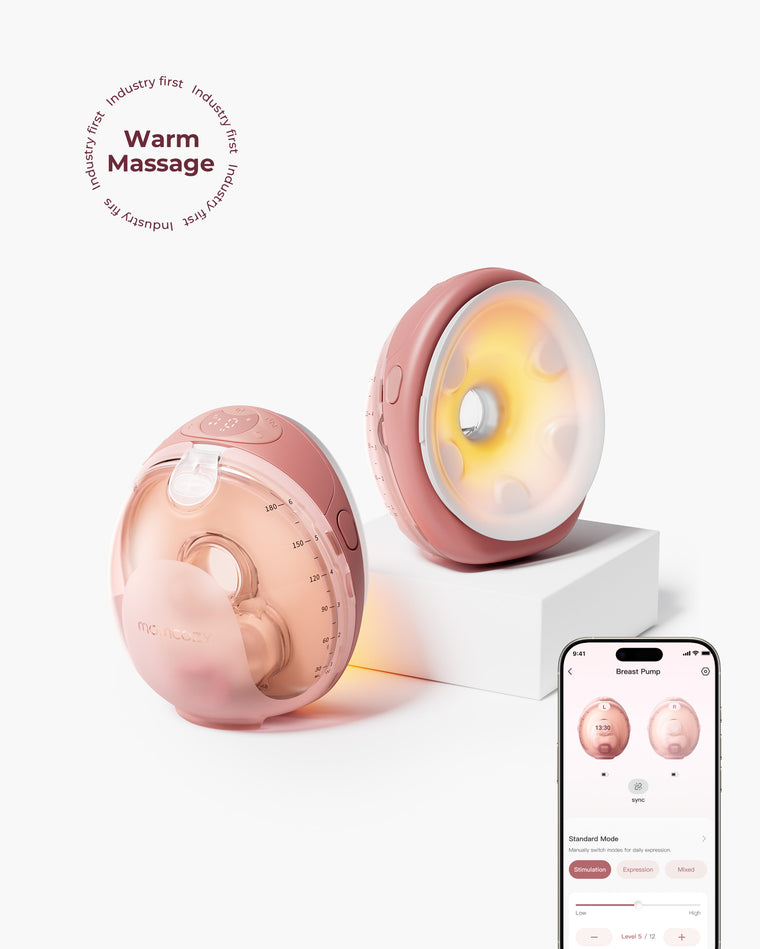
After birth, feeding can become another major part of the daily mental schedule.If pumping is part of your routine, it is hard to deny that comfort and convenience play an important role when you are already tired. The Momcozy Wellness 1 warm massage breast pump allows you to combine pumping with warming and massaging of the breasts, which can make your life a little easier. It is a great tool to rely on if you want to free yourself from the worries of breastfeeding logistics, but it will not cure your brain fog.
Focus on the Basics That Support Your Well Being
Beyond products, the basics still matter: eat regularly, stay hydrated, take gentle walks when medically appropriate, rest when opportunities appear, and accept help with routine responsibilities.
Think of body care as reducing friction rather than fixing your brain.

When Fog Is More Than Mom Brain
If brain fog is associated with feelings of hopelessness and panic, or severe or persistent insomnia, or significant shifts in mood or decreased ability to function, it's wise to seek professional help, rather than accepting it as just mom brain.
When Brain Fog May Need More Attention
There are some instances where concentration problems may occur together with postpartum depression or anxiety. According to ACOG, depression and anxiety are very crucial symptoms that can develop in pregnant women and after childbirth. Such conditions may lead to trouble with concentration or sleep, extreme worry, sadness, and loss of interest in many activities. For practical strategies, these mental health tips for new mums can help you manage anxiety during this transition.
Postpartum Conditions Can Overlap With Brain Fog
Postpartum thyroiditis is another condition worth knowing about. Thyroid dysfunction may present with complaints similar to many other postpartum conditions, from extreme fatigue to emotional and physical sensitivity to stimuli associated with PPD.
This is not to say that a common forgetfulness is not an ailment of a serious nature – it means that if feelings of worry, tiredness or a non-typical attitude towards oneself or others is intrusive, persistent and damaging to your day-to-day life – it is important to seek help from a professional.
Seeking professional guidance is not a failure to embrace motherhood; it is the right thing to do.
FAQ
Is mom brain real?
Yes. Mom brain is the term referring to a real physical phenomenon that happens in mothers during pregnancy and postpartum; it is related to a decrease in concentration and memory. There is no research which proves that motherhood permanently impacts the ability of women to function intellectually.
How long does mom brain last after birth?
There is no universal timeline. Some people may feel better after a few months or when they're sleep schedule and lifestyle are more consistent. Others may see improvements in brain structure for much longer than others. This doesn't mean that the effects would necessarily last that long on day to day mental performance.
Does pregnancy permanently damage memory?
Current research does not support the notion that normal pregnancy related brain remodeling is permanent damage. The changes in pregnant women's brains are actually considered to be more beneficial and adaptive for the process of motherhood.
Can partners get baby brain too?
Partners and others caregivers may also forget things and be distracted, especially when they are tired or under stress, but pregnancy involves physiological and psychological changes that only affect the pregnant person.
What helps pregnancy brain fog the most?
Sleep, reduction of stresses, practical help, memory aids, mild exercises, eating, drinking, and reduction of the unnecessary burden on the memory can all be beneficial. You do not have to rely only on your memory while being ill.
When should I worry about postpartum brain fog?
If the fog is severe enough, causing distress, associated with feelings of hopelessness or intense anxiety, panic attacks, extreme insomnia or other mood disorders; if the fog is not severe, but you believe that something may be wrong, consulting a professional can be helpful.

Conclusion
The simple answer? Yes. But there's a less terrifying explanation that science has uncovered.
Your brain is actually changing throughout pregnancy to better suit your needs as a mother - so while there is a mommy brain it's more of a survival mechanism for raising a child. The day to day confusion and forgetfulness can also be chalked up to being run down, hormonal changes, and the sheer stress of having a new child in your life.
Your brain can and will change for the long term, but those day to day brain fog issues should clear up as your body recovers from childbirth and settles back into a new normal.
If you find yourself forgetting where you put the tv remote, mixing up words in conversation, or just plain forgetting why you walked into a room at some point during the day, try not to think of it as your brain shutting down.
Think of it as your brain being busy. That's why we also offer Mom and More body care, to help support you during this trying time.
Because while your body is changing forever to meet the needs of your child, your day to day life can change right back to normal, with fewer stresses and struggles if you let us take care of you. If the fog is just too thick, remember that you can ask for help, or even just try to lessen your burden, to make life easier on yourself. After all, needing help is part of needing to recover.








