


WRITTEN BY

Shelly Umstot, BSN, RN
Shelly Umstot is a BSN and has been a registered nurse for over 35 years. She lives in North East Ohio and is a freelance health content writer. Her passion is bringing understanding to those with questions and concerns regarding health issues and helping them obtain and maintain their optimal health. She loves being with her family and has two lovely granddaughters who have stolen her heart. Assisting new parents in finding the information they need to face the joys and challenges of caring for their children is a gratifying experience for her as a professional, parent, and grandparent herself.
Exclusive pumping means your baby’s milk comes from a pump and a bottle, not from latching at the breast. People also type a blunter version: is exclusive pumping worth it. Fair. It is not “breastfeeding but easier.” It is milk feeding with a motor, a sink, and a clock.
The milk is still milk. Antibodies and calories don’t vanish because they took a detour through a bag. What changes is your day: more parts, more labeling, more sessions you cannot skip just because the baby slept. If that trade matches why you’re here (latch, NICU, measured ounces, or a choice you already made), it can be worth it. If you were promised it would be simpler than nursing, it often isn’t.
This page is the definition and the worth-it test. The clock lives in our exclusive pumping schedule. Tips that aren’t a manifesto sit in 13 exclusive pumping tips. Nursing vs EP as a fork in the road is exclusive pumping vs breastfeeding.
Key Takeaways
- Exclusive pumping means your baby gets only pumped breast milk—no direct nursing—yet still receives the immune and nutritional benefits of breast milk.
- It works on supply and demand: frequent removal (often 8–12 sessions daily at first) tells your body to make milk, with prolactin highest overnight.
- A double electric “big host” pump at home plus a hands-free wearable for outings is the setup most exclusive pumpers rely on.
- Exclusive pumping can delay your period and is not reliable birth control; it does not fully protect against pregnancy.
What is Exclusive Pumping?
What is exclusive breast pumping in plain terms? It is feeding your baby only pumped milk—no time at the breast—while still giving all the immune and nutritional value of breast milk. The sections below cover why parents choose it, how it works, and how to make it sustainable.
What is the difference between exclusive pumping and breastfeeding (nursing)? Exclusive pumping means you do not nurse your baby for their feedings; you feed them pumped breast milk from a bottle. However, exclusive pumping still allows you to provide breast milk with its highly nutritious properties even though you are not nursing. The exclusive pumping method doesn’t make the process less meaningful to you or your infant. Breast milk is always beneficial to your baby.
Although exclusive pumping may not involve direct physical contact with your baby during their feedings, there are still many ways you can bond with them:
- Skin-to-skin contact- Holding your baby close and touching their skin to yours is always a great bonding experience.
- Talk to your baby- Let them hear your voice during feedings. Talk with them and interact.
- Gaze into their eyes- Maintain eye contact as you speak and cuddle with them.
- Sing to them- Lullabies or other songs can soothe them and relax you both.

Is exclusive pumping worth it?
Worth it is a fit question, not a personality award.
It tends to be worth it when latch isn’t transferring milk, the baby cannot feed at the breast yet, you need to see ounces, you have a nursing aversion and still want to give milk, or you already know this is the plan and you’re building a system instead of fighting a fantasy latch.
It tends not to be worth it when the only pitch you heard was “you’ll be free.” Exclusive pumping is a part-time job with flanges. Eight to twelve sessions in the early weeks is common. Missing the overnight removal is how supply quietly drops. If you’d rather formula than that clock, that’s a valid exit. We don’t win a prize for keeping you on a motor you hate.
The hidden bill is the sink. Bags, valves, a cooler if you leave the house. If the pile is what’s breaking you, our take on whether a bottle washer is worth it is for the night shift, not a pep talk. DeepClean still has to be loaded. That’s the honest limit.
Cost: one pump per birth is a typical insurance path, often through a DME. Wearables may leave an upgrade balance. See pumps through insurance. Time is the larger invoice.
Does Exclusive Pumping Give Your Baby the Same Benefits as Breastfeeding?
The short answer: your baby gets the same breast-milk benefits, because the milk is the same. Exclusive pumping delivers the antibodies, enzymes, and live nutrients that protect a developing immune system—the American Academy of Pediatrics notes breast milk is the recommended source of nutrition for about the first six months. What changes is the feeding method, not the milk.
One difference is the bond of skin-to-skin contact. Direct nursing keeps your baby close, warm, and hearing your heartbeat at every feed, which can comfort a baby and support emotional connection. With exclusively pumping, you can recreate much of that closeness by holding your baby skin-to-skin during bottle feeds, making eye contact, and talking or singing. The NHS also notes that bottle feeding still lets other caregivers bond with the baby—a real perk of EP.
A second, smaller difference: babies who are never at the breast miss the protective effect against tooth decay that nursing provides, since a bottle keeps milk pooled around the teeth. Wiping your baby’s gums and brushing early teeth helps. The benefits of exclusively pumping reach you, too—rest, shared feeding, and the flexibility to step away when you need to. Overall, the benefits of exclusive pumping for your baby’s health are the same core benefits of breast milk itself.
Why Would You Choose Exclusive Pumping from Birth?
Why exclusively pump? The reasons are personal and varied—from a baby who cannot latch, to a NICU stay, to simply wanting the flexibility of bottle feeding. Whatever brings you here, exclusive pumping is a valid, loving way to feed your baby.
Choosing to exclusively pump breast milk and feed your baby using a bottle can be a personal decision or be selected due to reasons like these:
- Your baby was in the NICU (neonatal intensive care unit) after birth and did not establish nursing due to treatment.
- Your baby needs an NG (nasogastric) tube to get nutrients, and only liquids can be given through the tube going into its nose.
- Your baby refuses to nurse.
- Your baby is not gaining weight, so you need a way to measure their intake.
- Your baby doesn’t transfer milk well in his mouth due to physical oral issues like cleft palate or lip.
- Your baby is getting their teeth and biting your nipple.
- Your baby does not latch on well to get enough breast milk.
- You want to provide breast milk to your baby, but you have a nursing aversion.
There are many benefits to the exclusive pumping feeding method.
- You always know how much your baby is eating and never need to worry if they are getting enough milk.
- You know how much milk you produce and can keep track of your supply. If it starts to drop, you can take action quickly to restore it.
- No worries about biting. They don’t make breast pumps with teeth!
- You have better control when deciding to wean your baby, as you are in charge of the pump.
How Does Exclusive Pumping Work? Getting Started from Birth
Exclusive pumping works on a simple rule: milk production follows removal. The more often milk leaves the breast, the more your body is signaled to make. This is why frequency matters more than any single long session, especially in the first weeks.
If you plan to start exclusively pumping from birth, begin in the “golden hour.” Hand-expressing colostrum in the first 60 minutes after delivery moves the early milk and protects your supply. Research suggests hand expression can be more effective than pumping in the first 24–48 hours. Begin using a double electric pump as soon as your baby cannot nurse, and for an exclusively pumping newborn, aim for 8–12 sessions in 24 hours.
Prolactin—the hormone that drives milk making—peaks overnight. That is why an early-morning or middle-of-the-night session carries real weight for supply. Skipping it in the first weeks can undercut your long-term output. Many parents find the rhythm easier once they see it as “remove milk often, rest when you can.”
You do not need to nurse at all to make exclusively pumping work. Can I exclusively pump from birth? Yes—many parents do, especially after a NICU stay. Can I exclusively breast pump instead of nursing? Absolutely; the pump simply becomes your baby’s only source of breast milk, and a steady schedule keeps that source flowing.
Tools for Exclusive Pumping
The most suitable setup for exclusive pumping is a two-pump combo: a big host pump at home plus a wearable for outings. For full-time pumpers doing 8 or more sessions a day, a full-size hospital-grade pump like Momcozy’s upcoming V3 (plug-in) or V3 Pro (portable/cordless) delivers strong, supply-building suction at your nightstand.
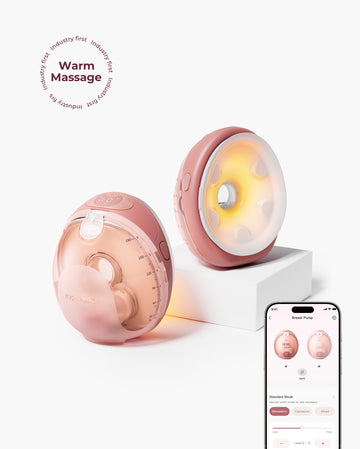
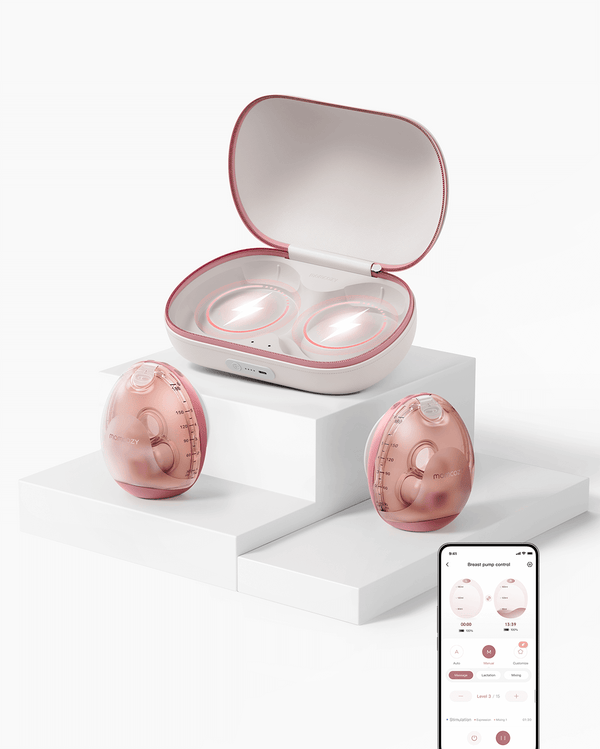
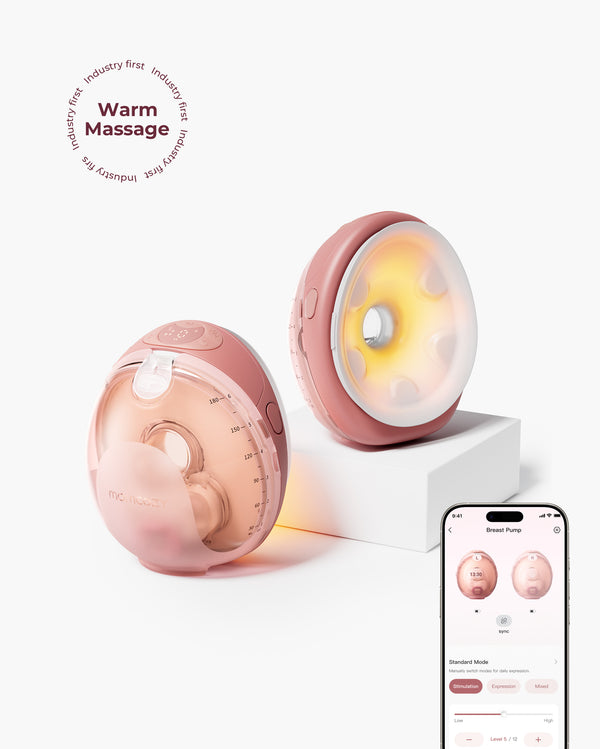
A hands-free wearable such as the Momcozy Air 1 or W1 keeps you consistent when you are away from an outlet. They are teammates, not rivals—together they cover every session of your day.
Member price
From¥53,200Code Save 15%
The breast pump is the most critical tool for exclusively pumping breast milk.
Because of the Affordable Care Act of 2010, your insurance must provide you with a breast pump. Check with your insurance company to see what models they offer. If they don't cover a model you desire, you may be able to pay the difference to find one.
Most pumps come with warranties, so ordering in the last month allows you to take advantage of them fully.
The breast pumps need to fit your breasts, so ordering in the last month increases your chances of finding the best flange fit.
Manual Breast Pump
These pumps are the least expensive option for pumping breast milk. They are portable and easily carried in a handbag. Moms mainly use them to express breast milk while on the go.
Electric Breast Pump
Electric breast pumps are the most comfortable and convenient way to express breast milk and are the best choice for new mothers who choose to pump exclusively. Electric pump options allow breastfeeding mothers to express breast milk for their infants without manually applying the pumping action.
For exclusive pumpers whose main job is building and protecting supply, a hospital-grade electric pump is the workhorse. Momcozy is adding two new options in this category: the V3 (plug-in hospital-grade) and the V3 Pro (portable/cordless smart). Both reach up to −270 mmHg with independent control per breast, and both include built-in pumping rhythms—Power Pumping, Milk Boost, Lactation Starter, and Deep Emptying—designed to support supply building.
The V3’s SoftStart™ eases into each session, and the V3 Pro adds smart pressure stabilization for steady output. For many moms, pairing one of these at home with a wearable like the Air 1 or W1 on the go is the most reliable way to never miss a session. The La Leche League also notes that a good double pump is the backbone of successful exclusive pumping.
There are many types of electric pumps for powered pumping. Let’s talk about a few:
- Hospital-grade pumps are more powerful and effective than many personal breast pumps. They are best when wanting to empty your breasts completely.
- Powered breast pumps are either plug-in, rechargeable, or battery-pack mechanized.
- Double electric pumps are two flanges attached to a pump for more breast milk in less time.
- Hands-free pumps are two separate pumps worn on each breast that pump by being charged. They allow you to do other tasks using your hands while pumping.
Electric pumps are time savers and make it easier for moms to do the job without physically wearing themselves out. Electric pumps are hands-down favorites, whether you are pumping for your baby to have a bottle ready immediately or you want to store your breast milk for later.
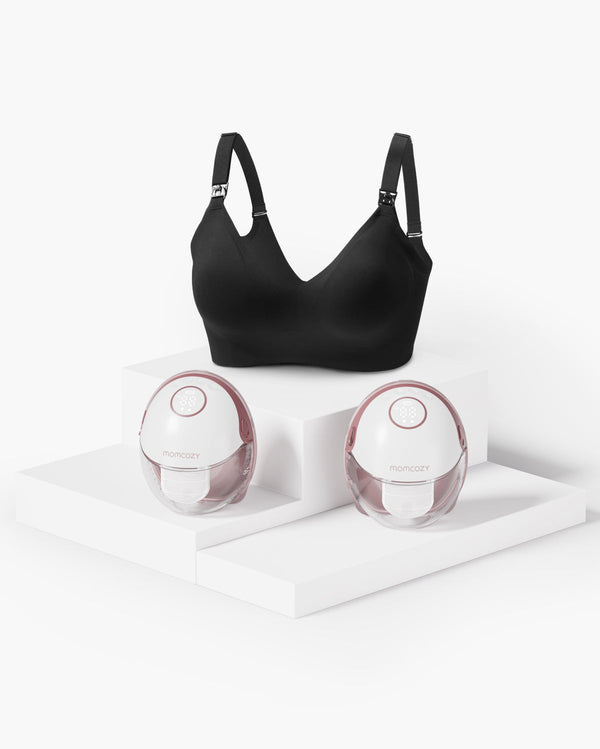
Hands-free pumps like Momcozy M6 and Momcozy S12 Pro allow moms to go about their daily lives without taking time away from their other tasks while they pump.
The Momcozy M6 allows you to express milk as you wish, with 3 pumping modes and 9 suction levels, providing significantly deeper suction without sacrificing comfort.

Member price
¥41,900
Breast Milk Storage Bags
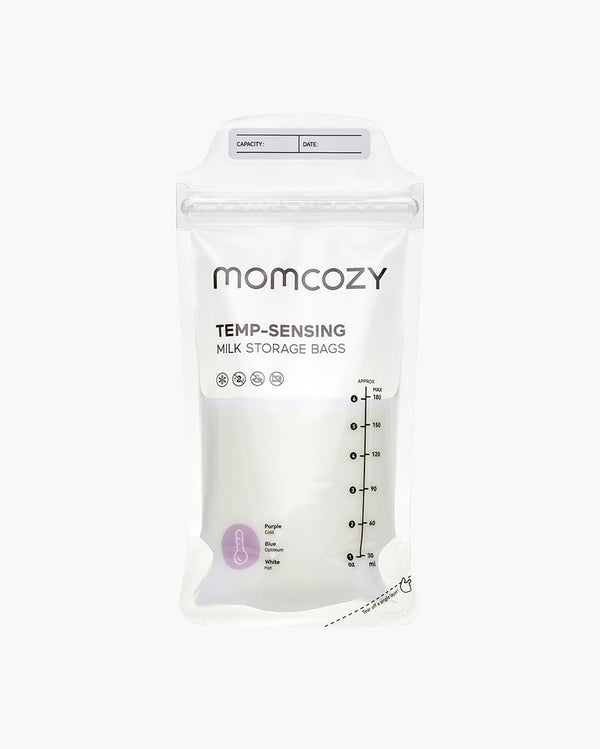
Breast milk storage bags make it easy to collect milk from your pumping session and store it for later use. You can freeze these flat and then stand them up chronologically to give your baby the oldest milk first.
Per the Centers for Disease Control and Prevention, you can keep breast milk in a deep freezer at zero degrees Fahrenheit or colder and use it for up to 12 months after it is first frozen. However, feeding it to your baby within six months is best.

Pumping Bra

A wearable breast pump bra is essential when using a hands-free pump exclusively. The pumps need support and slight compression from the flexible bra to do their job.
Bottles

You will need bottles to give your breast milk to your baby. Moms can choose traditional plastic bottles or bags that can be stored, warmed, and placed in a rigid bottle-shaped holder.
Bottle Warmer
Exclusively expressing breastmilk allows you to store a milk supply so that other family members or friends can share in bottle-feeding your baby directly. Having a bottle warmer for just these occasions is so convenient. You can heat frozen breastmilk quickly for them to feed your baby.
How to Build and Protect Your Milk Supply
Because milk follows removal, protecting supply is mostly about consistency. Pump on a regular schedule, and prioritize frequency over long sessions—a short 10-minute pump beats a skipped one. Add hands-on pumping (gentle breast massage and compression during the session) to boost output.
Power pumping mimics cluster feeding: 20 minutes on, 10 off, 10 on, 10 off, 10 on. Done once a day for a few days, it can nudge a sluggish supply. Check your flange fit often—a poor fit lowers output and hurts—and replace worn pump parts every 4–8 weeks. Stay hydrated, eat enough, and pump near your baby or a photo to trigger let-down.
A hospital-grade “big host” pump such as the V3 or V3 Pro earns its place here: its stronger, steadier suction and supply-focused rhythms help maintain the high session count exclusive pumping demands. Pair it with a wearable for life outside the house so no session gets missed.
Managing Oversupply and Engorgement While Exclusively Pumping
What is considered an oversupply of breast milk exclusively pumping? A common sign is regularly making more than your baby needs, with frequent engorgement, leaking, or clogged ducts. Oversupply is not automatically a problem, but it can be uncomfortable.
To relieve it, pump only to comfort rather than fully empty—emptying signals your body to make more. Use cold compresses between sessions to calm inflammation, and lengthen the gap between sessions slowly so supply eases down to match your baby.
If a clog or mastitis appears (red, hot, flu-like), reach out to your provider. Never cut sessions abruptly; gentle, gradual drops protect both comfort and supply.
What Are the Pros and Cons of Exclusive Pumping?
When you choose to exclusively pump your breastmilk, the choice can be easy, but the process can be overwhelming at first. These are a few of the pros and cons that may arise:
Pros of Exclusive Pumping
- Your baby will get all the benefits of breast milk versus formula. They’ll get all the vitamins and minerals packed with immune substances that protect them from illness. You will reap health benefits from it, too!
- Breastfeeding in public or even with some of your family members in the room may not be comfortable. Leaving the room for direct breastfeeding may also draw your attention away from your other family members. Having a milk supply for your next feeding will allow you to give your baby breast milk by bottle feeding them in the presence of everyone.
- Other family members can help. Infant feeding is not something you alone can do. New moms need to rest or do other things.
- Working: Many women can return to work after collecting milk to maintain a full milk supply for their babies. They can do their pumping sessions on breaks at their office to keep their exclusive pumping schedule and not worry if they have enough milk.
- Pumping exclusively can help maintain your milk output if you cannot nurse for other reasons.
Cons of Exclusive Pumping
- Expense: Breast pumps can be expensive and are essential for a new mom wanting to exclusively pump. You also need bottles, storage bags, and a cooler for your pumped breast milk.
- The tools you need for pumping milk with a manual or electric pump will need regular cleaning, e.g., pump parts, including pump flanges and milk collection cups, bottle warmers, bottle cleaners and brushes, and sterilizers.
- It’s time-consuming. You won’t just be pulling out your breast to feed your baby. You’ll use a breast pump and prepare a bottle from your expressed milk or thawing frozen milk to heat and feed your baby.
- It’s a lifestyle change. You’ll have to get up during the night for pumping sessions to maintain your milk production or increase your milk supply.
- Breast discomfort from exclusive pumping frequency and high-efficiency suction. Olive oil or other lubricants may be needed to keep your nipples from becoming painful and cracking.
Exclusive Pumping Schedule
Creating an exclusive pumping schedule is essential to help you manage your milk supply effectively. In addition, a well-planned pumping schedule is essential for working mothers, ensuring successful exclusive pumping and breastfeeding while maintaining a productive work-life balance.
Hand-expressing your breasts immediately after birth has been shown to produce more colostrum, which is full of protein and antibodies. Massage your breasts while doing this for the maximum output.
Pump eight to ten times in 24 hours, even at night. When starting, pump both breasts for about 10 to 15 minutes. Most babies take 24-30 ounces daily after the first few weeks. Your pediatrician will tell you the recommended amount per feeding.
Then, 20-30 minutes per pumping session is preferred. Longer may make your nipples sore.
You’ll produce the amount of milk your baby needs if you pay attention to their hunger cues and the fullness of your breasts.
Exclusive Pumping Schedule by Baby’s Age
Your ideal number of sessions changes as your baby grows. These ranges mirror how often a newborn would feed at the breast:
| Baby’s stage | Sessions per 24h | Spacing | Overnight pump |
|---|---|---|---|
| Newborn (0–4 weeks) | 8–12 sessions / 24h | Every 2–3 hours | Yes (aim for one 2–5 a.m.) |
| 1–3 months | 7–9 sessions / 24h | Every 3 hours | At least one |
| 3–6 months | 5–7 sessions / 24h | Every 3–4 hours | Often optional |
| 6+ months (with solids) | 4–6 sessions / 24h | Every 4–5 hours | Usually dropped |
Keep at least one overnight session in the early months—prolactin is highest then, and dropping it too soon can lower supply. For safe handling, the CDC advises refrigerated milk for up to 4 days and a deep freezer for about 6–12 months.
Tips from Experienced Exclusive Pumping Mothers
Some exclusive pumping mothers have shared some tips for maintaining your milk supply. Here's what they say:
1. Rules Should Not Be Rigid
If you choose to stick to strict rules, you are likely to feel overwhelmed. You will have to constantly worry about proper timing, the amount of milk to express, and more. This makes you tense and stressed. Effectively, it causes letdown issues. So, moms recommend steering clear of rigid rules. What you should do instead is find a natural routine that meets your needs.
2. Your Schedule Should be Flexible
Your pumping schedule should not be strict with timing. If your schedule says you should pump at 4:00 pm, but you are not able to until 4:45 pm, do not stress it. As long as your breasts are not getting full and you are still able to pump, that is okay.
3. Choose Breast Pumps that Allow Movement
Traditional electric breast pumps, especially hospital-grade ones, need you to plug them into a socket. That said, they require you to go and stay in one spot when it is time to pump. The problem with that is it stops you from doing anything else. Exclusive pumping moms suggest that you get rechargeable breast pumps, especially the wearable ones. These allow you to move freely while pumping. Since you also do not need to hold them, they allow you to multitask.
Do’s and Don’ts of Exclusive Pumping
DO:
Choose Wearable Breast Pumps
Exclusive pumping means you have to do it several times a day. If you are using manual pumps, that would be tiring. It will cause strain in your arm, wrist, and hands. Electric pumps are an upgrade, but you still have to hold them. On the other hand, wearable breast pumps allow you to hold them in place using nursing bras. This allows for a hands-free pumping experience, which offers convenience. You can prepare meals or tend to your baby during your sessions. It helps you save some time.
Make sure your breast pump parts come with pump flanges that fit your breasts. You want your nipple only to easily slide into the flange opening, not your areola.
Create a Pumping Station
Exclusive pumping moms found that it is easier when you have a pumping station. It's a comfortable spot in your home where you can also store all pumping essentials. There should be a comfortable chair and a small cabinet or drawers. In your pumping station, you should be able to find your breast pumps and milk storage. Using a supportive nursing pillow can also help you maintain a comfortable posture during long sessions or while bottle-feeding your little one.
It is also wise to buy spare breast pump parts so you can replace malfunctioning or unclean parts when needed. You should also keep them in your pumping station. Storing food, water, and something to keep you entertained is also a good idea.
Clean Your Breast Pump Parts
It is not safe to continue using unclean breast pump parts. It may promote bacterial growth in the milk. That makes it unsafe for your baby to consume. That said, you should always clean, sanitize, and air-dry breast pump parts after use. It helps prevent sanitation.
Store the Expressed Milk Properly
After pumping, you should store the expressed milk properly to keep it safe to consume. It can stay at room temperature for up to 4 hours. However, if you have no plans of using it within 4 hours, it is better to store it in the fridge immediately. Refrigerated breast milk stays safe to consume for 4 days. If you want to extend it even further, store it in the freezer. Frozen breast milk remains safe for up to 6 months. Just remember to follow safety guidelines when thawing it.
Store your breast milk in the amount your baby usually drinks at one feeding.
Prepare Tools You Can Use to Encourage Letdown
Do have a lubricant or nipple cream available so that your breasts do not become dry or cracked.
Keep hot/cold gel packs available to encourage letdown and provide comfort if breasts are swollen or painful. If you have trouble getting your milk to flow, use hand or electronic massage.
Applying warm compresses and taking a warm shower can also help. Warming up your pump flanges can also help your letdown.
DON’T:
Overlook Comfort During Pumping Session
Try to make the room as quiet as possible and sit comfortably on your chair. Comfort promotes letdown, while stress does the opposite. That said, you should also check the breast pump setting. Wearable breast pumps, or electric pumps in general, offer adjustable suction and speed. Take advantage of this to find a setting that effectively expresses milk without causing pain.
Don’t set your pump too high to begin your session. Start on a low setting and slowly increase the suction.
Overfeed Your Baby
Like direct breastfeeding, hold the bottle horizontally when you feed the baby so the breast milk flows as they suck. Pause during feeding and stop when they show signs that they are full.
Get Overwhelmed
If you have questions about your exclusive pumping schedule, milk supply, or milk production, or just need some exclusive pumping tips, contact your physician or lactation consultant.
Taking Care of Yourself: Mental Health and Support
Exclusive pumping is demanding, and your mental health matters as much as your supply. Some parents feel a dip with each let-down—a hormonal response called dysphoric milk ejection reflex (D-MER). Others feel isolated by the clock of constant sessions, or grief if nursing did not go as hoped.
These feelings are common and valid. Reach out early to a partner, friend, or lactation consultant, and talk to your provider if sadness, anxiety, or anger lingers. The CDC notes that postpartum mood changes are real and treatable. Asking for help is part of feeding your baby well, not a failure.
How to Wean from Exclusive Pumping
You can exclusively pump for a year or longer if you wish—many do, especially through a baby’s first birthday. When you are ready to stop, go slowly. Drop one session every few days and watch your comfort; sudden stops risk painful engorgement or clogged ducts. As solids replace milk after six months, your baby’s intake naturally falls, which makes weaning easier.
Replace dropped pumps with extra cuddles and bottle time so the bond stays strong. If your period returns or you notice a supply dip while weaning, that is normal. There is no single right end date—only the one that fits your family. A lactation consultant can help you plan a gentle finish.
FAQ’s About Exclusive Pumping
1. Is it OK to exclusively pump without nursing?
Yes. Exclusively pumping still provides nutritious human breast milk for your baby, with all its health and immune properties.
2. Does exclusive pumping delay your period?
Yes. It can delay your period but do not rely on it for birth control. The effects can vary from person to person, especially if you aren’t directly breastfeeding.
3. Can exclusive pumping prevent pregnancy?
No. You are only protected against pregnancy if you are exclusively breastfeeding.
4. Can exclusively pumping cause depression?
Yes. There is something called dysphoric milk ejection reflex (D-MER). It’s a condition that can contribute to depression in women who breastfeed or pump exclusively. It’s a hormonal response to the letdown while pumping milk or breastfeeding.
5. Can I exclusively pump for a year?
Yes. But remember that your baby may be ready to start eating other foods around six months, and you may need to pump less as they advance toward solid foods.
6. Can you lose weight exclusively by pumping?
Yes. You may lose some weight while exclusively pumping, but there may be other mothers who do not, as the amount of calories you burn pumping depends on age, activity level, and body mass index (BMI).
7. What is the best breast pump for exclusively pumping?
The most reliable setup is a two-pump combo: a hospital-grade “big host” pump at home plus a hands-free wearable for outings. At home, a full-size pump such as Momcozy’s V3 (plug-in) or V3 Pro (portable/cordless) gives the strong, steady suction that builds and holds supply. On the go, a wearable like the Air 1 or W1 keeps you consistent when you are away from an outlet. Together they cover every session of an 8–12×-a-day routine.
8. How does exclusive pumping work?
It works on supply and demand: the more often milk is removed, the more your body makes. You express milk with a pump—often a double electric—8–12 times in 24 hours at first, then fewer as your baby grows, and feed it by bottle. Prolactin peaks overnight, so an early-morning session matters most in the early weeks. No nursing is required for it to work.
9. Is exclusively pumping bad?
No. Exclusive pumping is not bad—it is a healthy, valid way to feed your baby breast milk when nursing is not possible or not chosen. Your baby still gets the same immune and nutritional benefits. The honest trade-off is that it is time-consuming and can feel isolating, so build a support system and protect your own rest. “Fed is best” includes pumped milk.
Conclusion
Using a breast pump exclusively for pumping is a big decision. Whatever the reason for choosing this feeding method, most women can be assured that their baby will still get all the benefits of breast milk as if they were nursing.
We’ve discussed some of the tools needed to start the process and shown exclusive pumping tips, pros and cons, and do’s and don’ts associated with it.
An exclusive pumping schedule is essential.
Only you know what feels comfortable and works most effectively for you and your baby. Don’t be afraid to ask questions, find support system groups, and discuss any concerns with your doctor or lactation consultant.
Whatever your reason for choosing this path, the right tools make it sustainable. The smartest setup pairs a big host at home—such as Momcozy’s V3 (plug-in hospital-grade) or V3 Pro (portable/cordless)—with a wearable like the Air 1 or W1 for life on the go. They are teammates, not rivals, covering every session from your first newborn pump to weaning.
With the V3, V3 Pro, and wearables, Momcozy now covers every pumping scenario, so you can keep giving your baby breast milk your way. For more on feeding and milk supply, the CDC is a helpful reference.





