Introduction
Hearing your baby make a sudden gasping sound can be alarming, especially when they otherwise seem to be breathing normally. The good news is that occasional gasping-like noises, squeaks, snorts, or throat-clearing sounds can sometimes happen in healthy babies due to normal breathing patterns, mucus, feeding-related irritation, or sleep transitions.
However, repeated gasping, signs of breathing difficulty, color changes, or feeding problems should always be taken seriously.
In this article, we'll explain why babies sometimes make gasping sounds while sleeping, awake, or after feeding, what may be normal, and when it's time to contact your pediatrician.
Why Is My Baby Making Gasping Sounds but Breathing Fine?
If your baby occasionally makes a gasping sound but continues breathing comfortably, feeds normally, maintains normal color, and quickly returns to their usual behavior, the sound may be related to normal infant breathing patterns, mucus movement, feeding-related throat irritation, or sleep transitions.
However, repeated gasping, worsening noisy breathing, breathing pauses, blue or gray coloring, feeding difficulties, or signs of distress should be evaluated by a pediatrician promptly.
Is It Normal for Babies to Make Gasping Sounds?
Your baby’s breathing may sound very different from an adult’s, and in many cases, this is normal. Babies have smaller airways and immature breathing patterns, which can make their breathing sound irregular, especially during sleep.
Brief, occasional gasping-like or noisy breathing sounds can happen in healthy babies who are feeding well, comfortable, and acting normally.
Common breathing noises in babies include:
- Gurgling
- Snorting
- Whistling
- Gasping or squeaking
- Rattling
These sounds may sound strange, but they can be considered normal. It sure will help you feel more in control if you understand what they mean.
Why Do Babies Make Gasping Sounds?
Hearing your baby gasp can make your heart skip a beat. But don’t panic just yet, these gasps can mean a lot of things; most are not as scary as you thought. They can happen during sleep, after feeding, or when your baby’s nose is a little stuffy. A baby swing can offer a gentle, soothing motion that helps comfort your baby and ease them into a relaxed state, providing a calming environment.
While Sleeping
Babies may make gasping or irregular breathing sounds during sleep because their sleep cycles are still developing. Learn more about baby gasping in sleep and what parents usually observe during this stage.
This may be due to:
-
Normal sleep stage transitions
-
Active (REM-like) sleep movements
-
Mild mucus shifting in the nasal passages
These sounds are usually brief and not linked to distress.
While Awake
Some babies may also make gasping-like sounds while awake, even when they appear fine.
This can happen due to:
-
Sound experimentation as they learn to control breathing and voice
-
Swallowing saliva or reacting to mild throat sensations
-
Brief startle responses or excitement
In most cases, babies quickly return to normal breathing and activity.
Common Causes of Gasping Sounds
Here are some of the possible causes why your baby produces gasping noises:
Nasal Congestion
A stuffy nose is the top reason for snorty, gasping noises. Babies are obligate nose breathers, meaning they mostly breathe through their noses for the first few months.
Post-Nasal Drip
Mucus running down the throat can make it sound like your baby is gasping or clearing their throat.
Laryngomalacia
A frequent condition that is not harmful, in which the tissue over the vocal cords is loose. It can produce a squeaking or gasping sound, particularly when your baby breathes in.
Feeding or Reflux
Milk coming back up slightly (even without full spit-up) can irritate the throat and lead to noisy breathing.
Sleep Transitions
Gasping or jerky breathing may happen during dream cycles or movement between sleep stages.
These reasons are something not to be worried about, as they may clear up on their own. However, be cautious regarding other symptoms that are accompanied by these noises.
Why Does It Sound Like My Baby Is Trying to Clear Their Throat?
You may have noticed them throat-clearing or producing a sound as though they are trying to throat-clear as a mother. At first, it may sound concerning, and a lot of what-ifs may come through your mind. Here are some of the possible things they’re dealing with:
-
Mucus buildup in the back of the throat
-
Mild reflux, especially after feedings
-
Excess saliva from teething
-
Dry air, irritating their airways
- Swallowed air during feeding
- Fast or uneven milk flow
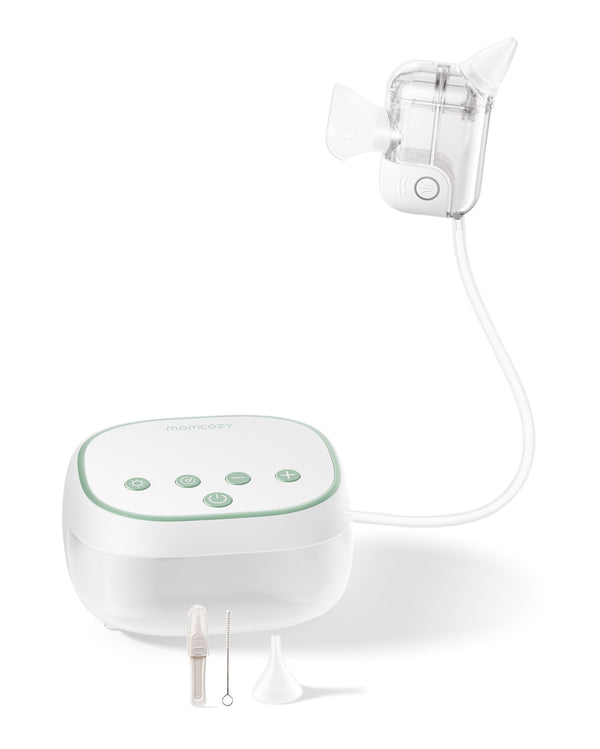
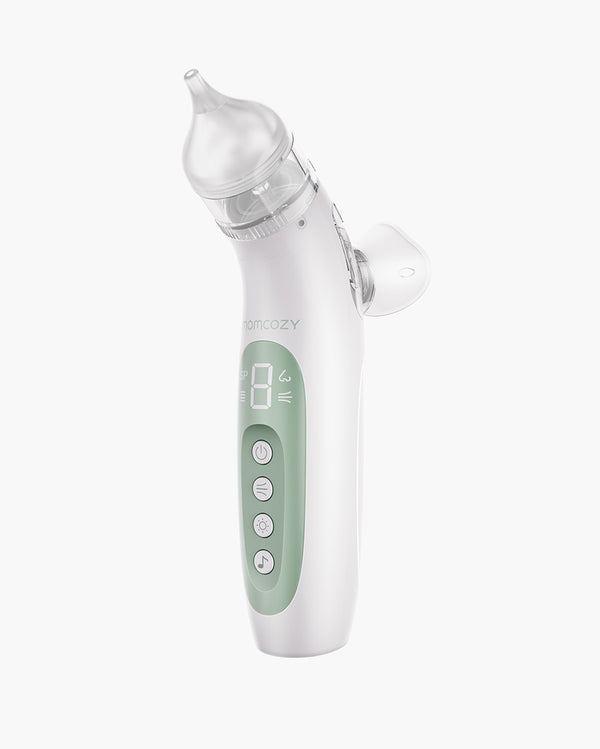
These throat sounds can mimic coughing or gasping but usually pass on their own. You can help them clear their passages using a gentle nasal aspirator for newborns like the Momcozy BreezyClear Pro™ 2-in-1 Spray & Suction Electric Nasal Aspirator. It’s designed to gently clear nasal passages and reduce throat gurgles caused by drainage.
2-in-1 Design
Hospital Grade Suction
Adjustable Suction
All-in-One Storage
2-in-1 Design
Hospital Grade Suction
4 Suction Levels
Mist Spray
Newborn Gasping Sounds: What’s Different in the First Months?
Newborns often make more noticeable breathing sounds, including gasping-like noises, because their airways and breathing patterns are still developing. In the first months of life, breathing may sound irregular, noisy, or uneven even when the baby is otherwise comfortable.
In many cases, this is related to normal newborn development, including:
-
Small and narrow airways that make airflow more audible
-
Immature coordination between breathing, swallowing, and feeding
-
Normal newborn noisy breathing during sleep and wake states
-
Mild congestion as babies adjust to breathing outside the womb
Because newborns are still adapting, these sounds may appear more frequent compared to older infants.
However, extra care should be taken if gasping sounds are persistent or come with other symptoms such as:
-
Difficulty feeding or refusing feeds
-
Fever or signs of illness
-
Noticeable color changes (such as bluish lips or face)
-
Increasing difficulty breathing or unusual lethargy
In these cases, it is best to consult a pediatrician to ensure proper evaluation.
Gasping Sounds vs. Noisy Breathing vs. Breathing Trouble
Babies can make different breathing sounds, and many are normal. Understanding the normal infant breathing rate can help parents better recognize what is expected versus what needs attention. The key is knowing when sounds are harmless and when they may need medical attention.
|
Type
|
What It May Look Like
|
Level of Concern
|
|
Brief gasping-like sounds
|
Short, occasional gasps, snorts, or squeaks during sleep or after feeds; baby looks calm and normal
|
Usually normal, especially in newborns
|
|
Noisy breathing (no distress)
|
Mild gurgling, whistling, rattling, or congestion sounds that come and go
|
Usually normal if baby feeds and behaves well
|
|
Breathing trouble (red flags)
|
Blue/gray lips or face, nasal flaring, chest retractions, fast breathing, grunting, long pauses, poor feeding, limpness, unusual sleepiness, worsening high-pitched sounds
|
Seek urgent medical care
|
When to take it seriously
If breathing changes persist, worsen, or come with any red flags, contact a pediatrician. When in doubt, it’s always safest to get it checked.
What Parents Can Do at Home
If your baby is making gasping sounds but otherwise seems comfortable, these simple steps can help you monitor the situation and support your baby's comfort.
-
Observe the pattern. Pay attention to when the sound happens, such as during sleep, after feeding, or while your baby is awake and active.
-
Record a short video. If the sound continues, a video can help your pediatrician better understand what you are hearing.
-
Check for congestion. Mucus or a stuffy nose can sometimes contribute to gasping-like or noisy breathing sounds. If visible congestion is present, a gentle nasal aspirator for newborns may help clear nasal passages and improve comfort.
-
Keep your baby upright after feeding. Holding your baby upright while awake after feeding may help if the sound seems related to swallowed air, mild spit-up, or throat irritation. For babies already eating solids, a sturdy baby high chair can help support an appropriate feeding position.
-
Maintain safe sleep practices. Always place your baby on their back on a firm, flat sleep surface with no loose bedding, pillows, or toys. A baby monitor can also help parents observe sleep patterns without frequently entering the room.
-
Watch for red flags. If the sounds become more frequent, worsen over time, or are accompanied by breathing difficulty, color changes, poor feeding, or unusual sleepiness, contact your pediatrician.
Most occasional gasping-like sounds are not a cause for concern when a baby is otherwise breathing comfortably, feeding well, and acting normally. When in doubt, seek guidance from your pediatrician.
When to Call a Pediatrician or Seek Urgent Care
While most noisy baby breathing is absolutely normal, such as snorts or infrequent grunts, there are situations in which it is a symptom of something more. Babies breathe more rapidly than adults, and sounds are all part of the normal process.
But if your baby is making abnormal sounds like gasping or wheezing on every breath, then there’s something going on. This is where you need to listen carefully, to be able to tell if you need to call your doctor.
Call your doctor right away if your baby:
- Has blue lips, face, or fingertips
- Flares their nostrils or sucks in at the ribs while breathing
- Has long pauses in breathing (also called apnea)
- Seems limp, very sleepy, or unresponsive
- Is breathing extremely fast or seems to be struggling for air
- Has noisy breathing that keeps getting worse over time
Now that you know these red flags, you’ll know what to look out for and when you should call the pediatrician. You don’t have to second-guess yourself or sit there wondering if you’re overreacting. If something feels off, it’s okay to ask for help. That’s what doctors are there for, and your concern means you’re doing your job as a parent.
FAQ
Why does my baby make gasping sounds while sleeping?
This can happen during normal sleep cycles, mild congestion, or natural breathing changes during sleep.
Why does my baby gasp for air randomly?
It may be linked to reflexes, saliva, mild reflux, or normal sound experimentation as your baby develops.
Why does my baby gasp for air while awake?
Awake gasping-like sounds can happen during feeding, excitement, or swallowing air, especially if the baby quickly returns to normal.
Why does my baby gasp after feeding?
This may be related to swallowed air, fast milk flow, or mild spit-up. Burping and upright positioning may help.
Can congestion make a baby sound like they are gasping?
Yes. A stuffy nose can make breathing sound noisy or gasping-like in young babies.
Is my baby gasping on purpose?
No. These sounds are usually not intentional and are part of normal development.
When should I call a doctor about baby gasping sounds?
Call a pediatrician if the sounds worsen, become frequent, or come with signs of distress or feeding difficulty.
Why does my baby make gasping or weird breathing sounds but seems fine?
Babies are naturally noisy breathers because their airways are small and soft. Common causes of gasping, squeaking, or rattly sounds are nasal congestion, post-nasal drip, a floppy voice box (laryngomalacia), reflux, and the shift between sleep stages. If your baby is pink, feeding well, and not struggling, the noise is usually harmless.
Is gasping but breathing fine normal in babies?
Often, yes. Noisy, gaspy, or grunty breathing without distress is common in the early months as the airway matures. The reassuring picture is a baby who stays pink, feeds and sleeps normally, and shows no flaring nostrils, ribcage pulling-in, or blue colour. It's persistent noise with those distress signs, not noise alone, that needs attention.
What is laryngomalacia?
Laryngomalacia is a soft, floppy voice box that partly collapses inward as a baby breathes in, making a squeaky or high-pitched sound (stridor), often louder when on the back, feeding, or upset. It's the most common cause of noisy infant breathing, usually mild, and typically outgrown by 12–18 months as the airway firms up.
What are the warning signs of laryngomalacia I should act on?
See your doctor or an ENT if the noisy breathing worsens over time, your baby struggles or pauses to breathe, feeds poorly or chokes during feeds, has poor weight gain, turns blue, or sucks in hard at the ribs or neck. Most laryngomalacia is mild, but these signs mean it needs assessment and possibly treatment.
Why does my baby make gasping sounds on purpose, when excited, or "for fun"?
Many babies discover they can make gasping, gulping, or squealing noises and repeat them — especially when excited or playing — simply experimenting with their voice and breath. If your baby does it while alert, happy, and breathing comfortably, it's a normal, even playful, developmental stage, not a breathing problem.
Why does it sound like my baby is gurgly or trying to clear their throat?
That wet, throat-clearing sound is usually saliva or mucus pooling at the back of the throat, common with post-nasal drip, teething drool, or a mild cold, because babies can't yet clear it themselves. It's typically harmless. Gentle nasal saline and suction before feeds and sleep help if congestion is the cause.
At what age do babies stop making gasping sounds?
It depends on the cause. Congestion- and reflux-related noises ease over the first months as the gut and airway mature, while laryngomalacia usually resolves by around 12–18 months. Playful, on-purpose sounds simply fade as your baby moves on to new tricks. Steady improvement, not sudden worsening, is what you want to see.
When should I see a doctor about my baby's breathing sounds?
The reassuring rule is that noise alone is usually fine — it's noise plus distress that needs care. Seek prompt help if your baby is visibly working hard to breathe, turning blue, pausing for more than 10 seconds, or feeding poorly and seeming unwell. Our guide on rapid breathing while sleeping lists the full breathing-distress warning signs to check against.
Conclusion
Being a mom can put you on edge when it comes to your baby’s health. Hearing your baby making gasping sounds but breathing fine can seriously freak you out. That sound can catch any mom off guard.
Here’s the important thing to remember: your baby is a natural noisy breather. Babies breathe in all sorts of ways as their little bodies grow. Their airways are tiny, their noses are dramatic, and their bodies are still figuring stuff out. Often, it’s just mucus moving around or a bit of reflux after feeding.
There are a few things that might help. Holding your baby upright after feeding can help with reflux (which is one of the most common causes of baby gasps). A gentle nasal aspirator for newborns can help clear out gunk in their nose. If you’re feeling anxious, having a Momcozy baby monitor BM04 nearby can give you a bit of peace while they sleep.
If those gasping sounds get more frequent, or come with other stuff like a bluish tint or feeding problems, don’t hesitate and call your pediatrician immediately. Always trust your instinct. It’s okay to be dramatic when it comes to your baby’s health. You got this!