Key Takeaways
- If your baby is comfortable and feeding regularly and is gaining weight as expected, chunky spit-up or spit-up that looks like “cottage cheese” is expected and not a problem.
- The curdled appearance is caused by milk reacting with stomach acids, not directly by spoiled milk or a health issue in and of itself.
- Spit-up flows out with little effort. Your baby vomits forcefully and seems visibly distressed. That difference is more important than the color or texture.
- If spit-up is forceful, green or yellow, bloody or accompanied by poor weight gain, fussiness after feeding or breathing problems, contact your pediatrician.
- Always place babies on their back, on a firm surface, even if they spit up frequently.
Is It Normal for a Baby to Spit Up Curdled Milk?
The short answer is most of the time, yes. The first time they see a chunky, cottage cheese-like spit-up, parents can often be surprised, but the consistency on its own is not necessarily a sign of trouble.
What really speaks louder is everything surrounding it. Does your baby settle and become content after the spit-up? Are they eating at an appropriate rate, eating enough and gaining weight appropriately? Do they have plenty of wet diapers throughout the day? If the answer to those is yes, then this is simply your baby's digestion in action, and there is no need to worry.

Why Does Baby Spit-Up Look Curdled, Chunky, or Like Cottage Cheese?
It is a matter of simple chemistry; it's really that simple. Milk starts to digest in your baby's stomach right away when it enters the stomach. That's what turns smooth milk into something thicker and chunkier by the time it comes back up.
Timing is a good indicator, but not a diagnosis. Typically, spit-up immediately following a feeding will still appear as milk. Wait an hour or two, and it frequently ends up thicker, or even curdled. That's simply because it's had more time to mix with stomach acid. They are just as normal as each other.
Why Do Newborns Spit Up Curdled Milk?
The most common reason that newborns spit up more than older babies is due to the development of their feeding and digestive systems. The muscle that keeps milk in the stomach is not yet fully developed and may not always close tightly. A certain amount of backflow can occur during the first few months, as the stomach is small and frequent feeding.
This usually gets better over time as your baby gets bigger, feeds well and spends more time upright.
Breastfed vs. Formula-Fed Babies: Does Curdled Spit-Up Look Different?
An infant can spit up curdled milk from either breastfed or formula-fed. The cause is the same: curdled milk that forms when it combines with acid in the stomach. Sometimes, formula may appear a little thicker or chunkier just due to the ingredients, but this is not an indication for the baby that one feeding method is more beneficial or that another is not.
The breastfeeding latch and positioning guide tells you how to breastfeed properly if you need support with positioning or latching to reduce swallowed air during breastfeeding. Momcozy's feeding gear collection provides parents with feeding-prep essentials for use with bottles, formula or a combination of both to help minimize feeding prep chaos and maximize the consistency of feeding sessions, though no gear can guarantee less spit-up on its own.

Why Does Spit-Up Look Different Right After Feeding and Two Hours Later?
The milk is the same but in different stages of digestion. Spit-up will typically be smooth immediately after feeding and near to the milk or formula that the baby just consumed. After a few hours, that same milk is mixed with the stomach's acid for long enough to become thicker, chunkier or even curdled.
This change over time is expected. On its own, it's not a reason for concern. Occasionally, some of that milk can come out through the nose instead of the mouth, which is usually just a matter of feeding coordination. Our milk coming out of a baby's nose guide covers what's typical here.
Curdled Spit-Up vs. Vomiting: How Can You Tell the Difference?
The difference between color and texture is not the best distinction; it's between effort and a baby's response. Spit-up comes out without much effort, often just after a burp, and your baby is usually fine right afterward. Vomiting tends to be forceful and will usually make your baby fussy, uncomfortable and visibly upset.
When in doubt, which one is it, or when vomiting occurs several times, just give your pediatrician a phone call; don't guess based on appearance alone.
Does Curdled Spit-Up Mean Reflux, GERD, or a Milk Allergy?
Texture alone is not a good indicator if a baby has reflux, GERD, or a milk allergy. These conditions can occur in babies who do not have any problem with curdled spit-up, and appearance does not always indicate the presence of these conditions. Most children with reflux, GERD and allergies will have a broad pattern of symptoms; for example, discomfort many times a day, poor weight gain and/or refusal to feed, and any one of these could lead to a diagnosis of reflux, GERD or allergy, and an evaluation by your child's pediatrician is required to confirm the diagnosis.
If your child exhibits other signs in addition to spit-up, it's best to discuss them with the doctor directly as opposed to matching them to a checklist.

When Should You Worry About Curdled Baby Spit-Up?
Most curdled spit-up needs no action at all. Here's a simple way to tell what's normal from what's not.
Usually fine:
- Your baby seems okay right after and feeds normally.
- Weight gain and wet diapers stay on track.
- Spit-up is pale, white, or curdled in color.
Call your pediatrician:
- Spit-up becomes a lot more frequent or larger in amount
- Your baby arches their back or seems uncomfortable during or after feeds
- Weight gain slows down, or your baby seems unusually sleepy or uninterested in eating
Get help right away:
- Spit-up is forceful or shoots out
- You see green, yellow, or blood-tinged spit-up
- Your baby struggles to breathe, chokes, or seems limp or unresponsive
For more on what different spit-up colors can mean, this clear baby spit-up guide breaks down the variations in more detail.
How Can You Reduce Spit-Up During and After Feeding?
Some minor changes in feeding routine may be helpful, but each baby is unique, so be sure to consult your pediatrician for more specific advice.
Feed in a more upright position, rather than flat, to allow milk to flow down by gravity. Slowly feeding your baby so that they do not swallow too much air into their tummy can help to prevent air swallowing at the same time, and feeding your baby halfway through rather than at the end will allow extra air to escape the tummy before it collects.
If you are bottle-feeding, it can also help to ensure that the nipple flow is appropriate for your baby's age and speed, as a fast flow can cause gulping. Momcozy's bottle-feeding essentials collection includes the basic aspects of caring for a feeding bottle and setting up for a more consistent feeding pattern, but it does not replace a feeding change your child's doctor prescribes.
Some parents use a nursing pillow while feeding to help provide a supported and comfortable position to hold for longer periods of time, thus aiding pacing. Visit the nursing pillow collection to check the feeding-support options; these are designed to provide comfort during supervised feeding and are not for sleep use.

What Is the Safest Sleep Position After a Baby Spits Up?
Whether your baby spits up often or rarely, the safest way for your baby to sleep is the same: on their back on a firm sleep surface, and away from soft or loose materials in the crib. This applies even on nights when spit-up has been more noticeable than usual.
Wedges, inclined sleepers and elevated positioning are not advised, not even for babies who spit up a lot, as these have not been proven to be safe or to pose other risks. If you have any particular concerns about spit-up while sleeping, this newborn spit-up during sleep has you covered on what to look for, and our safe back-sleeping guidance has more information on why back-sleeping remains the recommendation regardless of concerns.
FAQ About Curdled and Chunky Baby Spit-Up
Is curdled spit-up normal in a breastfed baby?
Curdled spit-up is common in breastfed babies and is most likely breast milk that's mixed with acid in the stomach.
Can formula-fed babies spit up chunky milk?
Yes, just like with breastfed babies, formula-fed babies can spit up chunky or curdled milk.
Why does my baby spit up cottage-cheese-like milk two hours after feeding?
The more time the milk spends in the stomach, the more time it will have to mix with stomach acid and get thicker or "curdled".
Does sour-smelling curdled spit-up mean the milk was spoiled?
Not typically. Stomach acids reacting with the milk is the most common cause of odor and is not spoiled milk.
How can I tell curdled spit-up from vomiting?
Spit-up comes out easily, and your baby is usually fine right after. Vomiting is forceful and often leaves your baby uncomfortable or upset.
Does chunky spit-up mean my baby has reflux or GERD?
Not on its own. Texture doesn't mean reflux or GERD. If you're seeing other symptoms, your pediatrician can help.
Should I feed my baby again after curdled spit-up?
This will depend on your baby's cues and the amount of spit-up. Your baby's doctor will be able to advise you on feeding at the right times for your baby.
Is thick-white spit-up normal in a newborn?
Yes, this is normal since the digestive system is still developing in newborns.
What colors of baby spit-up require medical advice?
If you see green, yellow or bloody spit-up, let your pediatrician know about it.
When do babies usually outgrow frequent spit-up?
Most babies spit up less with age as they sit up more (this varies from one baby to another).
Conclusion
Most babies will spit up milk that has been curdled, and it may appear to be a problem, but it isn't. It is more important to look at the bigger picture than the texture: how your little one feels throughout and after feeding, do they gain weight, is it hard to spit up or do they forcefully spit up?
Look for patterns, not within one feeding time only, but over time. As babies grow up, they spit up less and less, generally. If the spit-up is forceful, your child's spit-up changes color, your child is not gaining weight normally, or your child has breathing problems, call your child's doctor.
Trust what you're seeing. It's usually a matter of your baby's digestive system getting the hang of things.
Featured Collections
A few more Momcozy essentials that parents of newborns and young infants often find useful day to day. None of these are a substitute for your pediatrician's guidance, and none are intended to prevent or treat choking, reflux, vomiting, or breathing problems.
Baby monitors. A video and audio monitor can help you keep an eye on your baby from another room when they are napping and asleep at night, and it can also be a good everyday peace of mind. The Momcozy 5-Inch Dual-Mode Smart Baby Monitor (BM04) features parent unit or app viewing, storage support and a two-camera option. It's also available in a Baby Care Bundle with a portable sound machine.
App or Parent Unit
Danger Zone Alert
Storage Supported
Vox Mode
High chairs. Once your baby is old enough to sit up for meals, a supportive, easy-to-clean high chair can make mealtime more comfortable for both of you. The Momcozy DinerPal High Chair offers multiple recline modes and an easy-clean design, and it's also available in a Feeding Bundle with the KleanPal Pro bottle washer.
5 Modes
Safety Design
Lifelong Use
Ease of Cleaning
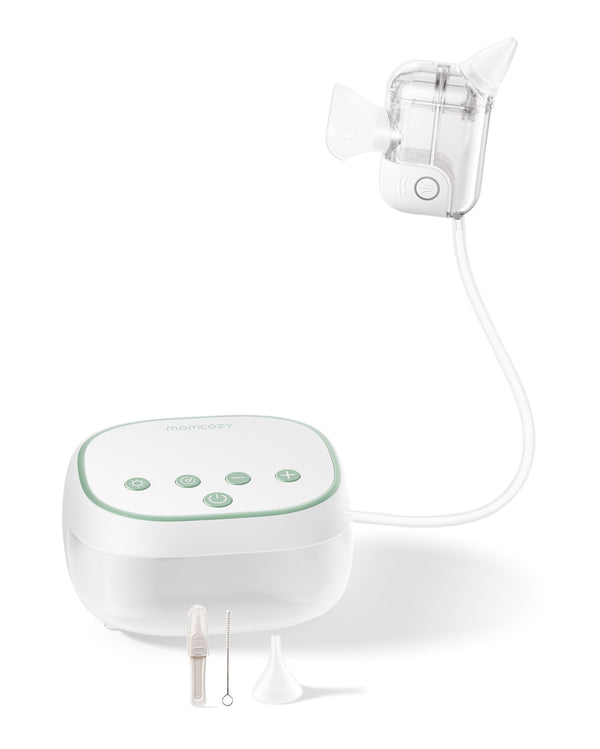
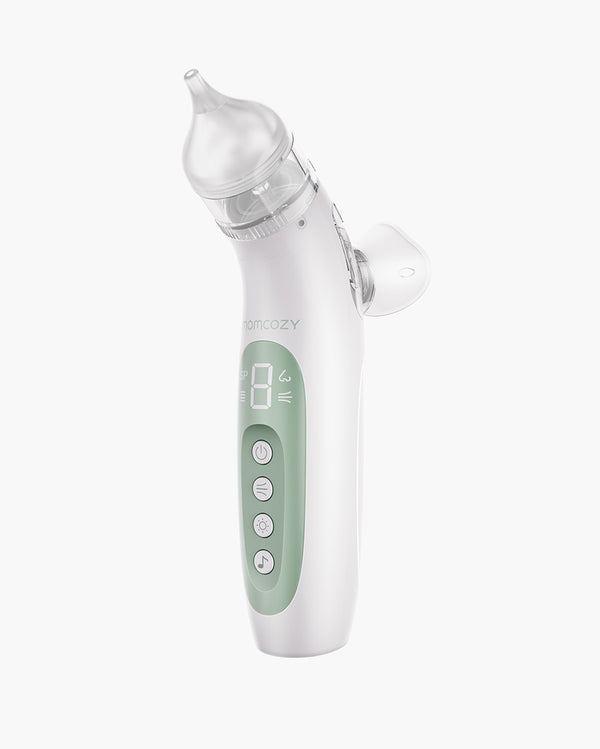
Nasal aspirators. A gentle nasal aspirator can help clear a stuffy nose for everyday comfort, separate from spit-up or feeding concerns, and isn't intended to treat breathing difficulty. Options include the Momcozy BreezyClear Pro 2-in-1 Spray & Suction Electric Nasal Aspirator and the Momcozy BreezyClear 2-in-1 Spray & Suction Electric Nasal Aspirator.
2-in-1 Design
Hospital Grade Suction
Adjustable Suction
All-in-One Storage
2-in-1 Design
Hospital Grade Suction
4 Suction Levels
Mist Spray