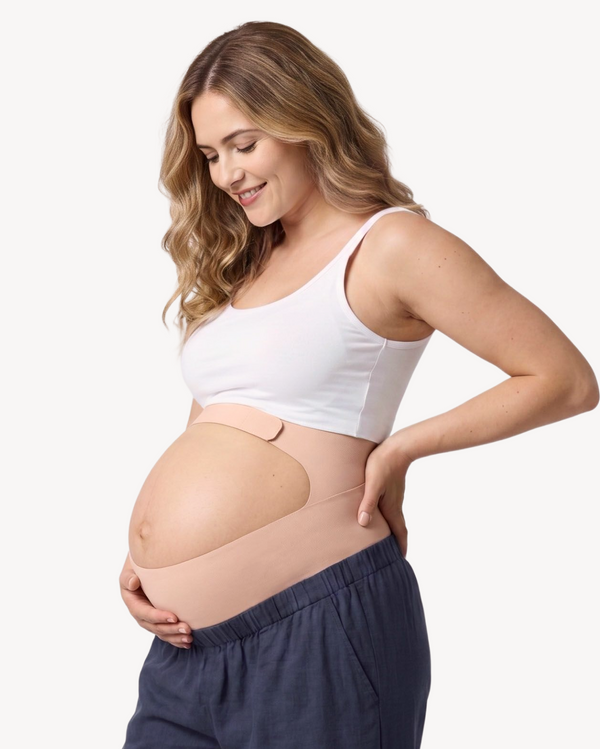
Pubic pressure in pregnancy can feel like heaviness, soreness, or extra weight at the front of the pelvis. It often becomes more noticeable as the uterus grows, posture changes, and the baby moves lower. Mild pressure can be part of pregnancy, while pain that affects walking, sleep, or daily movement may point to a pelvic joint problem that needs care.
Is Having Pubic Pressure During Pregnancy Normal?
Mild pubic pressure can be normal, especially later in pregnancy as the uterus grows and the baby moves lower.
Pain at the front of the pelvis may be pregnancy-related pelvic girdle pain, or PGP. Symphysis pubis dysfunction, or SPD, refers to pain around the joint at the front of the pelvis.
PGP affects up to 1 in 5 pregnant women and may make walking, climbing stairs, turning in bed, or getting out of a car difficult. Contact your provider if the pressure becomes painful or limits daily movement.
Causes of Pubic and Pelvic Pressure During Pregnancy
The pubic symphysis is the joint where the two sides of the pelvis meet at the front. During pregnancy, added body weight and changes in posture place more strain on this joint and the muscles around it.
Common causes of pressure in the pubic area during pregnancy include:
- A growing uterus and baby
- Changes in posture and balance
- Uneven movement in the pelvic joints
- Long periods of sitting or standing
- A previous back or pelvic injury
- A history of pelvic pain
- Activities that place more weight on one leg
The baby may also settle deeper into the pelvis during the final weeks of pregnancy. This process is sometimes called lightening. It can create more pressure near the bladder, cervix, and pubic bone, but it may happen weeks before labor begins.
What Are the Symptoms of SPD?
SPD usually feels different from general heaviness. The discomfort may be sharp, aching, burning, clicking, or grinding.
Common symptoms include:
- Pain directly over the pubic bone
- Pain while walking or using stairs
- Discomfort when rolling over in bed
- Pain when getting into or out of a car
- Trouble standing on one leg
- Clicking or grinding around the pelvis
- Pain when moving the legs apart
Pelvic girdle pain may also spread to the groin, hips, inner thighs, buttocks, or lower back. Note where the pain occurs and which movements bring it on. These details can help a healthcare provider tell PGP apart from other causes of pelvic pain.
Pressure vs. Pain
Pubic pressure usually feels like fullness, heaviness, or downward weight. Pelvic joint pain often feels sharper and is more closely linked to movement.
|
Feature
|
Pubic Pressure
|
Pelvic Joint Pain
|
|
Feeling
|
Heaviness, fullness, or downward weight
|
Sharp, aching, burning, or grinding
|
|
Timing
|
Often stronger later in pregnancy
|
Can begin during any trimester
|
|
Common Triggers
|
Standing, fatigue, or the baby’s position
|
Walking, stairs, rolling over, or standing on one leg
|
|
Usual Next Step
|
Rest, repositioning, or added support
|
Medical assessment, physical therapy, or movement changes
|
The pattern matters more than the label. A sudden change in the feeling or a rapid increase in intensity should be discussed with a prenatal care provider.
Schmerzlinderung
Komfort
Effektivität
How to Relieve Pubic Pain and Pressure
Changes to daily movement, rest, and sleep positions may reduce strain around the pubic joint.
-
Keep your legs together during certain movements. Sit while getting dressed. Keep your knees close when turning in bed, and move both legs together when getting out of a car.
-
Change positions regularly. Break up long periods of sitting, standing, or walking with short rest periods.
-
Use gentle belly support. A properly fitted belly band may support the weight of the belly while walking or standing. The BumpEase Momcozy Ergonest Maternity Belly Band has an adjustable design made to support the belly and back as the body changes.
-
Try gentle pelvic movement. Small pelvic circles on a pregnancy ball may support hip and pelvic mobility. The Momcozy BirthEase Pregnancy Ball Set can be used for supported sitting and gentle pelvic movement. Place the ball on a nonslip surface, keep your feet stable, and stop if discomfort increases.
Schmerzlinderung
Komfort
Effektivität
-
Use mild warmth. A warm shower or a wrapped warm pack on the lower back may help tight muscles relax. Keep high heat away from the abdomen.
For sleep, lie on the side that feels more comfortable. Keep your knees close together when turning, then place support between the knees and under the belly to keep the hips level.
The Huggable U Shaped Maternity Body Pillow supports the belly, back, hips, knees, and legs. The Pregnancy Pillow collection also includes other shapes for different bed sizes and support needs.
Full Body Support
Effective Pain Relief
Soft and Comfortable
Multi-Purpose Use
How Do You Treat Symphysis Pubis Dysfunction During Pregnancy?
A healthcare provider can check whether the pain comes from the pelvic girdle and rule out other possible causes. You may be referred to a physical therapist who works with pregnancy or pelvic health.
Treatment may include:
- Exercises based on your symptoms
- Changes to posture and daily movements
- Hands-on treatment from a qualified professional
- A pelvic support belt
- Temporary walking aids
- Pregnancy-safe pain relief approved by a clinician
Research on pelvic belts during pregnancy has found modest pain relief for some users. A belt should fit securely without causing numbness, breathing difficulty, skin irritation, or added pain. Early treatment can help keep symptoms manageable and make daily movement easier.
What Things Should You Avoid When Having Pubic Pressure During Pregnancy?
Movements that place most of your weight on one side or force the legs far apart can increase strain around the pelvic joints.
Try to limit:
- Heavy lifting
- Carrying bags or a child on one hip
- Standing on one leg
- Deep lunges that cause pain
- Wide squats that increase pressure
- Twisting while lifting
- Frequent stair climbing
- Sitting cross-legged when it hurts
- Continuing exercise through sharp pain
- Sitting or standing in one position for too long
Use a smaller range of motion when needed. You can also add support or switch to an activity that keeps the pelvis more stable.
Is It Normal to Barely Be Able to Walk During Pregnancy?
Pelvic girdle pain can make walking difficult, but being barely able to walk needs medical assessment. Severe pain or limited movement may require physical therapy, changes to daily activity, or temporary walking support.
Seek urgent care if walking trouble begins suddenly, follows a fall, or happens with weakness, numbness, or loss of bladder or bowel control.
Very limited movement can also raise the risk of blood clots during pregnancy. Tell your prenatal care team if pain keeps you in bed or prevents you from moving around normally.
Does Pelvic Girdle Pain Mean Labor Is Near?
Pelvic girdle pain does not predict when labor will begin. It can develop early in pregnancy and last for weeks or months.
Pubic pressure may be connected to labor when it appears with:
- Regular contractions that become stronger
- Contractions that move closer together
- Lower-back cramping that continues
- Bloody mucus
- A gush or steady leak of fluid
The baby moving lower may add pelvic pressure without starting labor. For some first pregnancies, this position change can happen several weeks before birth.
Before 37 weeks, pelvic pressure with cramping, increased vaginal discharge, back pain, or contractions may be a sign of preterm labor. Contact your prenatal provider or maternity unit right away.
When to Contact a Doctor
Contact your prenatal provider when pubic pressure is painful, getting worse, or making normal movement difficult.
Seek prompt medical care for:
- Regular or painful contractions
- Vaginal bleeding
- Fluid leaking from the vagina
- Fever or chills
- Pain or burning while urinating
- Severe or one-sided pelvic pain
- Less fetal movement than usual
- Fainting or trouble breathing
- Sudden weakness or numbness
- Pain after a fall or injury
Your provider may check your cervix, urine, pelvic joints, and the baby’s well-being based on your symptoms.
FAQs
Q1. Can Pelvic Girdle Pain Harm the Baby?
No, pelvic girdle pain does not harm the baby. It affects the joints and muscles around the pregnant person’s pelvis, though the pain can make movement difficult.
Q2. Can Constipation Feel Like Pubic Pressure During Pregnancy?
Constipation can create fullness or pressure in the lower abdomen and pelvis. It does not mean the pubic joint is injured. Contact your provider if the pressure remains after a bowel movement or becomes severe.
Q3. Is Pubic Pain More Likely in a Future Pregnancy?
A previous history of PGP can increase the chance of it returning in a later pregnancy. Early care and changes to daily movement may help keep returning symptoms manageable.
Q4. Does Pelvic Girdle Pain Affect How You Give Birth?
Most people with pelvic girdle pain can have a vaginal birth.Tell the delivery team which leg positions feel comfortable so they can support your movement and avoid unnecessary strain on the pelvis.
Choose Support That Fits Your Routine
Track which movements increase your pubic pressure and adjust your routine before the discomfort builds. Momcozy belly bands, pregnancy balls, and maternity pillows offer support for walking, gentle movement, sitting, and sleep. Choose the option that fits your body, daily activities, and prenatal care plan.