


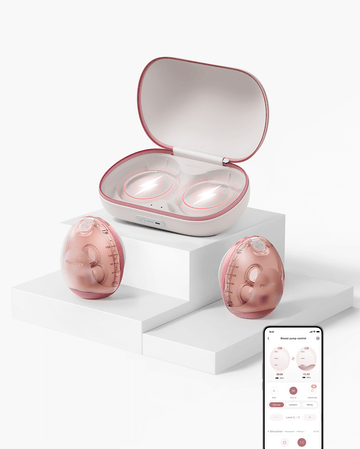
Breastfeeding is a natural and intimate bonding experience shared by you and your child, but it always brings questions and challenges to a mother like you who has a newborn. Many first-time mothers wonder if their nipple types will facilitate breastfeeding, it must be understood that no matter whether nipples are big, flat, or inverted, each nipple type is essentially suitable for lactation.
Day-one Google searches about types of nipples breastfeeding usually start from fear, not trivia. The rest of this page lists the usual shapes, then what actually helps a latch. This is general US parent education, not a personal diagnosis. See an IBCLC, your OB-GYN, or pediatrician for your own latch.
Key Takeaways
- There is no best nipple type for feeding. How readily tissue comes forward, plus a deep latch, matter more than a textbook outie.
- A baby needs nipple plus a mouthful of areola, not a perfect cylinder on the tip.
- Large nipples can make a newborn's first latches fiddly. They are not a stop sign.
- On a pinch test, true inverted nipples often retract. Many so-called flat nipples still evert with cold or a feed. A clinician can confirm the pattern.
- New, sudden inversion needs a clinician. Everyday shape variants do not.
What Are the Types of Nipples for Breastfeeding?
Types of nipples breastfeeding are usually grouped as protruding, flat, or inverted. Cleveland Clinic uses that same simple split.
- Protruding: The common outie. It sits forward of the areola at rest.
- Flat: Level with the areola at rest. Cold or a feed may still draw it out.
- Inverted: Tucks in. Grades run from a dimple to a deep retract.
- Puffy areola / Montgomery bumps: Normal oil glands, not a separate disease.
- One side different from the other: Common. Treat each side on its own latch.
If you look up pictures of nipple types, keep any photo clinical. Extra nipples are a FAQ footnote, not a main type.

Each nipple may have challenges that occur when breastfeeding. Below is the analysis of some of the problems that might arise and the possible solutions based on the varied shapes and sizes of nipples.
How to Tell Flat vs Inverted (The Pinch Test)
You cannot grade inversion from a mirror selfie. Use a gentle pinch behind the areola.
What you are testing: does it evert, stay flat, or pull in?
La Leche League describes the pinch: thumb and finger at opposite sides of the areola, then a light squeeze. If it comes forward, texts usually call that not truly inverted. If it pulls in, that pattern is often called inverted. Only a clinician can confirm your anatomy.
A nipple that pops out with cold or a feed is not truly inverted
If stimulation brings it forward, treat it as flat-at-rest, not a locked inversion. That distinction changes which tips you try first.
Pregnancy and early milk can change how they look
Hormones and fullness can flatten a usual outie for a few days. Recheck after a feed, not only at 6 a.m. when you are swollen.
Do Nipple Types Affect Breastfeeding?
Shape can change how the first week feels. It does not decide whether you are allowed to feed. Work on a good latch before you assume anatomy is the whole story.
Your nipple size and shape do not prevent successful breastfeeding but might influence how your baby is able to latch. A proper latch is when the baby draws both the nipple and part of the areola into his mouth, which can support a more effective feed. Results still vary by latch and baby.
If the nipples are not of an ordinary size and shape, it may limit how well the baby can latch on. Babies with small mouths will struggle to latch onto large nipples; flat or inverted nipples will not protrude enough to stimulate a proper latch. While common, these issues can often be eased with positioning, tools, and professional support. There is no guaranteed fix.
After a feed, a round tip is a better clue than how dramatic it looked in the mirror beforehand. A lipstick slant means go back to position, not shop for a new type.
Breastfeeding With Large Nipples (Big Nipple Lactating, Without the Myth)
Can nipples be too big for a newborn mouth?
No, your nipples cannot be too large for breastfeeding. Babies latch onto the areola - that darker circle of skin around the nipple itself. Clinicians writing about whether nipples can be too big or too small to feed land in the same place.
Therefore, the size of your nipple does not prevent breastfeeding but rather has more to do with the baby's latch. Challenges such as problem latching can be overcome by lactation consultants who can help with techniques, positions, or tools such as nipple shields. With support and patience, breastfeeding can work regardless of nipple size.
- Too Large Nipples
Possible Challenges:
- When the baby's mouth is small, latching can be challenging.
- Shallow latches to the breasts can lead to sore or cracked nipples for the mother.
- The infant gags or seems frustrated.
Remedies:
- Use a nipple shield to make the nipple so much smaller in size, thus making it easier for your baby to get a hold of. Treat a shield as a short, IBCLC-guided option, not a first-line gadget.
- Pump for a little before feeding to make the areola softer and, hence, the deeper latch for the baby.
- Try out some breastfeeding positions, such as the football hold or laid-back position, so that the baby can get to take in more of the areola.
- Long nipples
Possible problems:
- Long nipples can overstimulate the baby's gag reflex, thus creating feed interruptions.
- Babies can fail to achieve a successful latch.
- The risk of nipple pain and cracks may be more pronounced.
Solutions:
- Apply nipple stimulation with a pump or manually before feeding to encourage the baby to latch onto the areola instead of just the nipple.
- You can attempt to use a nursing pillow to help position your baby for a more secure and comfortable latch.


- Too Wide Nipples
Potential Problems:
- Wide nipples may be hard for smaller-mouthed babies to latch in onto properly.
- The inefficiency of milk transfer may lead to frustration for your baby.
Solutions:
- Compress the breast slightly with your hand to facilitate a deeper latch.
- Offer frequent, shorter feedings to prevent the baby from getting tired at feeding time.
- Too Long and Too Wide Nipples
Potential Problems:
- The combination of length and width makes it difficult to latch.
- More soreness for the mothers due to frequent shallow latches.
Solutions
- Consult a lactation consultant. Assure steps and feeding strategies tailored to your case.
- Employ nipple shields to help your baby learn your nipple size over time.
Occasionally, large nipple size may just not fit comfortably in a newborn's small mouth.
However, the situation can be managed by the hospital staff with the initiation of milk supply using a hospital-grade pump and hand expression. Frequent nursing during the initial 48–72 hours can then help establish a feeding pattern, but sometimes, if nothing else works, you may have to express milk until the baby grows in size and is able to feed satisfactorily. Early support, along with consistent efforts, can make feeding more workable with support. Success is not guaranteed.
U-hold / sandwich, football hold, laid-back — more areola, less gag
A wide gape plus the football hold or a laid-back recline often helps more than a shield on day one. Shape the breast like a sandwich so more areola goes in.
Soften an engorged areola before the latch
If the areola is tight as a balloon, hand-express a little first. A softer rim is easier for a small mouth than a rock-hard one.
If you also pump: flange fit for a larger nipple, not max suction
Match the tunnel to the nipple, not to a guess. Recheck right flange fit if you see rubbing rings. A slim in-bra cup such as Air 1 (about 61 mm / 2.4 in) can sit with less bulk when that fit is right. It does not shrink anatomy.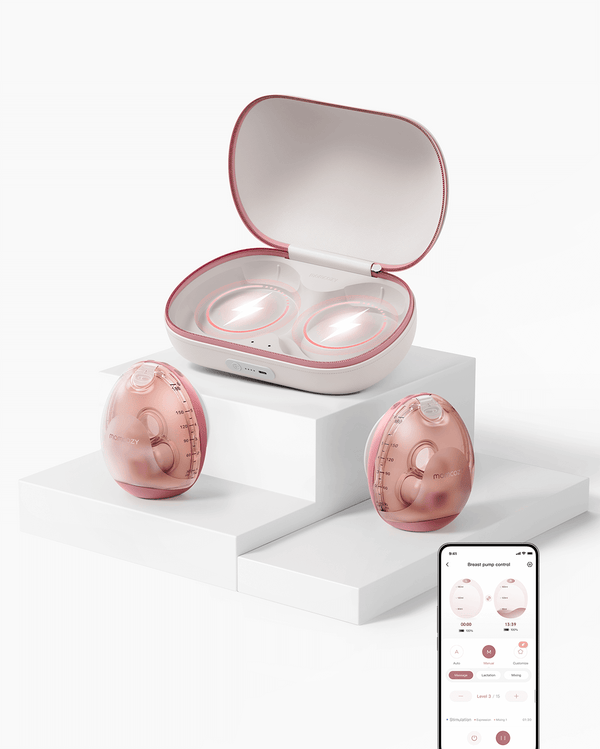

Flat and Inverted Nipples: What Actually Helps
You can feed with flat and inverted nipples. The work is a deep latch, not a cosmetic pop-out. Australian Breastfeeding Association says the same in plainer parent language.
1. Flat Nipples
Possible problems:
- Extra shallow or inverted nipples don't seem to protrude enough to be visible to the baby, particularly in the first weeks of breastfeeding.
- Engorgement can exacerbate the flatness of the nipple, and nursing becomes quite difficult.
Solutions:
- Use a breast pump or nipple shells to pull out the nipple before breastfeeding.
- Use the "sandwich" technique: Gently compress the breast so it is easier for your baby to latch.
- Visit a lactation consultant and seek help with positioning and latch correction.
2. Inverted Nipples
Possible Problems:
- Inverted nipples are sucked inward, making it difficult for the baby to attach in a normal manner.
- There’s a potential risk of reduced milk supply if feedings are inconsistent.
Solutions:
- Use tools like breast shells to encourage the nipple to protrude naturally over time. Shells are optional. They are not required pregnancy homework, and they do not medically correct inversion.
- Stimulate the nipple manually or with a pump before feeding to make latching easier.
- Introduce a nipple shield as a temporary aid while your baby learns to latch effectively.

Skin-to-skin, wide gape, sandwich hold — baby draws tissue out over time
Skin-to-skin and a wide gape let the baby draw tissue out over days. Skip prenatal stretching drills as required prep.
Brief pump or hand expression before a feed (not extra sessions all day)
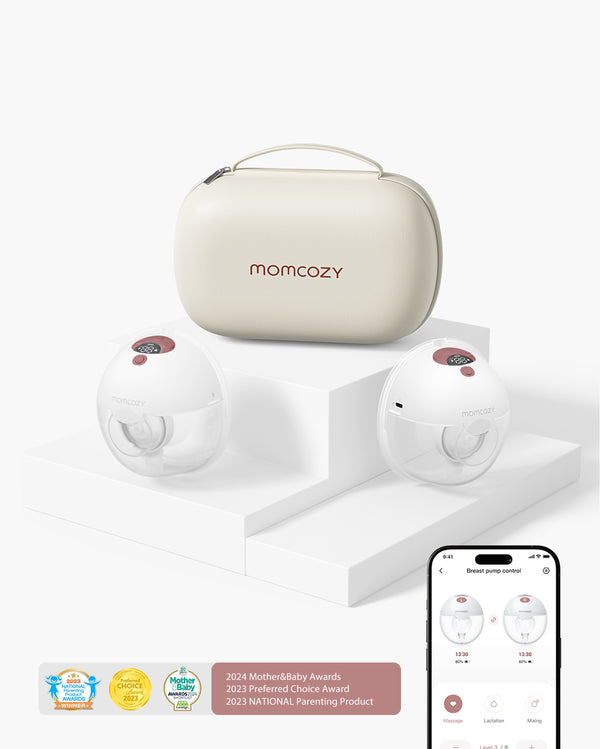
A short pre-feed draw with wearable pumps can bring a shy tip forward, then you go back to the baby. M5 Smart is handy if you want that short session logged in an app, not extra pumps all day.
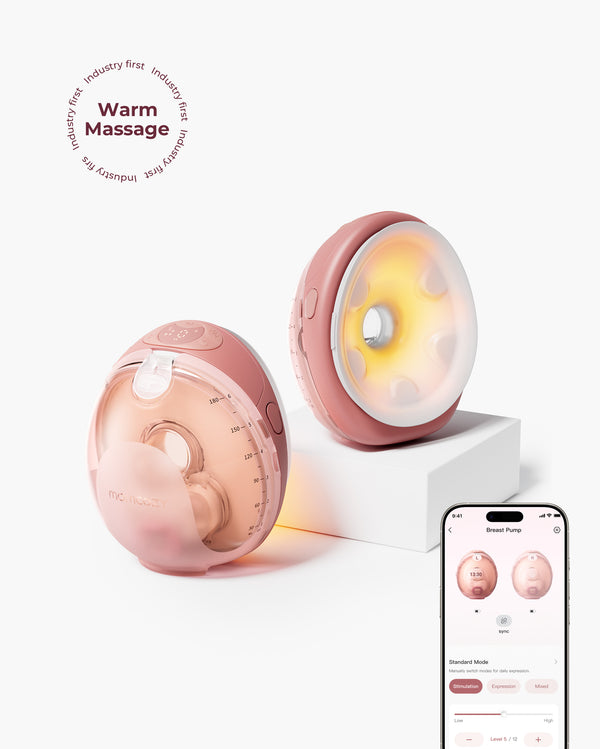
Wellness 1 warmth is optional comfort for a usual session once feeding is underway. Do not run heat-massage to yank an inverted tip out or to fix a type.
Member price
From$119.99

Engorgement can flatten even a usual outie
If you have concerns about your nipple shape and lactation challenges, you should seek help early enough. Discuss these matters beforehand with your midwife, OB physician, or nurse practitioner during pregnancy to discuss potential issues and prepare for breastfeeding.
Even after delivery, make sure your nurses and lactation consultant are well aware of your concerns so they can offer you tailored support. A lactation consultant will assist you in achieving a proper latch-a deep one that is effective without causing pain.
If engorgement is experienced, then breast massage and warm compresses applied to the areola can help soften it so that the baby may latch more easily. Skip deep massage if it hurts. Reverse-pressure softening is another option some IBCLCs teach.
Nipple shields: temporary, fitted, with a plan to wean off
A shield is a short bridge with an IBCLC, not a personality. Read how to use a nipple shield before you live in one. Piercings need jewelry out at feeds; that is a different page.
Soreness, “Damage,” and When to Get Help
Pain after the first two weeks is often a latch problem, not proof you have the wrong type
Discomfort during breastfeeding is common. It often eases when latch improves. Creams comfort skin; they do not treat a medical condition. Here’s how to soothe sore or damaged nipples:
- Apply Nipple Cream
Utilize a natural cream such as Momcozy Nipple Cream to soothe and moisturize the skin. That is comfort care, not a cure for cracks or a substitute for latch help.

- Warm Compresses
Apply a warm compress to the breasts for stimulation of milk flow and relief before feeding.
- Nipple Shields
Shields, such as the Momcozy Silicone Contact Nipple Shields, can be used to protect sore nipples and aid in latching.
- Proper Latch
Direct your efforts towards an effective latch, which will help avoid friction and anguish that should not have come during feeding.
Shallow latch vs cracked skin — fix the latch, then soothe
Cream helps skin that is already angry. It does not replace a deeper latch. If cracks keep opening, use how to heal cracked nipples as the care page, then get an IBCLC on camera or in clinic.
Call a US clinician or IBCLC for fever, sudden inversion, or a lump that does not change
Fever, spreading redness, or a brand-new inversion on one side is not a DIY shape project. Call the same day.
FAQ: Quick Answers to Common Questions
What type of nipples are best for breastfeeding?
All nipples can be used for breastfeeding. The trick is to find the right technique and support tools for a particular challenge. There is no single best type. Stretch and a wide mouth matter more than a textbook outie.
What are the different types of nipples for breastfeeding?
The usual groups are protruding, flat, and inverted. Puffy areola, Montgomery bumps, and two different sides are normal variants. Pictures should stay clinical.
Can I breastfeed with big nipples / while lactating with large nipples?
Yes. Big-nipple lactating questions are really about a newborn mouth and a deep latch, not about permission to feed. Positions and a softer areola usually help more than a shield.
How do I know if I have inverted nipples?
Use the pinch test behind the areola as a starting clue. If the tip pulls in, lactation texts often call that inverted. If it pops out with cold or a feed, it was likely flat at rest, not locked in. Only a clinician can confirm.
Can you breastfeed with flat nipples?
Yes. Many flat nipples evert during a feed. Skin-to-skin, a sandwich hold, and a brief pre-feed draw help. You do not need prenatal stretching as required prep.
Do types of nipples change during breastfeeding?
They can look different with pregnancy, fullness, and months of feeding. Elasticity often improves. A sudden new inversion still needs a clinician.
What type of nipple should I use if I am breastfeeding?
If you mean a bottle teat, that is a flow and shape choice for the bottle, not a breast type. See bottle nipple sizes. This page is about your own anatomy.
Does inverted mean more pain?
While it may be a bit more difficult at first, breastfeeding with inverted nipples doesn't have to be painful. It can be made much more manageable with the use of tools such as nipple shields and guidance from a lactation expert. Ongoing pain after two weeks is often still a latch issue. Get help rather than assuming inversion equals damage.
Conclusion
Each breastfeeding journey is unique, and though some challenges may arise due to nipple size or shape, they never actually define a mother's ability to feed her child.
Using proper techniques, tools, and support can help any mom overcome her difficulties and make nursing a gratifying experience. Every mother breastfeeding has a different experience, and every mom can create patience and perseverance in order to provide babies with what they need. Type and size change the learning curve, not eligibility. Call for poor weight gain, fever, or a new inversion. CDC has general feeding basics.








