Can your baby sleep on your chest? Many parents ask the same question once they notice that their newborn drifts off the moment they are held close. The answer is, yes, but with limitations. This guide covers a quick safety answer, how long a chest nap lasts, why babies like this position, and a step-by-step process for transitioning to independent crib or bassinet sleep when they are ready.
Quick Answer: Can a Baby Sleep on Your Chest
Yes, a baby can sleep on your chest but only under specific conditions. If you are fully awake, sitting upright, and watching a baby’s face and airway, then you can definitely let your baby have a safe supervised contact nap. You should never let your baby sleep on your chest while you are also asleep because this increases the risk of accidental suffocation. Remember, it is not recommended at any age. The sections below discuss how long this is okay for, what to do if ever your baby only sleeps this way, or how to move towards a more independent sleep.
Why Babies Like Sleeping On Your Chest? The Science Behind the Snuggles
The Science Behind the Snuggles
There's actually a reason your baby will only sleep on you. Newborns have powerful instinctual urges that attract them to the warmth and safety of a parent's body.
Being close to you is not much different from being back in the womb.
- Your Heartbeat: They heard it all day and night within you, and it's a comforting, familiar beat.
- Your Breathing: The gentle up-and-down motion is soothing, much like the motions they felt before birth.
- Your Warmth: You warm them up, something they are not very skilled at doing themselves yet.
So why do babies like sleeping on your chest? It soothes them. This closeness triggers a calming reaction in their body, allowing them to feel safe enough to sleep.
More Than Just Feeling Cozy
It is not just the physical motion and heat.
- Your Smell: Your smell is detected by your baby shortly after birth. It signifies safety and nurturing, and they feel protected when they are near you.
- Your Voice: They were used to your voice even before they were born. The vibration of your talking or humming is carried through your chest, adding another layer of comfortable familiarity.
With all of this taking place, it is why "my baby only sleeps on me" is something so many parents notice in the first few weeks.
Is It Safe for a Newborn to Sleep on My Chest
Key Safety Concerns
Even though your chest feels comforting, parents naturally worry, "Is it safe for my baby to sleep here?" It's crucial to know the risks. Groups like the American Academy of Pediatrics (AAP) point out several serious concerns:
-
Suffocation Risk: The biggest danger is the parent falling asleep. If you doze off, especially on a couch or armchair, the baby could shift into a position where their nose and mouth get blocked, or they could get trapped between you and the cushions. This is a major risk factor for accidental suffocation and SIDS (Sudden Infant Death Syndrome).
-
Developing Habits: If a baby only ever falls asleep on you, it can sometimes be harder for them to learn to fall asleep on their own in a crib later on.
How Long Can a Newborn Sleep on Your Chest
Parents often ask about the right amount of time for chest sleeping. There isn't a strict time limit for letting your baby nap on your chest while you are wide awake and paying attention. The question is not just “how many minutes”, but whether you will remain fully awake, the baby's airway stays visible, and you do not feel sleepy at all. When you feel any changes from those three, you have to move your baby to a bed or a flat sleep surface, regardless of how long the nap lasted.
However, letting your baby sleep on you while you are also sleeping is never recommended by safety experts, no matter how old the baby is. The answer to "how long can my baby sleep on me?" really depends on one key thing: Are you fully awake and alert?
For times when you are awake and supervising:
-
Newborns (0-1 month): Can enjoy these contact naps often throughout the day.
-
Young Infants (1-3 months): Can continue having supervised naps on your chest during the day.
-
Older Infants (4+ months): This usually becomes less frequent, though it may happen for comfort when they're sick or very upset.
Chest Sleeping While Awake vs. Falling Asleep With Baby on Your Chest
You might think that the two are the same, but they are entirely different. When a baby sleeps on your chest while you are awake, in an upright position, and actively watching, it is considered a supervised contact nap. This is exactly the way experts say chest naps can be done, but in moderation. However, it is a different approach when you fall asleep with your baby on your chest. Take note that once you are asleep, you cannot monitor your baby’s airway passage or position. Although some may think of it as a comforting situation, it could totally turn into a risky one. It is always better to be safe than sorry. One goal of this article is to let you know that chest naps are okay, but in moderation.
Baby Sleeping on Stomach on Your Chest: What Parents Should Know
Many babies mimic their position in their mother’s womb as it provides pressure and warmth which helps with fussiness. This position is the tummy-down against a parent’s chest and it can also be part of a supervised contact nap. But it also requires the same attention as any other chest-nap position. The baby’s face should be visible, uncovered, and within your eyesight. Their chin should not be tucked down in their chest in a way that could obstruct the airway. Remember, the tummy-down chest position should happen only while you are awake, alert, and under active supervision because once you doze off, the same risk concerns from chest-sleeping can also be applied here.
How to Make Supervised Chest Naps Safer
Maintain Alertness While Baby is On You
The most crucial safety measure when your newborn sleeps only on you is to remain wide awake and alert. This is not the moment when you can snooze in or watch a film that can get you drowsy. Bear the following tactics in mind so that you remain awake:
-
Set an alarm if you're sleepy
-
Keep a bottle of water within reach to remain hydrated
-
Have a quiet activity to do that keeps your brain active
-
Have another responsible adult with you who can take the baby if you begin to doze off
If You Start to Feel Sleepy
If you feel drowsy while your baby is sleeping on your chest, what you have to do is move your baby to a firm and flat sleep surface before allowing yourself to rest. You may find it hard to stop yourself from resting but moving your baby can save you a lot of trouble. It even removes the risk factor that experts always warn parents about. It is a good idea to practice this method before you feel tired or drowsy, so it will be an automatic response from you rather than a decision you always have to make.
Establish a Safe Position and Space
Despite close supervision, it is vital to form a safe space if your baby only sleeps on your chest:
- Position your infant so that his or her airway is not blocked and the face is uncovered
- Take loose clothing, blankets, and pillows away from your infant
- Sit upright—sofas and recliners can be particularly dangerous
- Avoid wearing garments that have strings, buttons, or other things that could pose a hazard
- Ensure the room temperature is pleasant but not hot
- Ensure the air in the nursery is clean to create an ideal sleeping environment for your baby. The Momcozy CozyBreath Baby Air Purifier gives you visual confirmation that your baby’s sleep environment is pure. Its real-time PM2.5 sensor displays the air quality, and a simple color-coded light (Green, Yellow, Red) tells you the air is clean. You can rest easier knowing that with every breath, your baby is inhaling the purest air, setting the stage for deep, restorative sleep.
Momcozy Prime Big Deals Day is Coming This June 6 - 28!
Get ready to score the biggest discounts of the season on our high-demand breast pumps, bottle washers, nursing bras, and other premium baby gear!
Momcozy Official
June 6 - June 28
Up to 60% OFF
Unlock member check-ins, early coupons, and extended sales post-event.
Shop Direct →
Amazon Store
Limited-Time Run
15% - 25% OFF
Fast shipping on all best-selling essentials. Stock is highly limited.
Shop Amazon →
Utilize Helpful Technology
New technology provides new tools that are available to aid in ensuring better safety during times when your newborn only wants to sleep on you:
-
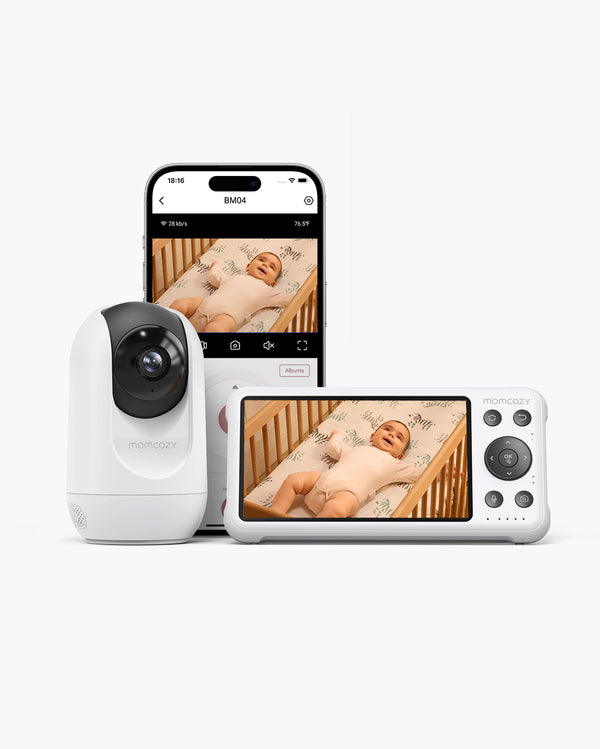
Baby monitor movement sensors can introduce an additional alertness level. Consider using the Momcozy Baby Monitor BM04 to keep a close eye on your little one.
-
Sound machines can provide a consistent soundscape that soothes both parent and child. The Momcozy Baby Sound Machine offers various sounds to help maintain a peaceful sleeping environment.
- Sleep tracking apps may help you chart patterns and shifts.
- If your baby requires constant motion to stay settled while you attend to other tasks, a baby swing can provide a safe, supervised alternative to chest sleeping, giving your arms a rest while keeping your infant soothed.
App Remote Control
Sleep-Wake Routine
7 Color LED Light
34 Sounds
App or Parent Unit
Danger Zone Alert
Storage Supported
Vox Mode
What to Do If Your Baby Only Sleeps on Your Chest
There are a few practical steps that can help you in transitioning, especially when your baby currently sleeps on your chest only. Remember, you do not have to fix this all at once.
-
Before transferring the baby to a flat sleeping surface, make sure that he/she is already in a deep sleep. Once they have settled into deep sleep, transferring becomes easier. It is usually signaled by looser limbs and slower, more even breathing.
-
Use a consistent sound cue. Using a repeated, gentle sound, like a white noise machine, played during chest naps and continued after transfer helps in bridging the change in environment.
-
Before the transfer, make sure to warm the sleeping space. A warm sleeping space helps the baby adjust nicely to the same feel as compared to your chest.
-
Start with one nap per day. Practice the transition with a single nap as it makes the process less overwhelming rather than attempting for multiple sleeping periods at once.
-
Transitioning can take some time so do not expect gradual progress. Babies need repeated practice or routine before they get used to something. It is also normal to experience setbacks during growth so do not underestimate the earlier progress.
When and How to Transition Away from Chest Sleeping
Identify Readiness Signs
When your baby only wants to nap on you, it can be hard to imagine them napping any differently. That being said, certain developmental signs indicate that your baby is ready to transition:
Finding the right body support is vital when you're managing infant sleep on chest: why babies find comfort in this close contact; many moms swear by a pregnancy pillow for that extra relief.
- Increased head and neck control
- Self-soothing (reaching for their fingers or thumb)
- Consistent sleep patterns emerging
- Increased independence when awake
- Less startling when placed on a flat surface
When you notice the baby startles less when placed down, it is often related to the startle reflex. If your baby frequently gets startled whenever transferring or moving, check our guide on newborn flailing arms and understand why this happens.
Apply Effective Transition Strategies
Moving from "my infant only sleeps on me" to independent sleep doesn't have to happen overnight. These gradual approaches can ease the process:
The warmth transfer: Warm the crib sheet with a heating pad (removing it before placing the baby down) to minimize the temperature change from your chest.
The scent connection: Place a t-shirt you've worn near the crib (not in it) so your scent remains part of their sleep environment.
The gradual retreat: Begin by having your baby fall asleep on your chest, then carefully transfer them to their crib. Over time, try placing them in the crib when they are drowsy but awake.
Consistent companionship: Transitioning doesn't mean losing that bond. Using a high-quality baby stroller during your daily walks allows your baby to stay close to you and feel your presence at all times, providing a sense of security similar to sleeping on your chest while helping them get used to their own space. A baby carrier works well here too. It basically allows you to stay close with the baby while hands-free, especially during awake daytime. It is also meant as a daytime soothing tool, not a complete sleep replacement.
The consistent comfort: Maintain other soothing elements like white noise, gentle swaying, or singing that were part of your chest-sleeping routine. A wearable baby sleep sack can help in recreating some of the secure, snug feeling of chest contact without loose blankets in the crib. It is often done once your baby is settled on a firm, flat sleeping surface, making it more familiar during the transition period.
As your baby begins transitioning to independent sleep, you’ll also start introducing them to other stages of growth. A baby high chair can be a helpful tool when they start sitting up and exploring solids, giving them a comfortable and secure place during mealtime.
5 Modes
Safety Design
Lifelong Use
Ease of Cleaning
Build Stronger Sleep Foundations
As you transition from "my baby will only sleep on me" to independent sleep, focus on creating an environment and routine that promotes healthy sleep habits:
- Establish a consistent bedtime routine that signals sleep time
- Create a sleep environment that's dark, relatively quiet, and at a comfortable temperature
- Respond promptly to needs but allow some space for self-soothing
- Consider a sleep consultant if the transition proves particularly challenging
Beyond Chest Sleeping: Safe Sleep Best Practices
The ABCs of Safe Sleep
Medical organizations worldwide advocate the "ABCs" of safe sleep when addressing concerns such as "Is it safe for a newborn to sleep on my chest?":
A - Alone: Babies should sleep in their own space, not sharing a surface with others.
B - Back: Always place babies on their backs for sleep. If your baby finds it hard or does not sleep on their back, check the article on baby won’t sleep on back as it explains common reasons and solutions.
C - Crib: Use a safety-approved crib, bassinet, or portable play yard with a firm, flat mattress.
Creating an Optimal Sleep Space
When transitioning from "newborn sleeping on chest" to independent sleep, your baby's sleep environment should be:
- Free of pillows, bumpers, blankets, and stuffed animals
- Maintained at a comfortable temperature (68-72°F/20-22°C is often recommended)
- Equipped with a firm mattress that fits snugly in the crib frame
- Located in your room for the first 6-12 months, but on a separate sleep surface
Finding Middle Ground
While following safe sleep guidelines is crucial, many families find ways to balance safety with the reality of "my newborn only wants to sleep on me":
To explore products that can improve your baby's sleep environment, baby sound machines and baby monitors are must-haves! Don’t forget the basics too—tools like a baby nasal aspirator not only support better breathing but also contribute to a safer, more comfortable sleep routine. For newborns who are still not yet rolling, a fitted newborn swaddle can also help in settling them in a firm sleep surface. It allows babies to follow safe swaddling guidance and stops them with it as soon as they show early signs of rolling.
FAQs
Can my newborn sleep on my chest while I am awake?
Yes, your newborn can sleep on your chest while you are awake. That is as long as you are alert and capable of monitoring them. If you feel sleepy, it’s better to not let them sleep on your chest. Transfer your baby to a firm sleeping surface.
Is it safe for a baby to sleep on my chest at night?
Letting your baby sleep on your chest at night is less safe than in the morning. You may fall asleep easier, which means your baby will be unsupervised. Therefore, it is safer for them to lie on a flat, firm surface, like what the American Academy of Pediatrics recommends.
Can my baby sleep on their stomach on my chest?
You can let them sleep on your chest on their stomach, but you need to be careful. Your baby’s face should be visible. Their nose and mouth should not be covered by your clothes or anything. It helps prevent blocking their airways. Stay alert, and transfer your baby to a better sleeping surface when you feel sleepy.
What should I do if I feel sleepy while my baby is sleeping on my chest?
If you feel that you are getting drowsy, immediately - but gently - move your baby onto a flat, firm surface. If there is another adult in the room, ask them to monitor your baby while you sleep. Do not wait for you to be too sleepy before transferring your baby.
How can I transition my baby from chest sleeping to a crib or bassinet?
Keep your baby’s head and body supported by your hands as you move. Then, gently lower them into their crib or bassinet. Rocking or singing/playing a lullaby can help keep them asleep while you are transferring them.
When do babies stop needing contact naps?
It is different from baby to baby. Some stop needing contact naps earlier, while others need it until they are a bit older. But usually, babies stop needing to sleep on their parents’ chest when they are 4 - 6 months old. It depends on your routines and your baby’s preference.
Why does my baby only want to sleep on my chest?
It's instinctive comfort: on your chest your baby feels your warmth, hears your heartbeat, smells you, and feels the rhythm of your breathing — all reminders of the womb. This closeness lowers their stress and helps them settle. Wanting contact to sleep is completely normal newborn behaviour, not a habit you've created.
Is it safe for a newborn to sleep on my chest?
It's safe only while you are fully awake and watching your baby. Supervised chest time and contact naps are fine and even beneficial. The danger comes if you might doze off, because a sleeping adult can't protect the baby's airway. For any sleep where you could fall asleep, place your baby down separately.
Why is chest sleeping dangerous if I fall asleep?
If you drift off, your baby can press their face into your body or bedding and be unable to move, blocking their airway, or they can slip and fall. On a sofa or armchair this risk is especially high. These situations are linked to suffocation and sudden infant death, which is why falling asleep together this way is unsafe.
How long can a baby sleep on my chest?
There's no set time limit — what matters is that you stay fully awake and alert the entire time, so short contact naps while you're up and watching are fine. The moment you feel you might fall asleep, move your baby to their own safe sleep space. Don't use chest sleeping for long night-time stretches.
How can I make chest naps safer?
Stay awake and attentive, sit reclined rather than lying flat, and keep your baby's face visible with their chin off their chest so the airway stays open. Avoid sofas, armchairs, and soft bedding, and skip chest naps if you're very tired, on medication, or have had alcohol. Treat them as supervised cuddles, not unattended sleep.
What's the safe way for my baby to sleep instead?
Follow the AAP "ABC" rule: babies sleep safest Alone, on their Back, in a Crib or bassinet with a firm, flat mattress and nothing else inside — no pillows, bumpers, or loose blankets. Keeping the baby in your room, but on their own surface, for the first 6–12 months further lowers the risk of SIDS.
Is it normal that my baby won't sleep unless held?
Very normal, especially in the newborn weeks, when babies crave contact and haven't yet learned to settle alone. It's tiring but temporary, and it eases as they mature over the first few months. Wanting to be held isn't spoiling — but for actual sleep, transferring them to a safe surface keeps them protected.
Will letting my baby nap on my chest create a bad habit?
No — contact naps meet a real need for closeness in the early months and won't spoil your baby or doom them to never sleeping alone. As they mature, they gradually learn to settle more independently. Enjoy supervised cuddles now; when you're ready to move them to a crib, see our tips on putting a baby down without waking them.
Take Action Now for Better Sleep
The process of moving from "my baby will only sleep on me" to sleeping on their own is priceless and challenging. Understanding why newborns prefer to sleep on your chest enables you to appreciate this inherent action while making the right decisions regarding safety. Remember that every transition takes time, and your consistency and patience will enable your baby to form good sleep habits that they can benefit from throughout childhood.