


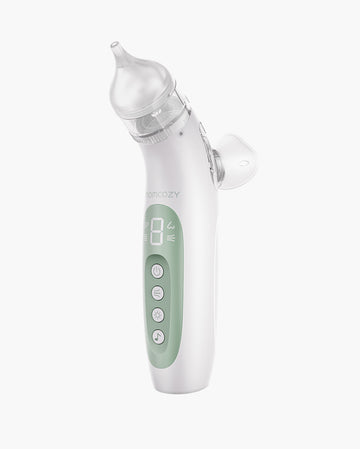
When your baby sounds stuffy, the hardest question is often not how to suction, but whether another session will help. A baby nasal aspirator can support comfort when nasal mucus is clearly disrupting feeding, sleep, or calm breathing, but routine suction is not necessary for every snort or grunt. Knowing when to use a nasal aspirator on a baby comes down to watching how congestion affects them and reassessing before each session. Feeding difficulty, disrupted sleep, visible blockage, and breathing comfort can help you decide when suction may be useful, while irritation or other warning signs may mean it is time to stop and contact your pediatrician.
Key Takeaways
- Use a nasal aspirator when mucus clearly disrupts feeding, sleep, or comfortable breathing rather than following an automatic daily schedule.
- Some hospital guidance sets a daily limit for bulb suction, but device instructions and your pediatrician’s advice should guide your baby’s care.
- Suctioning before a feed may make eating easier, while suctioning immediately afterward can trigger gagging, spit-up, or vomiting in some babies.
- Stop and reassess if the nostrils become red, swollen, sore, or bloody, or if repeated attempts remove little mucus without improving comfort.
- Fast or labored breathing, blue color, marked feeding changes, fewer wet diapers, unusual sleepiness, or fever in a young infant need medical attention.
The Short Answer: Use It for Function, Not for Every Noise
Use suction when nasal blockage is interfering with feeding, sleep, breathing comfort, or settling. A baby who is comfortable does not need preventive suction simply because a certain amount of time has passed.
“As needed” becomes easier to judge when you watch what your baby is doing rather than focusing only on how the nose sounds. Repeatedly unlatching to breathe, struggling to settle because the nose is blocked, or visible mucus blocking the nostrils are more useful clues.
Frequency also varies by device, age, and individual needs. A limit written for a bulb syringe should not automatically be applied to every electric or oral aspirator. Gentle technique matters as well. Keeping nasal suction shallow and focused on removable mucus helps avoid turning an ordinary stuffy nose into repeated, unnecessary suction attempts.

Is It Nasal Congestion—or Normal Newborn Snorting and Grunting?
Newborns can be surprisingly noisy. Snorts, grunts, wet-sounding breaths, and other unfamiliar noises do not automatically mean there is mucus available to suction.
For normal newborn noise versus congestion, pay more attention to function. Visible mucus, repeated pauses or unlatching during feeds, trouble coordinating sucking and breathing, or congestion that repeatedly interrupts sleep are more useful signs than sound alone.
Do not try to diagnose reflux, allergies, infection, or another condition from a sound. If a breathing noise is new, persistent, or difficult to describe, recording a short clip can help your pediatrician understand what you are hearing.
The location of the mucus matters too. A nasal aspirator can remove mucus from the nose, but mucus already in the throat needs to be cleared by coughing rather than nasal suction. That is one reason a baby can still sound congested even when little or no mucus comes out of the nose.
When to Use a Nasal Aspirator: A Scenario Decision Table
| Situation | Suction Now? | Reason / Next Step |
|---|---|---|
| Before feeding, and the nose is visibly blocked or baby repeatedly unlatches | Often reasonable | Clear gently before the feed, following the product instructions and any guidance from your child’s clinician. |
| Before a nap or bedtime, and congestion is making it hard to settle | May be reasonable | Use a brief, gentle session only when the blockage is affecting comfort. |
| Baby sounds noisy but is feeding, sleeping, and breathing comfortably | Usually wait and observe | Sound alone does not prove that there is removable nasal mucus. |
| Thin, runny mucus is already at the nostril opening | Try wiping first | If mucus can be removed from the outside, suction may add unnecessary irritation. |
| Mucus is thick or dry | Soften first | Plain infant-safe saline or a device-specific mist may help loosen the mucus. Avoid forceful or repeated suction attempts. |
| Immediately after feeding | Avoid when possible | Suctioning after a feed may trigger gagging or vomiting in some babies. |
| Breathing is fast or labored, color changes, or feeding drops significantly | Do not rely on suction | Seek prompt medical assessment. A nasal aspirator does not treat the underlying cause of breathing or feeding problems. |
Timing matters because suction tends to be most useful when congestion is affecting something the baby needs to do. When a baby is congested, clearing the nose before feeding can make breathing, sucking, and eating easier.
How Often Can You Suction a Baby’s Nose?
Before each session, look at what the congestion is doing. If it is still interfering with feeding, sleep, or comfortable breathing, another gentle session may be useful. If your baby is comfortable or the last attempt did not help, there is usually no reason to suction again just because a certain number of hours have passed.
For bulb syringes, Nationwide Children’s limits suctioning to no more than four times a day to avoid irritating the nose. That number applies to its bulb-syringe instructions and should not be treated as a universal limit for every nasal aspirator.
Your device instructions or pediatrician may recommend a different limit. When more than one instruction applies, follow the more restrictive guidance for that baby and device.
Daily suction during a period of real congestion may sometimes be appropriate when it stays gentle and limited. Daily preventive suction is not automatically needed when your baby is comfortable.
Before Feeds, Naps, and Bedtime: Choosing the Most Useful Moment
Before feeding: A blocked nose can make sucking and breathing harder to coordinate. Suction is most useful when congestion is actually interfering with the feed.

Before naps or bedtime: Consider suction when blockage makes settling difficult. The goal is to improve comfort, not to make every breath completely silent.
After feeding: Avoid immediate suction when possible. Nationwide Children’s recommends using saline and suction before a feed because suctioning afterward may cause vomiting.
The same symptom-led approach applies at daycare or while traveling. Keep the needed parts clean and dry, but being away from home is not a reason to suction more often.
What to Try Between Suction Sessions
Not every stuffy moment needs another round of suction. When mucus is thick or sticky, plain saline can add moisture and thin the mucus before suction. Softer mucus can move with less friction and may become easier to remove from the nostril opening.
Using saline does not mean suction must follow every time. If mucus moves to the entrance of the nostril, gently wiping it away with a soft tissue or cloth may be enough.
A humidifier may also help keep dry nasal passages moist when it is used and cleaned correctly. Avoid medicated nasal drops or folk remedies unless a qualified healthcare professional specifically recommends them.
Signs You May Be Suctioning Too Often
Redness, swelling, soreness, small streaks of blood, increasing distress, or worsening irritation after repeated suction are reasons to stop and reassess.
An unsuccessful session is useful information too. If very little mucus comes out and your baby does not feed, settle, or breathe more comfortably afterward, immediately repeating the process may add irritation without solving the problem.
If your device has adjustable suction, follow the product instructions rather than changing settings simply because one attempt did not work. Choosing nasal aspirator suction levels is a separate control decision from deciding whether another session is needed.
Repeated daily suction can also irritate already sensitive nasal tissue. The question of whether it is safe to use a baby nasal aspirator every day depends on how often it is used, how gently it is used, and whether irritation is developing.
Does Age or Aspirator Type Change the Decision?
Yes. Newborns have small, sensitive nasal passages, so the age guidance for the specific product and advice from your pediatrician should take priority over general online instructions.
Bulb syringes, oral aspirators, and electric models also differ in suction control, tip design, cleaning, and operating instructions. That is why one frequency rule cannot safely apply to every device.
Keep the tip at the nostril entrance as directed. Use the lowest effective setting where adjustable, according to the product instructions.
Electric and manual nasal aspirators create suction in different ways, while bulb, oral, and electric aspirator types can differ in control, cleaning, and day-to-day use.
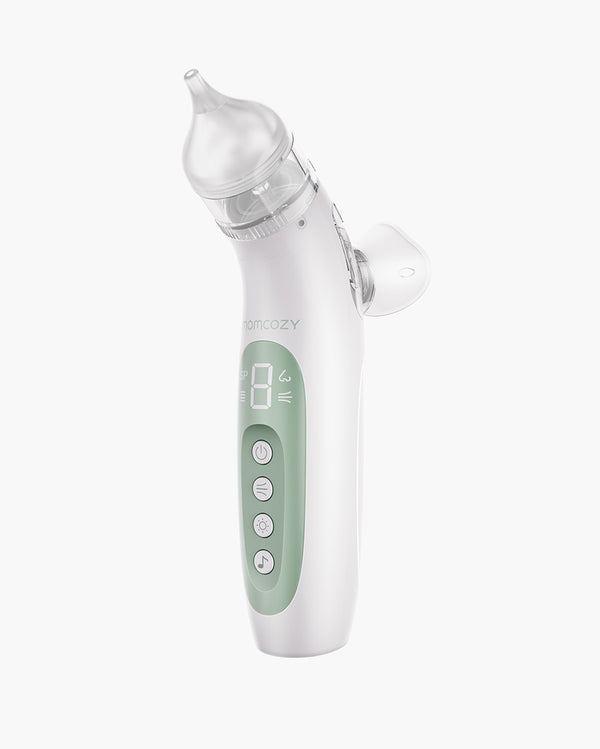
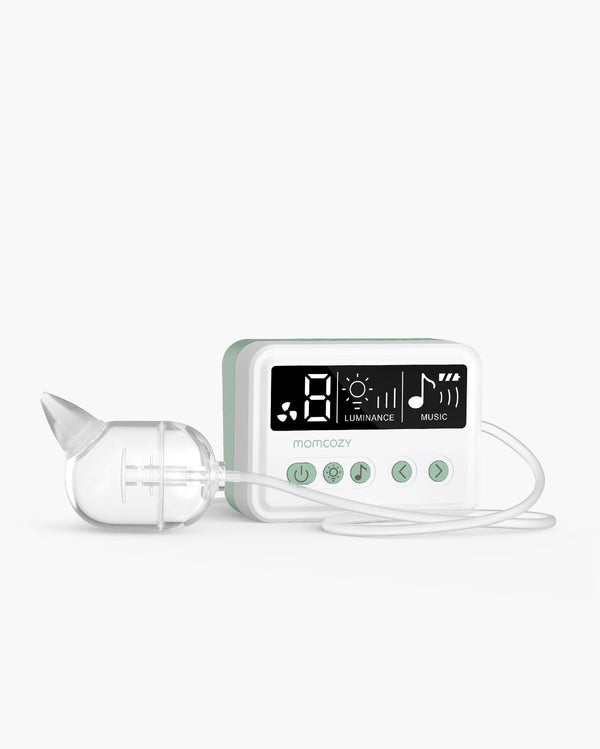
For families who prefer mist preparation and powered suction in one device, the Momcozy BreezyClear™ 2-in-1 Electric Nasal Aspirator combines a mist function with four adjustable suction levels. Current product guidance states that it is designed for ages 2–12; children under 2 should use it gently under pediatric guidance.
When Your Baby Fights the Aspirator
A resistant baby can turn a quick care task into a stressful one. Prepare the device and supplies first so you are not assembling parts while holding a moving child.
Keep the attempt brief, speak calmly, and pause if distress keeps increasing. Avoid making forceful restraint part of the routine. If every attempt becomes a struggle, a pediatrician or other qualified clinician can demonstrate appropriate positioning and technique.
Crying may simply mean your baby dislikes the experience. Persistent or unusual distress together with redness, swelling, or bleeding is a stronger reason to stop and reassess before trying again.
When Suction Is Not Enough: Call the Pediatrician
A nasal aspirator is designed to remove reachable nasal mucus. It does not treat bronchiolitis, pneumonia, reflux, allergies, or another underlying cause of congestion.
Watch the whole baby rather than focusing only on the nose. Fast or labored breathing, chest pulling in with breaths, flaring nostrils, a marked drop in feeding, fewer wet diapers, or unusual sleepiness can signal a problem that needs medical attention. Fever in a young infant also requires age-appropriate medical advice.
Home care is broader than suction alone. Keeping nasal passages moist and offering frequent feeds can support comfort and hydration during congestion, while rapid or labored breathing, retractions, or signs of dehydration are reasons to involve a healthcare professional rather than relying on another suction session.

FAQs About Nasal Aspirator Timing and Frequency
Can I Suction One Nostril if Only One Side Looks Blocked?
Yes. If blockage is clearly limited to one nostril, care can be targeted there rather than suctioning a clear nostril unnecessarily. Follow the device instructions and stop if the tissue becomes irritated.
Should I Cover the Other Nostril While Suctioning?
Do not improvise this step. Technique varies between bulb, oral, and electric aspirators, so follow the instructions supplied with your device or ask a healthcare professional to demonstrate the correct method.
Can a Nasal Aspirator Remove Mucus From My Baby’s Throat or Chest?
No. Consumer nasal aspirators are intended for nasal mucus. They do not remove mucus from the chest, and mucus already in the throat should not be suctioned with a consumer nasal aspirator.
What if No Mucus Comes Out?
Stop rather than increasing force or immediately repeating the attempt. Reassess whether the sound is actually caused by nasal blockage. Thick mucus may need softening, while some congestion sounds come from tissue swelling or mucus the device cannot reach.
Can I Use an Aspirator While My Baby Is Asleep?
A calm, safely supported moment gives the caregiver better control of device placement. Avoid introducing a device when sudden movement could affect positioning, and follow the instructions for the specific aspirator.
How Do I Count a Suction Session?
For practical tracking, treat one short care episode addressing the nostril or nostrils that need attention as one session. Then apply any frequency limit given by the device instructions or clinician.
Conclusion: Let Symptoms, Not the Clock, Decide
How often you should suction a baby’s nose depends more on what the congestion is doing than on a fixed timetable. Observe first, soften thick mucus when appropriate, suction gently when blockage affects feeding, sleep, or comfortable breathing, and reassess before doing it again. If repeated suction is not helping, irritation appears, or symptoms go beyond a stuffy nose, stop and seek medical advice. Momcozy’s baby nasal aspirator collection includes options with different control and care features for families choosing a device that fits their routine.








