


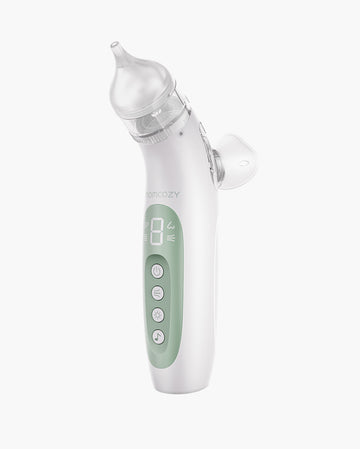
There is no specific timeline for newborn congestion as it varies based on what is causing the nasal congestion. When you ask how long does newborn congestion last keep in mind that symptoms of the common cold usually clear within 7 to 10 days, but a runny nose may linger for up to 14 days. Because their nasal passages are so tiny, newborns can sound congested all the time. The sound may indicate that the newborn is recovering from an illness and be separate from the typical symptoms of the cold. If there is the presence of mucus, the baby nasal aspirators will help to give nasal support by ensuring that the mucus is removed. However, suction will not reduce the time taken for the disease to heal.
Key Takeaways
- There is no universal period that is valid in all instances of newborn congestion. The length of time depends on what causes the congestion and the overall health progress of the baby.
- If the congestion occurs as a result of a common cold, many cases usually clear up in 7 to 10 days. Nasal drainage may persist for about 7 to 14 days if the other symptoms of the cold are clearing up.
- A newborn may still be congested even if there is a minimal amount of mucus. This is due to the small size of the baby’s nasal passages, and even minimal amounts of mucus become apparent in babies.
- Day 10 and Day 14 are not universal time periods in all cases of newborns. Congestion because of the common cold may have its own unique timetable as compared to stuffy newborns who are not infected.
- Pediatric review may be needed for newborns if symptoms are not improving.
- Symptoms such as breathing problems, poor feeding, color change, signs of dehydration, fever in a young infant, or worsening symptoms are more concerning than the number of days and should come first.
Why There Is No Single “Normal” Duration for Newborn Congestion
Congestion is a sign and not a condition, and thus, it is not bound to follow a set timeline. A baby having a cold may experience congestion that slowly gets better, while a newborn whose nasal breathing is just stuffy may experience congestion differently. Drying of the air or irritants in the nose may also cause congestion to come and go.
It is also important to differentiate between the presence of mucus and congestion in the nose. Babies could have either a runny or congested nose with clear mucus, while other babies could be stuffy without any or very little mucus at all. This will help understand why some babies are still stuffy even after they become free from cold symptoms.
A Cold Has a Timeline; a Congested Sound Does Not Always
Cold congestion tends to follow the general course of the illness and slowly gets better. Occasionally, a baby will sound congested but have very little visible mucus. This is why counting how many days have passed won’t always show whether things are really getting better.
Newborn Noses Are Tiny, So Sound Can Outlast Visible Mucus
Because newborns have tiny nasal passages, even a small amount of mucus can make their breathing sound congested. This can result in a baby sounds congested but no mucus scenario, where the noise is still present, but there is not much to clear.
|
Pattern |
What the timeline may look like |
|
Common cold |
Usually gets better in 7 to 10 days; drainage from the nose may continue for a few more days |
|
Newborn stuffy sound |
Does not necessarily go with the illness course due to smaller passages that would make normally quiet sounds louder |
|
Dryness or irritation |
May fluctuate according to the surrounding environment and does not necessarily follow a fixed number of days |
|
Persistent or recurrent congestion |
Needs to be evaluated according to the whole pattern of the illness along with other symptoms |
If It Is a Common Cold, How Long Can the Congestion Last?
If you are curious about how long congestion lasts in newborns, a runny nose or common cold tends to resolve after 7 to 10 days. Many pediatric sources say that recovery from a cold happens within this time frame. Nasal drainage can sometimes go on for 7 to 14 days. A cough might also stay around even after the nasal symptoms start to get better.

Days 1-3: Symptoms May Still Be Building
In a few days, congestion can still develop, and other cold symptoms may also appear. Your baby may have a stuffy or runny nose, and the amount of mucus can change during the day. At this point, it may be too early to know how long the illness will last.
Around The First Week: Look For a Trend Toward Improvement
By the week, most simple colds should start to get better. Your baby may have less mucus coming out of the nose or breathe easily for longer periods. Getting better doesn’t always mean all symptoms go away at the time.
By About 10-14 days: Persistent Symptoms Deserves a Closer Look
Nasal congestion and drainage can persist for 10 to 14 days with a cold, so watch for a steady trend toward getting better rather than on the precise day. When your baby's congestion isn't improving or begins to interfere with your baby's breathing or eating, it’s time to see the doctor.
In case of coughing along with stuffiness without fever, refer to baby stuffy nose and cough with no fever for more specific guidance.
|
Timeline |
What to Look For |
|
Days 1-3 |
Cold symptoms may still be developing |
|
Around 1 week |
Look for gradual trend toward improvement |
|
About 10-14 days |
Persistent or worsening symptoms deserve a closer look |
What If Your Newborn Has Sounded Stuffy Since Birth?
If your newborn baby has been stuffy since birth, it is not necessarily an indication that they have been sick with a cold or other illness that entire time. Small nasal passages make any mucus present sound congested, and the normal breathing sounds of newborn babies can worry parents as well.
“Sounds Congested” Is Not The Same as “Still Sick”
A stuffy sound doesn’t always mean an infection is still around. If your baby has no mucus, seems happy, is eating well, and isn’t struggling to breathe, the stuffy noise may not follow the usual 7 to 10-day timeline that comes with a cold.
This is also why asking how long does newborn stuffy nose lasts doesn’t have a single answer. A nasal sound with no mucus might stick around longer than a cold with a clear nasal drainage.
Image File Name: baby-having-nose-wiped-with-tissue

When a Long-lasting Newborn Sound Deserves Evaluation
Constant congestion should not be automatically seen as a sign of normality. If the problem is very severe, keeps getting worse, is associated with difficulties breathing or feeding, or if your baby is generally not feeling well, you should seek medical help from your baby’s pediatrician. This is especially important if the signs are not gradually improving.
If there is not much, or any, mucus to clear, suctioning will probably not get rid of the problem.
Instead, try to look for other signs such as how your baby breathes and feeds. For the full details, see the baby sounds congested but no mucus guide.
What Should Improvement Look Like From Day to Day?
If you are wondering how long newborn congestion lasts, it is best to monitor your baby on a daily basis. You will know that breathing is getting easier when you see that the mucus is less, that feeding is more relaxed, and that your baby can lie still for longer. Some runny nose and cough may remain even after the illness gets better.
Signs The Congestion Is Trending Better
A gradual improvement is far more helpful than hoping for symptoms to disappear suddenly. This can include your baby having less nasal mucus, being more comfortable during feeding times, or needing less nasal treatment due to reduced mucus to remove. All of this would be a sign that the congestion is improving.
The color or consistency of the nasal mucus is not enough to determine if the illness is progressing or not. You should still look at the complete pattern. Your baby could still have mucus despite being well and recovering gradually.
Signs The Pattern Is Not Improving
If symptoms stay the same for days, notice whether there is any overall improvement. A plateau without concerning symptoms is different from active worsening. However, if congestion keeps going past the cold period, it’s worth taking a closer look.
|
Trending Better |
Not Clearly Improving or Worsening |
|
Easier nasal breathing |
Breathing becomes more difficult |
|
Less or less-frequent removable mucus |
Congestion remains unchanged for several days |
|
More comfortable feeding |
Feeding becomes difficult or less comfortable |
|
Longer comfortable periods |
Baby seems increasingly unwell |
|
Fewer signs of discomfort |
New concerning symptoms develop |
What If Congestion Lasts Longer Than 10-14 Days?
If you are faced with newborn congestion for weeks, you might want to take a closer look at the timeline, particularly in the absence of any sign that cold‑like symptoms are abating. Snot from a cold can linger for as long as two weeks. Seattle Children’s says to call a health professional if nasal discharge continues beyond 14 days. Mayo Clinic notes that a typical cold often clears up in about 10 to 14 days. It advises contacting a doctor if symptoms worsen or fail to get better.
Still, a cold lasting 11 or 15 days doesn’t automatically mean something is wrong. Babies can recover at different rates, and persistent congestion can have different explanations.
Persistent Does Not Automatically Mean Serious
A stuffy or runny nose that lasts longer than usual doesn’t always mean there is something going on. Sometimes the symptoms just stick around as a baby slowly gets over a cold. The longer symptoms persist without obvious improvement, the more likely that this is no longer just a common cold with a residual cough.
As far as babies and newborns are concerned, it's best to call a pediatrician sooner rather than wait out any preset number of days. More information on what may help with congestion can be found in the pediatrician baby congestion relief guide.
But Persistent or Worsening Symptoms Deserve a New Assessment
If the stuffy nose has lasted beyond the expected cold window and there's no clear sign of getting better, or if the baby's congestion is not going away, talk to the baby's doctor. The same applies if the symptoms are getting worse or if there are changes in how the baby breathes, eats, drinks, or acts, in general.
What Can You Do While the Congestion Clears?
At this point, supportive care can ease breathing and feeding. The goal is that you shouldn't attempt to speed up the process—you just want to make your baby comfortable while it's happening. In certain situations, saline, fresh air, and suctioning mucus can be beneficial.
Add moisture
Nasal mucus may also be thicker and stickier when air is dry. A cool-mist humidifier with a clean filter can help moisten the air in your room, and saline drops or spray may help to thin mucus so it can be cleared when necessary. Clean the humidifier regularly and follow the care instructions of the manufacturer.
Clear mucus only when it is really there
The benefit of nasal suction comes into play only if there is really mucus, which interferes with your child’s comfort, ability to breathe through the nose, or feeding. There is no need for suction if a certain number of days has passed.
If you are in doubt about when and how often to use a nasal aspirator, refer to the dedicated guide for more guidance. For dry or hardened mucus, check out a guide on how to handle hard or dry baby boogers.

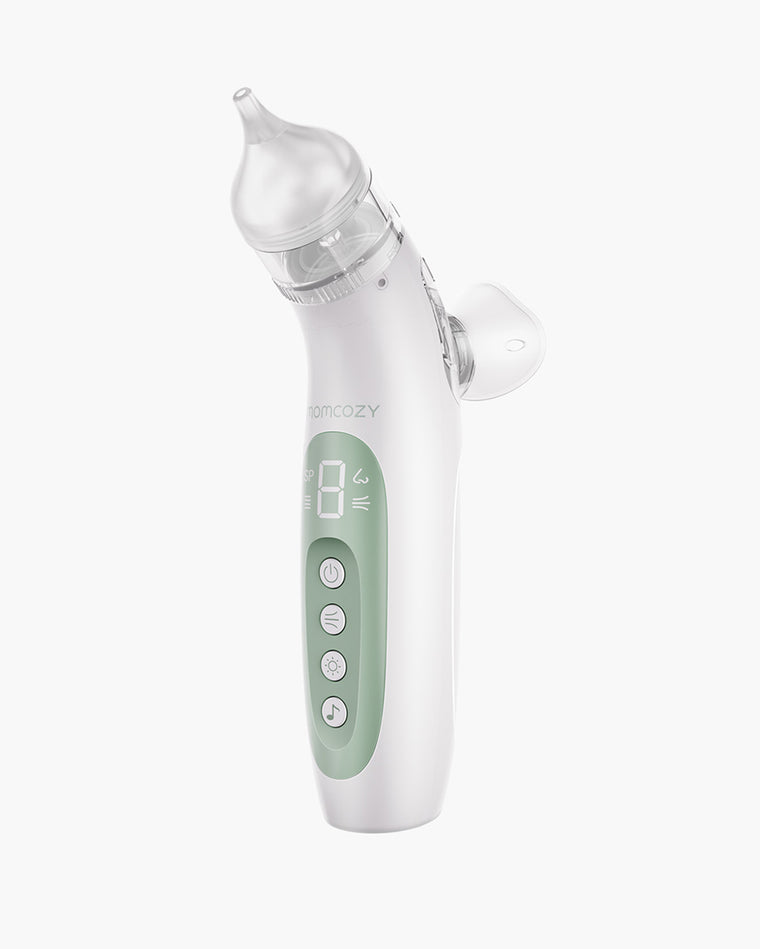
If you want to suction loosened or visible mucus, you can try a nasal aspirator like the BreezyClear™ 2-in-1 Electric Nasal Aspirator. It will help drain the mucus, but will not treat the duration of the illness or determine its cause.
Support comfort without trying to “speed-run” the illness
Keep your baby’s sleep surface firm and flat. Do not prop up the mattress, or use pillows, positioners, or other unsafe sleep aids to relieve congestion. Also, do not give young babies over-the-counter cough medicines unless a clinician recommends them.
The goal is to support baby’s breathing and baby’s feeding while congestion clears naturally. If symptoms are worsening or affecting baby’s breathing or baby’s feeding, supportive care should not replace pediatric evaluation.
When Can a Nasal Aspirator Help During a Longer Congestion Episode?
When you can see mucus or when loosened mucus is bothering your baby, a nasal aspirator can be useful. While it can remove mucus that is there, it does not diagnose the cause of congestion or speed up recovery from illness. If you are asking yourself, “when newborn congestion goes away?” suction should be considered as supportive care, not a treatment that will make your newborn's congestion go away faster.
Use suction for mucus, not for a timeline
An aspirator may not be needed if there is no or minimal mucus. For dry or sticky mucus, moisture or saline helps to first loosen it. You can also consult the guide on how to suction a baby’s nose if you decide to use an aspirator.
Less suction due to the decrease in mucus might be a normal process of recovery, but it cannot be an indicator of either your baby’s recovery or the cause of the mucus. You can consult the dedicated guide on when and how often to use a nasal aspirator.
Another nasal-care option is the BreezyClear™ 2-in-1 Electric Nasal Aspirator. However, remember that this is not a treatment for the underlying condition.
If nothing comes out, reassess instead of increasing suction
Your baby might still sound congested even if little or no mucus is expelled. Instead of suctioning again, stop and see if your baby is breathing and eating well. If your baby sounds congested but no mucus, there may just not be much for the aspirator to pick up.
|
Aspirators Fits |
Non-Fit Aspirators |
|
Visible mucus is present |
Little or no mucus is present |
|
Mucus is affecting feeding or comfort |
Baby only sounds congested |
|
Mucus has been loosened and can be removed |
Repeated attempts produce nothing |
|
Gentle clearing helps your baby feel more comfortable |
Increasing suction is being used to chase a congested sound |
What If Congestion Keeps Coming Back?
If your baby has newborn congestion for weeks, consider whether the condition was constant or occasional. Several instances, recurrent viral infections, or alterations in the baby’s surroundings could make baby congestion appear longer than just one infection. If the baby’s nostrils cleared and your baby was able to breathe and eat normally prior to the onset of the congestion, then this could indicate something else.
One Long Episode vs. Several Back-to-Back Episodes
A newborn congested for a month does not necessarily mean that your baby has had one cold during that whole period. One cold might start recovering even before the other cold occurs, and hence it would be good to examine every change in the condition individually. It is also important to note that environmental elements like dry air, smoking, or dust may affect the level of congestion as well.
|
Pattern |
What to Consider |
|
Congestion gradually improves |
May fit recovery from one episode |
|
Symptoms improve, then return |
May represent separate episodes |
|
Symptoms fluctuate with the environment |
Consider whether dryness or irritation is contributing |
|
Congestion never clearly improves |
Discuss the ongoing pattern with a pediatrician |
Persistent From-Birth Symptoms Are a Different Question
If your baby has had congestion from birth and without any improvement, that would be considered different from your baby having multiple colds. Do not attempt to diagnose an illness based on congestion alone; take into account your baby’s breathing and feeding abilities. In cases where congestion is getting worse or is interfering with breathing and feeding, you should see a pediatrician. In cases of a newborn, you can contact a doctor without attempting to diagnose an illness on the basis of duration alone.
Why Newborn Age Changes the “Wait and See” Timeline
In terms of how long congestion lasts in babies, you must take into consideration the age of the child. The timeline that may work as reasonable in older babies cannot be blindly used in newborns. More care and attention must be paid to newborns and young infants, as a dangerous disease can manifest itself in different ways in a newborn.
The Mayo Clinic suggests getting in touch with a healthcare provider immediately if your baby is younger than 3 months old and gets sick. UnityPoint also recommends being particularly cautious with the baby if there is congestion. It does not necessarily mean that the newborn with congestion needs urgent help.
A newborn is not just a smaller older baby
Newborns have systems that are still growing, and tiny airways. Even if congestion looks like minor changes, how they breathe, eat, drink, or act can be a sign. That’s why it’s not always wise to wait a number of days. Sometimes even small changes need attention.
When age lowers the threshold for a call
In the case of a newborn or an infant, it is necessary to see a pediatrician instead of just relying on the normal duration of the cold.
The question is not only when newborn congestion go away, but it is also about the well-being of the baby during the course of having congestion. It is necessary to contact a pediatrician if something with the breathing, feeding, or general health condition of the baby looks unusual.
When Should Persistent Congestion Be Checked by a Pediatrician?
There is no set date on which a baby will have a nasal congestion that needs to be seen by a doctor. Instead of focusing only on how long congestion lasts, try to consider whether your baby is breathing, feeding, staying hydrated, and behaving normally. Prolonged or recurring congestion should be checked out medically, especially when it affects these areas.
Breathing Red Flags
See a health care provider immediately if you feel that your baby is struggling to breathe. Some warning signs may include the baby’s chest being pulled in while breathing, the baby's nostrils flaring, an abnormal breathing sound, or even a color change in the baby’s skin or lips. All these symptoms should be considered more critical than the duration of the congestion itself.
If your baby is having very hard breathing or a marked color change, then urgent treatment should be sought immediately.
Feeding and Hydration Red Flags
Congestion may hinder your baby from feeding; any changes in your baby’s feedings should be taken into consideration. Less urination or other symptoms indicating possible dehydration are equally significant.
In case of a newborn or very young infant, the pediatrician should be contacted if there is any sign of reduced feeding or if you suspect any problems with hydration. You should not have to wait until the congestion is at the end of its cycle.
Timeline Red Flags
If congestion fails to improve within the predicted timeframe, gets worse, or even recurs, you should seek help from your baby’s pediatrician. For non-urgent guidance on managing baby congestion and discussing with your pediatrician about relief methods, you may refer to the pediatrician baby congestion relief guide.
Frequently Asked Questions
Can newborn congestion last for weeks?
Yes, congestion-like sounds may persist for weeks depending on the cause. A common cold generally lasts for about 7 to 10 days, and nasal discharge may last for 14 days, and newborns may sound stuffy simply due to the small size of the baby’s nasal passage.
Is 2 weeks of congestion normal for a newborn?
Congestion for two weeks does not always signify an issue, particularly when the baby seems to be recovering well and eating and breathing fine. The discharge from a common cold usually lasts for 7 to 14 days.
Why has my newborn sounded congested since birth?
A newborn may sound stuffy from the first days of life because their nasal passages are really tiny. Even a little bit of mucus can cause loud snorting or sniffing. If the sounds keep happening or get really bad, especially if there's trouble breathing or eating, it's important to see a pediatrician.
How long does congestion from a cold last in babies?
For a cold, congestion usually starts to get better in about 7 to 10 days. Nasal drainage might go on for another 7 to 14 days, and coughs can take longer to clear up. These are general ranges rather than guaranteed endpoints.
Why is my baby still congested after the cold seems better?
A baby may still have nasal drainage or sound congested even after other cold signs get better. Sometimes the nasal symptoms last longer than the rest. If the stuffiness doesn’t get better, or if the baby has trouble breathing or eating, call the pediatrician.
What if my baby is congested for a month?
If your newborn is congested for a month, this doesn’t necessarily mean that there has been a prolonged period of just one common cold. It could be that the symptoms have cleared up and come back again, or it may be another form of congestion altogether.
Does green or yellow mucus mean the congestion should last longer?
The color of mucus is not enough to determine the duration of your baby's congestion or if the condition is getting worse. Take note of other signs, such as if your baby is getting better, eating well, and breathing normally.
How long should I keep using saline or a nasal aspirator?
The usage of saline or a nasal aspirator depends upon the needs of your baby and the presence of mucus that needs to be cleared, not upon days. The nasal aspirator will clear out the mucus, but it will not reduce the duration of the illness. For guidance on when and how often to use a nasal aspirator, refer to the dedicated guide.
What if my baby sounds congested but nothing comes out?
A baby may seem congested despite the lack of mucus since babies have very small nasal passages. In case several attempts at suctioning fail to clear the mucus, one should stop the suctioning process and concentrate on breathing and feeding the baby. For more information, see the baby sounds congested but no mucus guide.
When should I stop waiting and call the pediatrician?
Contact a pediatrician if the congestion isn’t getting better, is getting worse, or is causing trouble breathing, eating, and drinking. Trouble breathing, changes in skin color, excessive sleepiness, or fever also need to be checked by your doctor. Moreover, if cough and a stuffy nose without fever are the main concern, see the baby stuffy nose and cough with no fever guide.
Conclusion
So, how long does newborn congestion last? Unfortunately, it is impossible to give a single answer that applies to all infants since it will depend on the cause of congestion. In the case where congestion is due to a cold, most cases tend to resolve within 7 to 10 days, while the drainage will take 14 days.
Instead of waiting for a particular day, look for the pattern of gradual improvement. Notice how your baby breathes, feeds, hydrates, and feels comfortable. Nasal care can be useful in case there really is mucus present, but it does not cure the disease itself.
If congestion remains unresolved, worsens, or interferes with breathing or feeding, then you should call your child’s pediatrician. In the case of babies and infants, even when there are no symptoms, any worries on the part of the parent or caregiver are enough cause to consult a doctor.









