


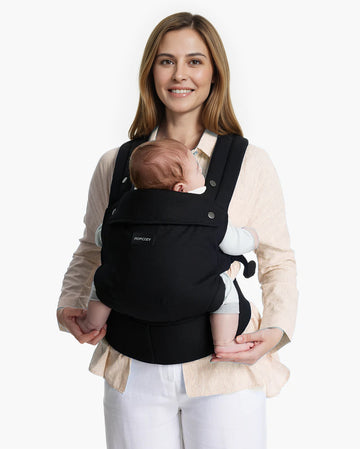
Searching for a dad baby carrier or baby carrier for men can make it seem like fathers need a completely different kind of gear. In practice, a better starting point is a carrier that fits the baby’s stage, matches the wearer’s torso and waist, adjusts easily between caregivers, and feels manageable during everyday tasks. Momcozy’s baby carrier collection includes structured, newborn, wrap, and hip-seat options for different stages and routines. Fit, comfort, adjustment range, and everyday use matter more than choosing a carrier based on gendered styling alone.
Key Takeaways
- The right baby carrier for a dad should fit both the baby and the caregiver and work well during the family’s real daily routine.
- Height matters, but torso length, shoulder shape, waist range, and buckle reach can matter just as much.
- Shared caregivers should readjust the waistband and shoulder straps each time the carrier changes wearers.
- Keep baby high, close, supported, and face-visible. Long-torso wearers may need to place the waistband higher.
- Easy try-on, clear instructions, and a practical return policy can make it easier to choose with confidence.
Is There Really a “Baby Carrier for Men”?
Most baby carriers are not made for only men or only women. A “baby carrier for men” usually means the product has a certain look, a wider fit range, longer straps, or features meant to work well on larger frames.
Style can still matter because you are more likely to use gear you like wearing. But dark colors, tactical details, or “dad-approved” labels do not tell you whether a carrier fits your baby’s stage or your body.
Dads, partners, grandparents, and other caregivers all need the same basics: enough adjustment range, easy-to-reach buckles, clear instructions, good support, and a fit that keeps the baby in the correct position.
Start With the Baby, Then Fit the Caregiver
Start with the baby’s needs before comparing adult features.

First, check your baby’s current weight, development, head and trunk control, and the positions allowed by the carrier manual. Do not choose a carrying position based on age alone.
Next, look at the adult wearer. Note where the waistband feels stable, how long the torso is, how broad the shoulders are, and whether the carrier adjusts well over normal clothing. Two people of the same height can still need different settings.
Finally, make sure the baby remains high and close with the face visible and body supported. Safe baby-carrier positioning, including the T.I.C.K.S. check and M-position, focuses on airway visibility and supported positioning rather than adult height alone.
The Shared-Caregiver Fit Test
If two adults plan to share one carrier, both should test it instead of assuming the same settings will work.
Each caregiver should put the carrier on alone, secure the baby according to the manual, walk, sit, reach for everyday items, and then remove the carrier without coaching. This shows whether the setup is easy to learn and repeat.
At each hand-off, check what needs to change: waistband position, shoulder-strap length, buckle placement, panel or seat setting, and cross-back or backpack-style strap routing if the model allows both.
Test the adjusters over realistic clothing too. A setup that works over a T-shirt may need changes over a sweatshirt or winter layer.
Leaving one caregiver’s settings unchanged may save a few seconds, but it is not a useful shortcut when the next wearer has a different torso, waist, or shoulder shape.
Comparison Table: Choose by Task, Not Gender
A useful carrier should pass checks you can actually observe at home. Instead of relying on labels such as “best for dads,” compare how well the carrier fits both adults, supports the baby, and works during normal movement.
| Decision Factor | What to Verify | Why It Matters for Shared Use | Home Test |
|---|---|---|---|
| Fit range | Waist, torso, strap length, baby settings | Both adults need usable adjustment margin | Fit over light and bulky layers |
| Buckle access | Reach and release without twisting | Supports solo setup and hand-offs | Put on and remove twice each |
| Load distribution | Pressure across shoulders, waist, hips | Body shape changes pressure points | Walk, sit, climb one flight |
| Heat and fabric | Ventilation, padding, drying, care | Different bodies and tasks generate heat | Wear indoors for 10–15 minutes |
| Learning curve | Repeatable steps and clear manual/video | A carrier unused is not a practical choice | Repeat setup without prompts |
| Baby-stage fit | Minimums, positions, panel/seat support | Adult comfort cannot override baby fit | Check face, back, hips, leg support |
What Dads in Real-World Discussions Actually Prioritize
Real-world babywearing discussions show that carrier preference is highly individual. Baby size, caregiver build, and the length of a typical carry can all change which design feels easiest.
Dads often mention fast adjustment, easy sharing, larger or reachable clips, lightweight materials, optional hoods, and waistband comfort. A setup that works well for a quick store run may not be the same one a caregiver prefers for a longer walk.
Long-torso wearers also need to watch baby height. If the waistband starts too low, the baby may sit lower than intended even when the carrier otherwise feels comfortable.
Preferences in the wider market include X-back, apron-style, half-buckle, structured, wrap, and one-shoulder designs. That variety does not make one form universally better, and a one-shoulder preference should not be read as a recommendation for a sling-style product.
Trying a carrier before buying can be especially useful when possible. For a secondhand carrier, check its condition, confirm authenticity, inspect the straps and buckles, and use the current manual for the exact model.

Comfort Is a System, Not a Padding Claim
Comfort comes from the whole setup. Waistband position, shoulder-strap path, baby height, center of gravity, and wear time all affect how the load feels.
Extra padding can help with cushioning, but it cannot correct a poor fit by itself.
A brief feeling of pressure while adjusting is different from persistent pain, numbness, slipping, or having to lean backward. Those are reasons to stop and refit rather than push through discomfort.
For many caregivers, reducing back strain during babywearing starts with load distribution and positioning instead of padding alone. For larger or broader bodies, plus-size babywearing fit also depends on usable waistband and strap range rather than a simple clothing-size label.
Match the Carrier to the Routine
A carrier that fits well in the living room should also work during the tasks your family actually does.
For five-minute soothing or quick hand-offs, fast setup matters most. During household movement, the carrier should let you walk, bend, and move through doorways without loose straps or awkward bulk. Avoid heat, sharp objects, unstable climbing, and any activity the manual does not allow.
For grocery errands, buckle access and freedom of movement become more noticeable. On neighborhood walks, load distribution, temperature, and longer wear can matter more.
Airport transfers add bags, security lines, feeding supplies, and frequent caregiver switches. Preparing for travel with a newborn also means thinking about feeding, diaper changes, storage, and temperature rather than treating the carrier as the whole travel setup.
For longer outdoor outings, reassess comfort and baby position as the carry continues.
When Another Carrier Type May Fit the Stage or Task Better
Different stages and routines can make different carrier structures useful.
Very young babies may need more stage-specific head and neck support, making a newborn carrier relevant when its exact weight and developmental requirements are met.
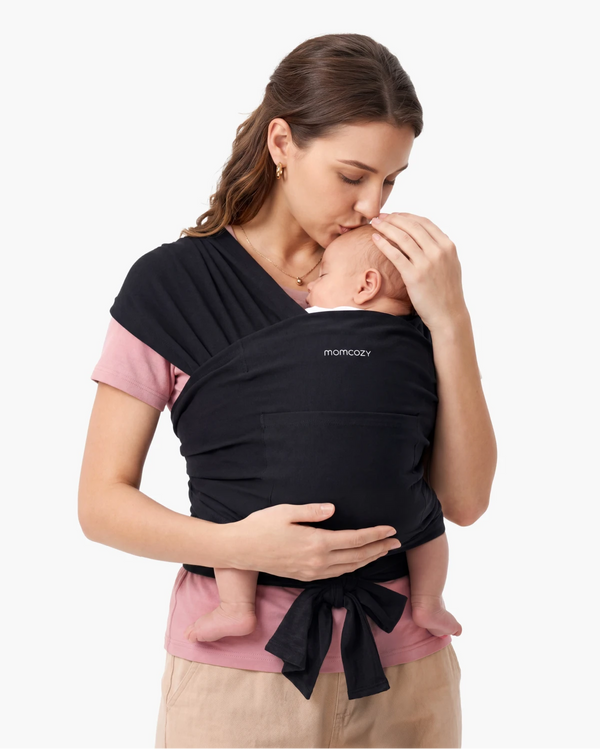
A wrap baby carrier offers a softer, close-fitting fabric setup, although the wrapping process may involve a different learning curve.
Once a baby meets the model’s stage requirements, a hip seat carrier can suit routines with frequent up-and-down carrying.
Because these structures use different support and adjustment systems, baby carrier types differ in setup, carrying positions, and everyday use. The best category is therefore the one that matches both the baby’s stage and the family’s routine.
A Practical Shortlist and Try-On Process
Once you know what both caregivers and the baby need, turn those requirements into a short list.
- Check baby-stage fit first. Remove any model that does not match the baby’s current weight, developmental stage, required support, or allowed carrying positions.
- Check adjustment margin for both adults. The waistband and straps should leave enough room for each caregiver and for normal clothing changes.
- Run the shared-caregiver test. Note pressure points, buckle reach, setup time, heat, baby height, and whether each caregiver can repeat the fit without help.
- Check the details beyond comfort. Review the current manual, product authenticity, seams and inspection points, care requirements, warranty and return terms, and access to fit support.
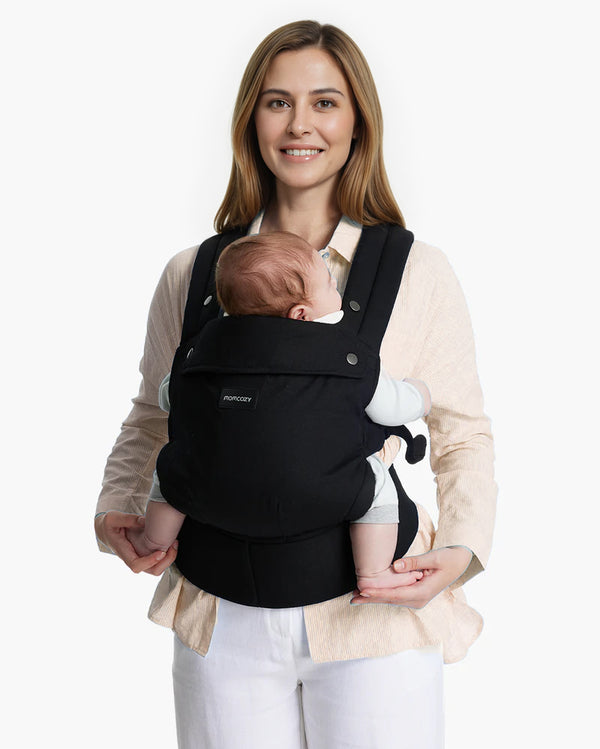
After those checks, product features become easier to judge because each one should solve a real fit or routine problem. The PureHug ergonomic, cozy and lightweight baby carrier is one structured option that can be assessed against the same criteria.
For families who switch caregivers often or handle babywearing alone, PureHug’s visible side buckles are designed to be easier to reach, while its X-back slips on like shoulder straps to support quicker solo setup and hand-offs. If load distribution is the bigger concern, the X-shaped strap layout spreads the support area across the back, while 3D EVA lumbar support and wider padded shoulder straps help distribute pressure across the back and shoulders.
Baby fit also needs to change as the child grows. PureHug uses three adjustable seat widths, while its IHDI-inspired ergonomic design is intended to support a natural M-position and supported C-curve when the carrier is adjusted correctly for the baby’s stage. For caregivers who expect longer everyday wear, the 100% cotton option uses OEKO-TEX-certified materials and is designed to feel soft and breathable against the baby.
These features still need to work together on the actual wearer and baby. The midwife-reviewed PureHug fit assessment provides a professional look at its support and positioning in everyday babywearing, while the current product manual should guide the exact setup and allowed carrying positions.
How to Read Recommendations Without Getting Trapped by Marketing
Useful recommendations give context, not just adjectives such as “best,” “comfortable,” or “dad-approved.”
Look for the wearer’s measurements, the baby’s stage, the setup method, the activity, and how long the carrier was worn. A review from a short grocery trip does not automatically tell you how the same carrier will feel during a long walk.
Tactical styling, dark colors, and marketplace popularity are preference signals rather than proof of fit, support, or authenticity.
Also check that the recommendation refers to the exact current model. Weight ranges, position rules, certification references, and product details can change, while marketplace listings may copy specifications incorrectly or mix information from different versions.
Wear time also depends on the baby’s stage, positioning, temperature, feeding needs, comfort, and opportunities for breaks, so how long a baby can stay in a carrier cannot be reduced to one universal number.
FAQs About Baby Carriers for Dads
Can Two Caregivers Leave a Baby Carrier at the Same Settings?
Usually, each caregiver should check the settings again before use. Waistband height, shoulder-strap length, and buckle position can change with body shape and clothing. Even if both adults use similar settings, check that the baby stays high, close, supported, and face-visible at every hand-off.
What Clothing Changes a Carrier’s Fit?
Winter coats, thick sweaters, slippery fabrics, and bulky layers can change how the straps and waistband sit. A fit that works over a T-shirt may need adjustment over a jacket. Recheck the carrier after changing layers so the baby stays supported and the straps stay secure.
What Should I Do if a Buckle Rubs My Arm or Underarm?
Check the strap route and buckle position shown in the manual. A proper adjustment may move the buckle away from the pressure point. If rubbing continues, stop and refit the carrier instead of moving straps into a position the manufacturer does not allow.
How Often Should I Inspect a Shared Baby Carrier?
Do a quick check before each use, especially when several adults handle the carrier. Look at the webbing, seams, buckles, loops, seat panel, and baby-contact areas. Make sure everything is clean, dry, securely attached, and free from visible damage.
Can a Tall Dad Simply Wear the Baby Lower?
No. Adult height does not change the need to keep the baby high, close, supported, and easy to see. A tall or long-torso caregiver may need a higher waistband or different strap adjustment. If the correct position cannot be reached, try another fit or model.
Is a Darker or Tactical-Looking Carrier More Suitable for Dads?
Only as a style preference. Color and tactical details do not show how the carrier will fit the adult or support the baby. Choose the look you enjoy, then confirm adjustment range, baby-stage rules, buckle access, comfort, and instructions before deciding.
Conclusion: Fit Range Matters More Than Gender
The best dad baby carrier is not defined by a “for men” label. It is the carrier that fits the baby’s stage, fits the adult wearer, adjusts well between caregivers, and works during the family’s real routine. That makes baby-stage fit, adult measurements, buckle reach, comfort, and hand-offs more useful decision points than styling alone. Momcozy’s baby carrier range covers several carrying styles, while the PureHug structured carrier combines X-shaped load distribution, lumbar support, padded straps, and adjustable seat widths for families evaluating a shared everyday option.








