


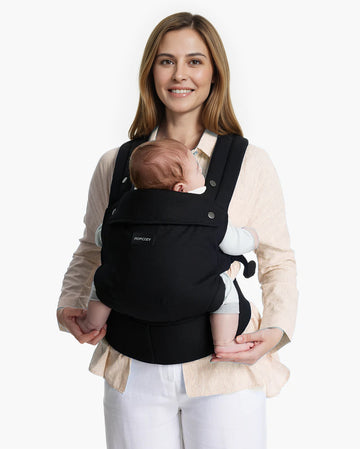
Babywearing at home can make short stretches of the day feel more manageable, but hands-free does not make every task appropriate. The useful question is whether a task keeps your baby visible and supported, lets you maintain balance and control, and avoids heat, sharp objects, chemicals, heavy loads, or repeated bending. Use this framework to plan a realistic routine, not to replace supervision, rest, or help from another caregiver.
Key Takeaways
- Babywearing may support short, lower-risk tasks, but hands-free never means unmonitored.
- Choose the task first. Heat, blades, chemicals, climbing, heavy lifting, and unstable movement stay off-limits.
- Recheck face visibility, airway, high placement, support, and approved fit whenever your posture changes.
- Folding laundry, phone tasks, calm walking, and waist-height tidying are often easier to modify.
- Pause if your baby slumps, overheats, or becomes distressed, or if you lose balance, visibility, comfort, or control.

Hands-Free Does Not Mean Risk-Free
A carrier can free your arms, but it does not remove your responsibility for monitoring, fit, balance, or task control. On days with contact naps, limited help, older children, work pressure, or postpartum fatigue, even a small task can feel urgent. Babywearing is a tool for selected moments, not a promise to finish a whole cleaning list or workday. Choose one small task, prepare it first, and stop when your baby or body needs something different.
Choose the Task Before the Carrier
No activity is universally safe just because a baby is in a carrier. Sort the task by hazard, then consider your baby's current fit and stage and your own balance. A carrier does not erase a risk you would avoid while holding your baby.
| Task group | Examples | Main conditions | Stop or avoid trigger |
|---|---|---|---|
| Usually lower risk when fit is stable | Folding clothes; phone or admin tasks; calm walking; light tidying at waist height | Face visible; both feet stable; no heavy object; no deep bend | Baby slumps, overheats, fusses, or blocks your view |
| Conditional and easy to modify | Watering reachable plants; loading light laundry; wiping a clear surface; cold food assembly | Keep sharp tools and chemicals away; move supplies to waist height | Repeated reaching, a wet floor, a basket to carry, or baby contact with products |
| Better postponed or delegated | Vacuuming with cords; mopping; low dishwasher loading; pet care with unpredictable movement | Choose another caregiver or complete it while baby rests elsewhere | Trip hazards, sudden pulling, loud distress, unstable stance, or restricted visibility |
| Do not attempt while babywearing | Stovetop or oven cooking; boiling liquids; frying; knives; hot drinks; bleach or aerosol chemicals; ladders; heavy lifting | No carrier feature removes the underlying hazard | Burn, cut, inhalation, fall, spill, or crush risk |
Run a Fit Check Before the First Task
Before you start, check the current manual, your baby's stage and size, the approved position, and every buckle and section of webbing. Confirm high placement, a visible face, an open airway, and a supported body while standing still. Do not troubleshoot a low or loose baby while walking, bending, or carrying another object. Recheck after a feed, a clothing change, a sit-to-stand transition, or whenever your baby settles lower. A consistent baby carrier safety check helps you spot small fit changes before they affect comfort or visibility.
Move Around the House Without Losing Control
Keep movements slow and predictable. Use a stable stance, shorten your reach, and bring the task to waist height. A shallow knee bend may be more controllable than folding at the waist, but only when your balance and your baby's support stay reliable. Avoid repeated deep bending, twisting under load, leaning over appliances, or carrying a basket, heavy package, or another child. Stop when you need both hands for balance, cannot see your baby or the floor, or feel the carrier shift.

Build a Short, Flexible Home Routine
Use a short routine as a planning tool, not a universal time limit for babywearing. Begin with a fit check and a clear walkway, then choose one lower-risk task, such as folding clothes, a brief seated admin task, or light pickup at waist height. Pause whenever your baby’s position, temperature, or cues change, and set your baby down safely if either of you needs a break. Before wearing, keep water nearby, move supplies within reach, remove cords, and identify a safe place for your baby. Plan handoffs where possible. For work-from-home parents, carrier time may suit brief admin tasks, not focused work that requires dedicated care coverage.
Sitting, Resting, and Feeding Are Separate Transitions
Sitting changes the carrier angle and can loosen fit or hide your baby's face. Treat every sit, stand, and feed as a fresh checkpoint. Avoid deep couches, recliners, and any situation where you may fall asleep; an actively monitored carrier nap is not approved sleep. After a transition, check the face and airway, then reset if needed. Maintaining a secure position during seated babywearing starts with an upright posture and a visible, well-supported baby.
Contact Naps, Baby Cues, and the Point to Stop
A carrier nap can be a calm, closely observed part of the day, but you must stay awake and keep monitoring breathing and position. Stop if your baby's face presses into fabric, the chin drops, color or breathing changes, your baby overheats, fusses, arches, slumps, or moves without support. Stop for your own dizziness, pain, fatigue, poor balance, or need to handle a hazard. Both time in a baby carrier and carrier naps call for ongoing checks rather than a fixed routine.
What Parents in Forums Actually Do at Home
Parent discussions are practical: many describe folding laundry, light pickup, calm walking, messages, or time with an older child. They also name the limits - skipping dishes, chemicals, deep bending, and tasks that block visibility; back discomfort, limited reach, or a baby who dislikes the carrier can end the plan quickly. The trade-off is quick setup versus support, low bulk versus longer-wear comfort, and what works for one caregiver versus another. Babywearing can make one part of a day easier, not solve the whole day. If fit feels uncertain, seek an in-person check from a babywearing educator or lending library.
Choose a Home Carrier by Routine, Not by Chore Count
A home carrier does not need to let you "do everything." Look for repeatable solo setup, a shared-caregiver fit range, manageable bulk, stable load distribution, reachable adjustments, washable materials, and easy removal for a diaper change. Test it for ten prepared minutes using only lower-risk tasks. A carrier that feels good on a walk can still feel bulky while sitting or reaching, so it helps to understand the practical differences between baby carrier styles.
How PureHug Fits a Short Home Routine
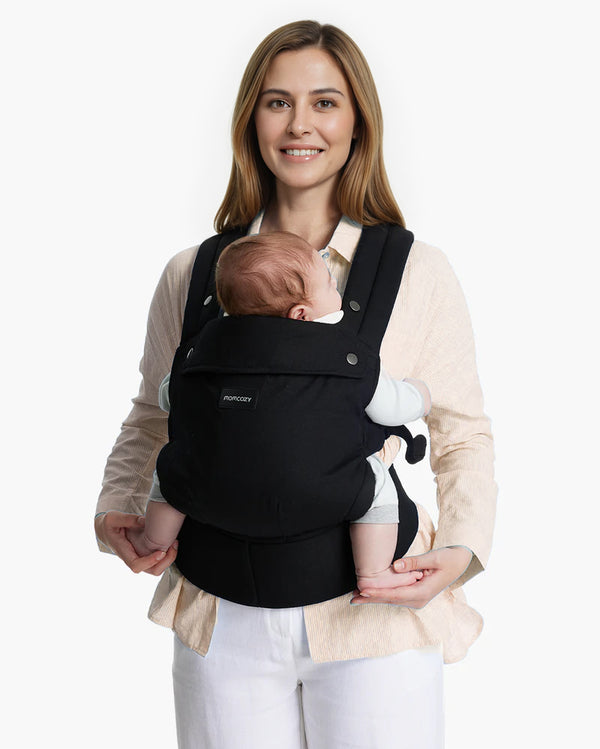
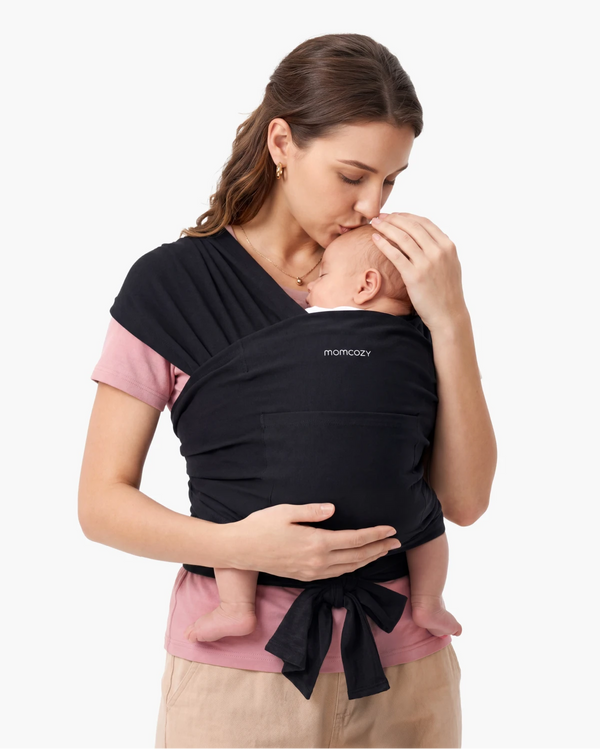
If a structured carrier suits your routine, try the PureHug baby carrier during a few lower-risk tasks and notice whether its cross-back fit and adjustable straps feel comfortable for you. Machine-washable care may also be useful for everyday cleanup.Use PureHug only when your baby is 3 to 24 months old and meets the product’s size and developmental requirements. For newborn-specific needs, choose a carrier designed for the newborn stage. Test solo setup, support, visibility, and your comfort during a prepared low-risk routine. A midwife’s perspective on PureHug adds context. Depending on your baby’s stage, a newborn-ready carrier, wrap carrier, or hip seat carrier may be a better match.
FAQs About Babywearing at Home
Q1. Can I Wear My Baby While Working at a Computer?
For brief admin tasks, sit upright, keep your baby's face visible, and recheck warmth and fit after sitting. A carrier cannot replace focused childcare or work coverage. Pause whenever posture or attention slips.
Q2. Can I Use Cleaning Spray While Babywearing?
Postpone or delegate aerosols, bleach, and strong chemicals. Inhalation, splash, skin-contact, and surface-residue risks do not become acceptable because your hands are free. Choose another task or place your baby safely with another caregiver first.
Q3. What Should I Do if I Need Something From the Floor?
Set your baby down safely when possible. Do not use one hand to compensate for an unstable deep bend. Move the item later, ask for help, or use a shallow knee bend only if your balance and baby's support remain reliable.
Q4. Can I Drink Coffee While Wearing My Baby?
Avoid hot drinks over or near your baby. Choose a sealed cool drink and keep it away from the carrier. Wait until your baby is safely elsewhere for coffee, tea, or anything hot.
Q5. Is Vacuuming While Babywearing Okay?
Vacuuming adds cord and trip hazards, sudden pulling, noise, and restricted visibility. It is usually better postponed, delegated, or done while your baby is safely elsewhere. Do not push through an unstable setup.
Q6. Do I Need a Different Carrier Only for the House?
Usually not. Compare setup speed, fit, bulk, sitting comfort, washable materials, and your baby's stage first. A short prepared test at home is more useful than a promise that any carrier works for every task.
Conclusion: Choose the Task Before the Carrier
Useful babywearing at home is selective: choose a lower-risk task, confirm fit, keep your baby observable, and stop before conditions become unsafe. The best routine leaves room for rest, a hand-off, and an unfinished chore. If you are considering a structured carrier, review the main carrier collection or try PureHug during one short, prepared routine. Let comfort, visibility, and control set the standard - never the number of tasks you can complete.








