


Pumping shouldn't feel like a second job. Whether you're back at work, managing a newborn's schedule, or trying to build a freezer stash, the right breast pump can save you real time and frustration. An easy-to-use breast pump fits into your life instead of complicating it. Here's a clear breakdown of what to look for and which pumps actually deliver on that promise.
What’s the Easiest Type of Breast Pump to Use?
The right pump can make your day smoother. Here’s how the four main types compare in real life.

Manual Pump
Manual pumps are the simplest in design. No cords, no motors, and usually two or three parts total. The downside is that you provide all the effort. You squeeze a handle repeatedly to build suction, which becomes tiring for longer sessions. Cleaning is quick, but these work best as a backup or travel pump rather than a daily workhorse.
Wearable Breast Pump
Wearable pumps sit inside your bra and run hands-free. No tubes hanging off your body, no outlet required, and most models have four or fewer parts to clean. Controls are either a simple button panel or an app on your phone. If you pump multiple times a day, a wearable pump has the lowest setup threshold of any type. Charging is straightforward since you simply plug in between sessions, and if you prefer to charge less often, look for a model that includes a charging case.
Hospital-Grade Pump
Hospital-grade pumps are powerful, but they come with a steeper routine.
These machines are larger and heavier, require tube connections and careful flange placement each time, and involve more milk-contact components to clean than most home pumps.
In a hospital setting, nurses typically guide usage. For home use, there is a learning curve, though the difficulty varies by model.
They are typically recommended for moms with low supply or babies in the NICU rather than for everyday convenience.
Traditional Electric Pump
Plug-in electric pumps are reliable and widely covered by insurance. However, tubing, a motor unit, flanges, and valves all need to be assembled before each session. The setup takes longer, portability is limited, and cleaning involves more parts.
Note that connecting to certain bottle brands may require a separate adapter. For moms who pump twice a day at a desk, this can still be a practical option.
In all, ease of use varies within every pump category. That said, newer generations of pumps, including the wearable designs that have grown in popularity in recent years, are built with user experience as a priority, and tend to offer simpler setups, fewer parts, and more intuitive controls overall.

What Makes a Breast Pump Easy to Use?
The phrase "easy to use" can mean different things. Here are the factors that matter most when you apply it to breast pumps:
- Simple assembly. A pump with four or fewer parts takes seconds to put together. Alignment marks or intuitive shapes that guide pieces into place are a big help.
- Clear controls. A well-labeled display or app interface means less time figuring out settings and more time actually pumping.
- Fast cleaning. Smooth surfaces, one-piece funnels, and fewer crevices mean less scrubbing after each session.
- Comfortable fit from the start. A pump that fits well without constant adjustment reduces the mental load of every session. Multiple flange size options help you dial this in.
- Consistent suction. Reliable output means shorter sessions, which directly affects how manageable pumping feels across a full day.
- Portability. If you can pump without being tethered to an outlet, your schedule opens up considerably.
- Long battery life. Fewer charges mean fewer interruptions.
When a pump checks most of these boxes, even four or five pumping sessions a day becomes a manageable part of your routine.
How to Choose an Easy-to-Use Breast Pump?
A few practical questions can narrow your search quickly:
How often do you pump?
If you pump once or twice a day, a traditional electric pump may work fine. If you pump four or more times daily, a wearable pump lets you keep doing other things while pumping, saving you meaningful time across your day.
Where do you pump?
At a desk, on the go, or during meetings? Hands-free wearable pumps are designed for those situations. Corded machines are not.
What are your supply goals?
Higher suction power supports better output. Look for pumps that let you adjust suction levels so you can find the level that works without causing discomfort.
How many parts touch milk?
Count them before you buy. Fewer parts means less to wash and less chance of missing a spot during cleaning.
Does flange fit matter to you?
It always does. A poor fit is one of the top reasons pumping feels painful or inefficient. Choose a pump that offers multiple flange sizes or an adjustable flange design.
Do you want app control or other premium features?
App-controlled pumps let you change settings without reaching into your bra, which makes a real difference during work calls or when you're holding your baby.

Top 8 Easy-to-Use Breast Pumps
Here is how eight widely-used pumps compare across the factors that matter most for ease of use.
| Pump | Parts to Clean | Flange Sizes | Battery Life | App Control | Portability |
| Momcozy S12 Pro Quick | 4 | Multiple inserts | 240 min / 8 sessions | No | In-bra wearable |
| Momcozy M5 Smart | 4 | 4 sizes (17–24 mm) | 180 min / 6 sessions | Yes | In-bra wearable |
| Spectra S1 Plus | 6+ | Standard | 180 min | No | Portable with handle |
| Elvie Stride | 5 | 2 sizes | 180 min | Yes | In-bra wearable |
| Medela Pump In Style | 7+ | Standard | 120 min | No | Tote-style portable |
| Lansinoh Signature Pro | 5 | 2 sizes | 120 min | No | Portable |
| Haakaa Manual Pump | 1 | One size | N/A | No | Fully portable |
| Willow Go | 4 | 3 sizes | 135 min | Yes | In-bra wearable |
Wearable pumps with four or fewer parts consistently rank highest for daily ease of use. Pumps with more components require more prep time per session, which adds up quickly across a full pumping day.
Momcozy S12 Pro Quick
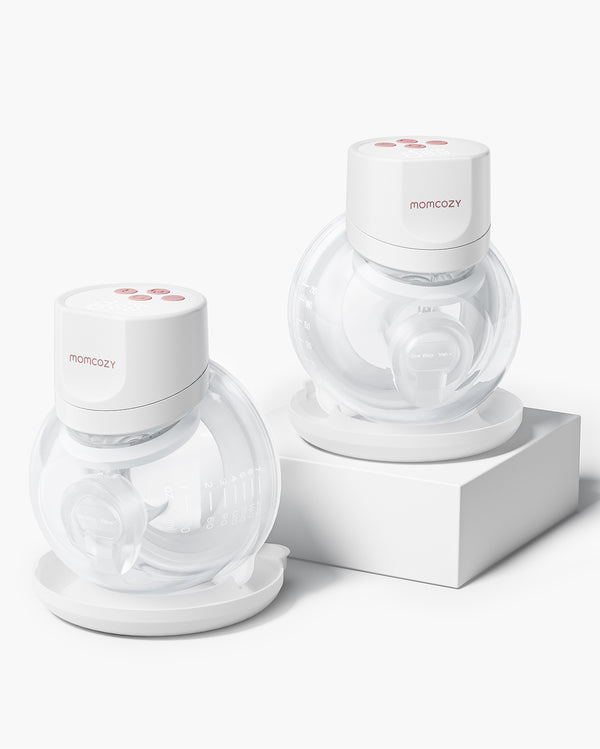
The S12 Pro Quick is built around the idea that pumping should take as little mental energy as possible. It consists of just four parts that assemble in three steps, using alignment marks to guide each piece into position without guesswork. Additionally, the one-piece funnel design eliminates tight corners, making rinsing fast and simple.
For a comfortable experience, the DoubleFit™ hybrid flange pairs soft silicone with a firm PP backing to create a secure, leak-free seal that doesn't need constant readjusting. Thoughtful design details include a grip tab that lets you handle the collector even with wet hands, and a flange cover that doubles as a stand so the pump sits upright between uses.
In terms of performance, suction reaches up to -295 mmHg, with three pumping modes and nine levels to customize each session. The pump operates quietly, keeping noise at or below 46 dB, and features a 1350 mAh battery that supports up to 8 sessions (240 minutes) per charge.

Momcozy M5 Smart
The M5 Smart brings app control to the wearable pump experience. Once connected via the Momcozy app, you can adjust modes and suction levels directly from your phone, eliminating the need to reach into your bra or press buttons mid-session. The app also lets you log each session and track milk volume over time, helping you spot supply patterns without keeping manual notes.
Weighing just 232g (8.2 oz), the pump sits completely inside your bra for genuinely hands-free pumping. It includes four flange sizes (17, 19, 21, and 24 mm), and all milk-contact parts are BPA-free. Finally, the battery supports up to 6 sessions (180 minutes), and a carry case is provided to keep everything organized when you head out.
Spectra S1 Plus
The Spectra S1 is one of the most widely covered pumps under insurance plans. It delivers strong, consistent suction and features a closed system that prevents milk from entering the tubing. While setup involves more parts than a wearable, the controls are clear once you learn the layout. With its built-in rechargeable battery, it works exceptionally well for moms who want reliable motor power along with the option to move between rooms.
Elvie Stride
The Elvie Stride pairs in-bra wearability with app-based control, operating quietly and fitting under most bras. While the parts count is slightly higher than some wearable competitors and flange size options are more limited, the overall setup remains straightforward for a hands-free experience.
Medela Pump In Style
A long-standing option in the pumping space, the Pump In Style uses Medela's PersonalFit Flex flanges and delivers consistent suction output. It works particularly well for moms who pump primarily at a desk and want a motor-driven pump with easy-to-find replacement parts. However, because setup involves more components, it is better suited for a twice-daily routine rather than a highly frequent pumping schedule.
Lansinoh Signature Pro
The Lansinoh Signature Pro is a budget-friendly double electric pump featuring adjustable suction and a rechargeable battery. It offers simple controls and handles the basics well for moms who pump once or twice a day. However, the part count is higher than that of wearable options, which is something to factor into your daily cleaning routine.
Haakaa Manual Pump
The Haakaa is a single-piece silicone pump that works through passive suction with no assembly required. While it is not designed for full pumping sessions, it is highly useful for catching letdown on the opposite breast during a nursing session or for occasional use on the go. Ultimately, it earns the highest rating for sheer simplicity and portability.
Willow Go
The Willow Go is a wearable, in-bra pump featuring app-based tracking and real-time output data. While its bag-based collection system keeps spills to a minimum, it does add an ongoing cost for replacement bags. Ultimately, it works well for moms who prioritize data visibility and fully hands-free use throughout the workday.
Ready to Find Your Pump? Start Here
Ease of use comes down to fewer parts, a better fit, and a pump that works with your actual day. Wearable pumps with streamlined designs, reliable battery life, and comfortable flanges check the most boxes for most pumping parents. If you want a pump that is fast to assemble, easy to clean, and built for real-life multitasking, the Momcozy S12 Pro Quick and M5 Smart are worth exploring. Find the one that fits your routine at Momcozy.
FAQs
Q1: Is a wearable breast pump a good choice for a first-time pumper?
Yes. Wearable pumps typically have fewer parts and no tubing to manage, which makes the learning curve shorter. Look for one that includes multiple flange sizes so you can find a comfortable fit from your first session.
Q2: How many parts should an easy-to-use breast pump have?
Four parts or fewer is a practical target. Fewer milk-contact parts means faster assembly and cleaning each time. Many wearable pumps, including the Momcozy S12 Pro Quick, are built around a four-part system for exactly this reason.
Q3: Can I use a wearable breast pump at work without anyone noticing?
Yes. In-bra wearable pumps like the Momcozy M5 Smart operate at under 48 dB and sit completely inside your bra with no external tubes or cords visible under clothing. Most people in the same room will not notice.
Q4: How do I know if my flange size is correct?
Your nipple should move freely in the tunnel without rubbing the sides, and little to no areola should be pulled in during suction. If pumping feels painful or your output is lower than expected, flange size is worth checking first. Many pumps include multiple sizes or flange inserts to help you adjust.
Q5: Does a higher suction level always mean more milk output?
Not always. Suction that is too high can cause discomfort, which may actually reduce letdown. The most effective setting is the highest level that still feels comfortable. Pumps with nine adjustable levels, like the S12 Pro Quick, make it easier to find that balance.








