Key Takeaways
-
• Burp your baby after each feed. This includes your late-night feedings. Burping cuts down on your baby's gassiness and spitting up, as well as waking them up less frequently.
-
• Do gentle and right positions to burp your newborn without waking them. You can try burping them over your shoulder, on your lap face-down, sitting upright, or across your arm.
-
• Babies will sometimes just release the gas by themselves or spit up at a later time. A little bit of fussiness might occur as well, but it’s common. Keep your newborn in a vertical position for 10 to 15 minutes.
New parents face this situation: the baby dozes off during feeding and you are lost as to the next step. You think about a possible trapped gas making them uncomfortable but on the other hand, you do not want to wake them up. Actually, it is tough to keep a baby comfortable while allowing them to sleep.
So, can you burp a sleeping newborn appropriately? You can gently burp them without waking. The point is to be calm and use simple positions.
Besides gentle burping, watch out for your baby’s breathing, especially when they have a cold. If a stuffy nose is making sleep harder, choosing the best infant nasal aspirator for gentle nighttime congestion relief can help clear your baby’s nose without fully waking them. Also, check out their baby monitors to have a closer look at your little one while he/she is asleep peacefully.
The Physics of Nighttime Digestion
Milk and some air are swallowed by a baby while feeding. The air can become stuck in the stomach and produce bubbles.
This became problematic because your baby is mostly lying down. When they lay flat, gravity will not allow milk and air to remain separate. The air will get trapped more easily and that is probably why some babies are uncomfortable or even have gas during sleep.
Why Does a Sleeping Baby Need to be Burped?
Your baby's body is hard at work digesting the milk even though they're asleep. At the same time, their stomach has some air trapped inside it. Babies swallow air while feeding, especially when they are gulping or bottle-fed. If the air isn't released, it can cause stomach discomfort, vomiting, or even reflux, which is also part of why newborns spit up during sleep more easily when they’re lying flat after a feeding.
Gently burping them during sleep is a great way to keep your baby comfortable, help digestion, and ensure your baby sleeps better.
The "Sleep-First" Decision Matrix
At night, make sure your baby is comfortable and asleep. It’s not necessary to make them burp right after feeding. But instead, see your baby’s condition first to decide what action to take.
In fact, skipping a burp is not bad. For example, if your infant was bottle-fed in one go, no signs of gulping and there is no history of reflux or frequent spitting up, then most probably they don't have a lot of trapped air. So, giving them some time for sleep might be a very smart move.
If your baby fed quickly, cried, or seemed gassy or spits up, they likely need to be burped. A short and gentle burp might be your best shot at keeping them comfortable and helping them sleep longer.
Many parents use a electric baby swing as part of their wind-down routine: a few minutes of soothing motion during alert time, followed by transfer to a safe sleep surface.
Some cry not from gas, but from being disturbed. When a baby is sleepy, even small movements such as lifting can surprise them. This is called overstimulation.
If your baby resists, keep movements slow and gentle. Hold them close, avoid lights, and don’t rush. Try a lighter burping position. If your baby is now good, it’s okay to let them sleep.
How to Burp a Sleeping Baby: Stealth Techniques
Burping a sleeping baby is all about being soft and slow, especially if you’re already trying to follow gentle ways to burp your baby and reduce reflux without fully waking them. Support their head and body while helping trapped air come out without waking them.
Try these simple positions:
-
On your shoulder: To keep your baby upright, have their chin on your shoulder. While you hold their head, lightly pat or rub their back. The air will rise naturally afterwards.
-
On your lap: Sit your baby while supporting the back of their head against your chest. Hold their chin and calmly pat their back.
-
Face down, on your lap: Place your baby on their tummy along your lap and raise their head slightly. You can hold their chin while slowly patting their upper back.
-
Along your arm: Lie your baby down on your arm, with their head near your elbow. Lightly pat or rub their back. This works well for small babies.
Here are the steps to burp your sleeping baby well:
- Lift gently. Bring your baby to an upright position (like over your shoulder). Support their head and pat or rub their back slowly. This helps air rise naturally.
- Pat softly. Use light, steady pats on the upper back. A slightly cupped hand works best. Think gentle, not strong.
- Switch if needed. If no burp after a few minutes, try sitting them on your lap. A small forward lean can help gas move up.
- Add soft rubs. If patting isn’t enough, rub their back in small circles, moving upward.
- Try side-lying. Arrange your infant on your lap with the head slightly more elevated than the rest of the body.
- Take your time. It may take 5-10 minutes. Babies who are deeply asleep burp in a quieter, less evident way. Even a little exhale or a body loosening will reveal that the child has burped. When your baby looks peaceful and happy, it is a perfect time to stop. Gently pat.
Know when to stop. If your baby seems calm and comfortable, it’s okay to stop. Not every feeding needs a burp.
Safety tip: Don't forget to always place your infant on their back for sleeping after the feeding session. To ensure your baby's nursery is as secure as possible, read our full guide on safe sleep positions for newborns.
Important Tips for Nighttime Burping to Prevent Wakeups
Help your baby burp while keeping them calm and sleepy. Here are some things to keep in mind:
- Light and soft pats work best. Use gentle tapping, not hard thumping.
- Make small, slow circles on your baby’s upper back to help bring up air without waking them.
- Move slowly and avoid sudden shifts. Steady hands help your baby stay asleep.
- Burp your baby right after feeding. They tend to be relaxed generally, but sometimes there will be some air trapped inside.
- It may be a good idea to wait for a while as it might take a few minutes. Relax and continue with your gentle touch.
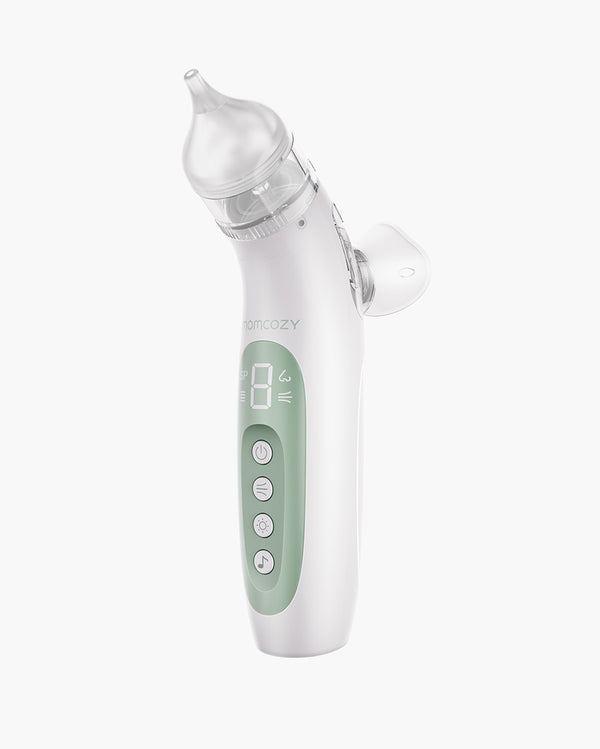
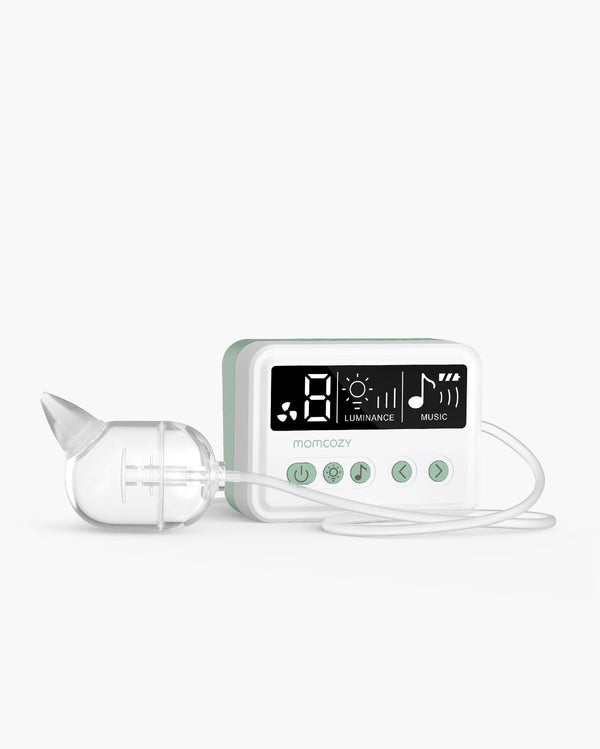
Besides burping, it is also a good thing to keep your newborn comfortable when their nostrils are blocked. A good nose suction device will clean your baby's nose safely and quietly without waking them.
The Momcozy Baby Nasal Aspirator is a perfect solution for you. This rids congestion fast and effortlessly so that your baby can breathe normally. With 65 KPa super strong suction power and 3-speed options, it will be able to extract hard and soft mucus gently.
Konstrukcja 2 w 1
4 Poziomy Ssania
Spryskiwanie Delikatną Mgiełką
Klasa Szpitalna
9 poziomów ssania
3 rodzaje końcówek
Łatwe czyszczenie
Klasa szpitalna
Key features:
- 65 KPa suction with 3 adjustable levels for gentle yet effective cleaning
- 2 ultra-soft BPA-free silicone tips for safe use
- Operates quietly under 45dB
- Lightweight, rechargeable, and easy to take anywhere
- Has a self-cleaning mode or manual washing
Note: Designed for children 2-12 years old. For babies under 2, use gently under pediatric guidance.
You can explore their full collection here: Momcozy Baby Nasal Aspirators.
For parents who want extra peace of mind, Momcozy also offers baby monitors so you can keep an eye on your little one while they sleep safely.
What if My Baby Doesn’t Burp at Night?
If your baby doesn't burp after feeding, don’t stress yourself. No bad thing will happen. The air trapped inside will be released naturally, or your baby might just throw up a little or get a bit upset after waking up.
The ones who find it hard to breathe because of the gas, can be supported by holding them a bit upright for 10-15 minutes after feeding, as this not only prevents spit-up but also helps burp release in awkward situations. Actually, some babies swallow very little air to the extent that they hardly need burping at all.
When Can I Stop Burping My Baby at Night?
You don’t always need to burp your baby. As they grow, they swallow less air and may not need it. This is especially true if your baby is around 4 to 6 months. If they seem comfortable and sleep well, you can slowly stop burping at night.
Conclusion
Now, can you burp a sleeping newborn? This guide helps you learn different simple positions that match your baby’s natural sleep. Not every baby needs a nighttime burp, and many outgrow it over time. Keeping your baby comfortable and breathing well is important, especially during colds, and tools like the Momcozy Baby Nasal Aspirator and baby monitors can help.