


A baby’s cough can sound dramatic, even when the cause is mild. Most coughs are linked to colds, post-nasal drip, or everyday irritants and improve with gentle home care. This article breaks down common causes and cough types, then shares safe ways to ease symptoms, including feeding for hydration, cool-mist humidity, saline and suction, and cleaner indoor air. It also highlights warning signs that need prompt medical attention, so you can act quickly when a cough signals something more serious.

What Is Coughing?
Coughing serves as your baby's built-in protection system. This reflex action clears the airways of mucus (thick fluid produced by the respiratory system), dust, or irritants. While it sounds distressing, especially in tiny babies, coughing actually prevents harmful substances from reaching the lungs.
Think of it as your baby's body doing exactly what it should, working hard to stay healthy and keep those delicate airways clear.
Causes of Cough in Babies
Before you can effectively help, understanding the root cause makes all the difference.
Common Cold
Viral infections top the list for baby coughs. In their first two years, babies typically catch 8 to 10 colds as their immune system builds strength. These viruses cause nasal congestion and post-nasal drip, when mucus runs down the back of the throat, triggering frequent coughing.
Air Pollution and Irritants
Your baby's airways are incredibly sensitive. Cigarette smoke, perfumes, cleaning products, pet dander, and even dry air can spark coughing episodes. Indoor air quality matters more than most parents realize.
Serious Causes
Some coughs need medical attention. Bronchiolitis (inflammation of tiny airways in the lungs), croup (infection causing airway swelling), whooping cough, or pneumonia (lung infection) present with distinctive symptoms beyond simple coughing. Watch for breathing difficulties, high fever, or unusual tiredness.
Other Reasons
Teething increases saliva production, sometimes causing gagging coughs. Gastroesophageal reflux (when stomach contents flow backward into the throat) can also trigger coughing, especially after meals.
Types of Coughs in Babies
Different cough sounds tell different stories about what's happening in your baby's body. Recognizing these patterns helps you respond appropriately and communicate clearly with your pediatrician.
| Cough Type | What It Sounds Like | Possible Causes | What to Watch For |
| Wet/Phlegmy Cough | Mucus-filled, rattling, congested | Common cold, bronchiolitis, RSV (respiratory syncytial virus), pneumonia, asthma flare-up, postnasal drip | Lots of phlegm, runny nose, high fever in severe cases. Most colds last up to 2 weeks and improve with rest and hydration. |
| Dry/Hoarse Cough | Harsh "barking" sound, like a seal | Croup (upper airway swelling caused by a virus) | Worse at night, noisy breathing, hoarse voice. Usually managed at home with humidified air and steamy showers, but severe cases need medical care. |
| Wheezing/Raspy Cough | Whistling or raspy sound when breathing, chest congestion | Bronchiolitis (lung infection, often from RSV), asthma | Develops after a few days of cold symptoms. Most cases treated at home, but severe breathing difficulty requires hospitalization. |
Each cough type responds differently to treatment, so identifying the pattern gives you a head start on effective relief.
How to Help a Baby with a Cough (Home Remedies)
Here are safe, pediatrician-approved strategies that really work.
Keep Baby Well Hydrated
For babies under 6 months, stick with breast milk or formula. These fluids thin mucus naturally. Older babies can have small amounts of water between feedings. Proper hydration keeps everything flowing smoothly.
Keep Sleep Flat and Safe
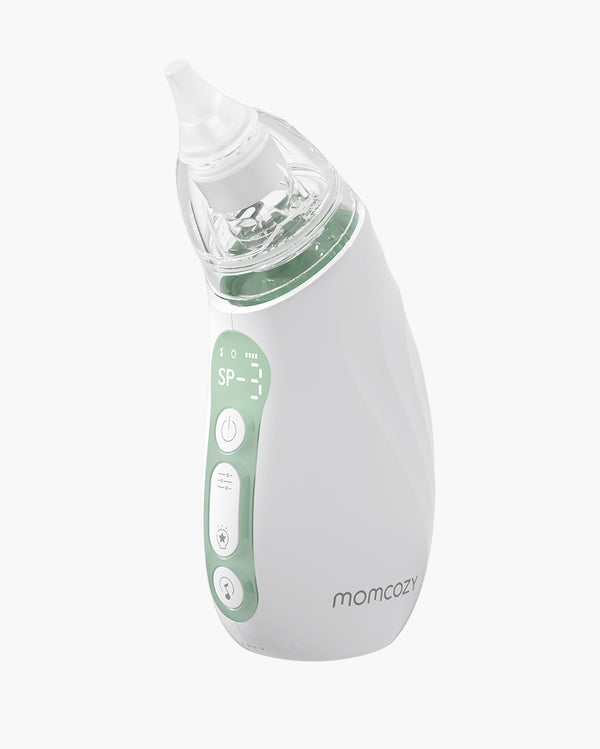
Babies should always sleep on a firm, flat surface. Instead of tilting the mattress, focus on clearing the nose before sleep. A few drops of saline followed by gentle suction can reduce post-nasal drip and make nighttime coughing less disruptive. If your baby wakes coughing, a quick nasal clear and upright cuddle often helps them settle faster.
Purify Indoor Air
Cleaner indoor air can ease coughs triggered by dust, pet dander, and other irritants. A quiet, baby-friendly air purifier with a high-efficiency filter can be especially helpful at night, alongside regular ventilation and consistent cleaning. The Momcozy CozyBreath Baby Air Purifier is one option designed for nursery use with quiet operation and high-efficiency filtration. Its 4-layer filtration system includes a silver ion filter that helps inhibit bacterial growth while capturing particles as small as 0.3 microns. The real-time PM2.5 monitor with a three-color indicator lets you see air quality improvements at a glance.


Use a Cool Mist Humidifier
Dry air irritates sensitive airways. A humidifier adds moisture to the air, soothing inflamed passages. Clean it daily to prevent mold growth, which would make things worse.
Try Steam Therapy
Run a hot shower and sit in the steamy bathroom with your baby for 10 to 15 minutes. The warm, moist air works wonders for loosening stubborn mucus.
Clear the Nose with Saline
Babies can't blow their noses yet. Saline drops followed by gentle suction using a bulb syringe clears blocked nasal passages effectively and safely.
What You Can Do When Baby Is Coughing in Sleep
Nighttime coughs rob everyone of rest, but these tactics help.
Keep the nursery between 68 and 72°F with 40 to 50% humidity. Offer a feeding before bed to coat and soothe the throat. White noise machines mask coughing sounds, helping both baby and parents sleep better.

Stay close but resist rushing in immediately. Babies often cough briefly and resettle on their own. Maintaining your usual bedtime routine provides reassuring consistency despite the discomfort.
How to Help Your Child Cough Up Mucus
When mucus sits in the chest, gentle techniques move it along.
During awake time, tummy time and gentle play can help shift mucus. Holding your baby upright throughout the day also uses gravity to reduce pooling in the airways. Combine this with saline and careful suction to keep breathing as clear as possible.
When to Call a Doctor
Your instincts matter most. Contact your pediatrician immediately if you notice:
- Difficulty breathing, rapid breathing (over 60 breaths per minute), or blue/gray coloring around lips or face
- Fever above 100.4°F in babies under 3 months, or any fever lasting more than 3 days
- Cough lasting beyond 3 weeks or producing blood-tinged mucus
- Refusal to eat or drink for more than 8 hours, or signs of dehydration
- Whooping sounds after coughing or coughing that started immediately after a choking episode
For babies under 3 months, any persistent cough deserves a professional evaluation. Better safe than sorry.
What Can Help Prevent Coughs?
Smart prevention reduces how often you'll deal with coughs. Here are key strategies:
- Stay Current with Vaccinations - Keep up with recommended immunizations, especially for pertussis (whooping cough) and influenza. These provide crucial protection during vulnerable early months.
- Practice Good Hygiene - Wash hands thoroughly before touching baby. Regularly sanitize toys and frequently-touched surfaces. Avoid sick contacts when possible, especially during cold and flu season.
- Maintain Clean Air and Boost Immunity - Ensure good indoor air quality through regular ventilation and air purification. Never expose baby to cigarette smoke or harsh chemical fumes. Breastfeed if possible, as breast milk provides antibodies that strengthen your baby's immune system.
These simple habits create a healthier environment where coughs happen less often.
FAQs
Q1. Can Teething Actually Cause a Real Cough or Just Occasional Gagging?
Teething does not directly cause coughing episodes. But a baby may drool a great deal during this process. The drool may collect in the back of a baby's throat. This leads to gagging or a cough occasionally when a baby swallows. But when a baby begins to cough a lot because of teething symptoms, then something more may be going on. This might be a cold that a baby catches around the time of teething. Babies continue to grow teeth for several months while being around viruses.

Q2. How Long After a Cold Ends Should My Baby's Cough Disappear?
Having a lingering cough when other symptoms of a cold are gone is entirely normal. Though fever and a runny nose will disappear within a week, a cough may go on for 2 to 3 weeks. This occurs because clearance of the respiratory irritations would take time. So long as your little one continues to be fine and this symptom of a cold infection continues to reduce instead of progressing, such a time span is considered normal.
Q3. Will Going Outside in Cold Weather Without a Coat Cause My Baby to Develop a Cough?
No, this is a common myth. Viruses are responsible for coughs and colds and not cold temperatures. Nevertheless, cold temperatures lead to conditions such that viruses spread faster because people spend most of their time indoors. Babies with respiratory problems may also be adversely affected because cold temperatures might irritate their respiratory passages. This advice continues to be valid: keep washing your hands frequently.
Q4. Is a Humidifier or Vaporizer Better for My Baby's Cough?
Cool mist humidifiers are safer and equally effective for babies. Warm mist vaporizers work by producing steam that may potentially burn a curious child who gets too close. They add moisture to dry air to relieve congested passages but reduce any chances of burning with a cool mist humidifier. Whether a cool or warm one is used for a baby, a key thing that needs to be considered is cleaning it with soap daily.
Take Action Today for Your Baby's Comfort
You now have a complete toolkit for helping your baby through those inevitable coughs. Most clear up naturally within two weeks using these gentle home remedies. Hydration, clean air, and your comforting presence work together powerfully. Remember to trust your parental instincts about when something needs medical attention. Every baby is different, and you know yours best. With these proven strategies, you're fully equipped to bring relief and comfort when your little one needs it most. Sweet dreams and easier breathing are just around the corner.








