Key Takeaways
This comprehensive guide equips parents with practical solutions for infant nasal congestion—from basic bulb syringes to electric aspirators like the Momcozy BreezyClear™. The article emphasizes safety-first techniques: use saline drops to loosen mucus, suction only 2-3 times daily to avoid irritation, and watch for warning signs like persistent fever or labored breathing that require immediate medical attention. Parents learn that clear nasal passages aren't just about comfort—they're essential for proper feeding, quality sleep, and preventing respiratory infections in babies who breathe primarily through their noses during early months.
Watching your baby struggle to breathe through a stuffy nose can be heartbreaking. That tiny sneeze or whimper tells you something's blocking their airway, but babies can't blow their noses as we do. As a parent, you need practical ways to clear infant nose congestion safely and quickly. This guide walks you through everything from basic bulb syringes to when it's time to call the doctor.
Why Is Keeping Your Baby's Nose Clear So Important?
Babies breathe almost entirely through their noses for the first few months of life. When mucus blocks those tiny nasal passages, it's not just uncomfortable—it affects everything. Your little one can't eat well because they need to breathe while feeding. Sleep becomes impossible when they're gasping for air. And that crying? It makes the congestion even worse.
A blocked nose also raises infection risks. When mucus sits in the nasal passages too long, it creates a breeding ground for bacteria. What starts as a simple stuffy nose can turn into an ear infection or worse. Clearing that mucus out regularly keeps the respiratory system healthy and prevents complications down the road.
Here's what happens when you don't clear infant nose congestion: feeding takes twice as long, sleep schedules fall apart, and your baby gets cranky from pure exhaustion. You'll both be miserable. Regular nose cleaning isn't being overprotective—it's basic care that makes everyone's life easier.
How to Clean an Infant's Nose Safely and Effectively?
You've got several options for tackling that stuffy nose. Each method works differently, and most parents end up using a combination depending on how thick the mucus is and how cooperative their baby feels that day.
Bulb Syringe Method
That blue rubber bulb they gave you at the hospital? It's simple but effective. Squeeze the air out before inserting the tip gently into your baby's nostril. Release slowly to create suction. The mucus gets pulled into the bulb, and you're done. Clean it thoroughly with hot, soapy water after each use.
The trick is being gentle. Stick to the outer part of the nostril—you're not trying to reach their brain. One or two squeezes per side is usually enough. Do this before feedings so your baby can breathe while eating.
Nasal Aspirator Options
Battery-powered aspirators give you more suction power than bulb syringes.
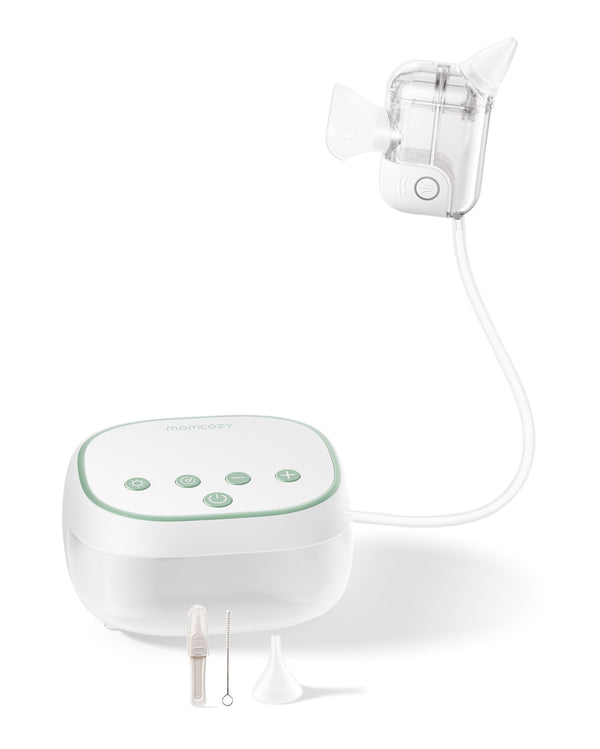
For everyday use, many parents prefer a soft-tip baby nasal aspirator, and some choose an electric option like the Momcozy BreezyClear™ 2-in-1 Spray & Suction Electric Nasal Aspirator, which is designed for tiny nostrils and feels less intimidating when you are still getting used to clearing your baby’s nose.
2-in-1 Design
Hospital Grade Suction
Adjustable Suction
All-in-One Storage
Manual aspirators need your lung power, while electric ones do the work for you. Both clean out deeper congestion that bulb syringes miss. They cost more but last through multiple kids if you take care of them.
Saline Nasal Spray Solution
Saline drops or spray are your first line of defense. Put two drops in each nostril, wait 30 seconds, then use your bulb syringe or aspirator. The salt water loosens dried mucus and makes everything easier to remove. You can use saline as often as needed—it's just salt water, nothing medicated.
Make your own by mixing ¼ teaspoon of salt with 8 ounces of warm water. Store it in a clean dropper bottle. Or buy premade saline—it's cheap and convenient.
Alternative Home Remedies
Steam from a hot shower works wonders. Sit in the bathroom with your baby for 10 minutes while the shower runs. The humidity loosens mucus naturally. A cool-mist humidifier in their room does the same thing overnight.
Keep your baby upright after feeding. Lying flat makes congestion worse. Follow safe sleep guidelines and keep the crib mattress flat; hold your baby upright for a while before laying them down on their back.
When Should You Use a Battery-Powered or Manual Aspirator?
Bulb syringes handle everyday, clear or thin mucus just fine. Save the heavy-duty aspirators for when things get thick and sticky. If you're squeezing that bulb repeatedly and nothing's coming out, upgrade to an aspirator with more suction power.
Use aspirators before bedtime and before meals. Those are the times when clear breathing matters most. Don't go crazy with it, though—too much suctioning irritates delicate nasal tissues and makes them produce more mucus. Twice a day is plenty unless your doctor says otherwise.
Battery-powered models work best when you need consistent suction strength. Manual ones give you more control, but tire out your lungs. Pick based on your budget and how often you'll need it. If you rely on an electric device every day, a rechargeable model such as the Momcozy Baby Nasal Aspirator – Long Battery Life can be reassuring, because you do not have to worry that the battery will die halfway through clearing a very stuffy nose.
How to Calm Your Baby During Nose Cleaning?
Let's be honest—babies hate having their noses messed with. They'll squirm, cry, and fight you the whole way. But you can make it less traumatic for both of you.
Step-by-Step Instructions for Cleaning Inside Baby's Nose
Start by laying your baby on their back on a flat surface. Have everything ready before you begin—saline, aspirator, and tissues. Put in the saline drops first and wait 30 to 60 seconds. This part is crucial. Don't rush it.
Insert the aspirator tip just inside the nostril opening. Point it toward the back of the head, not up toward the brain. Create suction (squeeze the bulb or turn on the device), then slowly pull it out. Wipe the tip clean and repeat on the other side if needed.
Sing to them. Talk in a calm voice. Some babies do better when you're making eye contact and keeping things playful. Others prefer quick and efficient. Learn what works for your kid.
Safety Precautions for Cleaning a Baby's Nose
Never stick anything farther in than the visible outer part of your baby's nostril. Those tissues are delicate and bleed easily if you're too rough. Don't suction more than a few times in a row per session—overdoing it causes swelling and makes congestion worse.
Watch for bleeding. A tiny bit of pink-tinged mucus happens sometimes, but actual bleeding means you need to be gentler or take a break. If your baby's nose bleeds every time you clean it, talk to your pediatrician.
Clean all your tools after every single use. Mucus carries germs, and you don't want to reintroduce bacteria into your baby's nose. Hot soapy water works for bulb syringes. Follow the manufacturer's instructions for aspirators.
What Causes Nasal Congestion and When Do You Need to Visit the Doctor?
Infants start having congestion for many reasons. Colds are the most common, as kids contract 6-8 colds during the first year, as the body identifies the viruses. Dry winds, common during the winter months, dry the nasal passages, making them congested, even if the baby’s not sick. Allergies can begin early, but new babies aren’t as prone to them.
Sometimes what appears to be the common cold can actually be reflux. Throat irritation from stomach acid increases mucus production. Teething, of course, brings additional spit and mucus. Your baby’s body is always adapting to the world after life inside the womb.
You are to call your pediatrician if your baby is three months old and younger and has had a rectal temperature of 100.4°F (38°C) and above. That’s an automatic call. You are to call if the baby appears to be breathing fast and hard, if the baby appears to be sucking in his chest to help him breathe, or if the baby’s lips turn blue.
If your congestion persists for over two weeks, or if the phlegm becomes thicker and green/yellow and persists, it’s time to visit the doctor. You know your body. If something feels off, treat yourself.
How to Prevent Mucus Buildup and Nasal Congestion?
- Maintain indoor humidity levels between 40–60%. This is dry enough to irritate your nasal passages, but high enough to support the growth of mushrooms. You can check your levels for $10 with a hygrometer.
- Avoid smoke and strong smells around your baby. Cigarette smoke, perfumes, and household chemicals can irritate the tiny passages and cause mucus. So, if you are one of the smokers, try to smoke outside and wash your hands well before touching the baby.
- You can breast-feed your baby if you are able. This breast milk contains. Furthermore, if you are formula-feeding your baby, there are no problems either, but try washing your hands and bottles often. In households where there are babies, germs spread very easily.
- Use the humidifier every night during the winter months. Otherwise, it becomes an engine for bacteria. Follow the maintenance instructions to keep it bacteria-free. Change the water every day, and use distilled water if your tap water is hard.
FAQs
Q1. How Often Should I Suction My Baby’s Nose?
An ideal frequency for most kids would be two to three times each day—before the morning feed, as you prepare for bedtime, and maybe during the middle of the day if they are really stuffed up. Just remember that your baby’s nasal passages are not designed for an endless number of uses like your kitchen sink. Use the nasal aspirator only if you hear and see mucus blocking their airflow. If your baby appears to be breathing and eating just fine, the last thing to worry about would be their nasal passages. They can naturally flush their passages without your help.
Q2. What are the Side Effects of Suctioning the Newborn?
The most common problem associated with the use of the device consists of common nose bleeds that come as a result of excessive forceful use of the tip. You can find mucous membranes tinged pink, which would indicate that the procedure had been performed either too deeply or forcefully. Swelling can result if the procedure is performed frequently. This would seem comically counterproductive, especially if you intended to alleviate the congestion. Some children would become irritated and agitated during the process, leading to the generation of excess mucus as a result of their crying. Occasionally, excessive and forceful use of the device would damage your baby’s nasal passages.
Q3. Can I use regular Saline Nose Drops multiple times per day?
Yes. Saline can be used as many times as needed because it’s only sterile salt and water without any medicine. In medicated eye drops, one should not overuse them because plain saline helps preserve and thin the mucus. Many moms use it up to four to six times as often as needed for their kids during bad cold times without any issues. In doing the homemade version, it’s as effective as commercial products if one gets the proportions right and uses it within 24 hours.
Keeping Your Baby's Nose Clear: Final Tips for Parents
Your baby depends on you to keep those tiny airways clear and functioning. Start with saline, use the right tool for the job, and clean everything thoroughly. Most importantly, trust yourself. You know your baby better than anyone. Bookmark this guide and share it with your partner or caregiver so everyone knows the safe way to help your little one breathe easier.
If you are putting together a simple congestion kit for home and travel, combining saline, a basic bulb, and a gentle baby nasal aspirator with tools like the Momcozy BreezyClear™ 2-in-1 Spray & Suction Electric Nasal Aspirator and the Momcozy Baby Nasal Aspirator – Long Battery Life can give you quick, comfortable relief for your baby whenever a cold or stuffy night shows up.